Quick Answer
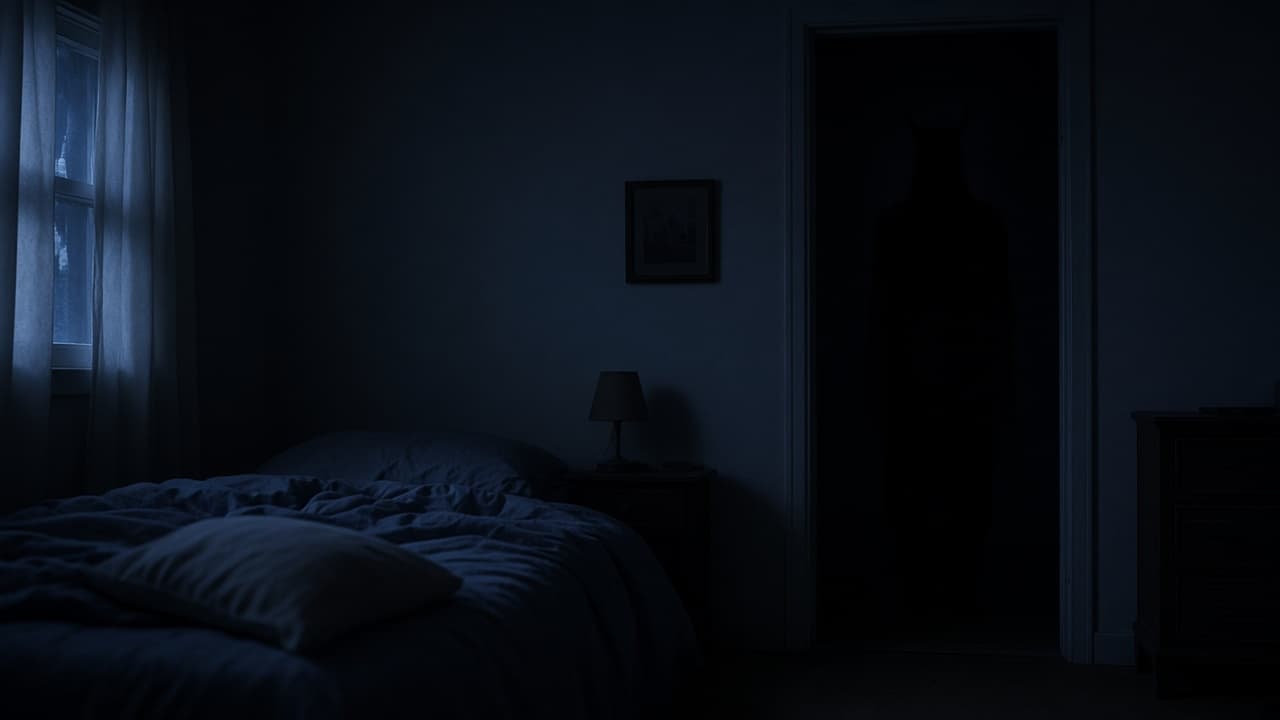
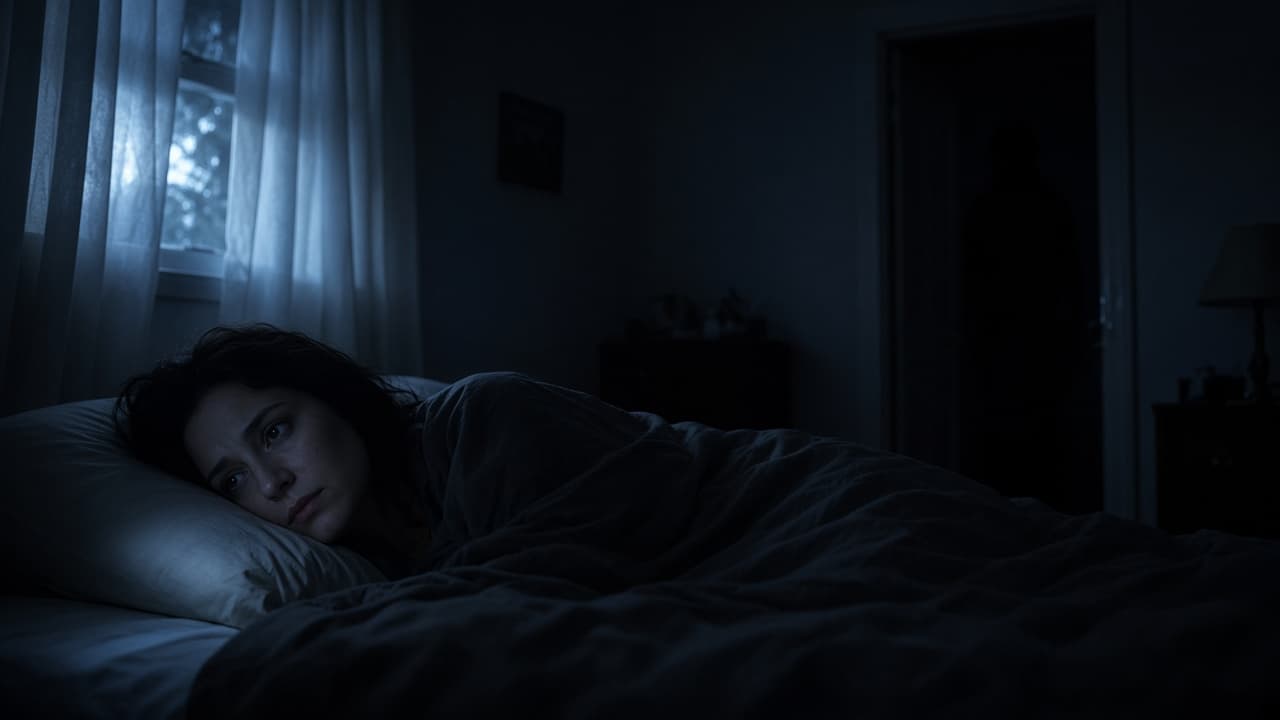
Sleep paralysis is the night when awareness comes back before the body does. You cannot sit up, speak, or run. The room looks like your room. A presence, a pressure on the chest, a figure in the doorway, or a hum in the air often arrives with it. That combination is a recognised sleep state, not a verdict on your soul and not a prediction. This page is the dictionary hub for the dream-side of cannot-move, freeze, and bedside presence. The longer guide to a repeating figure is [sleep paralysis, same demon every time](/blog/sleep-paralysis-demon-same-every-time). If the scene was specific,
You Wake, You Cannot Move, the Room Is Real
This is the textbook episode. Seconds to a couple of minutes. It ends abruptly, often with a jerk or a gasp.
J. Allan Cheyne and colleagues, writing in the late 1990s and in later reviews, described consistent clusters across cultures: an intruder, a felt presence, pressure on the chest, and sometimes a sense of floating. The mechanism is unromantic. During REM sleep, motor output is gated so you do not act the dream. Occasionally that gate stays shut while consciousness returns, and leftover imagery paints the actual furniture.
The useful morning distinction: if you knew you were in your bed, this is the page. If you were still inside a story, running, flying, arguing, you may be looking at ordinary dream atonia instead. Both can be treated. Only this one impersonates a visitation so cleanly.
A Figure in the Doorway, on the Chest, or at the Foot of the Bed
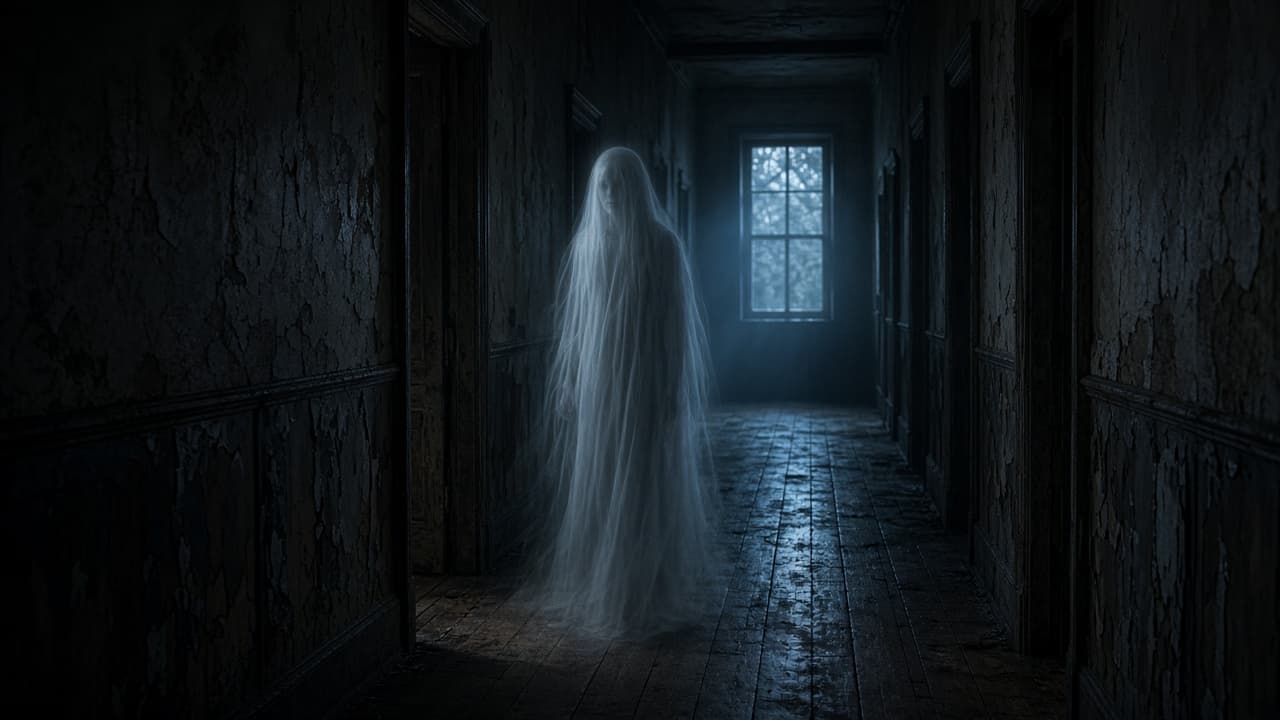
A person-shaped dark, a hag, a devil, a relative, a faceless coat.
The figure is the brain's best available explanation for a presence plus threat plus immobility. It will use your folklore. It will also use last week's news. Recurrence of the same figure is not proof of a contract. It is proof that a fear image worked once and got filed as the default.
If the figure spoke, treat the sentence as you would any dream speech: write it, then see whether it is your critic, a memory, or a threat that belongs in daylight safety planning. If the figure was a dead person, hold deceased loved ones in one hand and this physiology in the other. Grief and paralysis can share a night without one cancelling the other.
Pressure, Suffocation, or Not Being Able to Breathe
A weight. A pillow. Hands. Air that will not come.
Chest pressure is part of the classic cluster, which is why so many traditions invented a creature that sits on sleepers. It is still worth checking the airway in waking life: snoring, gasping, reflux, panic. Not being able to breathe as a running dream plot is a cousin. Here the suffocation is glued to immobility and a real room.
If you have daytime sleepiness, loud snoring, or episodes that leave you wrecked, say so to a clinician. Interpretation does not clear an airway.
You Can See or Hear but Not Call Out
A partner in the bed who does not wake. A phone you cannot reach. A scream that is only air.
This variant adds helplessness in a social key. The threat is not only the figure. It is that help is inches away and unavailable. People who feel unseen in waking life, carers, people in unsafe homes, people whose panic has been minimised, report this with painful accuracy. The dream is not proving that no one would help. It is showing what frozen help feels like.
If you are in an unsafe home, skip the symbol and use safety resources. Physiology and danger can coexist. Do not let a clever explanation talk you out of a door.
Have a Sleep Paralysis dream of your own?
Write what you remember and get a clear reading.
Floating, Vibrating, or Leaving the Body While Frozen
Humming, buzzing, rising to the ceiling, watching yourself on the bed.
Cheyne noted floating as part of the same family of states. Some dreamers later file this as a spiritual event, which their tradition may support. The conservative reading is that REM sensory weirdness plus atonia produces a convincing out-of-body plot. You do not have to mock a spiritual reading to keep a sleep-hygiene plan.
If these episodes are followed by daytime dissociation that is new and frightening, mention that to a clinician as well. Night glitches that start colonising the day deserve more than a dictionary.
Freeze Inside a Running Dream (You Were Not "Awake")
A chase, an exam, a stage, and your legs are wet sand. You know it is a dream or you do not.
This is the typical-dream neighbour called being frozen with fright. REM atonia leaks into the story as character failure. It is miserable and it is not a moral. Trapped and being chased cover a lot of this ground. Mention it here because searchers often land on "sleep paralysis" when they mean "I could not run."
The remedy is similar: less bedtime dread, more sleep regularity, and, if a plot repeats, rewriting the ending while awake (imagery rehearsal). You do not need to win the chase at 4 a.m. to be a competent person at 10.
It Happens in the Same Room, Same Corner, Same Hour
Repetition makes it feel like a haunting. The corner becomes charged. You start staying up to avoid the hour.
This is how a sleep event becomes a nightmare disorder. Expectation is part of the engine. The longer guide on a repeating paralysis figure is written for that loop. Practical bits that help many people: sleep on a schedule, reduce alcohol, get up for a few minutes rather than fighting the bed in a panic, and tell the figure, in daylight, that it is a recording.
If you use lucidity as a hobby, know that some people get more of these states when they chase lucidity hard. Adjust the hobby if the cost is terror.
Psychological Meaning
Cheyne's descriptive work is the citation this page owes. The phenomenology is stable enough that you can stop arguing whether your particular costume is unique. Antti Revonsuo's threat-simulation theory (2000) helps with why the content is threatening: a system built to rehearse danger will not waste a state of immobility on a picnic. G. William Domhoff's continuity hypothesis still applies to who the figure resembles. Your boss, your father, last night's film, your folklore.
What this is not: a diagnosis you should make from a blog, a reason to stop medication without a doctor, or proof that you are weak. Plenty of healthy sleepers have an episode after jet lag or a broken night. Frequency, distress, and daytime cost are what turn an episode into a problem worth clinics.
When It Will Not Stop
Treat the sleep as a system. Regular hours. A darker, cooler room. Less scrolling in the last hour. Alcohol and irregular shifts are frequent fuels. If you snore or stop breathing, say so. If you dread bedtime, the dread is now part of the disorder; a therapist who knows nightmares can help more than another entity name.
You can keep a spiritual practice and still use a sleep clinic. The night does not require you to pick a team. If a particular figure, sentence, or corner is still specific,