Quick Answer
Dreaming of the devil is rarely about the devil. It is usually about something in your life that has the shape of temptation, guilt, or dread with an author, a compromise you are considering, a shame you cannot set down, or fear that has been looking for a face and found the most recognisable one your culture supplies. There is also a plain physiological version worth ruling out first, because it accounts for a great many of these reports: a frightening presence at the bedside while you cannot move is sleep paralysis, and it is a well-documented sleep event rather than a visitation.
Waking Up Unable to Move With Something There
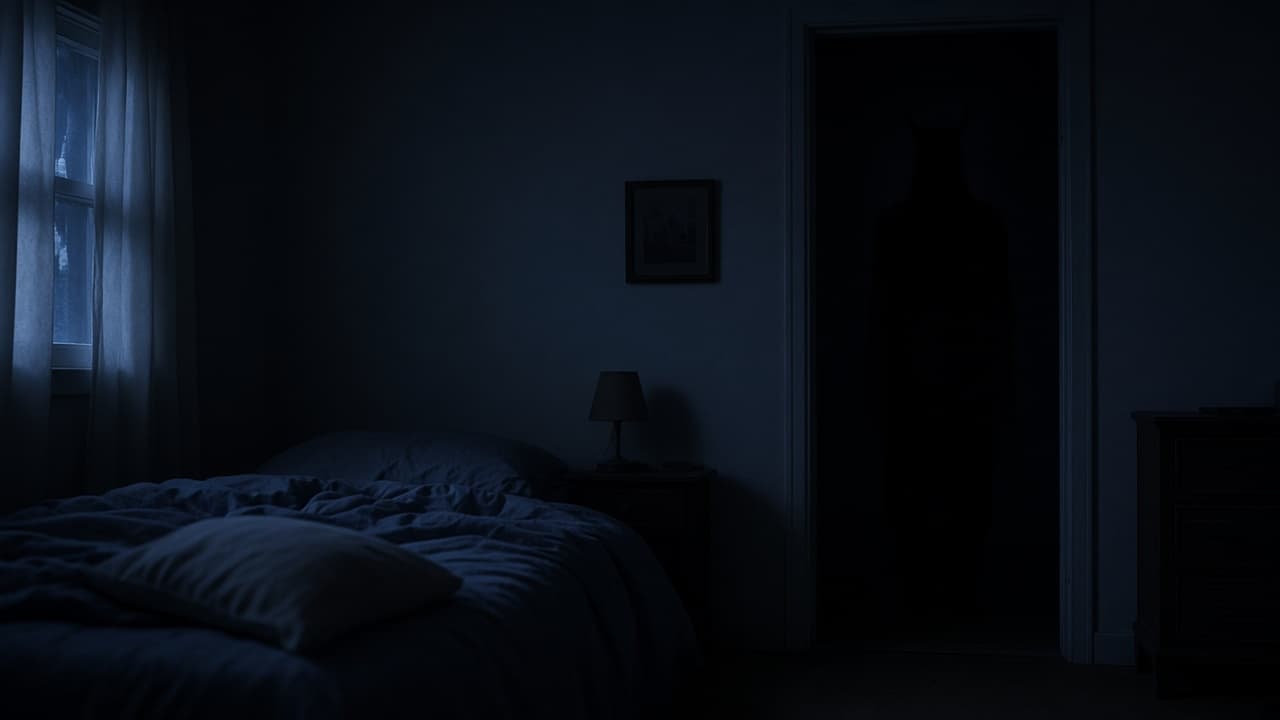
This deserves to come first because it is the version that frightens people most and has the clearest explanation. You wake, or seem to. You cannot move or speak. There is weight on your chest, a presence in the room, sometimes a figure at the door or leaning over the bed. It lasts seconds to a couple of minutes and ends abruptly.
That is sleep paralysis. During REM sleep your voluntary muscles are switched off; occasionally that switch stays on for a moment after consciousness returns, and dream imagery continues into the actual room. J. Allan Cheyne and colleagues catalogued the experience in the late 1990s and identified consistent clusters, an intruder, pressure on the chest, and a sense of floating, reported by people all over the world who had never heard of each other's folklore.
The cultural naming varies and the experience does not. The Old Hag in Newfoundland, the kanashibari in Japan, the pisadeira in Brazil, the incubus of medieval Europe, and yes, the devil at the foot of the bed. Devon Hinton and colleagues have documented how the same event gets interpreted through whatever spiritual framework the sleeper holds. Knowing what it is does not stop it being terrifying, but it usually stops the aftermath, the days of wondering whether something was in your house. It is triggered most by irregular sleep, sleep deprivation, and sleeping on your back.
The Devil Offering You Something
The classic scene. A calm figure proposes an exchange: money, success, relief, someone's love, in return for something you would rather not name.
Deal dreams almost always accompany a real decision with a moral cost attached. Dreamers report them before accepting jobs at companies they have doubts about, while considering staying in a comfortable relationship they know is wrong, or when an opportunity requires misrepresenting something. The dream's genius is that it makes the price explicit, and the price it names is often startlingly precise.
Remember what was asked for. Dreamers frequently recall the exact item, my daughter, my name, ten years, the thing I like about myself, and that detail usually does more work than the whole rest of the dream.
Being Chased by the Devil
Pursuit strips out the negotiation. There is no offer; there is only distance closing, often through a house or a landscape that keeps rearranging itself.
Chase dreams of this kind cluster around guilt and consequence rather than temptation. They arrive when something is catching up: a debt, a lie, a health issue you have avoided, a piece of work you claimed was finished. Being chased is among the most commonly reported dream themes generally, so the pursuit itself is not remarkable; the identity of the pursuer is what has been chosen here, and that choice is usually about moral weight.
Whether you woke before it reached you matters less than dreamers assume. Almost nobody is caught in these dreams. The dream is about the running.
Someone You Know Becoming the Devil
The face is your father's, your manager's, your partner's, and then it is not. Or the figure keeps their face while something else looks out of it.
This is a trust dream, and it is one of the more painful ones. It tends to arrive when you have noticed something in a person you love that you do not want to have noticed, cruelty in a joke, a pattern of manipulation, a coldness during your worst week. The dream does not mean the person is evil. It means your assessment of them is shifting, and that shift has not yet been allowed into daylight.
Dreamers often feel disloyal on waking. Worth remembering that noticing something is not the same as deciding what to do about it.
Selling Your Soul or Signing Something
A contract, a document, a signature, a handshake. Sometimes the dream is entirely about ink.
Signing dreams tend to accompany commitments that feel irreversible in the specific sense of costing you something essential: a mortgage that locks in a career you do not like, a visa arrangement, a marriage entered from obligation, a contract with an exclusivity clause. Dreamers regularly describe reading the document and being unable to make out the terms, which is usually an accurate account of a real decision made with incomplete information.
Have a Devil dream of your own?
Write what you remember and get a clear reading.
Being Laughed At
No threat, no offer. The figure simply finds you funny, or contemptible, and does not stop.
Mockery dreams are shame dreams. They cluster around humiliation that has not been metabolised, being demoted, being publicly wrong, being left, being seen at your worst by someone whose opinion you cared about. What makes this version so unpleasant is the sense of an intelligence that knows exactly which part of you to laugh at, which is generally how self-criticism operates rather than how anything external does.
Standing Up to the Figure
You refuse. You pray, you shout, you say a name, you tell it to leave, and sometimes it goes.
These dreams tend to follow real acts of boundary-setting: a resignation letter, a confrontation with a family member, an addiction interrupted, a return to a practice that steadies you. Many religious dreamers report speaking scripture or a prayer and finding it worked, which is worth taking seriously as a report of their own recovered agency, whatever one's view of the metaphysics. See praying for how that gesture reads across dreams more widely.
Whether the figure fully retreated usually reflects how settled the waking boundary is, not how strong your faith is. Partial retreat is the most common outcome, and it is usually honest.
A Devil Who Looks Completely Ordinary
No horns, no fire. A pleasant man in a good coat, a helpful colleague, a stranger who is unusually reasonable, and you know, in the dream, exactly what he is.
This is often the most sophisticated version, and dreamers find it more disturbing than the theatrical one. It arrives when something harmful in your life is presenting well: a plausible manager, a charming partner, an easy solution with a hidden cost, an argument that sounds correct and is not. The dream's whole content is the mismatch between appearance and knowledge, which is also the situation you are in.
Psychological Meaning
Three mechanisms cover most devil dreams, and none of them require you to abandon a religious framework.
The first is sleep physiology, already covered above. Cheyne's work on hypnagogic and hypnopompic hallucinations explains a large share of bedside-presence reports, and it explains why they concentrate during exam periods, new parenthood, shift work and jet lag, all states of disrupted sleep.
The second is threat simulation. Antti Revonsuo's 2000 theory holds that dreaming rehearses danger, and a supernatural adversary is an efficient way of representing a threat that is intelligent, unavoidable and morally loaded. Michael Schredl's research on nightmare frequency shows these dreams track stress: they increase during difficult periods and settle when sleep and circumstances improve. If your devil dreams started five weeks ago, look at what changed five weeks ago before looking for anything larger.
The third is cultural availability, which is where Domhoff's continuity hypothesis applies. Dreams build from the material you have. A person raised in a religious household, or one who has recently watched a great deal of horror, has a very well-furnished figure available for any feeling of dread, so the same anxiety that produces a faceless pursuer in one dreamer produces the devil in another, and lesser figures such as demons in a third. Kelly Bulkeley's research on religious and spiritual dreaming documents how consistently religiously engaged people dream in the imagery of their tradition, which is what you would expect from a mind reusing what it knows.
Practically: check your sleep first, then name what has been asked of you recently that you did not want to give.
Biblical and Spiritual Meaning
If you read dreams through scripture, the tradition is more careful and less alarming than most online material about this symbol.
The biblical devil is characteristically an accuser and a persuader rather than a monster. Job 1-2 has the adversary in conversation, permitted and limited. Zechariah 3 shows him accusing a man already being defended. The temptation in the wilderness in Matthew 4 is entirely verbal, three offers, each answered with a sentence, and that is closer to how devil dreams actually behave than any horror imagery. 2 Corinthians 11:14 warns that he can appear as an angel of light, which speaks directly to the ordinary-looking version above. John 8:44 names him a liar; 1 Peter 5:8 uses the prowling lion.
Two passages tend to matter most to frightened dreamers. James 4:7 puts resistance within the dreamer's reach rather than framing them as helpless. And Ephesians 6 describes standing firm in armour that is largely defensive. Across the tradition, the appropriate response is refusal, not panic, and mainstream Christian, Jewish and Islamic teaching has consistently held that involuntary dream content is not sin. Martin Luther wrote about being tormented in the night; the counsel that emerged was not to treat it as a verdict on his soul.
Where dreams are treated as spiritually significant in your community, talking to a pastor, imam or spiritual director is reasonable and often steadying. Be wary of anyone who reads a single dream as evidence of possession, curse, or a need for expensive intervention. That combination has a long history of exploiting frightened people at 3am.
When These Dreams Keep Coming Back
Devil dreams recur most in three situations: broken sleep, an unresolved moral bind, and periods of grief or fear where dread has no target.
Deal with sleep first, because it is the cheapest intervention and often decisive, regular hours, less alcohol late, and not sleeping on your back if paralysis episodes are part of the picture. Then write down what the figure wanted, in one line. Dreamers who do this often find they have described a real conversation they need to have with an employer, a family member, or themselves.
If the dreams leave you frightened of your own bedroom, or you find yourself dreading sleep, that is worth raising with a GP or a therapist. Both nightmare frequency and sleep-paralysis distress respond well to treatment, and there is no need to hold this on your own.