Quick Answer
Snake dream meaning turns on a single question: could you see it coming? Snakes arrive in dreams as low, quiet, fast things that appear where you did not expect them, which makes them a natural image for a risk you have half-registered, a person whose intentions you cannot read, or a change in yourself that is already underway. The scene narrows it down. A bite marks a worry that has become an event. A snake in the house moves the problem indoors. Many snakes turn one threat into a field of them. A snake shedding its skin is rarely frightening at all, and usually arrives during a period when something old is genuinely coming off.
A Snake Biting You
The bite is the most reported version and the most interpretable, because it has a location and a delay.
Dreamers almost always remember where the fangs landed, and that detail works better than any general symbol reading. A bite to the hand tends to accompany something going wrong in work or in doing, a project, a contract, a piece of craft you were holding. The foot or ankle points at direction and movement: a route you had committed to that turns out to be the dangerous one. The neck or face points at speech and exposure. Bites to the leg while walking often follow weeks of pushing on with something you had private doubts about.
The other detail is timing. Some dreamers describe a long stretch of watching the snake before it struck, which usually maps onto a waking situation they saw developing and did not interrupt. Others are bitten without warning, and that version tends to follow genuine ambushes, a message that arrived out of nowhere, a decision made about you elsewhere.
Whether the bite hurt is a separate signal. Painless bites frequently accompany damage you have already absorbed and stopped feeling. Pain, swelling, or the panic of looking for help more often tracks something still in progress, where you are actively trying to limit the harm.
A Black Snake
Colour in dreams tends to set the emotional key rather than swap the symbol out. Black is the most searched snake colour and the most misread: dreamers wake up convinced they have seen something evil, when the reliable signal is concealment.
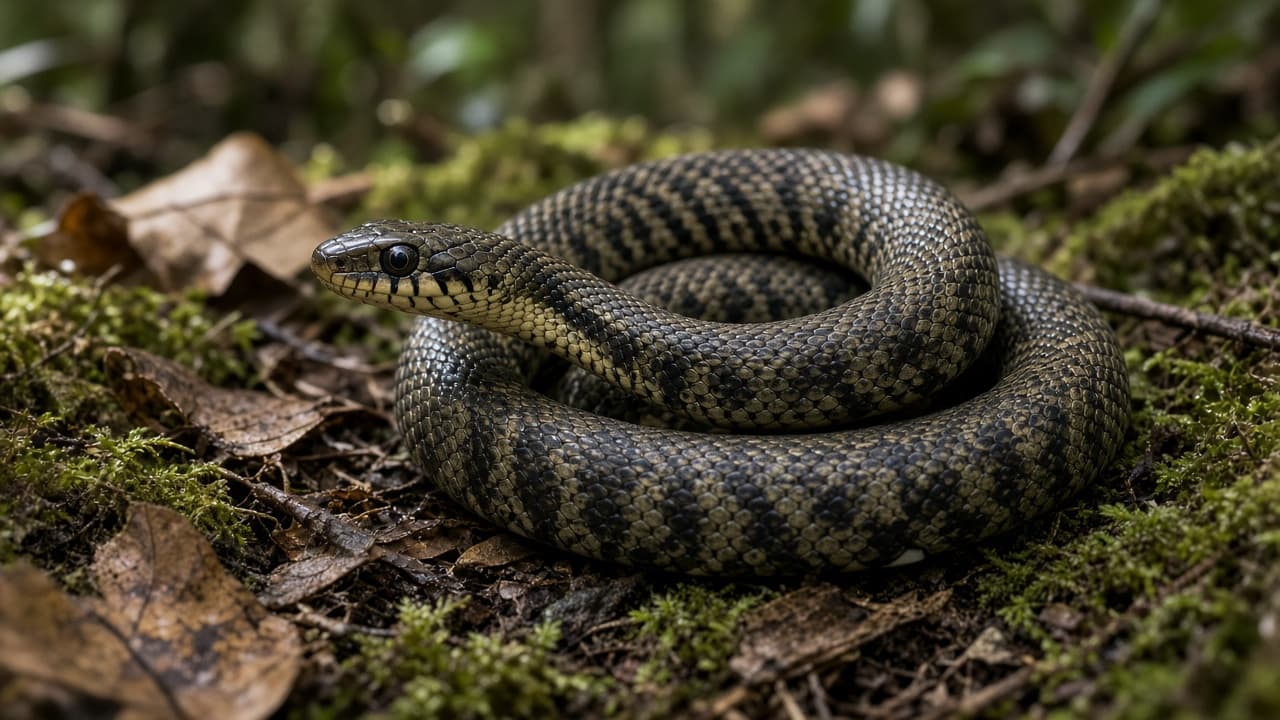
A black snake is hard to see. That is usually the point. These scenes cluster around a threat that is definitely present and refuses to come into focus, an atmosphere at home nobody will name, a test result you are waiting on, a restructure at work being discussed above your head. Dreamers often report knowing exactly where the snake was without ever getting a clear look at it, which is an unusually precise description of how ambient dread works.
Setting matters more than shade. A black snake in long grass leans toward a risk hidden inside something ordinary. One in a dark room or under furniture leans toward a domestic tension you are stepping around. If the snake was large, still, and simply watching, the dream is often less about attack than about how much of your attention the unnamed thing is taking.
A White Snake
White snakes feel different on waking, and dreamers usually notice it: the fear is thinner, sometimes replaced by awe.
That shift is worth trusting. Pale or white snakes tend to arrive with clarity rather than dread, something finally seen plainly, a truth that turns out to be survivable, a change you can look at directly. Dreamers often describe the snake as beautiful and describe themselves as calm, which is rare in this symbol family.
White snakes also carry strong folklore, particularly in Chinese and Japanese tradition, where white serpents appear as guardians, wealth-bringers, or divine messengers rather than enemies. If the dream felt reverent, that inheritance is probably part of why. It still does not make the dream a forecast. The practical question is what became clear to you recently, and whether you have acted on it yet.
Green and Yellow Snakes
These two get searched together and read quite differently.
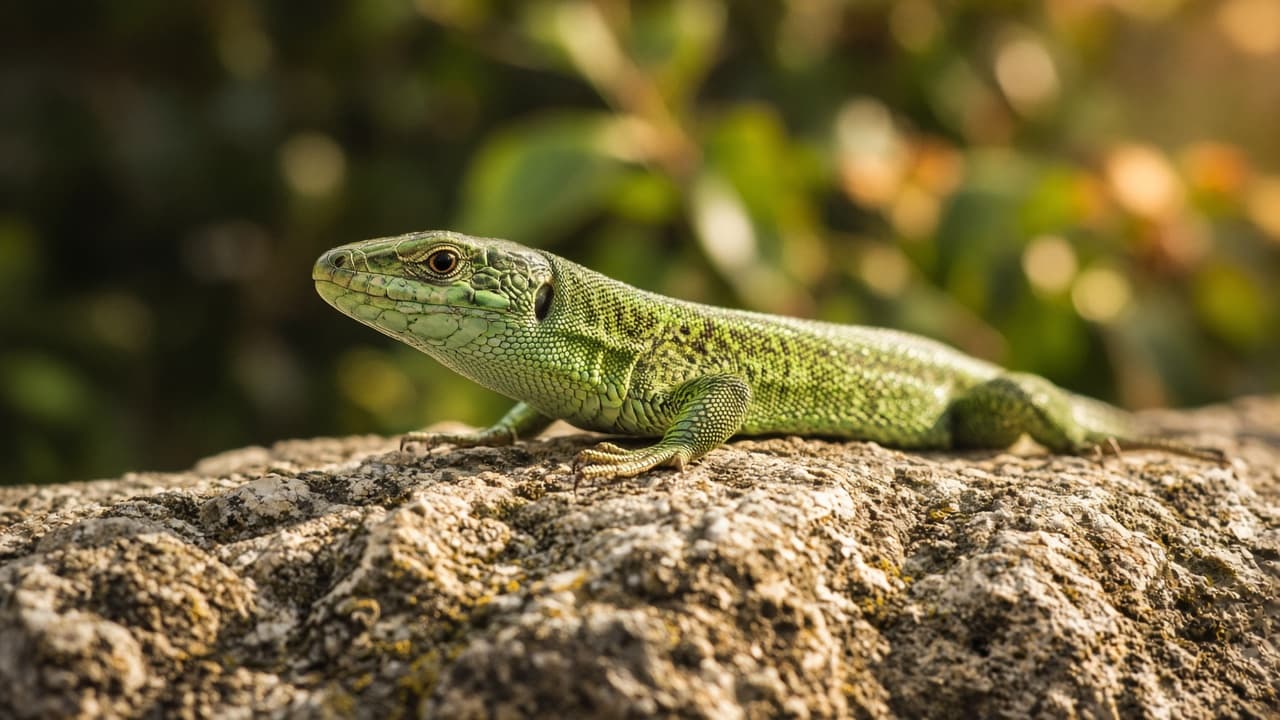
Green snakes skew toward growth, newness, and inexperience. They often show up in gardens, hedges, and undergrowth, the threat is small, alive, and mixed into something that is doing well. Dreamers frequently report a green snake that startles more than it endangers, which fits the waking pattern: a new relationship, a new job, a new plan with one live risk sitting inside the healthy part of it.
Yellow snakes carry warning and caution, partly because yellow is the colour we use for exactly that in waking life. These dreams tend to accompany a signal you have already received, an odd remark, a slipped deadline, a bill that did not add up, and have not escalated. If the yellow snake was bright and openly visible, the dream is often reporting that the warning was not subtle and you noticed it perfectly well.
A Rattlesnake or a Snake You Can Hear
Sound changes the whole dream. A rattle or a sustained hiss is a warning shot, and it means the danger announced itself before anything happened.
Rattlesnake dreams therefore tend to be about heeded or ignored notice rather than ambush. Dreamers describe freezing, stepping back very slowly, or trying to work out which direction the sound came from, and that last version is the most telling, because it maps onto waking situations where you know a conflict is coming but cannot tell from where.
Recover what you did with the sound. Backing away calmly usually accompanies a boundary you have already set. Walking on toward it happens more often than you would expect, and it tends to follow weeks of overriding your own instincts about a person or a commitment.
Many Snakes at Once
Number turns a specific fear into a saturated one. A pit of snakes, a floor of them, a nest under a step: what changes is that there is nowhere neutral to stand.
These dreams rarely track a single antagonist. They cluster around periods of distributed strain, several small problems arriving in the same fortnight, a workplace where the pressure comes from everywhere, a family situation with multiple people to manage. Dreamers often report that no individual snake was threatening, which is usually accurate about the waking version too.
Watch how you moved. Careful stepping between them tends to accompany someone managing a difficult period competently and exhaustingly. Standing still because movement felt impossible more often accompanies genuine overload, and is worth taking seriously as information about your capacity rather than your courage.
Have a Snakes dream of your own?
Write what you remember and get a clear reading.
A Snake in Your House
The house is the private zone, so a snake indoors means the unreadable thing has crossed a boundary it was previously outside of.
Common waking matches: a work conflict that now runs through your evenings, someone in the family whose behaviour has become unpredictable, money trouble that has moved from abstract to domestic. Dreamers frequently describe hunting for a snake they know is inside and cannot find, and that is often an exact description of a problem they have felt but not yet identified.
Room placement narrows it further. Kitchens and living rooms lean toward shared household life. A snake in the bedroom or in the bed points at intimacy, rest, and the last place you expect to be on guard, these dreams often follow a period of not sleeping well for reasons you have not addressed. A snake coming in under a door or through a window shifts the emphasis onto entry: what did you leave open, and did you know it was open?
Killing a Snake
Killing the snake ends the ambiguity, and how you feel afterwards is the reading.
Relief usually means you have recently confronted something directly, said the difficult thing, ended an arrangement, named a person's behaviour out loud. The dream is reporting a resolution you have already achieved rather than instructing you to fight.
Guilt is more interesting and more common than people expect. Dreamers sometimes wake troubled by their own violence, and that version often follows shutting down something that was not actually hostile: a person's awkward honesty, a change you were not ready for, an instinct of your own you decided to suppress. If the snake kept moving after you thought it was dead, the situation is probably not as closed as you have been telling people.
Psychological Meaning
Snakes are a special case among dream animals, because there is real research on why they command attention so easily.
Arne Öhman and Susan Mineka's 2001 paper in Psychological Review proposed an evolved fear module: a set of mechanisms that make fear of certain ancestral dangers, snakes prominent among them, unusually easy to learn and unusually hard to unlearn. The important nuance is often lost in retellings. Mineka's laboratory-reared rhesus monkeys were not born afraid of snakes. They acquired the fear rapidly after watching another monkey react fearfully, and in Cook and Mineka's work they did not acquire fear of flowers or rabbits through the same observational route. So the finding is about biased learning, not about innate terror.
That distinction matters for interpretation. It means a snake is a cheap, fast image for your mind to reach for when it needs to represent danger, which is a strong reason not to treat the presence of a snake as evidence that the danger is large. The vividness is partly about the symbol, not only about the stakes.
From there, G. William Domhoff's continuity hypothesis does most of the interpretive work: dream content generally continues waking concerns rather than encoding them in a separate language. If you are in a situation with a concealed risk, a snake is the available shape for it. Antti Revonsuo's threat-simulation theory adds the rehearsal angle, which fits bite and chase versions well, the dream runs the scenario rather than predicting it.
Practically: name the thing you cannot currently see clearly. Then check what the snake actually did, because watching, striking, blocking, and shedding point at four different waking jobs.
Spiritual and Cultural Meaning
Few animals carry as much layered tradition, and almost none of it is straightforwardly negative.
In Hindu tradition, nāga are serpent beings associated with water, protection, and thresholds, and kundalini is described as a coiled serpent energy rising through the body, an image of transformation rather than menace. Greek medicine placed a snake on the rod of Asclepius, which is why serpents still appear on medical insignia; the snake there is a healer. The ouroboros, the serpent eating its own tail, appears in Egyptian and later Hermetic sources as an image of cycles and self-renewal.
In the Chinese zodiac the snake reads as intelligent, private, and self-possessed. Several Australian Aboriginal traditions hold Rainbow Serpent narratives central to creation and to the making of waterways. In West African and diasporic traditions, serpent figures such as Dan appear as intermediaries between worlds.
The recurring thread is skin. A snake grows by shedding, which is why so many traditions attach it to renewal, medicine, and becoming. If your dream featured a snake sloughing its skin, or a shed skin with no snake in it, that lineage is the one to read it against, something is coming off you, and the dream is often gentler than the animal suggests.
Biblical Meaning
Scripture is genuinely double-minded about serpents, and knowing both sides defuses a lot of 4am panic.
Genesis 3 gives the serpent in Eden, the source of most Western dread around the symbol: deception, a persuasive voice, a boundary crossed. That is the passage most dreamers arrive with. But Numbers 21:8–9 has Moses raise a bronze serpent on a pole so that those who look at it live, the same animal as the instrument of healing. John 3:14 deliberately picks up that image.
Matthew 10:16 instructs disciples to be "wise as serpents and harmless as doves", which treats serpentine shrewdness as a virtue when it is paired with gentleness. Luke 10:19 speaks of authority over serpents, an image of protection rather than threat.
If you read dreams through scripture, the useful question is not whether your snake was the Eden serpent. It is which of the two functions your situation calls for: something deceptive to be named, or something painful to be looked at squarely so it stops having power over you.
When the Same Snake Dream Comes Back
A repeating snake dream is usually a report on an unresolved situation, not an escalating warning. Snake imagery tends to persist while something stays ambiguous and to fade once you either confront it or genuinely accept it, and the fading often happens without any deliberate interpretation at all.
Keep track of one variable across repeats: your own behaviour. Dreamers who move from freezing to backing away to speaking, across weeks of dreams, are usually describing a real change in how they are handling the waking version. That progression is better evidence than the snake's colour or size.
If the dreams are frightening enough to damage your sleep, deal with the sleep before the symbolism. Imagery rehearsal therapy has solid evidence for recurrent nightmares and a clinician can usually teach it in a handful of sessions. Interpretation is easier, and more accurate, once you are rested.