Quick Answer
Dreams about demons tend to arrive in two quite different forms. One is a nightmare in the ordinary sense: a figure that represents something in your life that feels overwhelming, shaming, or impossible to reason with. The other is a sleep paralysis episode, where you wake with your body still immobilised and something appears to be in the room with you. Telling them apart is the most useful thing you can do, because they have different explanations and different remedies. If you could not move and knew you were awake, start with the [sleep paralysis](/dreams/sleep-paralysis) hub.
Waking Up Unable to Move
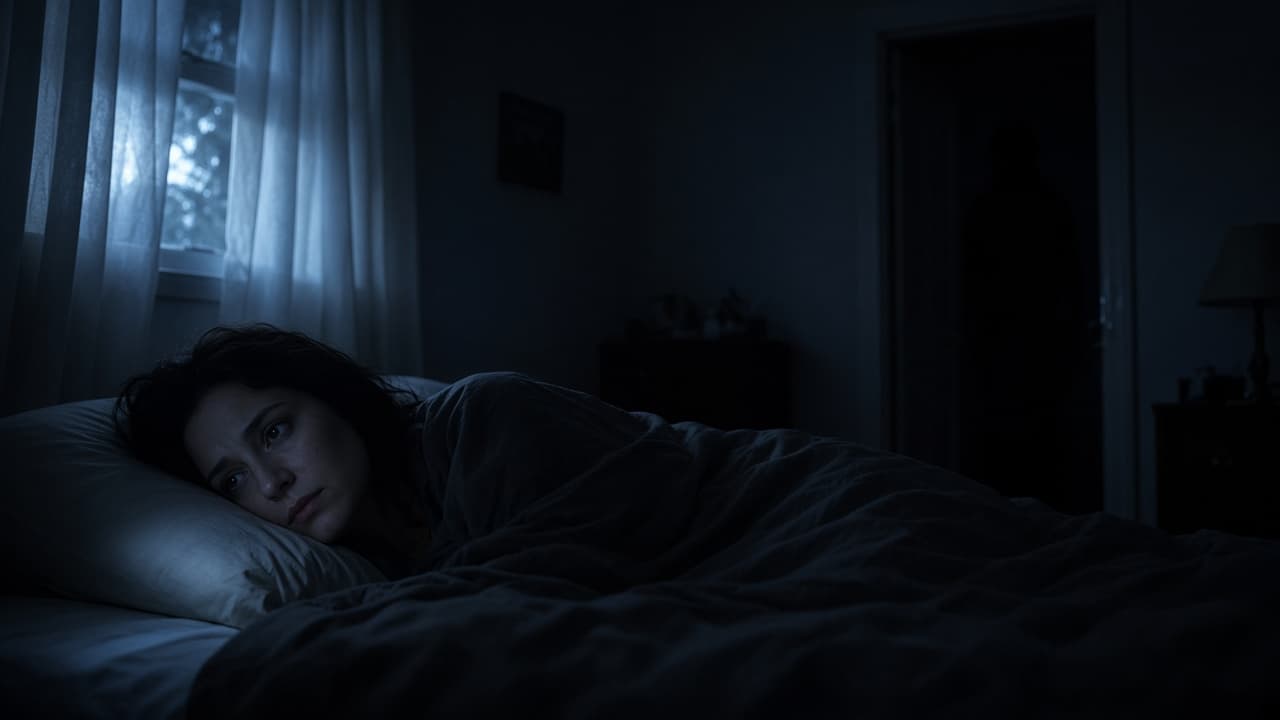
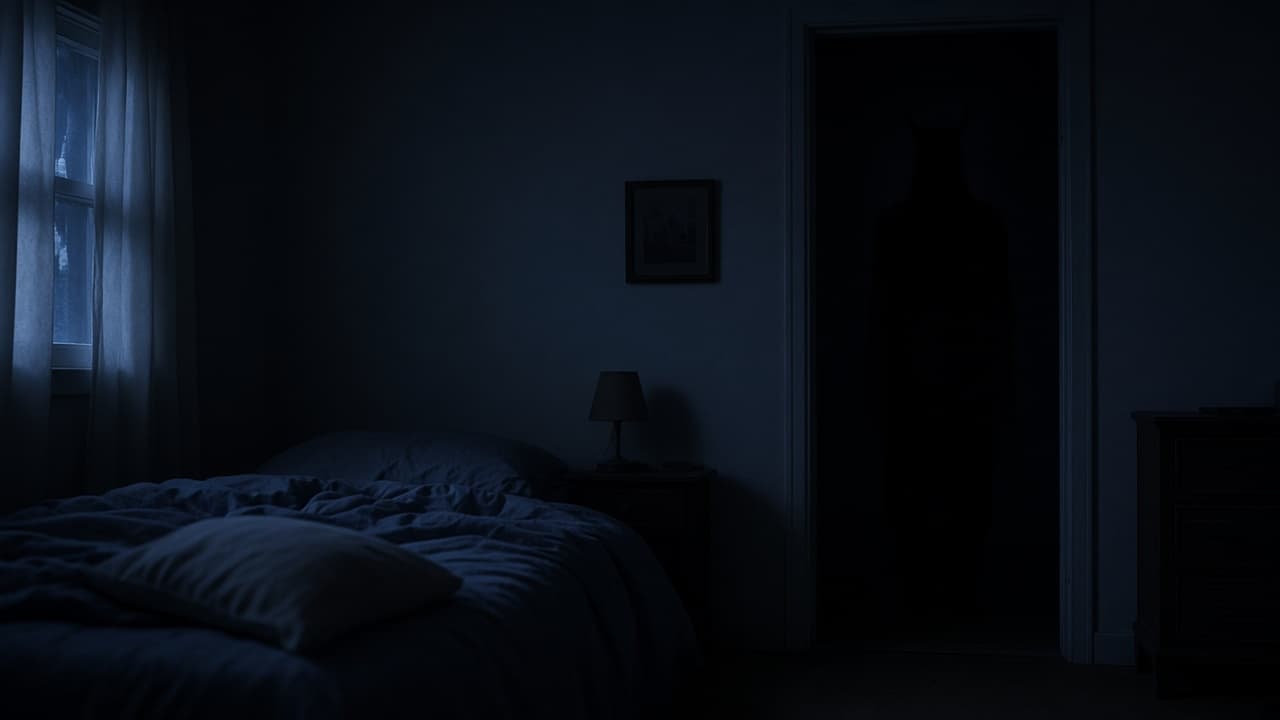
You surface, you know where you are, and your body will not respond. Often there is a figure at the door, at the foot of the bed, or leaning over you.
This is sleep paralysis, and its features are remarkably consistent worldwide: immobility, a sense of presence, sometimes footsteps or a voice, sometimes a weight. What is happening physiologically is that REM atonia, the muscle shutdown that stops you acting out dreams, has outlasted the transition into waking, while dream imagery continues to run. The dictionary hub for cannot-move, freeze, and bedside presence is sleep paralysis.
The episodes are brief, typically seconds to a couple of minutes, and they end on their own. They are not dangerous. Knowing what they are reduces the fear substantially for most people, which matters, because the terror is the actual harm.
A Weight on Your Chest
The pressure version has its own long history. Dreamers describe being pinned, crushed, or unable to draw a full breath, with something crouched on them.
Part of this is respiratory. Breathing during REM sleep is shallower and partly outside voluntary control, so a body that is trying and failing to take a deep breath produces exactly the sensation of being sat on. The mind then supplies a cause.
Older European tradition named the figure incubus or mare, the root of the word nightmare, and versions of the same pressing entity appear across many cultures. The consistency of the description across centuries is one of the better arguments that something physiological is generating it.
Being Chased by One
Pursuit dreams with a demonic figure work differently from paralysis. You are mobile, terrified, and running through a place that keeps rearranging.
These usually attach to something you are avoiding with real effort: a debt, a diagnosis, a confession, a relapse you can feel approaching. The figure is characterised by relentlessness rather than strength, dreamers rarely report being caught, and often describe knowing it will never stop.
What you were running toward can be as informative as what you were fleeing. Related mechanics are covered on the being chased page.
A Demon Wearing a Familiar Face
Among the most disturbing versions: the figure looks like your mother, your partner, your child, or a friend, with something wrong in the eyes or the voice.
Estrangement is nearly always the theme. These dreams cluster around people who have become unrecognisable, through dementia, addiction, a personality change after illness, or behaviour so out of character that your model of them broke. The dream renders "this is not who they are" in the most literal way available.
It is not an accusation, and it is not a perception of anything hidden. It is your mind marking that someone you know has stopped matching their own description.
Being Possessed Yourself
Here the fear turns inward: you feel something take over, speak through you, or move your limbs.
Loss of self-authorship is the theme, and it is remarkably common in people dealing with compulsions, intrusive thoughts, rage they do not recognise, or the after-effects of a period when they behaved unlike themselves. Dreamers often report watching from inside, unable to intervene.
Intrusive thoughts in particular are worth naming, because they frighten decent people badly and are extremely common. Having a thought you find abhorrent is not evidence of anything about your character, and if those thoughts are frequent and distressing while awake, that responds well to treatment.
Have a Demons dream of your own?
Write what you remember and get a clear reading.
Praying or Fighting It Off
Many dreamers report trying to pray and finding the words will not come, or speaking a name and watching the figure recoil.
The blocked-prayer version is common enough to be its own category, and it maps onto a familiar waking feeling: needing help and being unable to ask, or reaching for a faith that has gone quiet on you. It is not a verdict on your belief.
When the resistance works, a prayer completed, a refusal spoken, a light appearing, dreamers usually wake calmer and report the dreams becoming less frequent afterwards. That pattern is consistent with what nightmare therapies aim to produce: a rehearsed sense of agency inside the scene.
Something Only a Child or an Animal Can See
A quieter variant. Nothing attacks; a dog stares at a corner, or a child in the dream says there is someone there.
These dreams tend to reflect a suspicion you cannot substantiate, a sense that something is wrong in a household, a workplace, or a friendship, with no evidence you could present to anyone. The dream gives the intuition a witness, which is exactly what you lack while awake.
Psychological Meaning
Sleep paralysis is the single most useful piece of knowledge for this symbol. Brian Sharpless and Jacques Barber's 2011 systematic review in Sleep Medicine Reviews pooled decades of studies and found a lifetime prevalence of roughly 7.6% in the general population, considerably higher among students and psychiatric samples. This is a common experience, not a rare one.
J. Allan Cheyne's research at Waterloo mapped the hallucinations themselves, distinguishing an "intruder" cluster, sensed presence, fear, footsteps and shadowy figures, from an "incubus" cluster of pressure and breathing difficulty. Those two clusters describe most demon-in-the-room reports with unsettling accuracy.
Culture then supplies the identity. Baland Jalal and Devon Hinton's comparative work, including a 2013 study contrasting Egyptian and Danish samples, found that people in a setting where the experience is interpreted through spirit beliefs, jinn attack, in that case, reported greater fear and longer episodes than people who interpreted it in physiological terms. The event appears to be universal; the figure and the fear are shaped locally.
For demon dreams that are not paralysis, Antti Revonsuo's threat-simulation theory (2000) applies: dreaming rehearses danger, and a supernatural antagonist is the strongest available image of a threat you cannot fight or outrun. Domhoff's continuity hypothesis adds the obvious predictor, people raised in traditions with vivid demonology, and people who consume horror, dream these figures more often.
Triggers are worth knowing because they are actionable. Sleep deprivation, irregular schedules, shift work, jet lag, alcohol before bed and sleeping supine all raise the likelihood of paralysis episodes.
Religious and Spiritual Frameworks
Demons are not only a psychological category. Christianity, Islam, Judaism, Hinduism, Buddhism and many other traditions have developed serious theological accounts of malevolent spiritual beings, and a great many people who have these dreams hold one of those beliefs sincerely. This page is not written to talk anyone out of their faith.
Two things can be true at once. Most traditions already distinguish between an ordinary dream and anything claimed as a genuine spiritual encounter, and most set a high bar for the latter. Within that framing, learning that your 3am experience matches a well-documented sleep phenomenon does not require you to abandon anything, it narrows the question.
If your framework is religious, talking to a priest, imam, rabbi, or a trusted leader in your community is a reasonable step, and many are well practised at handling these conversations without alarm. If the experiences are frequent, it is worth doing that alongside addressing sleep rather than instead of it.
Night After Night: What Helps
Regularity does more than anything else. Fixed sleep and wake times, enough hours, less alcohol, and sleeping on your side rather than your back all reduce paralysis episodes measurably for many people.
During an episode, most people find that trying to move a small extremity, a finger, a toe, or focusing on slow breathing shortens it. Fighting the paralysis with your whole body tends to intensify the panic.
If the dreams continue and you are starting to dread bedtime, that dread is the thing to treat. Imagery rehearsal therapy has the best evidence for recurrent nightmares, and persistent sleep paralysis is something a sleep clinic can assess properly. For the closely related figure, see devil; for the wider category, see monsters.