Quick Answer
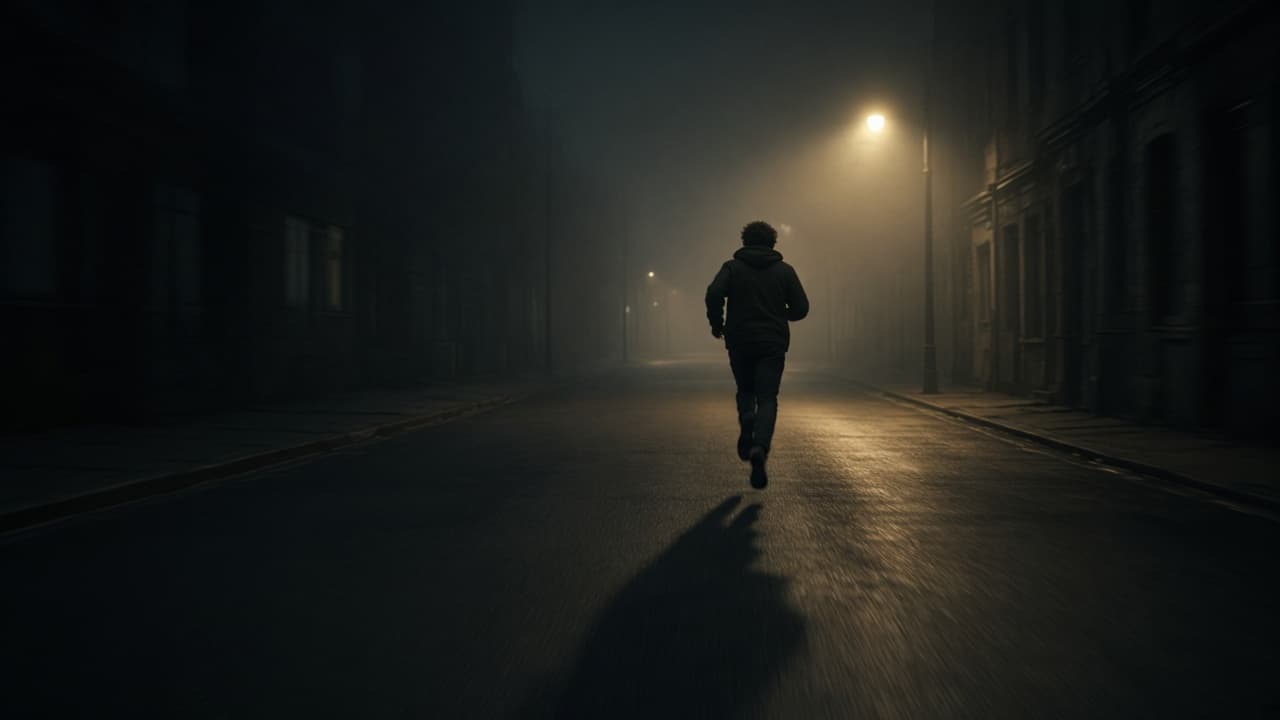
Trapped is the dream of no exit. Not delayed, not lost, *contained*. A room, a car, a crowd, a [prison](/dreams/prisons), a hallway that only returns you to itself. Time often joins as a second wall: air running out, a fire, a ceremony starting without you. The useful questions are architectural. What was the container? Was there a [door](/dreams/doors) that would not open, or no door? Who walked free while you could not? Could you breathe? Those answers usually name a waking structure that looks optional from outside and feels load-bearing from in.
Locked in a Room
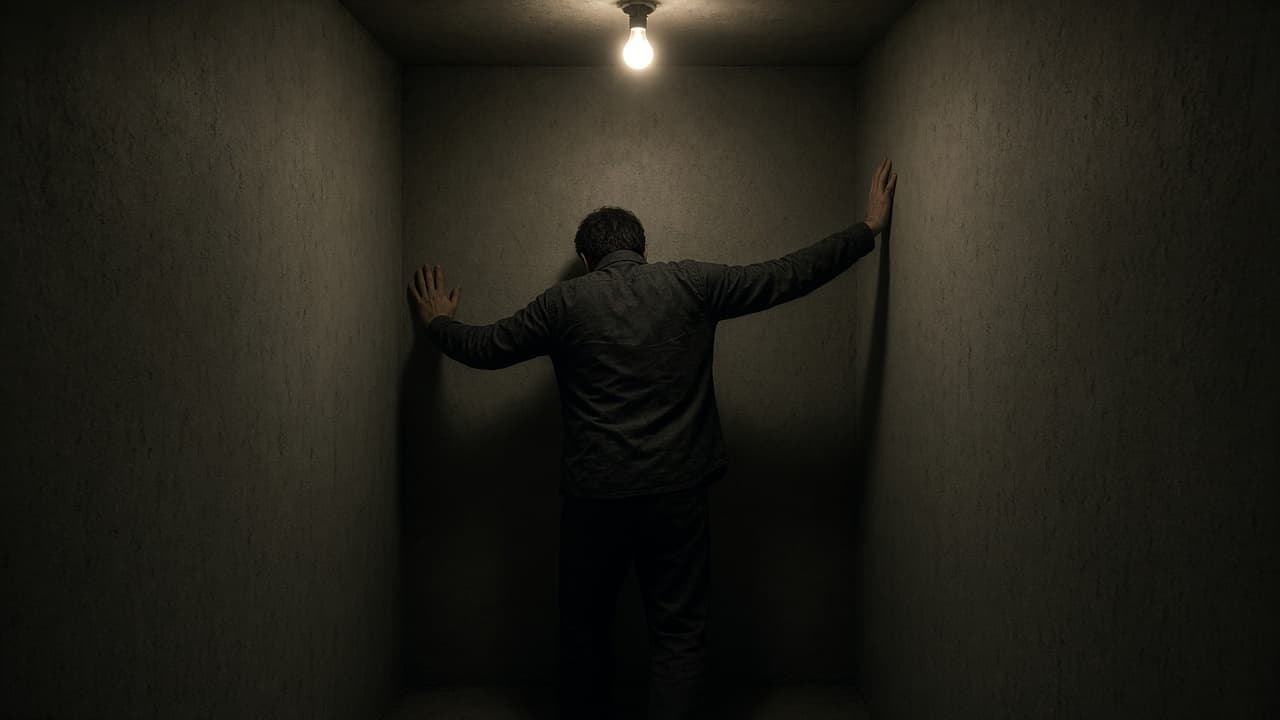
Four walls, a door that is the whole plot, a handle that turns and does nothing.
Locked-room dreams are about a known exit that has been denied. Keys, bolts, a person on the other side, a lock you installed yourself. They cluster around jobs with notice periods, marriages with logistics, visas, NDAs, families that punish leaving, and bodies that will not currently do the thing that would constitute exit.
If you had made the room, a study, a panic room, a bathroom, you may be in a sanctuary that became a trap. That reversal is common in burnout: the coping structure sealed. If someone else locked it, recover who holds keys in daylight. Being kidnapped is the interpersonal extreme of this geometry.
Stuck in a Car or Elevator
A designed cabin, a machine that should move you, a failure of the promised mobility.
Cars that will not open from inside, lifts between floors, aeroplane toilets, modern capsules. These dreams track reliance on systems for movement you will be judged on personally: commuting, promotions, travel, a relationship that was supposed to be a vehicle. See elevators for the vertical version in more detail.
Windows you can see through but not climb out of are a special cruelty: information without exit. People in transparent institutions (open-plan offices, family WhatsApp, small towns) know that dream without the metal.
Trapped in a Crowd
Bodies as architecture. You need three steps and there are none.
Crowd-trapping is social constraint. Concerts, protests, commuter trains, family weddings, a pavement that will not part. You cannot leave without becoming someone who shoves. That moral bind is often the point: exit exists and it costs other people, or your image as decent.
If the crowd was celebrating and you were not, belonging is the wall. If the crowd was fleeing a threat, you are in a chase with no lane. Panic in crowds in waking life will recruit this image readily; treat the panic as a body fact, not only as a symbol.
Caught in a Maze or Endless Hallway
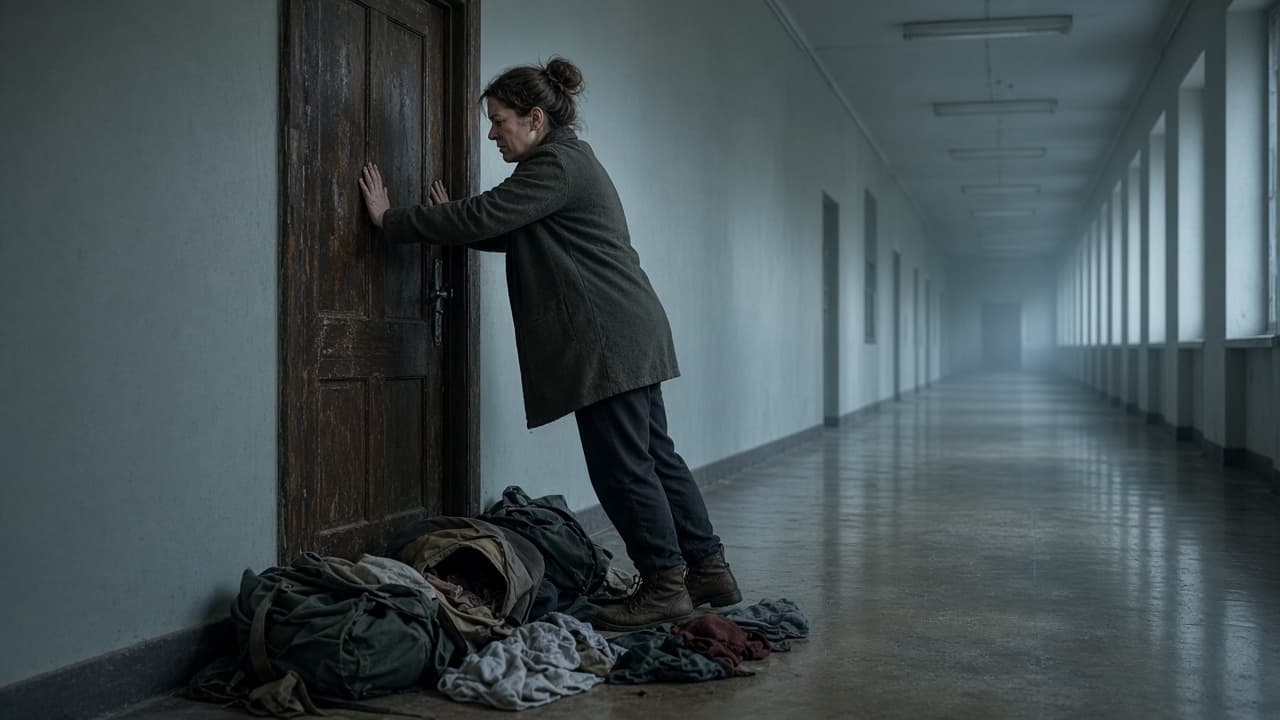
There are doors, and they are a lie. Choice without progress.
Mazes are bureaucratic and psychological at once: processes with loops, arguments that return to the same junction, a website, a family conversation, a hospital. You are moving. You are not arriving. That combination produces a special rage.
Marks you made on walls that later vanished mean your own mapping is being erased, gaslighting, a shifting policy, a brain fog. A maze you designed for someone else and then could not leave is a trapper-trapped plot: a system you used on others (or on a younger you) now has you in it.
Have a Trapped dream of your own?
Write what you remember and get a clear reading.
Buried, Suffocating, Time Running Out
The container is tightening, or the resource inside it is finite.
Rubble, a cupboard, a collapsing ceiling, earth. Air. This is not being able to breathe plus enclosure. Deadlines wear this costume: a submission, a medical window, money, a pregnancy decision, a visa clock. The dream is not subtle because the constraint is not subtle.
If you could hear people walking above you, the social world is continuing on a floor you cannot access. That is a precise picture of certain depressions, certain recoveries, and certain administrative limbos. Calling out and not being heard is the isolation inside the trap.
Watching Others Walk Free While You Cannot
The exit works. It is just not yours.
This is one of the bitterer trapped dreams, and it is socially accurate more often than people want. Siblings who left the family. Colleagues who got the visa, the treatment, the resignation. Friends whose bodies cooperate. You can see the street.
Envy in the dream is allowed. So is love. If you were banging on glass, you still believe in being fetched. If you had gone still, you may be in the stage of conserving air. Neither is a personality. Both are phases of an unfair architecture.
Finding a Way Out
A window that was always a window. A key in a pocket. A wall that was plaster. A person who opened from outside.
Exit dreams after trapped ones often follow a waking crack in the structure: a lawyer, a friend with a spare room, a medical option, a sentence you finally said. Dreamers report that the exit was ordinary, which is frequently true of actual exits. They are rarely cinematic.
If you found the way out and did not take it, the remaining plot is fear of the street, not lack of a door. That is a different piece of work. If the exit led into another room of the same kind, you are in a nested system, leaving the job into the industry, leaving the marriage into the family. Name the nest.
Psychological Meaning
Antti Revonsuo’s threat-simulation theory (2000) treats confinement as a high-cost ancestral and modern threat: pits, rooms, being held, not being able to run. Chase dreams and trapped dreams are siblings; one has a pursuer, the other has architecture.
G. William Domhoff’s continuity hypothesis (2018) supplies the building materials. People in actual constrained lives, immigration, caregiving, poverty, illness, coercive relationships, dream traps that match. People with claustrophobia get the capsule versions. Michael Schredl’s research on nightmare frequency explains why these scenes cluster and why they wreck sleep: they are negatively toned and they repeat while the constraint remains.
Freud (1900) sometimes read rooms and being shut in as bodily and sexual; that fits some dreams and misses a visa appointment. Jung’s interest in the prison as inner complex is useful when you are clearly both jailer and jailed. Hartmann (2011) would call the no-door room a picture of "there is no exit in the current design."
Hobson’s activation-synthesis reminder: REM paralysis is itself a trapped-body state, and the plot borrows it. That is why legs fail in chases and why some trapped dreams include the specific horror of a will that does not move a limb. Physiology and biography can share a night.
Name the Missing Door
Say the container in waking words: this contract, this body, this town, this role, this group chat, this timeline. Then say whether the door is locked, absent, or visible and unused.
Repeating no-exit dreams are usually still-true architecture, not a personality defect called "feeling trapped." One real hinge installed in daylight, money moved, a conversation, a legal call, a night away, a treatment, changes the floor plan more than a clever reading of the wallpaper. If the dreams follow real violence or confinement, skip the symbol hunt and take the nightmares to someone trained in imagery rehearsal or trauma work. You are allowed to want out of the night as well as the room.