Quick Answer
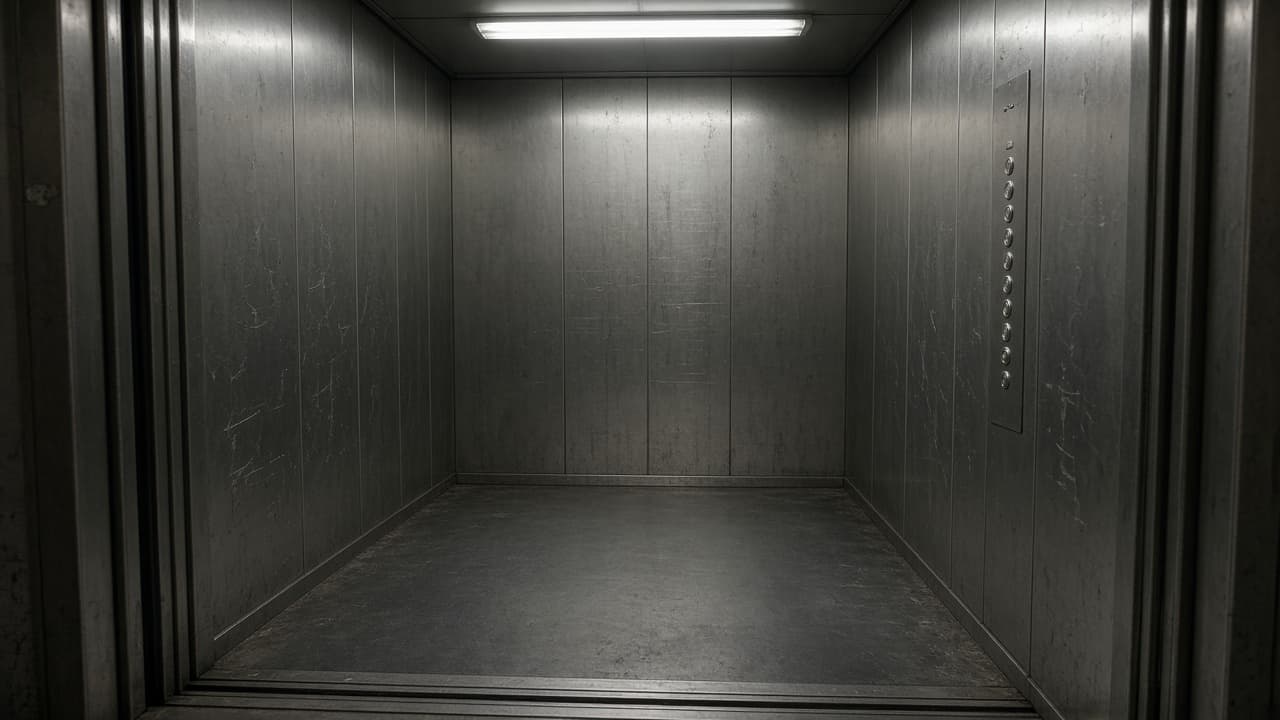
An elevator is a box that moves you between levels of a structure you did not build. That is why it is such a good image for social and institutional altitude: [work](/dreams/work) hierarchies, families with floors, recoveries, status you enter by button rather than by [ladder](/dreams/ladders). You do not fully control the ride. Motors, cables, other passengers, a panel that may not match the building, those are the meaning. Stuck between floors, express to the roof, a falling cabin, [doors](/dreams/doors) that open on the wrong life. Recover the direction, the company, and whether you could choose the stop.
Going Up, a Smooth Ride, a Desired Floor
The cabin works. Numbers increase. The door opens on a place you meant.
Successful ascent often continues a real lift, a role, a recovery of energy, a move into a more public life. Dreamers describe the small pleasure of a working machine, which is easy to skip and actually important: you are in a system that, for once, is doing its job.
If the top floor felt exposed or empty, altitude without a room you want is the subject. Penthouse dread is not ingratitude. It is information about a height that does not have a life in it yet.
Going Down, Basements, a Level You Did Not Want
Numbers decrease. The air changes. Sometimes a car park, sometimes a cellar that should not exist.
Descent can be rest, investigation, or demotion. A chosen basement (storage, a lab, a quiet office) is often necessary work below the public floors. An unwanted descent is loss of altitude, a role shrinking, a mood dropping, a family secret’s address.
If the elevator kept going past the last marked floor, you are in extra-institutional territory: a process that has left the org chart. That can be creativity. It can be depression. The feeling in the cabin usually tells you which.
Stuck Between Floors
Neither here nor there. An alarm. A phone that may or may not reach security.
This is the signature elevator dream. It maps onto liminal administrative life: waiting on committees, immigration, medical results, a relationship that has left one status and not entered the next, a manuscript in submission. You have already left a floor. You do not yet have a door.
Who you were stuck with is half the story. A stranger is a fellow subject of the system. A boss is hierarchy in a broken box. A lover is intimacy in a stall. Trying the doors, the ceiling hatch, the alarm, or sitting down on the floor are four different waking tactics. People who sit down have often correctly judged that effort will not move the machine.
Falling Elevator
The cable story. Stomach, lights, a drop in a shaft.
This is falling with infrastructure. The support that fails is a system, a company, a market, a body of professional identity, a building (literal or social) you were inside. Other passengers screaming or going quiet is the social field of the drop.
Waking before impact is as common as in open-air falls. Landing in a basement alive is aftermath: you are on a lower floor and you are not dead, which is how many demotions and crashes actually feel. If you were the one who had insisted the elevator was safe, the dream may be about a trust you sold other people.
Have a Elevators dream of your own?
Write what you remember and get a clear reading.
Wrong Floor, Wrong Panel, Buttons That Do Not Match
You pressed 4 and the door opened on a rooftop garden, a childhood kitchen, a floor numbered 12½.
Mismatch is about a hierarchy whose labels do not describe the rooms. Job titles. Dating stages. Immigration categories. Academic ranks. The map is not the building. Dreamers in bureaucracies know this one in their bones.
A panel with missing buttons is denied access. A panel with too many is overwhelming choice in a vertical frame (which is still not free motion; it is choice among levels). If someone else pressed, agency was never yours; recover who holds the panel in daylight.
Crowded Cabin, Express Elevator, Being Late
Social physics in a box.
A packed elevator is status-proximity: you are in the same shaft as people you cannot choose, breathing the same air on the way to different floors. Shame, attraction, and work politics all use this set. An express that will not stop at your floor is a system optimised past you, a career track, a city, a friend group that skipped your stop.
Late plus elevator is a classic splice: the machine is slow and the meeting is now. That splice is often just the week. It is also a picture of relying on a system for timing you will be judged on personally.
Doors Opening on Nothing, a Shaft, a Different Building
The promise of a floor, then absence.
Open doors onto a black shaft are trust-violation dreams. You were supposed to step out into a room. There is no room. Offers that were vapour. A "next stage" that was branding. A relationship level that did not exist.
Doors opening onto a completely different building (a forest, a school, a tunnel) mean the elevator connected structures you do not think of as one. Work and family. Public and secret life. The ride is revealing an architecture you did not know you were in.
Psychological Meaning
Allan Hobson’s activation-synthesis model is oddly at home in lifts: vestibular noise in REM, the body paralysed, a brain that must narrate rising and falling. That explains the sensation. G. William Domhoff’s continuity hypothesis (2018) explains the building. People in tall-office cultures, people waiting on promotions, people who are actually claustrophobic, dream elevators more, and they dream their shafts.
Ernest Hartmann (2011) would call the stuck lift a contextualising image for "I cannot get to the next level and I cannot go back." That sentence is often the whole dream. Freud (1900) linked lifts and stairs to sexual rhythm in ways that fit some dreamers and read as cartoonish for others; if the cabin was erotic, you have your clue, and if it was a performance review, you also have your clue.
Revonsuo’s 2000 threat-simulation theory covers falling lifts, opening onto shafts, and being trapped with strangers as confined-space threats. Michael Schredl’s stress research explains why they cluster around appraisal season.
Ladders remain the useful contrast: climbing is effort you author. Elevators are altitude the building administers. Knowing which machine you are in is the interpretation.
The Floor You Could Not Choose
Name the hierarchy: job, family, recovery, city, relationship stage. Then name the malfunction: stall, drop, skip, wrong label, no floor at all.
If you keep waking in the same cabin, the daylight move is rarely "press a different button harder." It is asking who owns the motor, and whether you need a ladder, a staircase, or an exit from this particular building rather than a better ride inside it.