Quick Answer
A ghost is a presence that did not complete its exit. The person, the job, the childhood house rule, the old self, something still occupies space without having a current body in the story. Grief is the honest centre of many of these dreams, and [dead relatives](/dreams/dead-relatives) talking is often experienced as a visit rather than a symbol. Other ghosts are claims: guilt, a role, a house that remembers. Recover who it was, whether only you could see it, and whether the feeling was longing, dread, or unfinished duty.
A Deceased Loved One Visiting
They are there. The kitchen, the end of the bed, a garden. Sometimes younger. Sometimes well.
Bereavement dreams of the dead are among the most commonly reported "meaningful" dreams in the research literature. They often arrive in the months after a death, and also years later at anniversaries, houses, and decisions the person would have had a view on. The emotional signature is usually recognition plus the ache of the ending that still has not been accepted in the body.
What they said, if they spoke, is worth keeping without over-interpreting. People wake with a sentence that was either comfort, instruction, or the ordinary chat that death interrupted. You can treat that as the mind completing a conversation and, if it is your framework, as contact. The useful part is the same: a claim of relationship that the funeral did not cancel.
Being Chased by a Ghost
The presence wants you and you do not want to be had.
Chase-ghosts are unfinished demands. An apology you have not made. A will. A family story. A person who died in conflict with you. Sometimes a living person whose need has a haunted quality, they are not gone, but the claim feels spectral, not negotiable.
As with other chases, turning around often collapses the horror into a conversation or a smaller figure. Running forever usually means the waking strategy is still avoidance. If the ghost could pass through doors, ordinary barriers will not help; the work is not another lock.
A Ghost in Your Home
The house has a resident you did not invite, or one you almost expected.
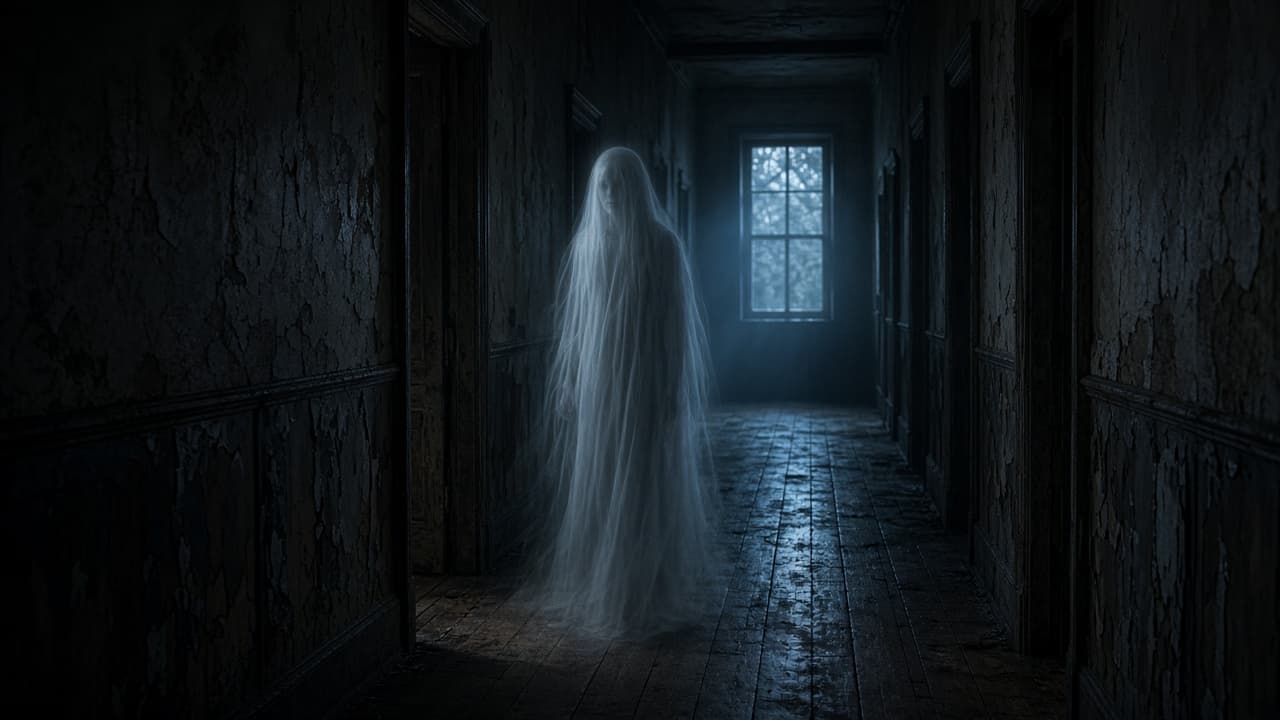
Domestic ghosts mark patterns that occupy rooms: a parent’s rule still running the kitchen, a former partner’s taste on the shelves, a grief that sits in a particular chair. Hostile house-ghosts feel like invasion. At-home ghosts feel like the house’s memory, which can be tender or suffocating.
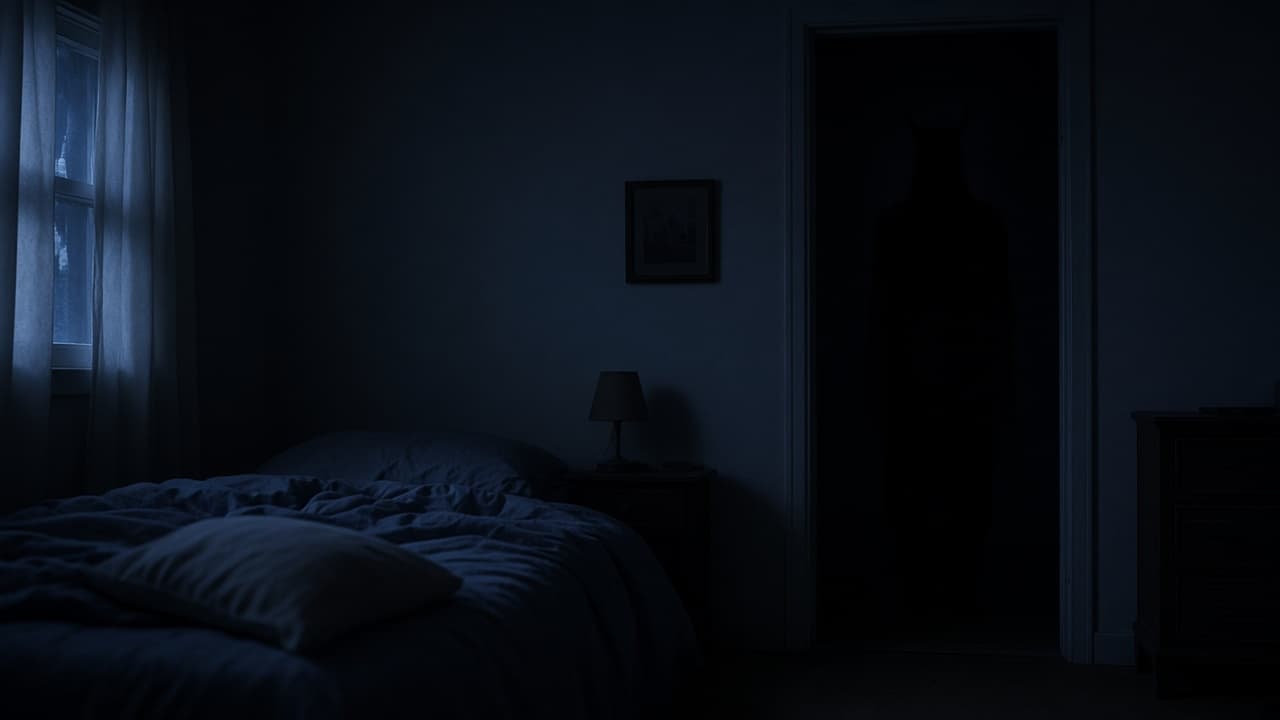
Basements and attics are storage. Hallways are transit, a presence that will not pick a room. A ghost in the bedroom is intimacy and sleep colonised. If you were trying to sell the house or move, the dream may be about what you cannot pack.
Talking to a Ghost
Dialogue is possible. That already changes the genre from horror to encounter.
Conversation dreams are often the psyche’s attempt to finish something: an argument, a thank-you, a question about money or love or what they wanted. Dreamers report that the dead are sometimes frustratingly themselves, not oracular, just familiar.
If you could not get the words out, the unfinished business may still be yours to speak in the living world (a sibling, a grave, a letter). If they would not answer, you may be in the part of grief where the other is no longer available as a partner, only as an image. That is a hard phase and a real one.
Becoming a Ghost
Your hands go through the rail. People walk past. You are the residue.
This is an invisible dream in funeral clothes. It shows up after moves, layoffs, breakups, and in depressions where you continue as a outline. Who could still see you, a child, a dog, one friend, is the remaining social world.
Sometimes becoming a ghost is a wish to be done with a role without the violence of dying. You want out and you do not want a scene. The dream stages the cost: out is also un-touchable.
Have a Ghosts dream of your own?
Write what you remember and get a clear reading.
Ghosts Only You Can See
A crowded room, and the extra person is yours.
Private sight is about a reality other people are not in. Grief does this. So does a secret. So does a perception you cannot socialise yet (a workplace truth, a diagnosis you have not told). The loneliness of being the only witness is often the point.
If you tried to show someone and they could not see, you have already had the waking version of that conversation. If you chose not to mention the ghost, you are managing other people’s comfort, which is a policy with a price.
A Friendly or Helpful Ghost
The haunting is on your side. Directions, a warning, a light, a joke.
Helpful ghosts are resources from the unfinished past, a skill a parent taught, a dead friend’s courage, a former self that still knows the way through a house. They can also be wish: you would like the dead to still do some of the work.
Accepting help is different from being obligated to host them forever. A kind presence that will not leave can still be a claim. Notice whether you were grateful or tired.
Exorcism, Banishing, a Shadow That Is Not Quite a Ghost
You want the presence gone. Ritual, shouting, a priest, a light switch.
Banishing dreams are about authority over what may occupy you. They show up when a grief has become a lifestyle, when a family ghost (addiction, rage, a secret) is using the next generation, when a house feels like it still belongs to someone else. Success in the ritual maps onto a waking boundary that held. Failure maps onto a method that is theatre.
If the figure was more demon than ghost, the tone is persecution rather than unfinished love. Those are different claims. A shadow without a story is often anxiety looking for a costume. Do not import a cosmology you do not actually hold just because the hallway was dark.
Psychological Meaning
Deirdre Barrett’s research on dreams in bereavement is the most useful citation here. Visitation dreams are common, often comforting, and they tend to follow the relationship more than a generic "ghost" template. People dream the dead as they need them, and also as they were.
Freud (1900) treated ghosts among the returning repressed and the unfinished, wishes and accusations that do not stay buried. That fits guilt-ghosts and argument-ghosts. It is a poor fit for a quiet kitchen visit that leaves someone able to sleep.
G. William Domhoff’s continuity hypothesis (2018) predicts the rest: people in old houses, people in grief, people watching ghost stories, people who feel unseen, dream ghosts. Jung’s interest in the dead as inner figures is available if that is your language; it should not overwrite a straightforward missing of a person.
Revonsuo’s 2000 threat-simulation theory covers chase-ghosts and hostile hauntings as pursuit threats with the special feature that barriers fail. Schredl’s work on nightmare frequency explains why hauntings cluster in stressed and grief-heavy months.
The Claim That Did Not Leave
Ask what still wants a room in your life: a person, a duty, a version of home, a guilt. If the ghost was beloved, the work may be continuing the relationship in a form that does not require them to stay in the hallway. If the ghost was a demand, the work may be a boundary the living still need.
Repeating hauntings usually mean the claim is still active in daylight, an unopened box, an unspoken sentence, a role you perform for someone who is gone. One concrete finishing act (a call, a rite you actually believe in, a room cleared, a truth told to a sibling) changes more plots than another night of arguing with the wallpaper.