Quick Answer
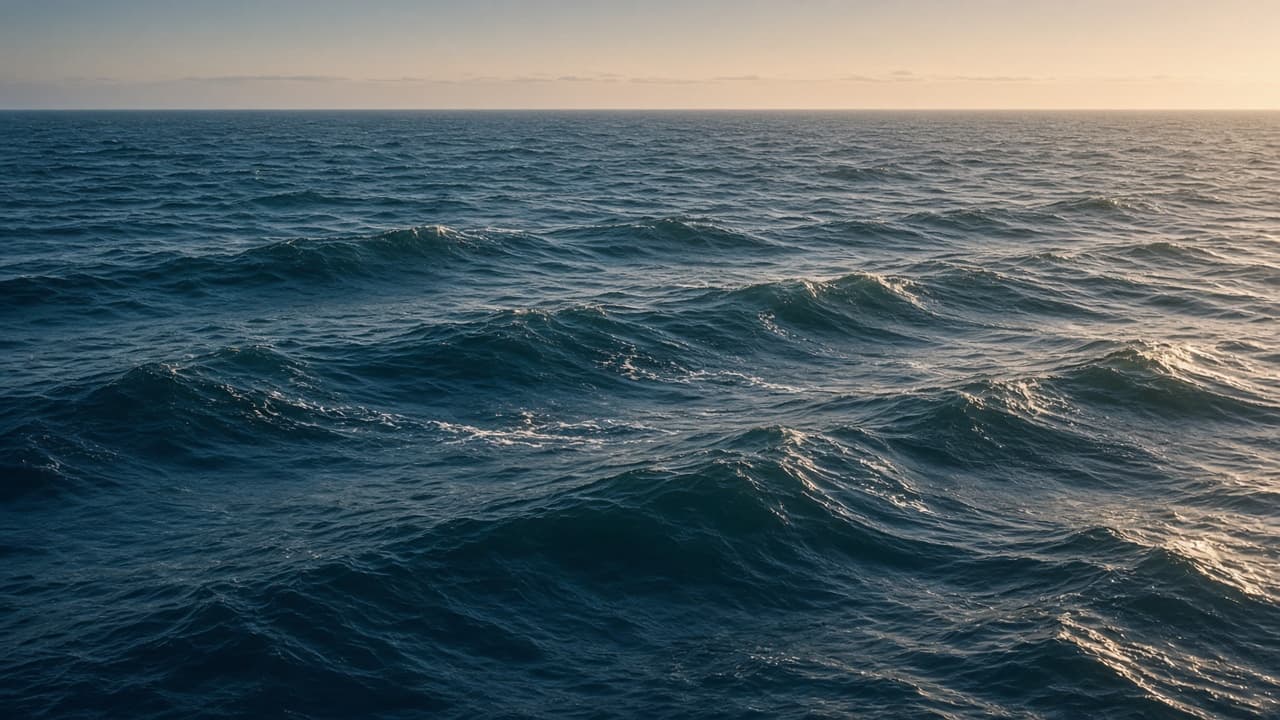
Water in a dream is the medium you are in, feeling, mood, a social field, more than a standalone symbol. Clarity versus murk, depth, temperature, and whether the water was a place you could swim or a force that rose around you decide the reading. A still [lake](/dreams/lakes) is not a [flood](/dreams/flood). A competent [swim](/dreams/swimming) is not [drowning](/dreams/drowning). The [ocean](/dreams/ocean) has its own scale. Start with the state of the water and what your body could do in it, then match that physics to the week you are actually having.
Calm, Clear Water
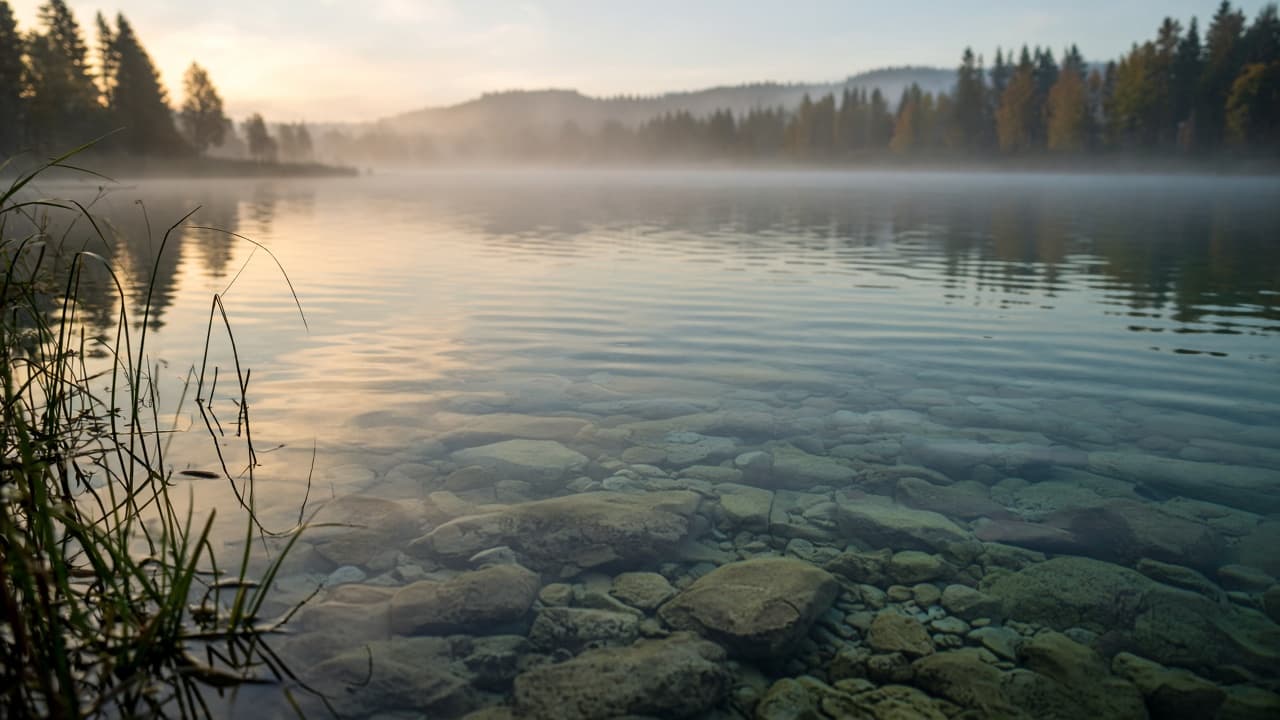
Visibility is the gift here. You can see the bottom, or at least far enough that the medium does not hide anything. The feeling is often relief that surprises you.
These scenes tend to follow a period of confusion that has resolved enough to look at, a conversation that finally happened, a diagnosis that at least has a name, grief that has become specific rather than total. Clear water is not "you are happy." It is "you can see."
If the calm felt wrong, too still, no birds, a swimming pool at night, the dream may be reporting a pause that is actually a freeze. Compare ice and snow. Stillness has two families: rest and stall.
Murky or Dirty Water
You cannot tell what you are standing in. Silt, oil, sewage, a brown river after rain. The distress is usually disgust plus not-knowing, not a single monster in the water.
Murk maps onto mixed situations: a relationship with two stories, a workplace where the official account and the real one diverge, family history with missing pages. You are functioning in a medium that will not give you a clean reading.
Whether you stayed in is the practical question. Wading because you had to get across usually tracks a messy obligation you have correctly judged as temporary. Choosing to swim in it, or not noticing the dirt until late, more often means you have adapted to opacity and stopped expecting clarity.
Rising or Flooding Water
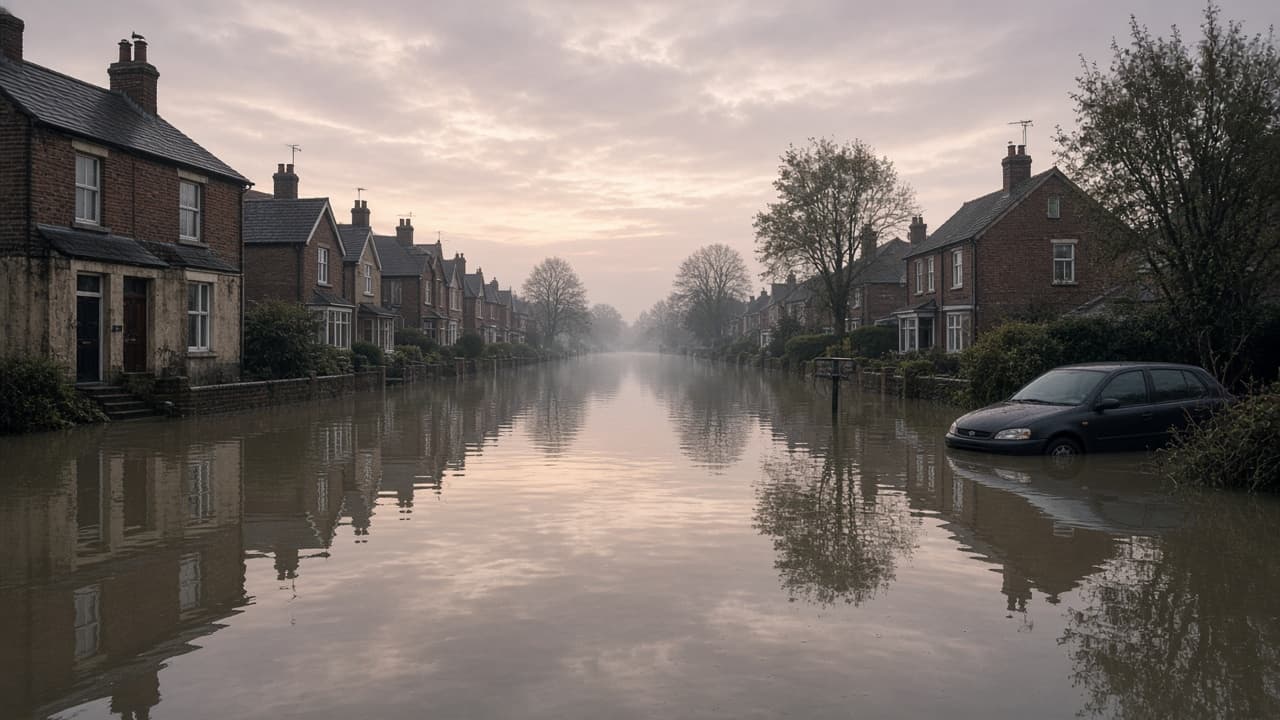
The container fails. A room fills. A street becomes a river. The distinctive feature is that the water comes to you.
Slow rise in a house is about capacity: emotion or work that used to fit and no longer does. Dreamers report it during accumulations, inbox, caring labour, a grief that was supposed to stay in one hour of the week. Fast flood and tsunami imagery lean toward overwhelm with a trigger: news, a fight, a market move.
Where you went matters. Upstairs and rooftops are holding strategies. Opening a door to let water out is a different dream from blocking it with towels. The flood entry covers household versions in more detail; here the point is the medium exceeding the vessel.
Drowning or Struggling to Breathe
Breath is the plot. Water is only the thing that took it.
This is a capacity dream, and it is worth reading beside drowning and not-being-able-to-breathe. You are in deeper feeling or demand than your current technique can handle. Panic in the dream often matches a waking sense that there is no air left in the schedule, the marriage, or the role.
Whether anyone helped is diagnostic. Being pulled up maps onto support that exists and may not have been used. Being watched from a boat maps onto isolation inside a system that could help and is not. Fighting alone until you woke is the most common, and it usually means you have been treating survival as a solo sport.
Swimming Confidently
The medium is there and you can move in it. Stroke, breath, direction.
Competent swimming is not the absence of emotion; it is skill inside emotion. These dreams arrive when you have learned the temperature of a situation, a job, a city, a relationship, and your body has a way through it. See swimming for stroke-level detail.
Direction still matters. Swimming toward a shore is different from swimming in place, and both differ from racing. If you were showing off, the dream may be about performance in a feeling-field rather than genuine ease. If nobody was watching and the water was just workable, trust that report.
Have a Water dream of your own?
Write what you remember and get a clear reading.
Frozen or Boiling Water
State change. The medium is no longer ordinary water.
Ice and frozen lakes track feeling that has been taken out of circulation, a shutdown, a wintering, a decision parked until spring. Boiling tracks feeling that has gone past containable heat: rage, urgency, a conflict that will scald if you stay in it. Neither is a moral. Both are physics.
Dreamers who walk on ice without trusting it are often describing a truce. Dreamers who drop something into boiling water are often describing a conversation they know will be costly. Temperature is information about what it currently costs to be in the feeling.
Walking on Water
You do not swim. You stand on the surface, sometimes with religious overtones, sometimes with simple impossibility.
This scene often accompanies a period of functioning above a feeling rather than in it, competence that depends on not going in. It can feel miraculous and it can feel lonely. If the surface held and you were calm, you may be in a stretch of borrowed exemption: the crisis has not touched you yet. If the surface flexed and you were waiting to fall, the exemption is already ending.
People with a biblical frame will hear Matthew. That association is real for them and still not a prophecy. The practical question is whether staying on the surface is still the right skill, or whether the next honest move is to swim.
Bathing, Drinking, or Carrying Water
Small water, used on purpose. A bath, a glass, a bucket for someone else.
Taking a shower and bathing often track a wish to reset a self that feels coated, after conflict, after a role, after news. Drinking is need: what you are taking in, and whether it was clean. Carrying water for another person is caretaking labour made literal; notice whether the bucket was leaking, too heavy, or accepted with thanks.
These domestic scenes are easy to skip because they look mundane. They are often closer to the week's actual emotional economy than a tsunami is.
Psychological Meaning
Ernest Hartmann argued in 2011 that dreaming contextualises emotion in pictures. Water is one of the most efficient pictures available: a medium you can be in, that can be clear or opaque, shallow or deep, still or in flood. You do not need a dictionary to feel the difference between a glass of water and a room filling from the floor.
Carl Jung treated water as a common image of the unconscious, not as a mystical substance, but as the field that holds what is not currently in the ego's dry air. That lens fits dreams of depth and murk. It fits less well for a leaky tap, which is usually just a household stressor wearing an elemental costume.
G. William Domhoff's continuity hypothesis keeps the reading honest. People who are grieving, people who are overwhelmed, people who have just found emotional clarity, dream water that matches the state. The ocean adds vastness; a puddle does not. Match scale to scale.
Revonsuo's 2000 threat-simulation theory is relevant when the water is trying to kill you. Flood and drowning are ancestral and modern threats at once. The rehearsal is of capacity failure, not of a future wave.
Reading the Medium You Woke From
Name three properties before you reach for a symbol list: clarity, volume, and what your body could do. Clear and small is not the same as dark and total. A swim you could complete is not a flood that ate the furniture.
If water dreams repeat, they usually repeat the same property, always murky, always rising, always a competent stroke in a pool. That stability is the clue. Change the waking condition that produces that property (opacity, overload, or unused skill) and the element in the dream tends to change with it, without anyone needing to bless the lake.