Quick Answer
A flood in a dream almost always represents something that came from outside you, cannot be reasoned with, and is now deciding what happens to your life. That is why it fits illness, redundancy, bereavement, debt and family crisis so well, none of those negotiate. The distinguishing feature against other water dreams is scale: a flood does not threaten you personally so much as it changes the whole environment. Two details matter most. How fast the water arrived, and whether you were in it, above it, or watching it from somewhere dry.
Water Rising Slowly Inside Your House
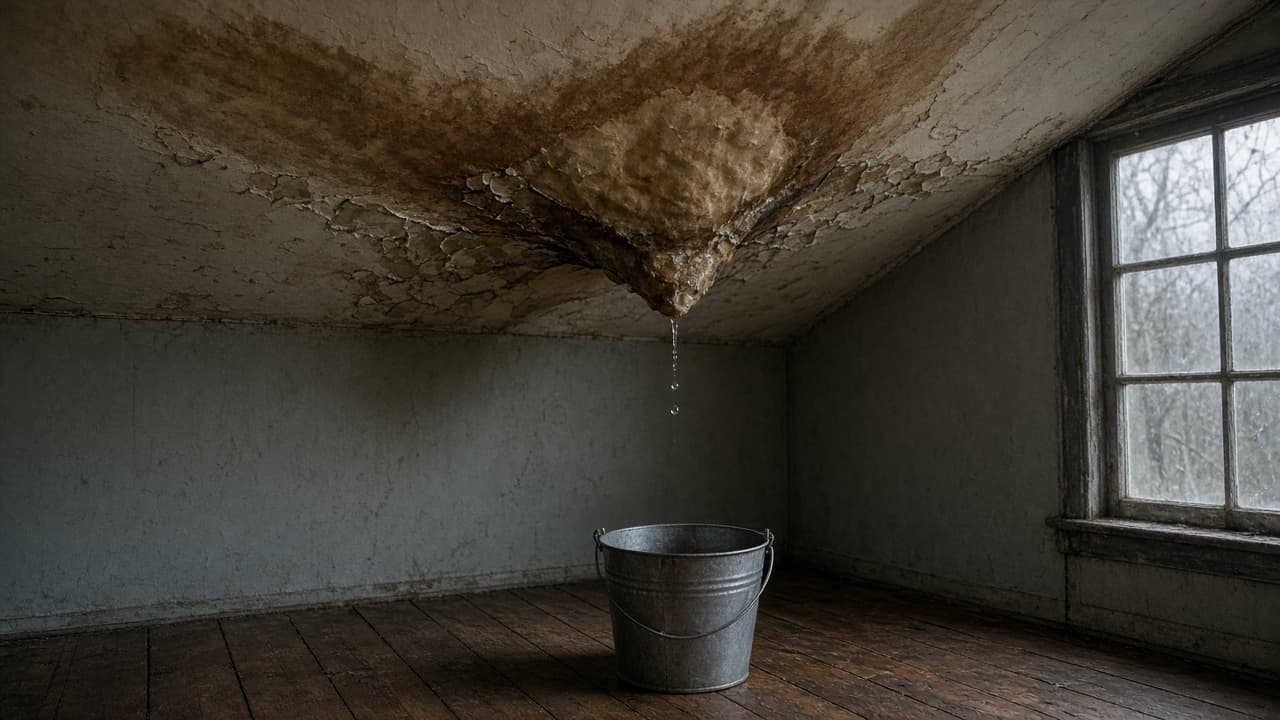
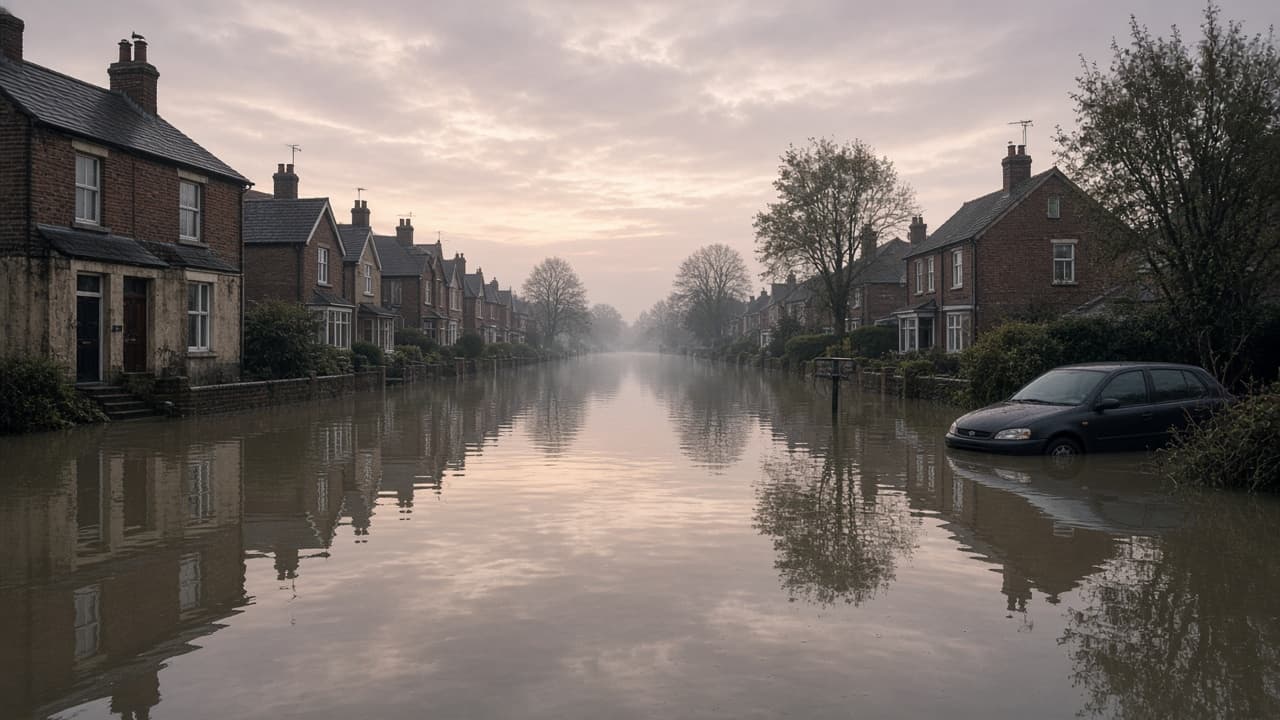
The most reported version, and the most quietly frightening. There is no wave. The water is simply higher each time you look, over the doorstep, over the skirting boards, up the stairs, while you carry on trying to do ordinary things.
Rising water indoors points at pressure that has reached your private life. Dreamers report it during long illnesses, drawn-out financial trouble, and family situations that have been deteriorating for months. The slowness is the accurate part: these are problems that do not arrive as a single event, and the dream captures the specific dread of watching a level change.
Where you were when you noticed is worth recovering. Still trying to work, cook, or tidy while water covers the floor is an extremely common report and usually describes someone who has been coping by carrying on. Standing at the top of the stairs looking down is a different dream, closer to having already given up ground.
A Wall of Water or a Flash Flood
Here it arrives all at once: a wave down a street, water bursting through a door, a river that jumps its banks in seconds.
Sudden floods track events with no run-up, a diagnosis, a sacking, a death, a message that reorganised everything in one afternoon. Dreamers usually describe no time to decide, which is the point. Where the slow version is about endurance, this one is about shock.
If the dream kept restarting the moment of impact, that repetition is common after real upheaval and is generally your mind rehearsing something it has not finished absorbing rather than warning you of a repeat.
Watching From High Ground
You are safe, a hill, an upper floor, a bridge, and the flood is happening below. The emotion dreamers report most is not fear but a strange mixture of relief and guilt.
These dreams cluster around situations where disaster has struck near you rather than to you: a colleague made redundant in a round you survived, a friend's marriage ending, a relative's illness. The vantage point is the meaning. Dreamers frequently mention wondering whether they should go down, which usually maps onto a real question about how much they are obliged to help.
Driving Into Floodwater
A road that disappears under water, a car that keeps going anyway, an engine cutting out halfway.
This is a judgement dream. It arrives when you are deciding whether to continue with something whose depth you cannot see, a job offer with unclear terms, a relationship after a serious warning sign, a project everyone else has stepped back from. Real flood driving is genuinely one of the more dangerous things people do voluntarily, and the dream tends to know it.
Whether you turned back is the reading, and dreamers usually already know which they did. Pair it with driving if the dream was more about control than water.
Saving Things From the Water
Grabbing photographs, documents, a laptop, a pet, a box from a loft. Often the dream is entirely about the selection.
What you reached for is the most personal detail available in any flood dream, and it is usually accurate about your priorities in a way daylight reasoning is not. Dreamers who go for documents tend to be managing practical precariousness. Those who go for photographs are usually protecting continuity and memory. Those who go back for a person or an animal are frequently carrying real caring responsibility.
Leaving something behind is worth sitting with rather than feeling bad about. It often names the thing you have already, quietly, decided you can lose.
Muddy Water Versus Clear Water
The water's condition changes the emotional key more than any other single feature.
Brown, silty, debris-filled water tends to accompany situations that feel contaminating as well as overwhelming: money trouble with shame attached, a conflict where reputation is at stake, an addiction in the household. Dreamers often mention not wanting it to touch them, which is a distinct feeling from fear of drowning.
Clear or clean floodwater is less common and usually accompanies emotion that is simply too much rather than dirty, grief, love, relief after a long strain. Some dreamers describe it as beautiful, which tends to confuse them on waking. It need not.
Have a Flood dream of your own?
Write what you remember and get a clear reading.
Being Swept Away
Your feet go, and after that the dream is about current rather than water. You are carried past things you recognise, unable to stop.
Loss-of-footing dreams track situations where events have taken over the sequencing of your life: a court process, a house move that gathered momentum, a family decision made by other people. Notice whether you were trying to grab something or had started to swim with it. Dreamers who report going with the current often turn out to have made a real decision to stop resisting, which is not the same as defeat. Where the water closes over you entirely, drowning covers that more specific reading.
After the Water Goes Down
An underrated version. The flood has already happened. What is left is mud, ruined furniture, a smell, and a great deal of work.
Aftermath dreams almost always arrive later in a hard period, and they mark a real shift: the crisis is no longer the problem, the clean-up is. Dreamers frequently describe exhaustion rather than fear, and that exhaustion is usually honest reporting. If you have been telling people you are fine because the worst has passed, this dream is a reasonable place to reconsider that.
Psychological Meaning
Flood dreams have an unusually well-documented place in the research on dreaming after difficult events.
Ernest Hartmann's work on the "central image" of dreams found that the intensity of a dream's dominant picture rises with the emotional intensity of what the dreamer has lived through, and that tidal waves and floods are among the most characteristic images reported after trauma and major upheaval. Hartmann and colleagues documented dreams collected around the September 2001 attacks and found that people's dreams did not generally replay planes or buildings; the imagery shifted toward overwhelming natural forces, water among them. That finding is genuinely useful, because it means a flood dream after a hard year is a recognised, ordinary pattern rather than a private omen.
Antti Revonsuo's threat-simulation theory, published in 2000, adds why water on this scale is such ready material. Floods were a real and recurrent danger throughout human history, and dreaming appears to preferentially simulate exactly this kind of environmental threat. Notably, these simulations often remove the easy escape, which is why so many flood dreams involve stairs that do not go high enough or doors that will not open.
Domhoff's continuity hypothesis explains the timing and the specifics. Dream content continues waking concerns, so the flood tends to appear in periods described as "too much at once" rather than during ordinary busyness. Dreamers can usually name the water within a sentence or two when asked directly what has been rising.
One physical note. Needing to urinate, being too warm, or having a cold or blocked breathing can all colour dreams toward water and submersion. Worth ruling out before reading anything larger into a single night.
Spiritual Meaning
Floods carry more spiritual weight than almost any other dream image, and the traditions are remarkably consistent with each other.
The flood myth appears independently across cultures: Noah in Genesis, Utnapishtim in the Epic of Gilgamesh, Manu warned by the fish Matsya in Hindu tradition, Deucalion and Pyrrha in Greek myth. In every case the water is not random destruction. It clears a situation that has become unsustainable, one person or family carries forward what matters, and life is rebuilt afterwards on different terms. That structure is why the image has survived, and it is a considerably more useful frame than reading a flood dream as a threat.
Read that way, the spiritual question a flood dream raises is a practical one: what has become unsustainable, and what would you carry out with you? Dreamers who found themselves choosing what to save have effectively already been asked it.
Biblical Meaning
Scripture uses flood language in two distinct ways, and both are relevant to how these dreams feel.
Genesis 6-9 gives the full narrative, ending not with destruction but with the covenant and the rainbow, the explicit promise that this will not be how things are settled again. Anyone waking frightened from a flood dream with that story in mind should notice where it actually ends.
The second use is personal rather than cosmic. Psalm 69:1-2 is the most exact description of overwhelm in the Bible: the waters have come up to my neck, I sink in deep mire where there is no standing. Psalm 42:7 has deep calling to deep, all your waves gone over me. Isaiah 43:2 answers those directly, when you pass through the waters, I will be with you, notably promising accompaniment rather than the absence of flooding.
Matthew 7:24-27 is the one that speaks most to the house-flooding version: two houses, the same storm, and the difference is the foundation rather than the weather. If your dream was about water in your own home, that passage asks a question worth asking anyway, what is this life built on, and which parts of it would hold.
When Flood Dreams Keep Coming
Repeated flood dreams usually mean the overwhelm has not receded rather than that something is coming. They tend to fade as the waking situation stabilises, which also means they can be a useful, if unwelcome, gauge of how you are actually doing beneath what you tell people.
Two things help concretely. Name the water, most dreamers can identify it in one sentence, and vague dread does more damage than a named problem. Then reduce one input, even slightly, because these dreams respond better to lowered load than to insight.
If the dreams began after a real disaster, bereavement or trauma and keep replaying the same moment, that pattern is well recognised and treatable. Imagery rehearsal therapy has good evidence for recurrent nightmares, and a clinician can work through it with you in a small number of sessions.