Quick Answer
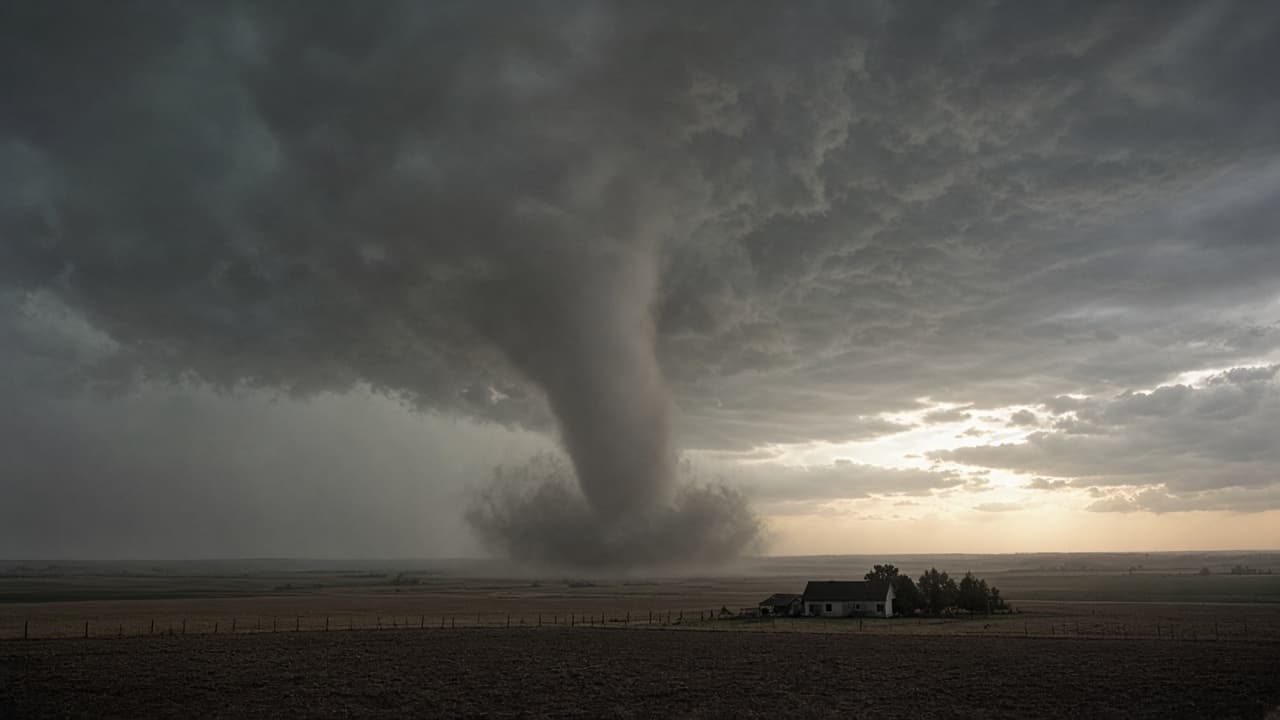
Tornado dreams generally picture a force that is coming, visible, and beyond negotiation. Unlike a flood or a fire, a funnel cloud can be watched from a distance for a long time before it decides anything, and that waiting is usually what the dream is about. Your position in the scene decides the reading: watching from a porch is a different dream from crouching in a basement, and both differ from being lifted off the ground.
Watching One Approach From a Distance
The most frequently reported version has no destruction in it at all. You are standing somewhere open, the sky has turned, and the funnel is out there, moving.
Anticipation dreams like this cluster around known-but-not-yet-arrived events: a restructure that has been announced without names attached, a diagnosis awaiting test results, a relationship everyone can see is ending. The threat has a shape and a direction, and there is nothing to do but track it.
The detail to recover is whether it was coming toward you. Dreamers often describe a long uncertainty about the path, which tends to match a waking situation where you do not yet know if you are affected.
Several Funnels at Once
Two, three, or a whole horizon of them. The tone shifts from dread to a kind of scattered panic.
Multiples reflect simultaneous pressure rather than escalation of a single problem. This version shows up in the weeks when a house move, a parent's illness and a work deadline overlap, or when a business has three separate fires burning. Dreamers commonly report being unable to decide which one to watch, and that indecision is usually the symptom worth naming.
Some people describe the funnels as strangely orderly, moving in parallel. That variant often accompanies a life that is objectively overloaded but running on schedule, stressful without being chaotic.
Taking Shelter
Basements, bathtubs, cupboards under stairs, ditches. Shelter dreams are dominated by waiting in the dark with the noise overhead.
These arrive when you have already made the protective decision: cut spending, told the family, paused the plan, gone quiet until something passes. The emotional work is endurance, not strategy.
Who was in the shelter with you is the most informative detail. Dreamers often find that the list matches the people they actually rely on, sometimes surprising themselves by noticing who was missing.
A Tornado Hitting Your House
When the funnel reaches the house, the dream usually stops being about weather and starts being about the structure of your life. Houses in dreams tend to represent the self, the family, or the arrangement you live inside, a pattern explored further on the houses page.
Roof loss is the most common specific. It corresponds neatly to a lost sense of cover: income, a protective relationship, a job that kept everything else standing. Watching walls go while you are still inside tends to accompany situations where privacy has been stripped rather than safety.
What survived matters. Dreamers frequently report one room untouched, and can usually name what that room represents without much prompting.
Being Lifted Into the Air
Occasionally the dream takes you up. The sensation is described as weightless, loud, and oddly calm in some accounts, terrifying in others.
Being pulled in generally tracks a loss of ground, a period where events took over and your own decisions stopped mattering much. Redundancy, a sudden separation, a medical event, an emergency at home. The calm that some dreamers report is worth noting rather than dismissing; it often follows the point at which someone stops resisting a situation they cannot change.
Have a Tornadoes dream of your own?
Write what you remember and get a clear reading.
Trying to Get Other People to Safety
A large share of tornado dreams are about somebody else. You are shouting at family members who will not move, carrying children, going back for a pet.
Responsibility versions are frequent in parents, eldest siblings, carers and managers. The distinguishing frustration is that the people in danger are not taking it seriously, which usually maps onto a waking situation where you are the only person treating a risk as real.
If you woke before reaching them, that unfinished quality is typical of stress dreams and is not a statement about the outcome.
A Storm That Never Lands
Some tornado dreams simply stop. The funnel lifts, veers, or dissolves, and nothing happens.
Near-miss dreams often arrive after a period of bracing that ended in an anticlimax: results that came back fine, a meeting that turned out to be routine, a confrontation that never happened. Dreamers sometimes report disappointment alongside relief, which makes sense, sustained anticipation has its own momentum, and it does not switch off cleanly.
The Sky Before It Forms
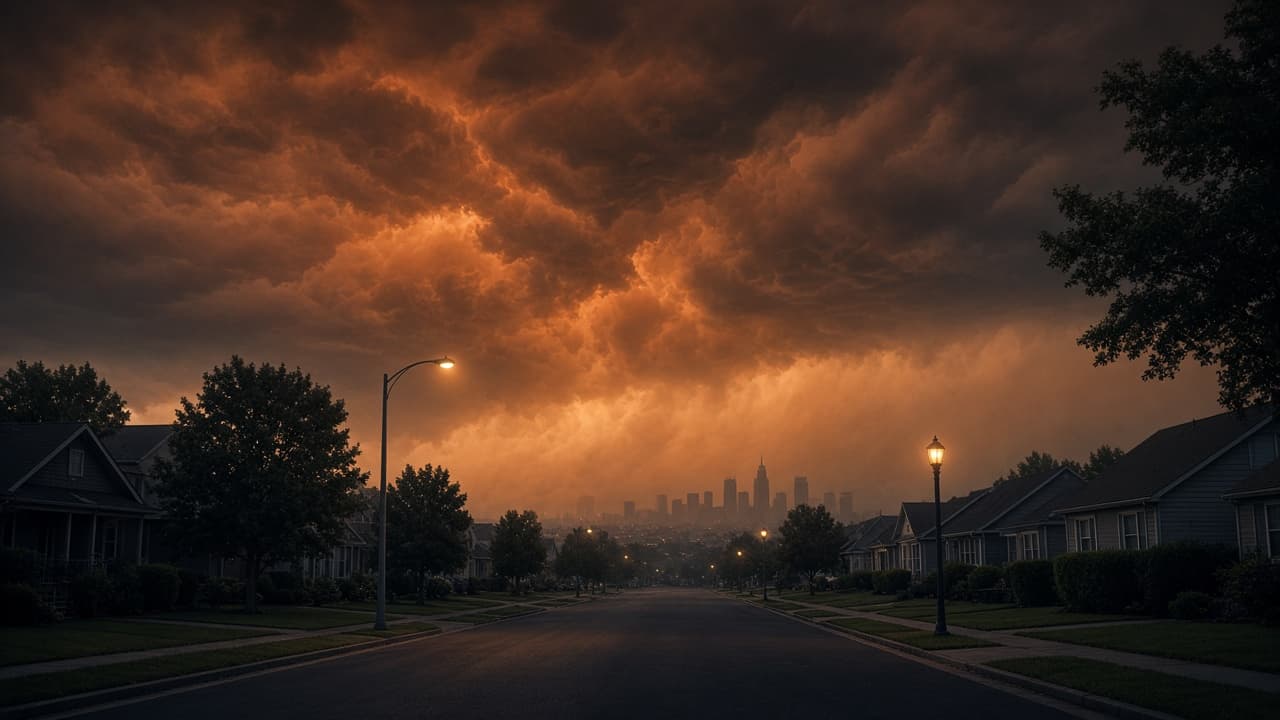
A distinctive minority of these dreams contain no funnel at all. The air goes still, the light turns green or yellow, and everyone knows what is coming.
Pre-storm dreams are about atmosphere rather than event, and they tend to appear early, before an announcement, before a conversation, in the week when something at home has changed tone but not yet content. They are among the more useful dreams to notice, because they often precede the versions with a funnel in them by days or weeks.
Psychological Meaning
Ernest Hartmann's research offers the most directly relevant frame. Studying dreams after traumatic events, Hartmann described the central image, a single dominant picture whose intensity reflects the strength of the emotion behind it, and found that overwhelming experiences frequently produced images of being engulfed by natural force, the tidal wave being his best-known example. A tornado belongs to that same family: an image chosen for the sheer scale of what it has to carry.
Antti Revonsuo's threat-simulation theory (2000) explains the rehearsal quality. Dreaming appears biased toward practising escape from serious danger, and a storm offers an unusually complete simulation, warning, decision, shelter, aftermath.
Domhoff's continuity hypothesis accounts for who dreams this most. People in tornado regions, people who have lived through a storm, and people who follow severe weather coverage dream about funnels more often. That is environment, not prophecy.
Michael Schredl's work on nightmare frequency is worth knowing if these dreams are frequent: nightmares are common in the general population, and it is the distress they cause rather than their count that predicts how much they affect daily life. In other words, a monthly tornado dream you find interesting is a different matter from a weekly one you dread going to bed over.
When the Dream Follows a Real Storm
If you have actually experienced a tornado, the reading changes. Post-event dreams tend to reproduce sensory specifics, the sound, the pressure, the debris, and can persist for months, flaring during storm season or at the first siren test.
That pattern is well recognised after natural disasters and is not a sign that you are handling it badly. It becomes worth professional attention if it comes with avoidance, hypervigilance, or dread that outlasts the weather. Trauma-focused therapy works, and nightmare-specific treatment can be added to it.
Recurring Tornado Dreams and What Actually Helps
When the funnel keeps returning, it usually means the anticipation has not resolved. Something in your life has been about to happen for too long.
Two things tend to shift it. The first is naming the actual storm, writing down what you are waiting for, which often turns out to be smaller and more specific than the dream suggests. The second is deciding what your shelter is: the practical plan, the money, the person you would call.
For persistent, sleep-wrecking versions, imagery rehearsal therapy has the strongest evidence of any nightmare treatment and is usually taught in a handful of sessions. For related weather imagery, see storms and flood, or browse the elements hub.