Quick Answer
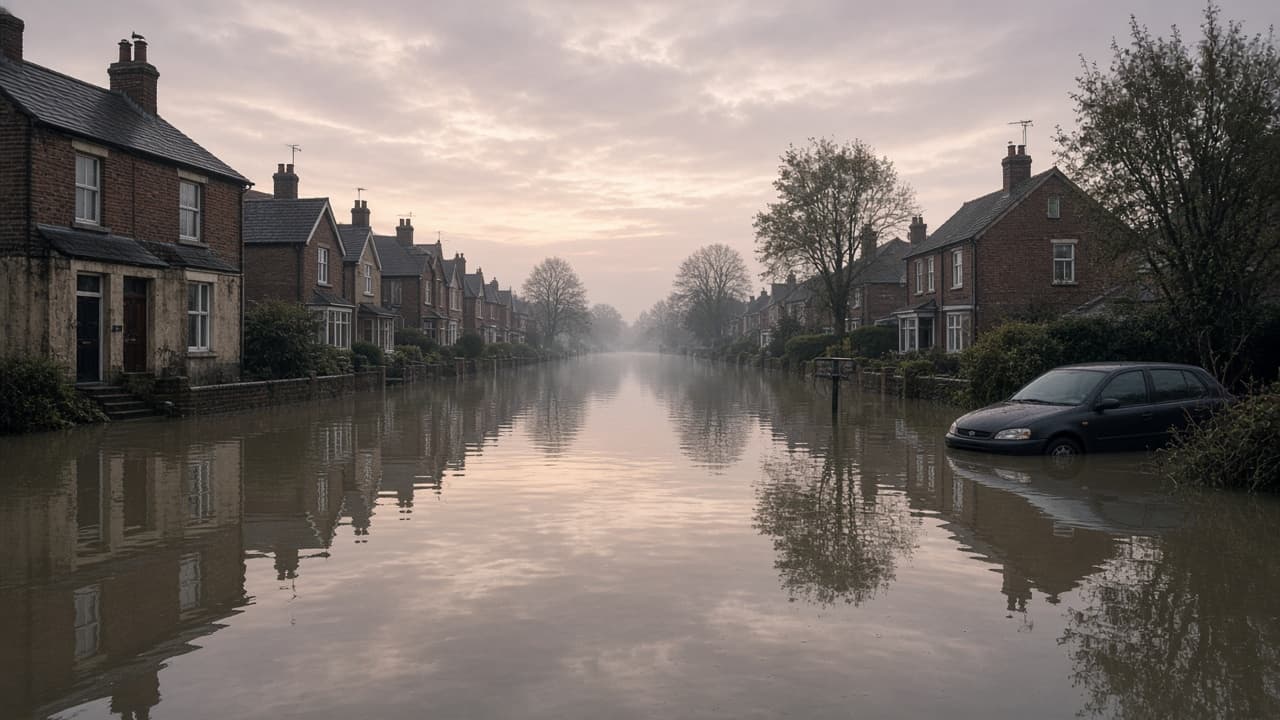
Dreaming the world is ending usually means a whole system in your life is failing at once, and the psyche has reached for the largest picture it stocks. Marriages, workplaces, nations, and childhood cosmologies can all feel like “the world.” The scene decides the flavour: a sky event is impersonal scale; a [flood](/dreams/flood) is emotion and inundation; a quiet empty earth is aftermath; trying to save people is leftover responsibility. This is not a timetable for the planet. It is a picture of an era ending from the inside.
Watching the Sky Change
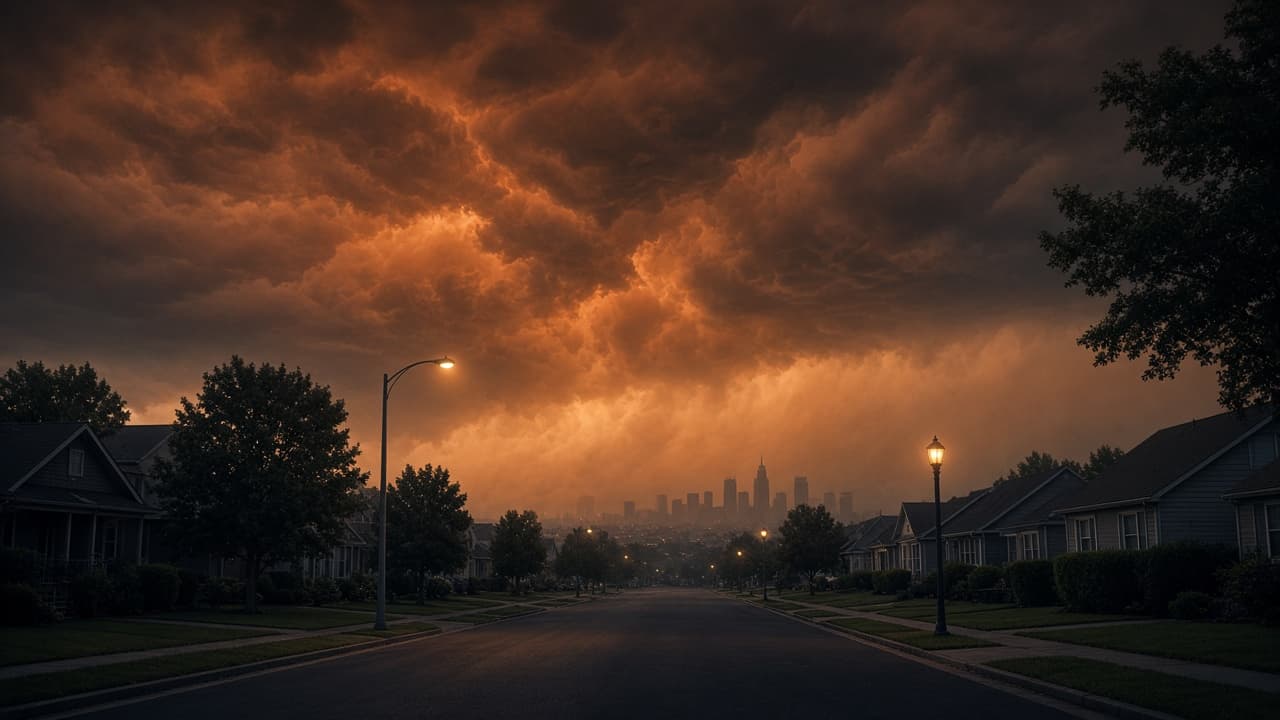
Colour, a second sun, objects that do not belong, a silence in the birds. You are standing in a car park that is still a car park.
Sky-endings are impersonal. The cause will not take your meeting. These dreams cluster around historical-scale anxiety as it lands in a body, climate, war on the feeds, a pandemic memory, a market, a church you left that still owns the sky in your imagination. You are a witness with a shopping bag.
Whether other people saw it splits private revelation from public event. If only you looked up, you may be carrying a recognition your circle is still calling weather.
A Broadcast, an Official Announcement
Television, a phone alert, a civil servant at a lectern, a voice in a shop. The end arrives as information before it arrives as physics.
Institutional apocalypse maps onto endings that come through systems: HR, a diagnosis protocol, a government, a school email, a religious authority. You are being told. The body has not yet caught up. Dreamers describe trying to finish a task anyway, pay a bill, collect a child, which is often an accurate report of how collapse actually feels in a life: mixed with errands.
If the announcement was wrong, or a drill, the night may be about crying wolf and a nervous system that cannot tell rehearsals from fires.
Trying to Save People
Lists. Hands. A car that will not hold everyone. A parent, a child, a colleague, a dog. The arithmetic of care under a deadline that is the sky.
Rescue-apocalypse dreams belong to people who are used to being the extra pair of hands. The world-ending is the feeling that the job has become infinite. Who you reached for first is a brutal and useful inventory. Who you could not carry is the guilt the dream came to file, not to solve in one night.
If nobody would come, you may be leading a collapse that other people are still calling a normal Tuesday. If they followed and you still failed the physics, the night is talking about limits, not about love.
Running From the Disaster
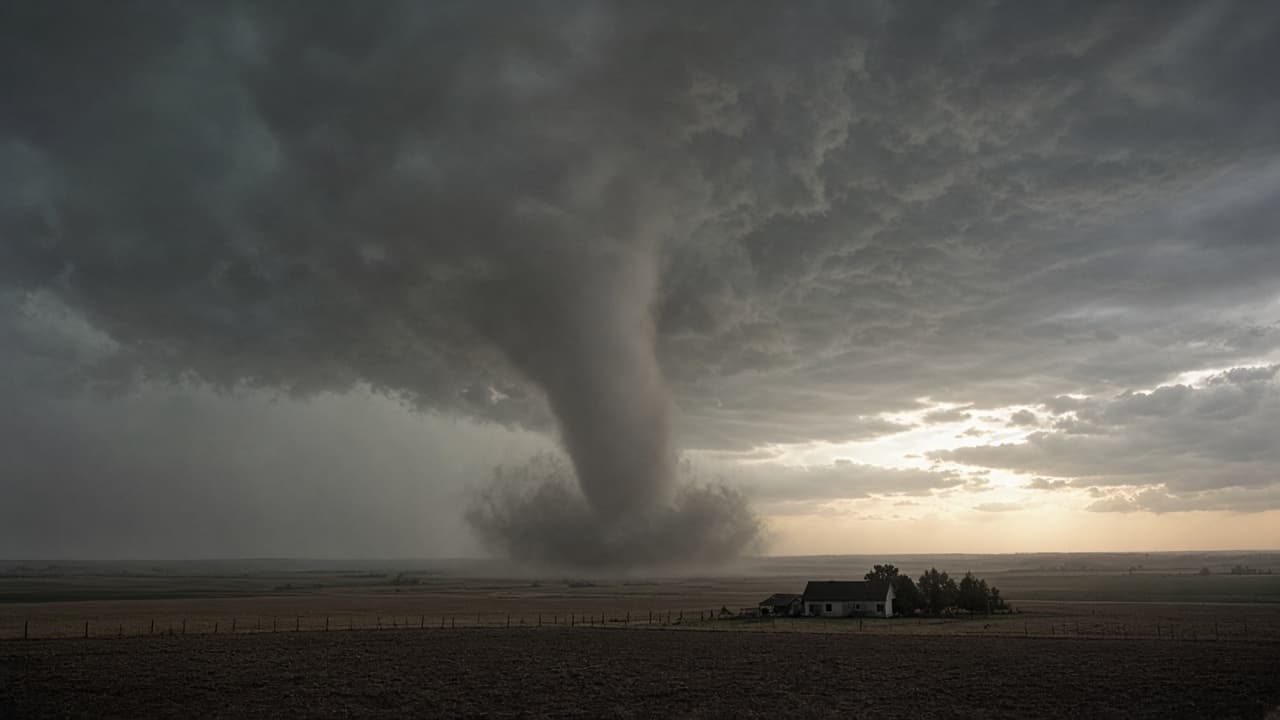
A wave, a wind, a light, a crowd. Tornado weather, storm logic, road logic. You are a body again, not a witness.
Flight dreams are threat rehearsal with a cosmic costume. They often follow weeks of trying to outrun a local ending by staying busy: a breakup you will not start, a job you will not leave, a conversation that would end a household’s story about itself. The disaster behind you is the thing that happens if you stop.
Whether you reached a basement, a mountain, or a boat tells you which refuge you still believe in. If every refuge failed, the psyche may be arguing that the ending has to be gone through, not outrun.
The Last Ordinary Day
Dishes. A joke. Light through a kitchen. You know, and you still put the cups away.
This variant is almost tender. It pictures the end as a quality of attention rather than as special effects. People in grief, in pre-divorce, in the week before a move, in the last season of a parent’s health, dream this one. The world that is ending is the world in which those cups belonged to an unremarkable forever.
If you told someone and they would not hear, add the loneliness of premature knowledge. If you told no one, you already know that pattern.
Have a End Of The World dream of your own?
Write what you remember and get a clear reading.
After the End: Empty Streets, Quiet Earth
The event is over. Shops, a highway, a school, the moon still doing its job. You walk.
Aftermath dreams are about identity after a cosmology. Who are you when the company is gone, the marriage is gone, the church is gone, the city of your twenties is gone. Emptiness can be peace. It can be barrenness. It can be a blank page you do not yet trust.
If you were looking for other people, belonging is still the plot. If you were relieved, believe the relief; some worlds were heavy. If you were the only one left and it felt like a job, you may still be assigning yourself the night watch.
You Caused It, or You Could Have Stopped It
A button, a forgotten duty, a sentence, a vote, a fire left on. Scale and guilt in the same fist.
Responsibility dreams attach to people who already take too much blame and to people who have actually held a lot of power. Distinguish if you can. Eldest children and team leads dream cosmic guilt because their nervous system maps local failure onto total failure. Executives, doctors, and parents of small children sometimes dream it because the radius of their error really is large.
The useful question is not “am I a monster.” It is “what radius do I actually have, and what have I been calling the world that is only my household.”
Everyone Else Is Calm
The sky is wrong. The queue at the café is fine. You are the only one whose voice will not stay down.
Unshared apocalypse is a picture of private knowledge in a numb culture: a diagnosis you have and they do not, a political fear your family calls hysteria, a relationship ending you can date and they still want to book a holiday. The terror is not only the end. It is the social unreality around it.
If you joined their calm, you may be practising a dissociation that is already a daytime skill. If you screamed, you may need one person who will look up with you, not a better metaphor.
Psychological Meaning
Ernest Hartmann argued that dreams contextualise emotion in a central image whose intensity matches the feeling (Dreams and Nightmares, 1998; his earlier work on thin boundaries). The tidal wave is his famous example; the end of the world is the same mechanism with the volume turned to the stop. When a feeling is too big for a kitchen argument or a single loss, the dreaming mind borrows cosmology. That is not grandiosity. It is proportion.
Antti Revonsuo’s threat-simulation theory (2000) explains the running and the sky-objects as rehearsals of existential threat. Climate and media have given the rehearsal new props. The drill is still a drill.
G. William Domhoff’s continuity hypothesis then localises the planet. People in a dissolving marriage, a collapsing industry, or a family secret’s last year dream apocalypse because those situations really do end a world, the world as that person knew how to live it. Nielsen and colleagues’ typical-dream inventories also keep finding disaster and end-of-the-world themes among widely reported scenarios; you are not exotic for having the image.
Practically: name the system that is ending. If you cannot, the dream may be about climate or news as a weather of the nervous system, and the work is smaller: fewer feeds, one local action, sleep.
After the Ending Keeps Arriving on Schedule
Apocalypse dreams process era-change. They are not a date for the planet, a mark of being chosen, or a proof that you failed to save everyone.
If the same sky returns, pick the local world and do one irreversible honest thing in it, a conversation, a resignation, a will, a boundary. Cosmic nights often quiet when a human-sized ending is allowed to start.
If you wake with doom that outlasts coffee, treat the feeling as a nervous-system event as well as a symbol. Light, food, a walk, a limit on overnight news. You can care about the actual Earth in daylight without letting the night use the whole planet as a hammer on a private grief.