Quick Answer
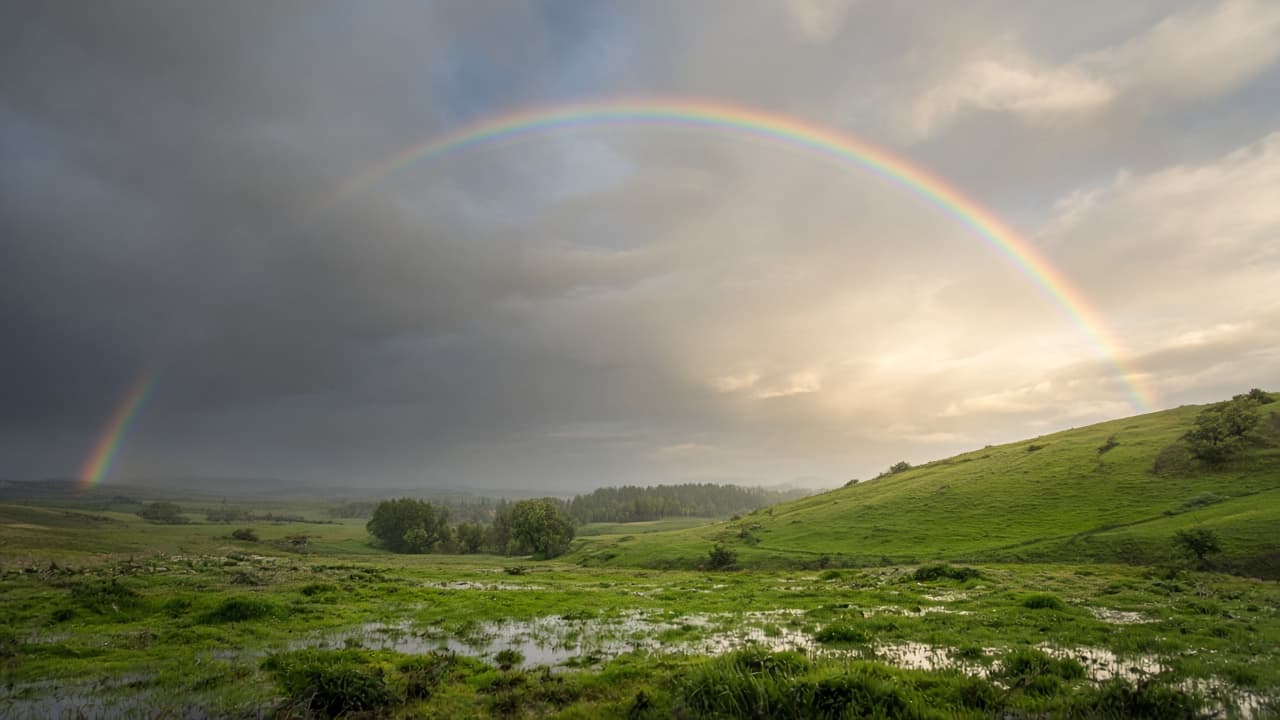
"I dreamed in color" is a search that assumes colour is special. For most people under sixty, colour is the ordinary paint of dreaming. What is interpretable is exception and emphasis: a black-and-white night, a hyper-saturated one, a single red object in a grey street, a [rainbow](/dreams/rainbow) that feels like weather with an opinion. Michael Schredl's work on colour in dreams is the research to know before you spiritualise the chroma. If the dream's story was vivid and the colour was just how it looked, interpret the story. If the colour *was* the event, stay on this page.
Everything Was Ordinary Colour and You Only Noticed on Waking
The default report. Sky was blue because sky is blue. You mention colour because a questionnaire asked.
This is not a symbol. It is memory of visual experience. People who rarely recall dreams sometimes treat a well-remembered colour night as a breakthrough; more often they simply remembered a dream, and colour is part of what makes recall feel rich. Enjoy it. Do not conscript it into a personality theory.
If someone told you "real dreams are black and white," they were recycling a mid-century media myth. You can put that down.
Hyper-Saturation | Too Bright, Cartoon, Unreal
Colours that hurt, or that look like a filter, or that make objects feel fake.
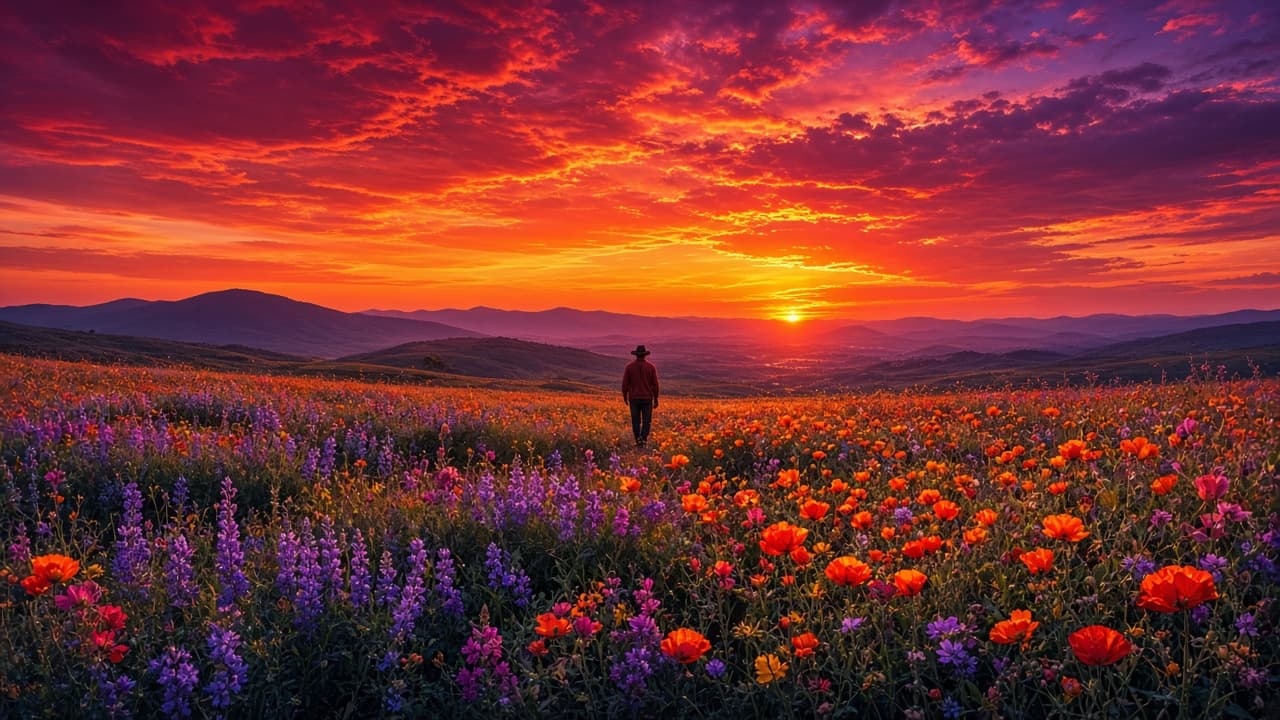
Over-saturation often tags emotional intensity and sometimes mania-adjacent periods, new love, psychedelic residue, or a nightmare that is "too much." Dreamers describe the colour as the threat, which is a useful inversion: not a monster, a world turned up too loud. Fire and sunset hues show up here because they already sit at the top of the saturation scale.
If the saturation was beautiful rather than sickening, the night may be marking a period that feels more real than last year, or more cinematic, which is not always the same as more true.
Black-and-White, Grey, Newspaper, Old Film
A whole dream without chroma, or a dream you would swear was "in black and white."
Grey dreams are the ones that actually want interpretation as a colour event. They cluster with depression reports (the world drained), with nostalgia (the past as archive), with moral coldness, and with media: a story you consumed in monochrome, a photograph, a documentary. Eric Schwitzgebel's 2002 essay "Why Did We Think We Dreamed in Black and White?" showed how reports of grey dreaming tracked the rise of black-and-white film and television, then faded as colour media became default. The mind describes dreams in the visual language it has practised.
A sudden grey night after years of colour is more personal than a lifelong grey-describer. Ask what lost warmth this month.
One Thing in Colour
A red coat. A blue door. Blood. A person's eyes. The rest is ash.
Spotlight dreams are gifts to interpretation. The coloured object is the subject. Dreamers waste the gift by asking "what does colour mean" instead of "why that coat." Follow the object into its own page if it has one; stay with the contrast if it does not.
If the coloured thing was a person, they are marked. If it was an exit, the dream is making sure you saw the exit. If it was a wound or a stain, the dream is making sure you cannot pretend you did not see.
Have a Dreaming In Color dream of your own?
Write what you remember and get a clear reading.
A Specific Hue Dominates | Red, Blue, Gold, Green
Not a rainbow. A wash.
Red washes attach to alarm, desire, anger, and medical dread. Blue washes to distance, calm, sadness, night. Gold to value and unreality. Green to growth or sickness, depending on the shade. These are cultural associations, not laws; your biography beats the chart. A painter will have a different red than a person whose only red is brake lights.
Name the hue and the feeling in the same sentence. If you cannot, the wash may have been lighting, not a message.
Colour That Changes Mid-Dream
A room that bleeds from colour into grey, or the reverse. A face that loses its flush.
Change is the event. Losing colour mid-scene maps onto a feeling going dead, a conversation, a hope, a person "going grey" in your estimation. Gaining colour maps onto a scene that suddenly mattered, a person who became real, a memory that warmed up.
Mirrors that show a different colour-world than the room are a related trick: two visual regimes, two self-presentations.
You Argue, in the Dream, About Whether It Is in Colour
A rare, almost comic meta-dream. Someone says "this is black and white" and you can see green.
Meta-colour dreams are about disagreement over how real or how alive something is. Couples have them during "you are overreacting / you are shut down" weeks. Artists have them during debates about whether a project has life in it. The argument is the content. Who insisted on grey, and who could see the green?
Psychological Meaning
Michael Schredl, Anastasia Fuchedzhieva, H. Hämig and S. Schindele's 2008 paper in Imagination, Cognition and Personality ("Do we think dreams are in black and white?") is the citation this search deserves. They found that people often have beliefs about dream colour that do not match careful morning reports, and that colour is common when you ask promptly. Schredl's broader diary work also ties vivid, colourful recall to emotional intensity and to how you ask the question. The research punchline is modest and important: colour is not a rare spiritual upgrade. Memory, media, and mood distort the report.
Schwitzgebel's 2002 historical argument sits beside it: mid-twentieth-century Americans claimed black-and-white dreams at high rates that collapsed as colour TV spread. That does not make your grey dream fake. It makes "everyone used to dream in grey" a media story.
Hobson's REM visual activation explains why dreams can be so pictorial at all. It does not assign a meaning to blue.
Interpret chroma when it behaves like a spotlight or a drain. Otherwise give the plot the attention. If a single object carried all the colour, or a night went grey on purpose, those are the details worth dropping into a personal reading in thirty seconds, not the mere fact that you have a visual cortex that works in hue.