Quick Answer
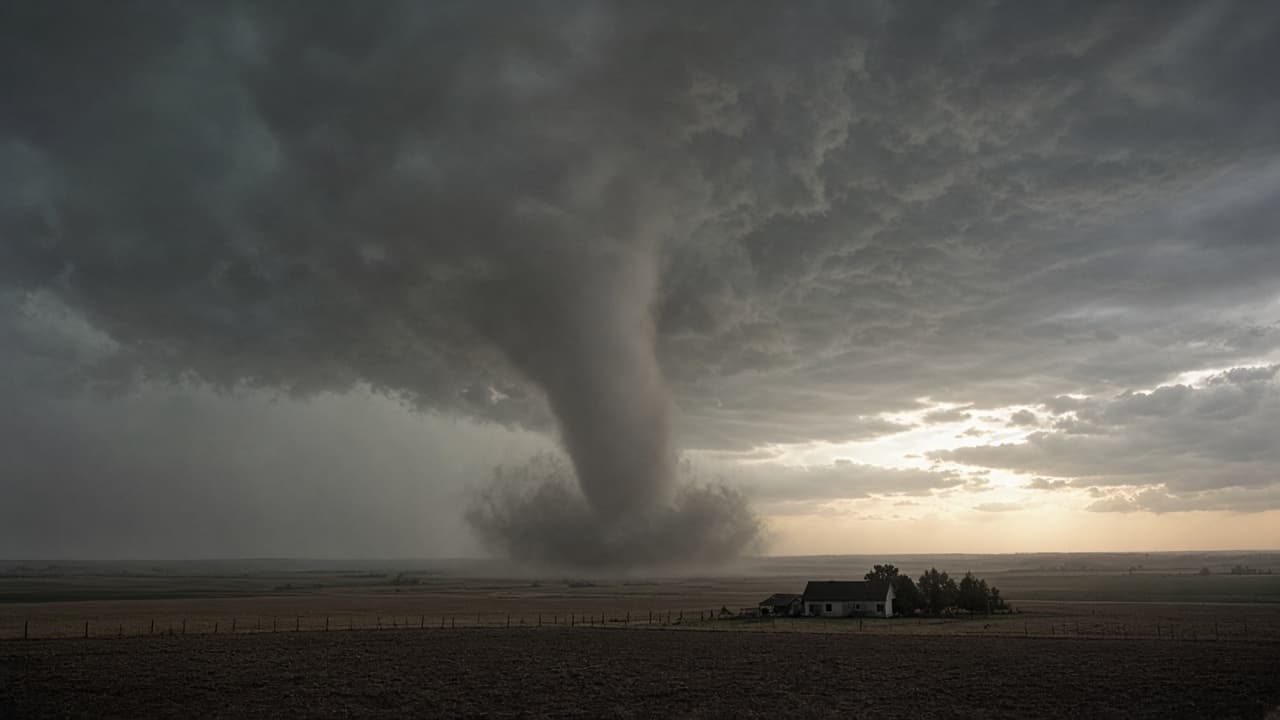
An earthquake is the failure of the thing that was not supposed to fail. Walls can be rebuilt. Ground is the category of "underneath." Dream quakes usually mark a foundation shock: a relationship’s basic terms, a job that was the floor, a country’s story, a body’s reliability, a family myth. [Storms](/dreams/storms) and [tornadoes](/dreams/tornadoes) are weather. An earthquake is geology. Recover whether the [house](/dreams/houses) stood, who you pulled outside, and whether the shaking returned as aftershocks. Those details are the magnitude of the waking event.
The Ground Splitting Open
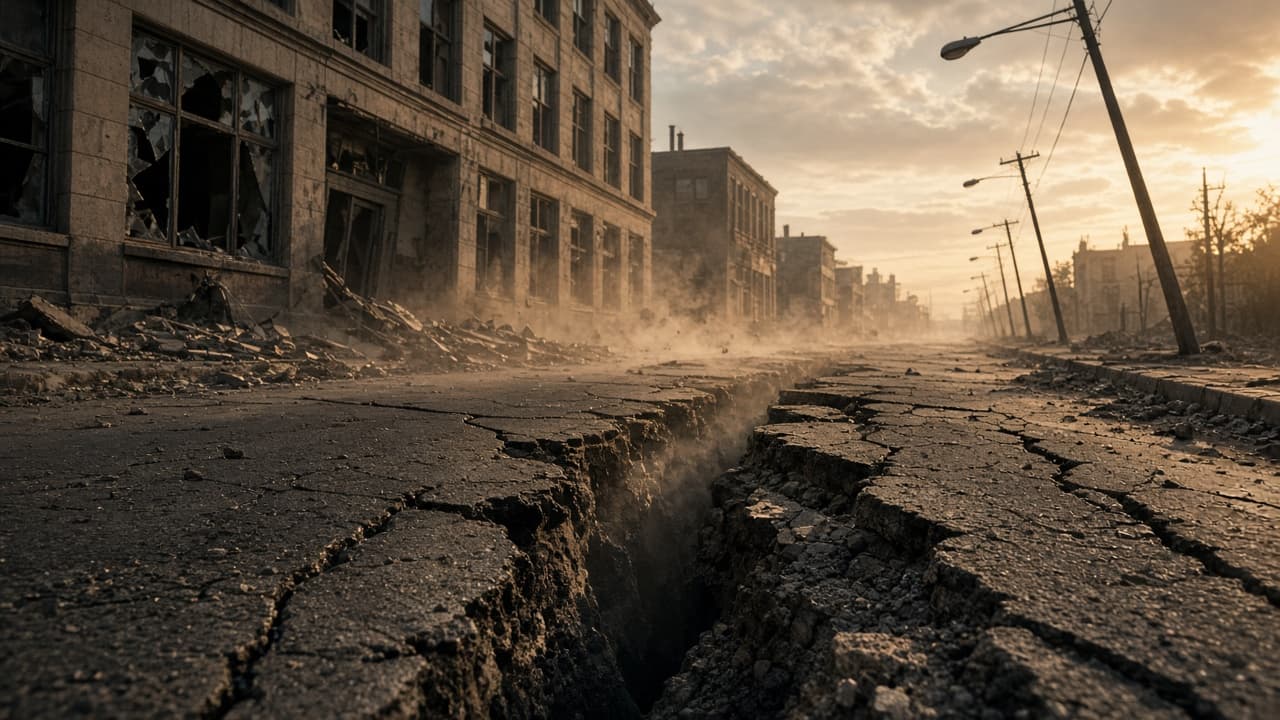
A street unzips. A lawn becomes a trench. The split is visible.
This is the version that will not let you pretend the instability is "just a feeling." Something has a crack with edges. Infidelity that became a fact. A diagnosis. A redundancy list. A political break. Dreamers describe looking into the gap and not wanting to see the depth, which is often the correct instinct and also not a strategy that lasts.
If you fell into the split, you are already in the new geology; see falling. If you jumped it, you are still using old agility on a new landscape. If you watched from a distance, the shock may still be happening to a neighbouring life, a sibling, a colleague, a country on the news, and your body has taken it as ground.
The House Shaking, Objects Falling
The dwelling stays, the contents do not. Pictures, glasses, a chimney.
This is interior damage with an intact shell. The life still looks like a house from the street. Inside, the arrangement has been thrown. It clusters around family rows, financial shocks that have not yet changed the address, and health scares that everyone is still going to work around.
What broke is worth listing. Heirlooms versus cheap stuff. Walls cracking versus a single vase. A chandelier swinging and not falling is a different nervous system from plaster dust in the lungs. You are being shown the load-bearing points you actually have.
Running Outside, Not Knowing Where Is Safe
The plot is evacuation without a map. Doorway, street, a park that might liquefy.
These dreams itemise the search for a new foundation while the old one is still moving. People leaving jobs, marriages, countries, and churches report it. The cruelty of an earthquake is that "outside" is not automatically safety; the ground is everywhere.
Who you took with you, who you left, who refused to come, that is the ethic of the week. Standing in a doorway is the half-measure: you know the drill and you have not committed to open ground. Cars that will not start add a failed-exit plot on top of the geology.
Aftershocks
You thought it was over. The floor moves again. Sleep becomes a series of bracings.
Aftershocks are the dream’s honesty about instalment news. Medical results that arrive over weeks. Legal processes. A grief that has more than one death in it. A company that keeps "restructuring." The nervous system learns a new baseline of startle.
If people in the dream went back inside too soon, you may be watching a waking rush to normal that you do not trust. If you refused to go back in, you are already living in the temporary, hotels, friends’ sofas, a provisional self. Neither is a character flaw. Both are phases.
Have a Earthquakes dream of your own?
Write what you remember and get a clear reading.
Being Buried or Watching Others Buried
Rubble, a hand, dust, the specific panic of weight.
Burial under a house is a trapped dream with a geological cause. Something that was supposed to shelter you has become the threat. Institutions do this. Families do this. A body of belief can do this.
If you were digging someone else out, you are in a rescue role, and possibly in over-functioning. If nobody came for you, the isolation of the shock is the subject. Dust that makes it hard to breathe overlaps not being able to breathe; the medium of survival has filled with the wreckage.
A Quake at Work, School, or in a City You Do Not Live In
The foundation that failed is not the childhood home. It is a public structure.
Workplace quakes track organisational shock: a founder leaving, a scandal, a strategy that was the floor. School quakes often use an old building for a current evaluation fear. A foreign city can mean a foundation you only thought was yours, an industry, an internet public, a nation’s story.
Scale still talks. One office shaking is local. A skyline going is a worldview. Match the skyline to the size of the assumption that moved.
Surviving, Then Checking Who Else Survived
The shaking ends. The social audit begins.
These endings are about the new we. Who is still in your life after the foundation event. Roll-calls, phones that will not connect, a street of people holding each other. Dreamers wake with tenderness or with a cold inventory.
If you felt strangely calm in the rubble, you may already be in aftermath competence, the person who knows where the water is. If you felt cheated that the world looked the same, the dream is reporting a mismatch: internally there has been a quake, and the city has not updated its face.
Psychological Meaning
Antti Revonsuo’s threat-simulation theory (2000) covers earthquakes as high-cost, uncontrollable, habitat-destroying events. The rehearsal is of getting dependents out, finding open ground, enduring aftershocks. You do not need to live on a fault line for the brain to find the metaphor available; news and cinema have done that work.
G. William Domhoff’s continuity hypothesis (2018) then explains who dreams which quake. People in actual seismic zones mix drills with metaphor. People whose marriage or employer just shifted dream houses. People whose political ground failed dream cities. Tore Nielsen’s typical-dream research reminds us that natural-disaster dreams are widely reported; the geology is shared, the address is personal.
Ernest Hartmann (2011) would call the quake a contextualising image for "nothing underneath is trustworthy right now." That sentence is often enough. Jung’s interest in the underworld is optional; you do not need a descent myth to notice that the basement moved.
Michael Schredl’s findings on stress and negatively toned dreams explain runs of quake nightmares during unstable months. They fade when a new floor is installed, not when the symbol is decoded for the fifth time.
What Used to Be Underneath
Name the foundation that moved before you decorate the rubble. Whose promise. Which job. Which body. Which country. Which story about how things were always going to be.
If aftershocks keep arriving in the night, they are probably still arriving in the day. The useful move is not to "stop being dramatic about the ground." It is to stop putting heavy furniture back on a floor you already felt shift, and to build, slowly, something you can actually stand on, even if it is smaller than the old house.