Quick Answer
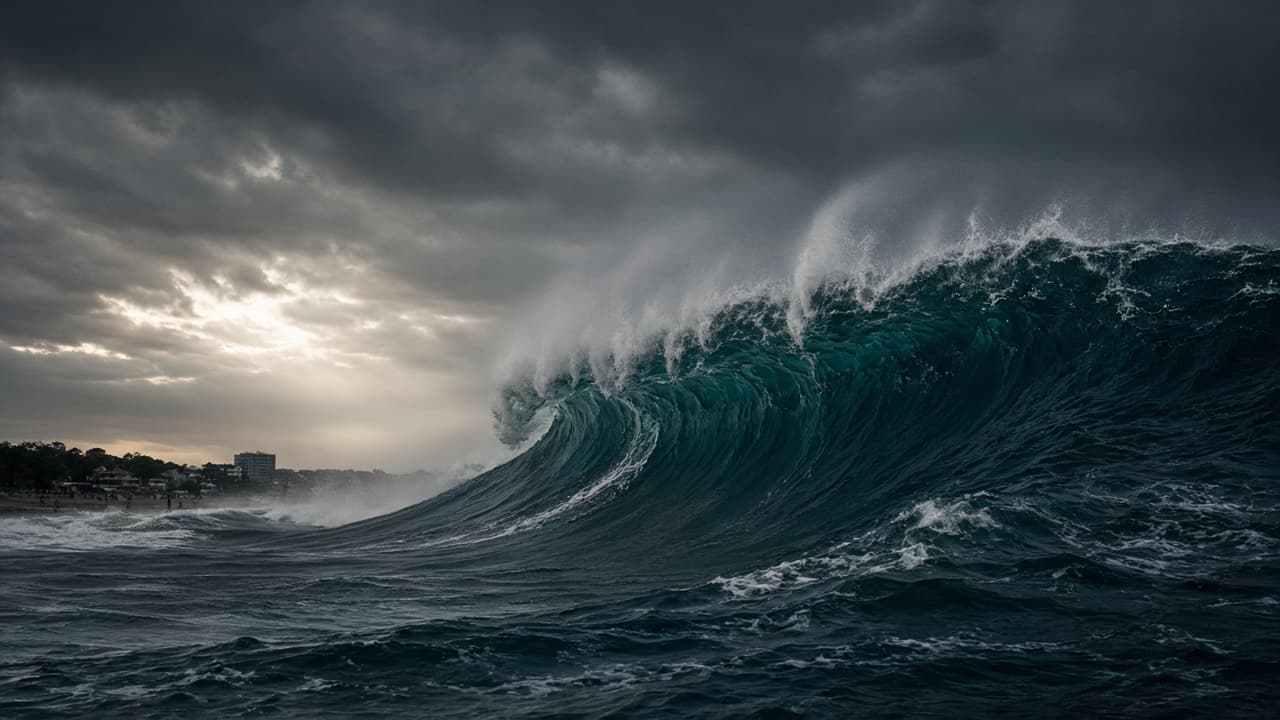
A tsunami dream is about scale. Something in waking life has become larger than the plans, coping strategies, and personal timeline you brought to it. Unlike a [flood](/dreams/flood) that rises in your house, a tsunami comes from the horizon, outside, collective, not something you caused by leaving a tap on. Whether you saw the wave building, whether anyone else on the [beach](/dreams/beach) moved, and whether you made it to high ground decide the reading. The water is rarely a weather forecast.
A Wave You Saw Coming
The sea draws back, or a wall of water is already visible and still far off. You have time, which in a tsunami dream is a specific kind of horror: knowledge without enough power.
This version clusters around slow-building crises you have been tracking, a parent's decline, a company that is clearly failing, a relationship whose ending is obvious to everyone except the people in it, a climate of politics or money that has been worsening in plain sight. You are not surprised. You are trying to decide whether warning others is useful, or whether you should just run.
If you spent the dream telling people who would not listen, that is often the waking situation with the serial numbers filed off. If you watched in silence, ask whether you have already decided that speaking will not change the scale.
A Wave You Did Not See
Impact without overture. You are shopping, driving, sitting in a cafe, and the water is simply there. Shock is the emotion, not dread.
These dreams tend to follow news that did not have a run-up in your private life: a sudden redundancy, a betrayal you had no theory for, a diagnosis that arrived as a phone call, a public event that reordered the week. The psyche did not get to rehearse. It stages the rehearsal afterwards, at night, at the wrong size.
Dreamers sometimes report that the ordinary scene continued for a few seconds under water, people still holding coffee, a radio still on. That texture maps onto the strange persistence of routine after impact. You are still performing Tuesday while Tuesday has ended.
Being Swept Inland
You are in the water, moving whether you chose to or not. Buildings, cars, and other bodies go with you. Agency is the thing the wave removes.
This is closer to drowning than to watching from a cliff, but the difference is important: you are being relocated, not necessarily dying. Dreamers who surface in a strange neighbourhood, a rooftop, a tree, often wake with the sense of having been put somewhere they did not pack for. That maps onto forced moves, geographic, professional, relational, more than onto death anxiety.
If you were holding someone's hand and lost it, or kept it, recover that. The tsunami is the event. The hand is the attachment the event is testing.
High Ground and Survival
You make it up a hill, a hotel stairwell, a multi-storey car park. The water passes below, or slams the lower floors, and you are dry enough to keep thinking. Relief here is not trivial. It usually means some part of you believes there is still a position above the thing.
These dreams appear during periods of active coping: updating the CV, moving savings, leaving before the worst, taking the child out of the situation. The dream is not congratulating you. It is running the drill of elevation.
Look at who else made it. Surviving alone can feel like guilt in the morning, and that guilt is often already in the waking story, the colleague you could not bring, the sibling who will not leave, the version of yourself you had to abandon to get up the stairs.
Have a Tsunami dream of your own?
Write what you remember and get a clear reading.
The Sea Going Out First
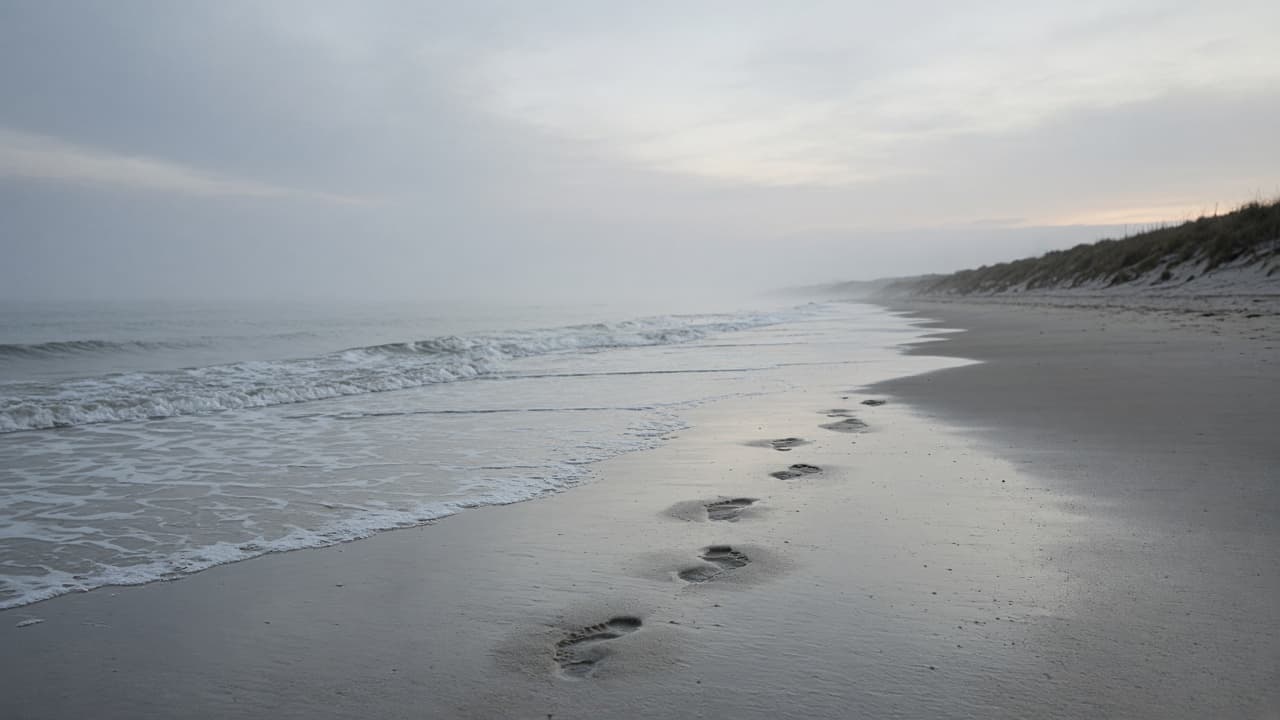
An empty beach, fish on wet sand, boats sitting on their hulls. Anyone who has learned the real-world sign knows what comes next, and the dream often knows that you know.
This is a vigilance dream. Something has gone too quiet. A conflict stopped without resolving. A symptom disappeared without explanation. A person who usually fills the room has become careful. The receding sea is the uncanny pause, and the question the dream poses is whether you will treat the pause as a gift or as information.
People who grew up with actual tsunami drills, or who have lived through real storms and evacuations, will get this imagery more readily. Media does the same job for everyone else. Either way, the meaning is the quiet, not the folklore of waves.
After the Water | Debris and Return
The wave has gone. Streets are unrecognisable. You are looking for a house, a person, a car, a document. Aftermath dreams are about inventory: what survived, what is gone, what you are now responsible for cleaning.
They cluster after the acute phase of a waking crisis, when the adrenaline has dropped and the consequences are visible. Insurance, grief, the practical work of rebuilding a life that still has to be lived. The water was the event. The debris is the meaning you actually have to carry.
If the dream kept sending a second wave, or a third, you are probably not yet convinced the acute phase is over. That is worth respecting. Hypervigilance after impact is a human response, not a character flaw, and it fades more reliably when the real situation stabilises than when you tell yourself to relax.
Watching From a Distance
A cliff, an aeroplane, a news screen inside the dream: the tsunami is happening to a coastline that is not quite yours. Distance changes the ethics of the image. You are a witness, which can be helplessness, or guilt, or the first stage of recognising that a collective event will reach you later.
This version is common when the overwhelm is public, wars, pandemics, climate news, someone else's catastrophe that you are adjacent to. It is also common in people who intellectualise feeling: the wave is allowed to exist as long as it stays in the frame.
If you tried to get closer, or to get further away, that impulse is the reading. Approach is involvement you have not admitted. Retreat is a boundary you are trying to keep.
Psychological Meaning
Antti Revonsuo's 2000 threat-simulation theory is the cleanest fit for tsunami dreams. He argued that dreaming evolved in part to rehearse threat perception and escape, and a wall of water is an almost schematic threat: it is large, it is incoming, and the correct response is to move to safety. You do not negotiate with it. That is why the image is so efficient for any waking situation that has the same shape, unarguable, incoming, bigger than personal plans.
Tore Nielsen's work on typical dreams and on how waking concerns are incorporated into sleep (including his 2000s studies of dream content after stressful events) helps explain why the wave arrives after news footage as well as after private crisis. The brain is not predicting a flood. It is using a high-impact image it recently filed, then running your own scale-problem through it.
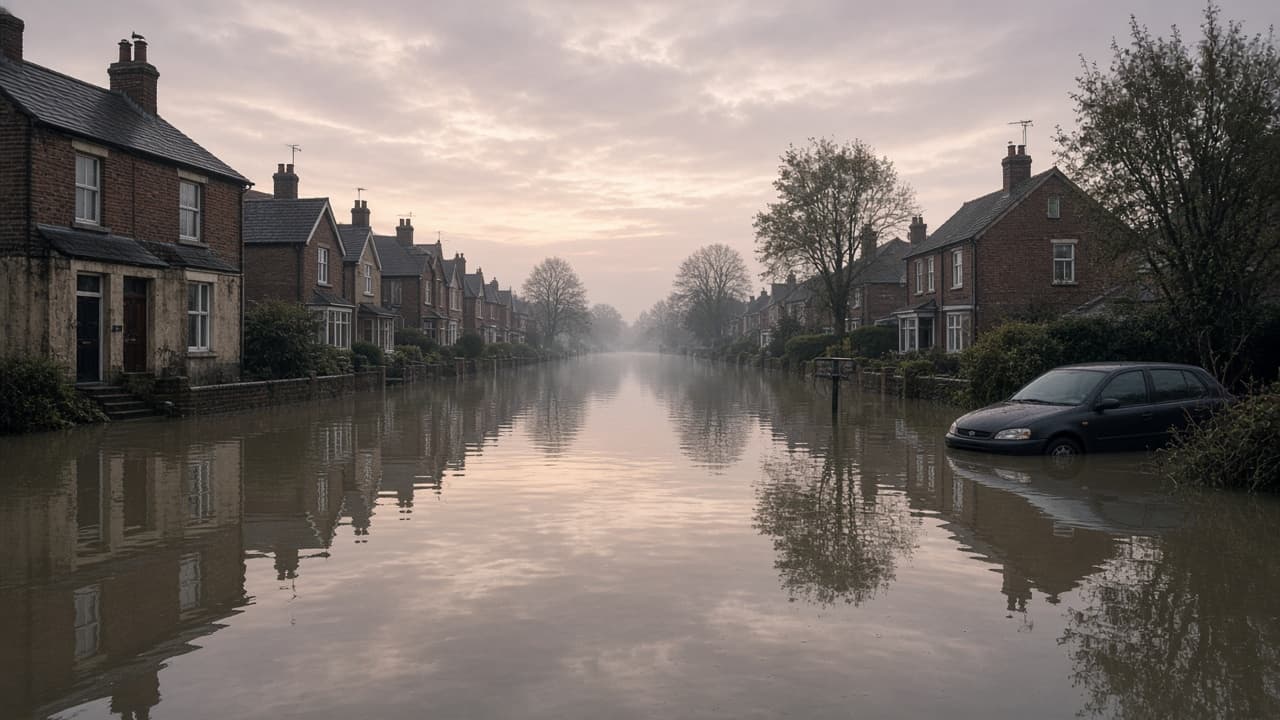
A flood in the house is often interpersonal or bodily, the water has already crossed the threshold of the private. A tsunami is more often systemic or existential. The difference in origin is worth keeping when you interpret.
When the Wave Comes Back
Recurring tsunamis usually mean the scale problem is still open. Either the real situation has not resolved, or your nervous system has not received the all-clear. Tracking whether you are seeing the wave earlier each time, more warning, more high ground, is often more useful than tracking whether the water is bigger.
Practical steps are unglamorous and they work. Reduce late-night disaster media if the dreams spiked after it. Name the actual incoming thing in a sentence. Take one elevation action in daylight: the call, the document, the exit, the savings transfer. The dream is a drill. Drills complete more easily when the waking rehearsal has started.
If you lived through a real tsunami, flood, or evacuation, and the dream replays with documentary force, that is post-traumatic material rather than a symbol to decode. It belongs with a clinician who knows trauma nightmares, not with a dictionary.