Quick Answer
A beach is not the sea and it is not the land. It is the strip where those two agree to meet, and the agreement keeps moving. In dreams that geometry is used for transition, for rest, for being seen in a body, and for standing as close as you dare to feeling without having to [swim](/dreams/swimming) yet. Holiday beaches, winter beaches, and beaches with something wrong on the horizon are different edges. The tide line is often the most honest object in the scene.
Vacation Weather
Heat, a towel, permission to do nothing, the particular laziness of a day that does not count. Some beach dreams are simply the wish for rest, especially in people who do not take it.
If the holiday felt earned and you could actually lie down, the psyche may be filing a request. If you could not settle, you kept checking a phone, a child, the sun, a bag, you have imported your inland nervous system onto the sand. The location changed. The vigilance did not.
Luxury that felt fake, or a resort you could not afford in the dream, is often about a kind of ease you can picture and cannot inhabit. You know what rest looks like. You do not yet have the ticket.
Exposure | Body, Skin, Being Seen
Swimwear, nakedness, a body that will not match the catalogue, other people's looking. Beaches are one of the few public places where skin is ordinary, which makes them a ready stage for shame and for freedom.
This clusters around any waking situation where you are more visible than your clothes usually allow, a new relationship, a health change, ageing, a workplace that has started seeing you. Compare naked dreams; the beach version is nakedness with a social alibi.
If nobody looked and you still felt wrong, the audience is internal. If everyone looked and you were fine, something in you has updated what the body is allowed to be in public.
The Tide Line
Wet sand, foam, the debris of the last high water, your footprints filling. A boundary that is factual twice a day and never in the same place.
People use the tide line in dreams as a place to leave things, a letter, a name, a stone, a conversation. Sometimes the sea takes it. Sometimes it returns it uglier. That is a fairly precise picture of what happens when you put a feeling into a medium you do not control: public posting, telling a family, handing a problem to an institution.
Building at the tide line, a castle, a relationship, a plan, is the other classic. You know it will not last as architecture. You build it because the building is the point. Grief and play can look identical here.
Walking Along, Not In
You stay on the hard sand, or the promenade, and the water is a companion you will not enter. Approach without immersion.
This is a common stance toward emotion, toward a change, toward other people's chaos. You will be adjacent. You will not get your hair wet. It can be wisdom (you cannot swim today) and it can be a life strategy that has calcified. The dream's mood usually votes.
If a companion went in and you did not, attachment is at different depths. If you wanted to go in and the water would not allow it, too rough, too filthy, a sign forbidding swimming, the medium itself is currently unsafe, and staying on land is not cowardice.
Have a Beach dream of your own?
Write what you remember and get a clear reading.
Empty, Off-Season, Out of Hours
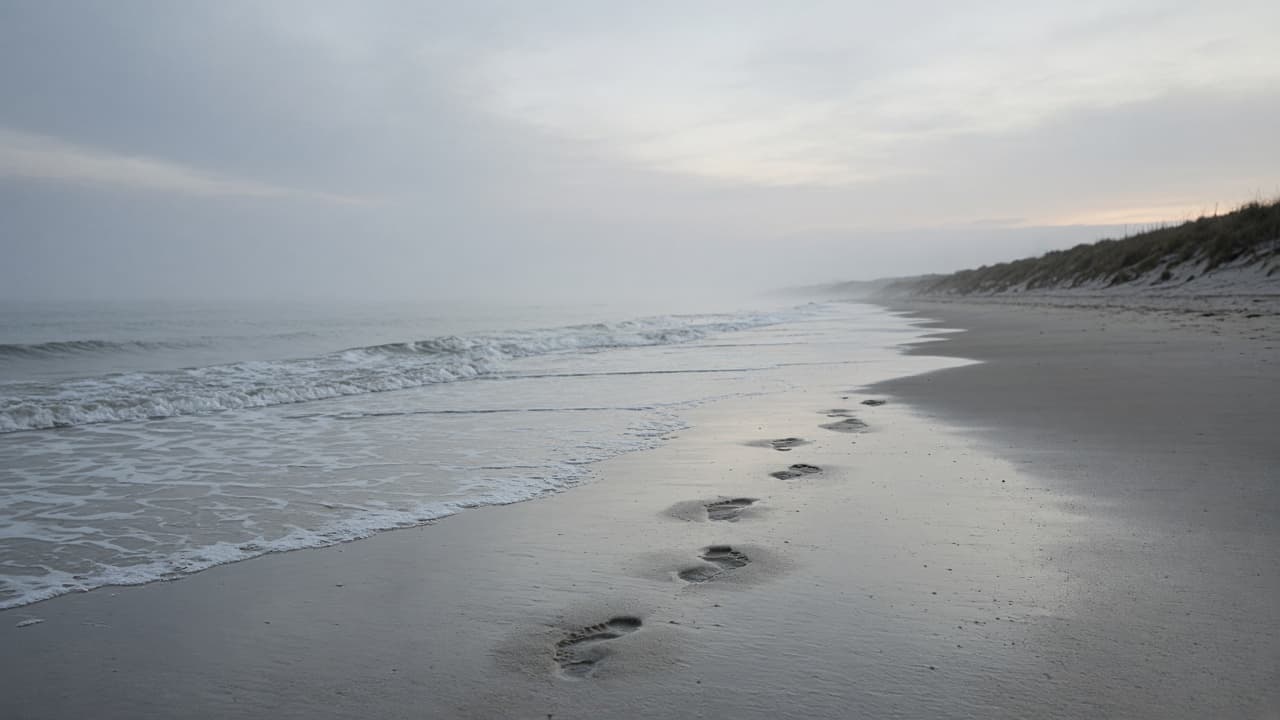
A closed kiosk, a grey sea, your own footprints, a wind that makes speech stupid. The edge without the holiday plot.
These beaches are for thinking and for grief. They show up after losses, during winters of a life, in introversion that is not a problem. The water is still the unconscious or the feeling or the large thing; it has simply dropped the requirement that you enjoy yourself in its presence.
Finding a single other person on that beach can be a quietly important image: someone else is also at the private edge. Whether you spoke is the whole story.
Something on the Horizon
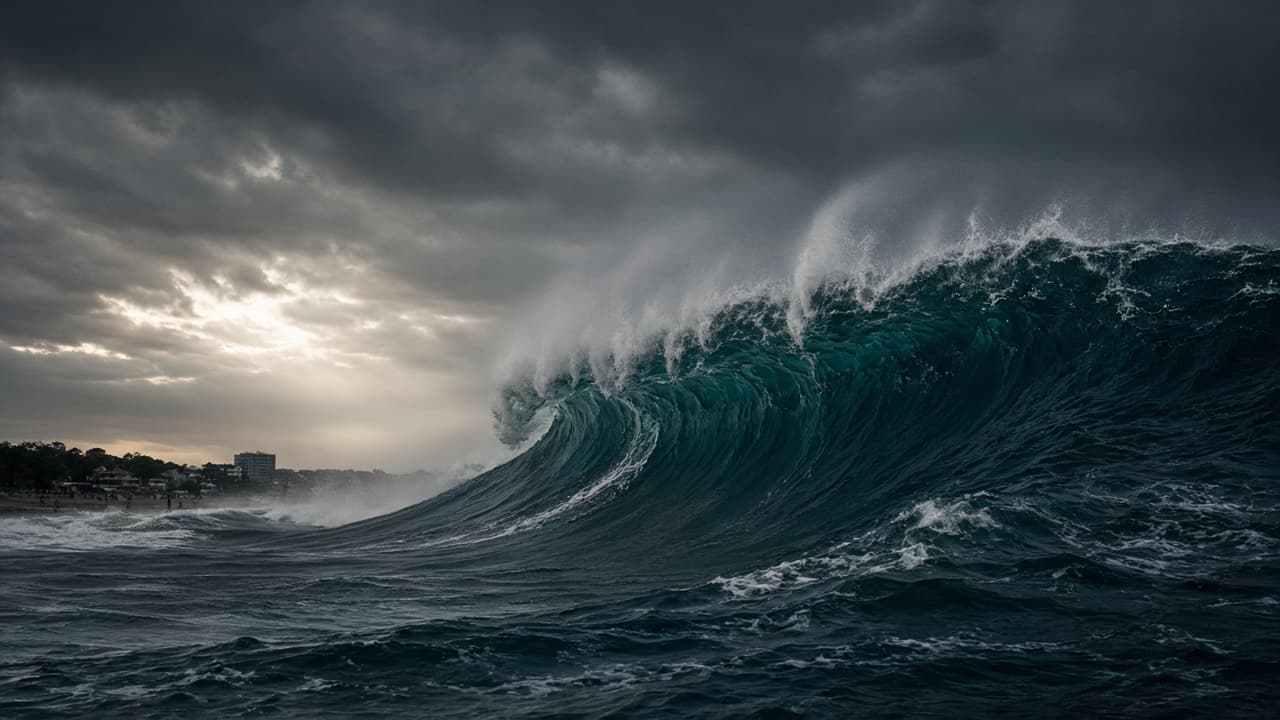
A ship, a tsunami wall, weather, a person swimming too far, an object that should not be at sea. The beach becomes a viewing platform.
Vigilance at the shoreline maps onto waiting: results, boats, people, news. You have put yourself where you can see trouble or arrival as early as the geography allows. That can be a sane response to a real incoming thing. It can also be a habit of living at the alarm-post.
If you turned inland and the horizon still pulled at your back, you are trying to leave a watch you have not been relieved from. If you walked toward the water to meet whatever it was, you are done with being only an observer of your own edge.
Crowds, Lost Children, and the Group Towel
Public beach as social system: finding your people, losing a child, other people's radios, the politics of space. The edge is a city for a day.
Lost-child variants are usually about responsibility at a boundary, a part of you, an actual child, a project, that can wander toward deep water while you are buying something inland. Do not over-read; also do not ignore the panic. Where is your attention split in daylight?
Not finding your group is a belonging wound with sunscreen on. You can hear the sea. You cannot find the towel that means you are with someone. It is cousin to hotel corridors and to school yards.
Psychological Meaning
Michael Schredl's 2018 work on factors affecting dream content (and his longer programme on continuity) is a dry and useful start: if you have been to a beach, seen beach media, or are planning a trip, expect sand. Continuity first.
When the beach is not literal, Jung's 1964 discussion of water as a picture of the unconscious, in Man and His Symbols and elsewhere, still earns a cautious use. The shore is then the ego's working edge: close enough to be affected, not yet dissolved. Vacation weather is the wish that this edge be pleasant. A winter beach is the fact that it often is not.
Revonsuo's threat-simulation frame explains the horizon-scanning versions, especially those with waves that are too big. Standing where you can see the threat coming is a rehearsal of vigilance. A tsunami from the sand is different from a tsunami from a cliff; you have less elevation and more time to run inland.
Read the dream as a report on a border. Are you resting, exposing a body, leaving things for the tide, or watching the horizon? Those are four different jobs, and the sand will do all of them.
When You Wake Still on the Sand
Recurring beaches often mean the transition is still the live habitat. You have not gone inland and you have not gone out. That can be a creative season. It can be a stall.
If the repeating scene is rest you never take, take one actual hour of not-usefulness and see whether the dream changes. If the repeating scene is scanning for a wave, name the incoming thing and decide whether you are a lookout or a person who is allowed to go home.
A beach that turns to oil, glass, or teeth is an edge that has become hostile. Check the waking boundary that stopped being sand, a relationship, a feed, a job at the waterline of burnout, and move one inland step before you interpret the geology.