Quick Answer
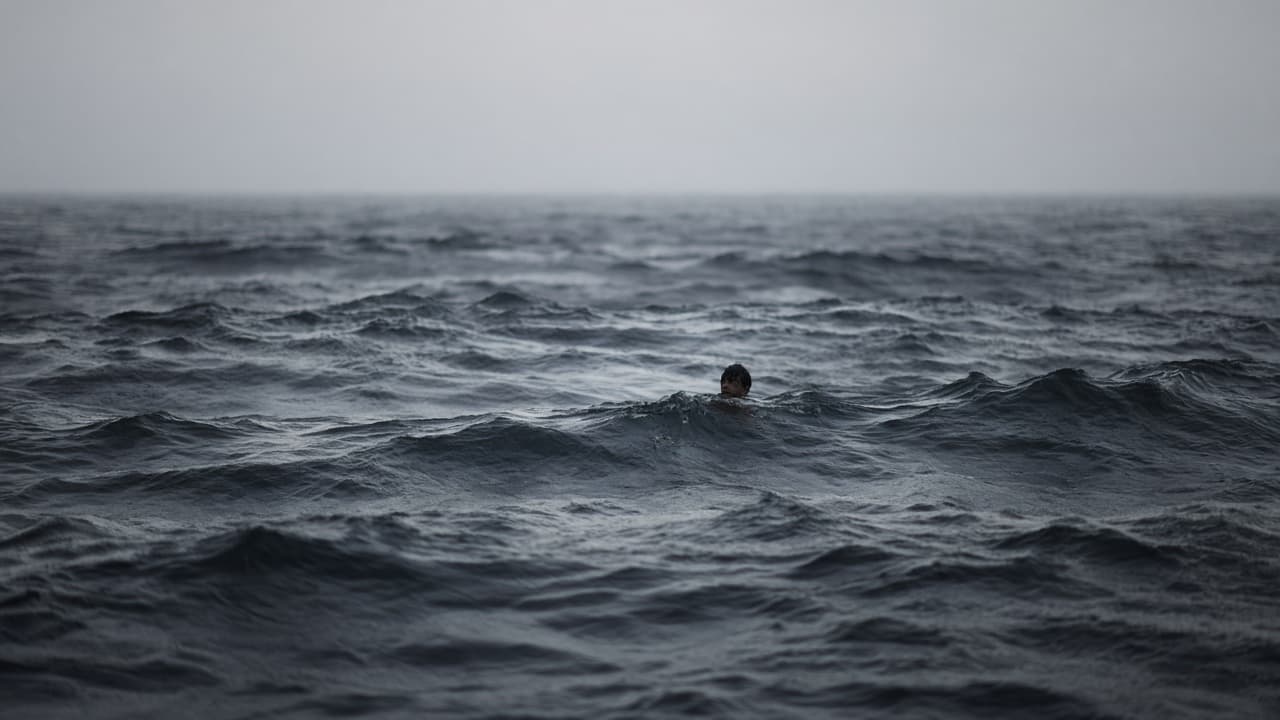
[Swimming](/dreams/swimming) in a pool has walls, depth markers, and a way out at both ends. Swimming in the [ocean](/dreams/ocean) has weather. The dream is usually about a demand that will not stay in its lane, grief, ambition, a relationship, a job, and about what kind of swimmer you become when nobody is watching the clock. Waves, temperature, and whether a shore existed are the three details that actually sort the night. Ignore lucky-sea folklore until those are recovered.
Open Water Versus a Pool
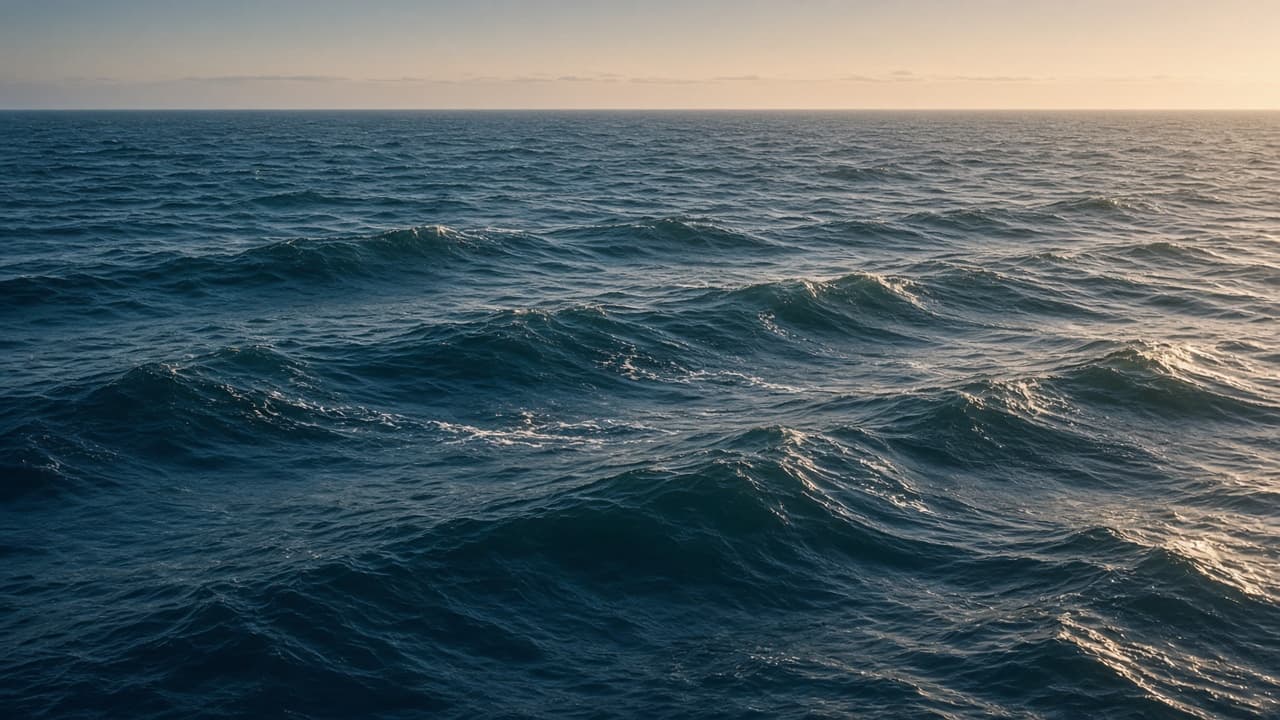
You know you are not in a pool because there is no tile, no chlorine, no lane rope. The water goes down farther than you can think, and sideways farther than you can plan.
This contrast is the whole first reading. Pool swimming is effort inside a designed container. Ocean swimming is effort inside something that does not care about your workout. Dreamers who have recently left a structured job, a structured relationship, or a structured town report this switch with uncomfortable accuracy.
If you kept looking for the wall and could not find it, you are still using pool-skills on ocean-problems. That is not a character flaw. It is a mismatch, and mismatches are tiring.
Waves That Decide the Stroke
The water is not still. Swells lift you, dump you, or arrive at an angle that ruins the rhythm you were trying to keep.
Waves are other people's timing, or the world's. A meeting that keeps moving. A parent's health that will not schedule itself around your week. News cycles. You can swim through them, and you cannot make them stop. The dream often arrives when you have been treating a chaotic system as if it were a poorly run pool.
A following sea, waves from behind, pushing, can feel like help you did not ask for. A head sea is the opposite: every stroke is work. Recover which one you had. People misremember this, and the misremembering is usually flattering.
No Shore in Any Direction
You turn 360 degrees and there is only water. No beach, no ship, no lights.
This is not automatically drowning. Drowning is about breath. No-shore is about duration. The situation you are in has no visible completion. Caretaking without a discharge date. A creative project with no publisher. Dating without a conversation about what it is. The psyche stages the missing ending as missing land.
If you were still swimming, you have not given up; you have run out of landmarks. If you had stopped and were floating, the night may be asking whether stillness is currently more honest than the performance of progress.
Cold Water That Takes the Breath
Temperature is a separate plot. The ocean can be beautiful and still steal heat.
Cold-open-water dreams cluster around shocks that look like opportunities: a job you wanted that is lonelier than the listing, a move to a city that does not hold you, a relationship that is "free" and actually exposing. You entered willingly. The medium is doing something your skin did not vote for.
Shivering, cramping, or deciding to turn back are all useful. Turning back in a no-shore dream is paradoxical and therefore important, it means you are looking for a different kind of exit than geography. In waking terms that is often a boundary, a conversation, or a refusal to keep proving stamina.
Have a Swimming In The Ocean dream of your own?
Write what you remember and get a clear reading.
Something Alive Underneath
A shadow, a fish, a suggestion of bulk you never fully see. You keep swimming and the unseen keeps pace.
Open ocean is a classic image of the not-yet-named. Unlike a pool, it can contain a life that is not yours. The reading is not "a monster will get you." The reading is "this situation has more in it than the surface conversation." Attraction, resentment, a secret, a talent you have not used, any of those can swim under a competent stroke.
If you dived to look, you are in an investigative period. If you refused to look and sped up, you already know the policy you are using by day.
Exhaustion Mid-Crossing
The plot is stamina. Arms fail. You switch to a slower stroke. You think about floating and cannot quite allow it.
These nights track unsupported effort with unusual honesty. People who are "fine" in the office and then dream of ocean miles are often the same people who will not say they are tired until the body says it for them. The ocean is a fair referee: it does not care about your reputation for being the strong one.
A rescue that arrives, a boat, a stranger, a sudden sandbar, is worth taking seriously as a wish for help you have not requested. A rescue you refuse is even more specific.
Swimming at Night
Dark water, maybe stars, maybe only the sound. Depth and distance both become guesses.
Night-ocean swimming is disorientation plus commitment. You have already left the well-lit version of the problem. Insomnia, a secret, a second job, a grief that only visits after the house is asleep, the dream uses the ocean because the ocean is the largest privately entered space most people can imagine.
If there was phosphorescence or a moon path, you had a weak navigational aid. Follow what it pointed at. If there was nothing, the night is asking you to admit you are navigating by effort alone.
Psychological Meaning
Ernest Hartmann's work on the contextualizing image, developed across the 1990s and restated in his 2011 book The Nature of Dreams, is the right tool here. Hartmann argued that the central image of a dream pictures the dreamer's emotion in a form the rest of the dream can then move through. A tidal, unbounded body of water is one of his recurring examples for overwhelming feeling.
Ocean swimming adds agency to that image. You are not only in the feeling; you are trying to locomote in it. That combination shows up when the emotion is large and you still have a job to do inside it. Continuity does the rest: people who actually swim, or who have a real crossing coming, will load the image more readily. The rest of us borrow it because it is the best available picture of "I am in this and the edges are not my invention."
Pool versus ocean is therefore not a petty distinction. It is the difference between a designed difficulty and an unbounded one. Name which you had, then name the waking situation that has the same geometry.
After a Night of Open Water
These dreams do not forecast shipwrecks, drownings, or a change of fortune at sea. They describe a relationship to effort in a medium bigger than your plan.
If the same crossing repeats, recover whether anything in the dream ever changes, a new stroke, a boat, a colder patch, a hint of land. Unchanging nights usually mean the waking demand has not been redesigned. Changing nights mean you are already practising a different way through. Either way, stamina is data, not a moral score.