Quick Answer
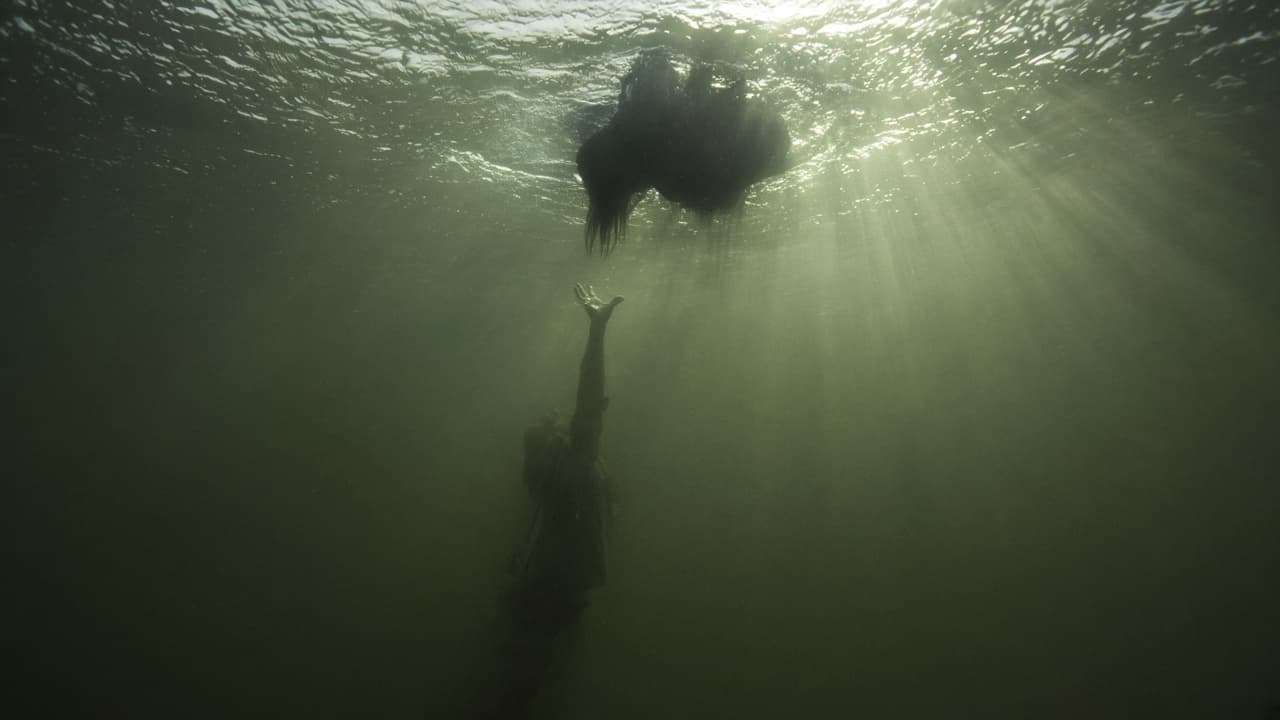
Dreaming that someone else is drowning is a different plot from drowning yourself. You are stationed at the edge of [water](/dreams/water) while another body goes under. The meaning lives in your job in the scene: witness, failed rescuer, successful rescuer, or person who turned away. Helplessness is usually the emotion being pictured, not a forecast of a real-world accident. If you were the one going under, use [drowning](/dreams/drowning). This page stays with the other person, child, partner, stranger, crowd, and the awful physics of not being able to breathe for them.
Watching From the Shore or a Boat
You see them. You do not enter. Distance is the fact: a beach, a pool deck, a boat, a bridge. Sound may travel. Your body does not.
Witness dreams cluster around situations where you have line of sight on someone else’s crisis and no authorised way in, an adult child, a colleague, a public figure, a sibling who will not accept help. The water supplies the scale. Their problem looks like weather.
Whether they looked back at you matters. Eye contact often means you feel implicated, even chosen as the audience. No look at all more often means you are watching a process that does not include you, which can be a relief and an insult at once.
Trying to Save Them and Failing
You dive. You swim. You grab. They slip, they pull you down, the distance does not close, you wake on the gasp.
Failed rescue is one of the more painful typical scenes because it recruits moral language. Dreamers wake saying they are a bad friend, a bad parent, a coward. The fairer reading is limits. You can be willing and still not be the right instrument. Caregiving, addiction in the family, and mental-health crises produce this geometry constantly: love without leverage.
If they pulled you under, the dream is also about contagion, the fear that helping will drown you too. That fear is sometimes wise. Boundaries are not the same as abandonment, even when guilt says they are. Compare not being able to breathe: your airway became part of the plot.
Saving Them
You get there. They cough. They live. You are shaking on the tiles or the sand.
Successful rescue dreams often follow a waking intervention that worked, or one you are steeling yourself to make, a call, a visit, a confrontation, a payment. They can also be compensatory: you could not save them in the day, so sleep runs a version where you can.
How they treated you afterwards is worth keeping. Gratitude versus fury versus blankness maps onto how help is actually received in that relationship. Some people hate being pulled out. The dream may be preparing you for that ingratitude so it hurts slightly less in daylight.
A Child or Someone Dependent Drowning
The drowning person is small, old, ill, or otherwise not a peer. Your duty in the dream feels non-optional.
Dependency raises the volume of responsibility dreams. Parents of young children report these in clusters, especially around water safety films and real pools. Start with continuity and ordinary anxiety before you reach for a symbol of “the inner child.” Sometimes a child is a child.
When the dependent figure is not literally yours, a student, a patient, a younger sibling, the dream is still about a duty of care you cannot put down at the water’s edge. Flood and ocean versions make the duty look even less fairly scaled to a single adult.
Have a Someone Drowning dream of your own?
Write what you remember and get a clear reading.
A Stranger Drowning in a Crowd
You are not the only watcher. Others also fail to move, or they move and you do not. The drowning person has no name.
Bystander dreams are about public helplessness and moral luck. News images, refugee stories, and disasters you can only meet through a screen often continue at night as a body in water and a crowd that does nothing. The dream is not asking you to have superpowers. It is asking what kind of witness you are in a culture of remote suffering.
If you were angry at the crowd, you may be angry at a system. If you were indistinguishable from the crowd, you may be angry at yourself for living a life that watches.
You Could Hear Them but the Water Was Too Heavy
Sound without successful motion: screaming under a surface, knocking on ice, a pool that has turned to syrup. You know where they are. Physics will not let you complete the act.
This variant emphasises medium rather than will. The water is too thick, too cold, too wide. In waking terms the obstacle is often institutional or logistical, visas, hospitals, distance, money, rather than a lack of love. You are not frozen by cowardice. You are frozen by the density of the situation.
Ice and winter water belong with stalled grief. Chlorinated pools belong with public, rule-bound spaces where you still could not perform the rescue the rules implied someone would.
Psychological Meaning
Ross Levin and Tore Nielsen’s 2007 work on disturbed dreaming and affect load is a strong fit for someone-drowning nightmares. They describe how high waking distress, especially interpersonal and helplessness-related distress, shows up as intense, story-like bad dreams. A person going under while you watch is almost a diagram of affect load: too much feeling, not enough agency.
That is not a diagnosis. It is a mechanism. If you are in a season of caregiving, news horror, or a friendship you cannot fix, the simulator runs drowning because drowning is the culture’s clearest picture of “I can see the need and I cannot breathe for them.”
G. William Domhoff’s continuity view then names the cast. The drowning person is often someone you actually worry about. When they are not, ask what part of your life you have been talking about as “going under”, a project, a parent’s mind, a country. Metaphor you already use in the day is cheap material for the night.
Do not skip physiology if you woke gasping. Apnoea, congestion, and panic can supply the breath plot while the mind supplies a victim to attach it to. Check the body. Then interpret the relationship.
After You Keep Failing the Rescue
A repeating failed-save dream usually means the waking situation is still open and still unmatched to your tools. One practical move is to name, on paper, what you can actually do for that person this week, a call, a referral, nothing, and what is not yours to do. Sleep likes unfinished moral maths.
If the dreams follow a real drowning, accident, or medical crisis, treat them as trauma content. Imagery rehearsal and trauma-focused care are the right tools. Decoding the water as a symbol can wait until you can sleep.
Someone-drowning dreams are about witness and the limits of love. They are not a schedule of harm. If you describe who was in the water, how far you were, and whether you entered, a personal reading can use those facts instead of a generic rescue myth.