Quick Answer
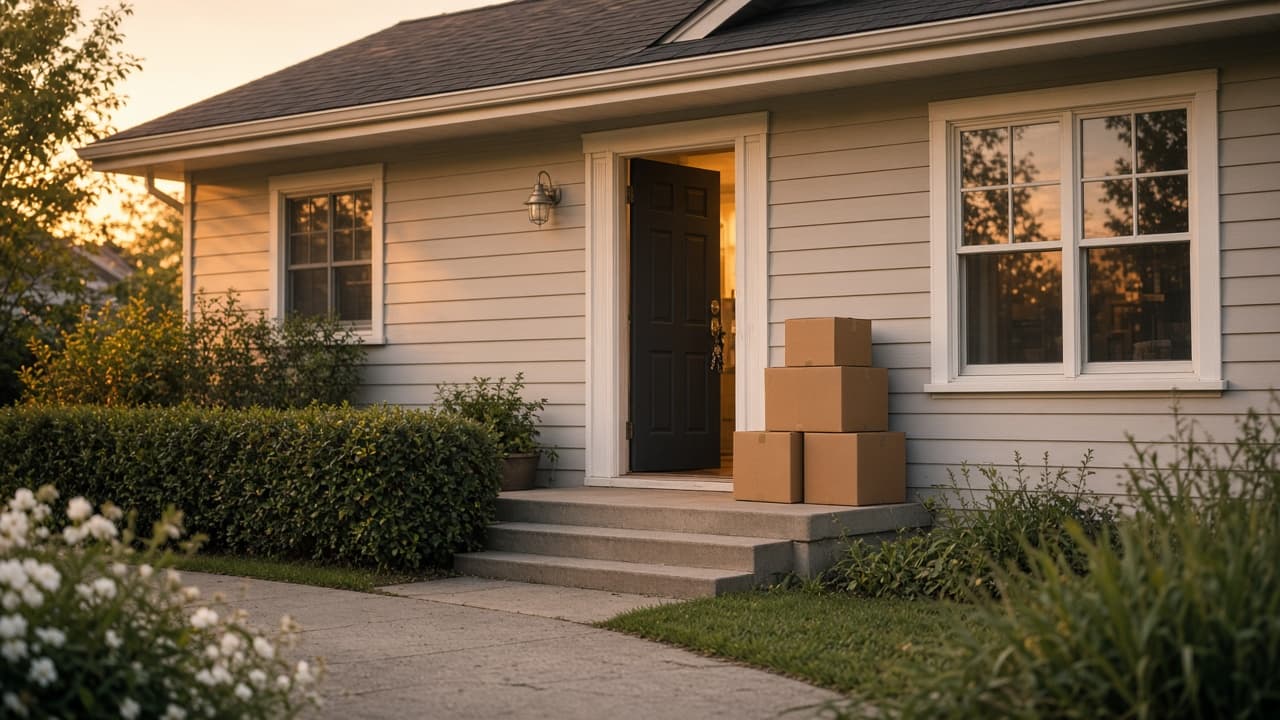
Moving into a new house is identity relocation at the moment of occupancy. Boxes are the old life in portable form. Keys are access. Rooms that keep appearing are the parts of the new self that were not on the tour. The dream is not a property forecast. It is about trying to live in a floorplan you do not yet know.
If you actually moved this month, start with continuity. The rest of us are usually changing roles.
Boxes Everywhere
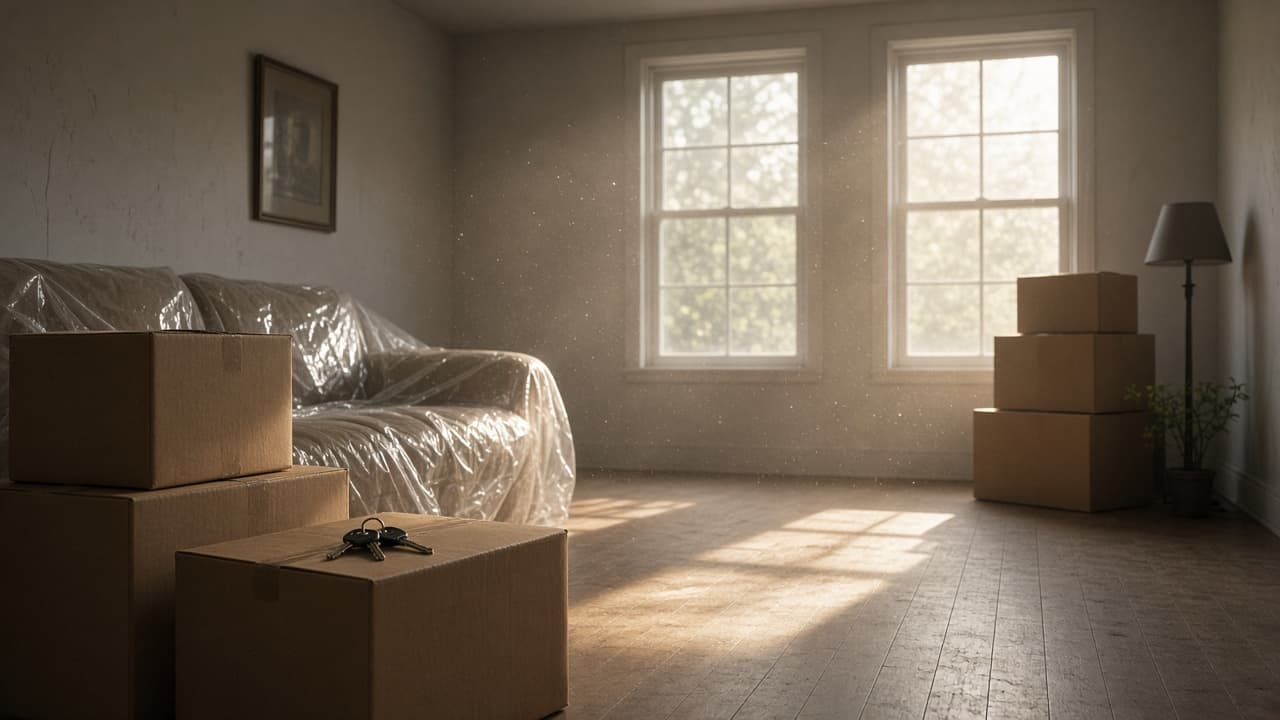
Cardboard is the old world, labelled badly, in the way of the new rooms.
Unpacking is decisions: what gets a cupboard in the next life. Dreamers who cannot find a specific box are looking for a function they used to have, a friend group, a skill, a version of morning. Dreamers who refuse to unpack are stalling occupancy on purpose. A house full of sealed boxes is a self in storage. You have the address. You have not moved in.
If the boxes multiplied while you slept in the dream, the past is still arriving. That is how grief and old jobs behave. If you put boxes out on the street, a discard is in progress. Related transit without a new address lives on moving.
Keys That Do Not Fit
You have a key. The lock disagrees. Or there are too many keys on a ring and the night is a test.
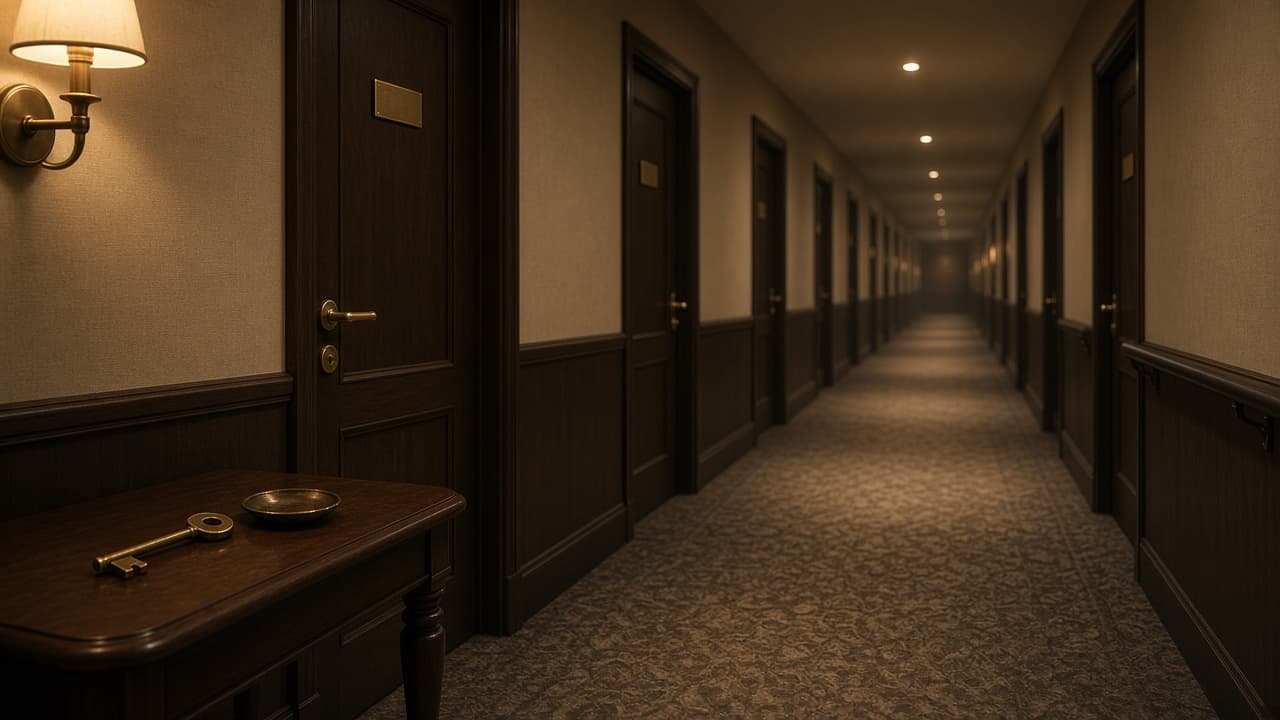
Keys are authorised entry. Failure here is a belonging problem with hardware. New jobs with badges that do not work yet, marriages that do not feel like home, recoveries that still lock you out of your own kitchen at 11 p.m. A key that works on the fourth try is closer to learning. A key that works for everyone but you is exclusion. A key that opens the neighbour's house is a misplaced life: you are using the wrong authorisation.
Losing the keys after you have already entered is a different scare: occupancy without a way to leave and return. That is how some promotions feel.
Rooms That Keep Appearing
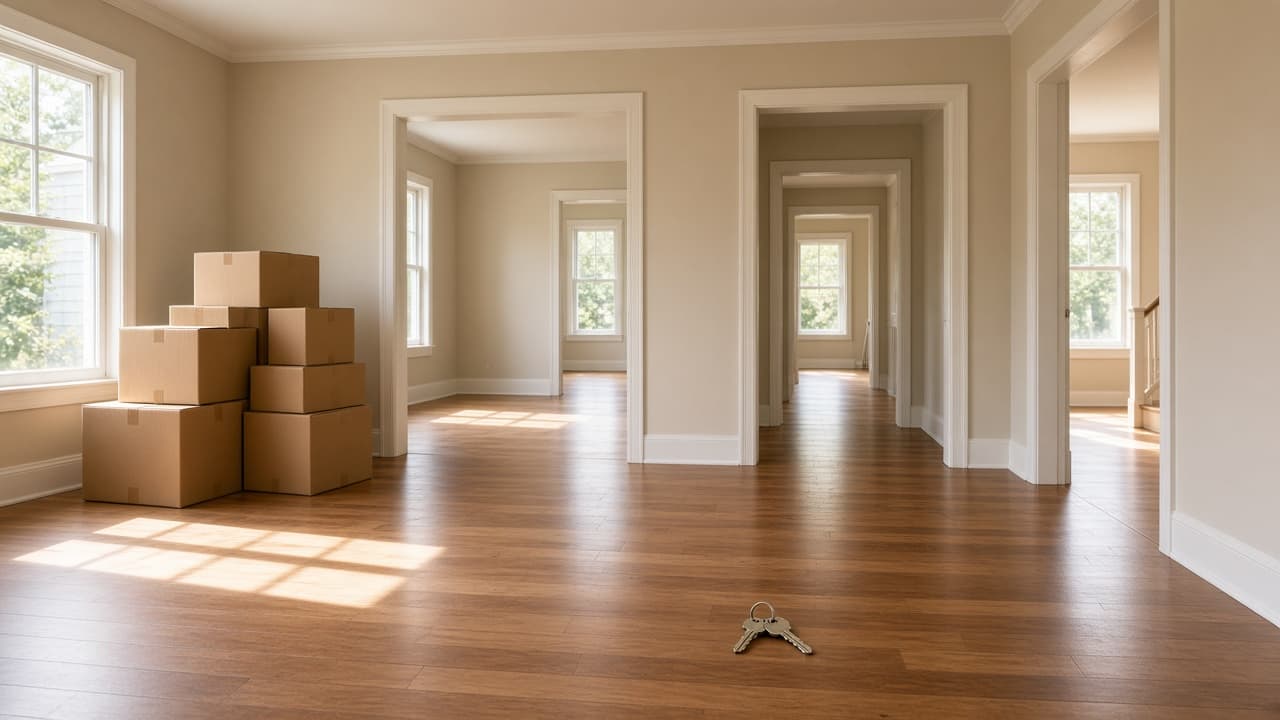
A door that was a cupboard is a hall. A hall is a wing. The house is larger than the listing.
Extra rooms are extra psyche, extra duty, or extra history. Gift-feeling extra rooms often arrive when a life is expanding faster than your self-concept, more love, more work, more talent than you budgeted. Threat-feeling extra rooms are unbudgeted responsibility, or the sense that you will never finish knowing this place, which is a map of anxiety rather than of square footage.
If the new rooms were already furnished, someone else's life is included in the deal. If they were empty and echoing, you are the one who has to decide what they are for. Empty can be freedom. It can also be the fear that you will fail to fill a role.
The First Night
Dark, unfamiliar switches, a bathroom you have to hunt for, a window that looks at the wrong tree.
First-night dreams are about the nervous system in a new container. Even happy moves wreck sleep. The dream is allowed to be banal and still important: you do not yet have a muscle memory of safety here. People who slept in the wrong room, or who could not find their child in the new layout, are running attachment in an unmapped building.
If you wanted to go back to the old house for one night, that homesickness is not failure. Occupancy takes more than a signature. Compare with a hotel, where not belonging is the point of the building. A new house claims you should belong. That claim is what the first night tests.
Have a Moving Into A New House dream of your own?
Write what you remember and get a clear reading.
Previous Occupants
People already live there. They cook. They know the light switches. They may be kind. They may not leave.
This is the inherited-life scene. Step-parenting, joining a family business, moving into a partner's flat, taking a job whose last holder is still a legend. Ghost language is optional. The psychological fact is occupancy conflict.
If you negotiated space, you believe a shared house is possible. If you hid, you do not. If they were dead in the dream but still present, you are dealing with influence that does not require a body, a parent's taste, a previous spouse's rules. Houses page the stable self; this scene is the self trying to overwrite.
Wrong House
You move in and realise the address is not yours. The furniture is almost right. A neighbour says you have the wrong key.
Wrong-house dreams track a life that looks like the one you chose and is not. A relationship that had the right shape. A city that had the right job. A recovery that had the right slogans. The almost-right is the cruelty. Totally wrong is easier to leave.
If you stayed anyway, you may be in a waking compromise. If you left the boxes in the lorry, a reversal is still available. Buying a house is the commitment fantasy or fear. Wrong house is the morning after.
Doors, Neighbours, the Street
The interior is not the whole occupancy. Who can see in. Who you are to the road.
New neighbourhood dreams (watching from a window, not knowing if you say hello) are about a social self that has not been introduced. Privacy versus display. A house with no doors on the street side is exposure. A house behind gates you did not ask for is protection that may be isolation.
If the street was the old street and the house was new, you are changing internally without changing context, a common pattern for people who transform in place.
Psychological Meaning
G. William Domhoff's 2003 The Scientific Study of Dreams gathers the evidence that dream content is largely continuous with waking concerns. People who are actually moving dream moves. People who are changing identity without a van still borrow the most available metaphor for relocation: a house.
Houses as self is older than that book, and still useful if you keep it concrete. Boxes are contents. Keys are rights. Extra rooms are unassimilated parts. You do not need a mystical estate agent.
Stickgold-style overnight processing also fits: the brain is trying to build a map of a new environment, real or social. First-night insomnia after a real move is a cousin of this dream.
If Every Night You Are Unpacking Again
A repeating move-in usually means occupancy is unfinished. Name the real new house: job, marriage, country, body, sobriety. Then pick one box to actually unpack in daylight, one habit, one conversation, one room you will use on purpose.
You cannot finish a dream house. You can inhabit one waking room well enough that the night stops adding wings.