Quick Answer
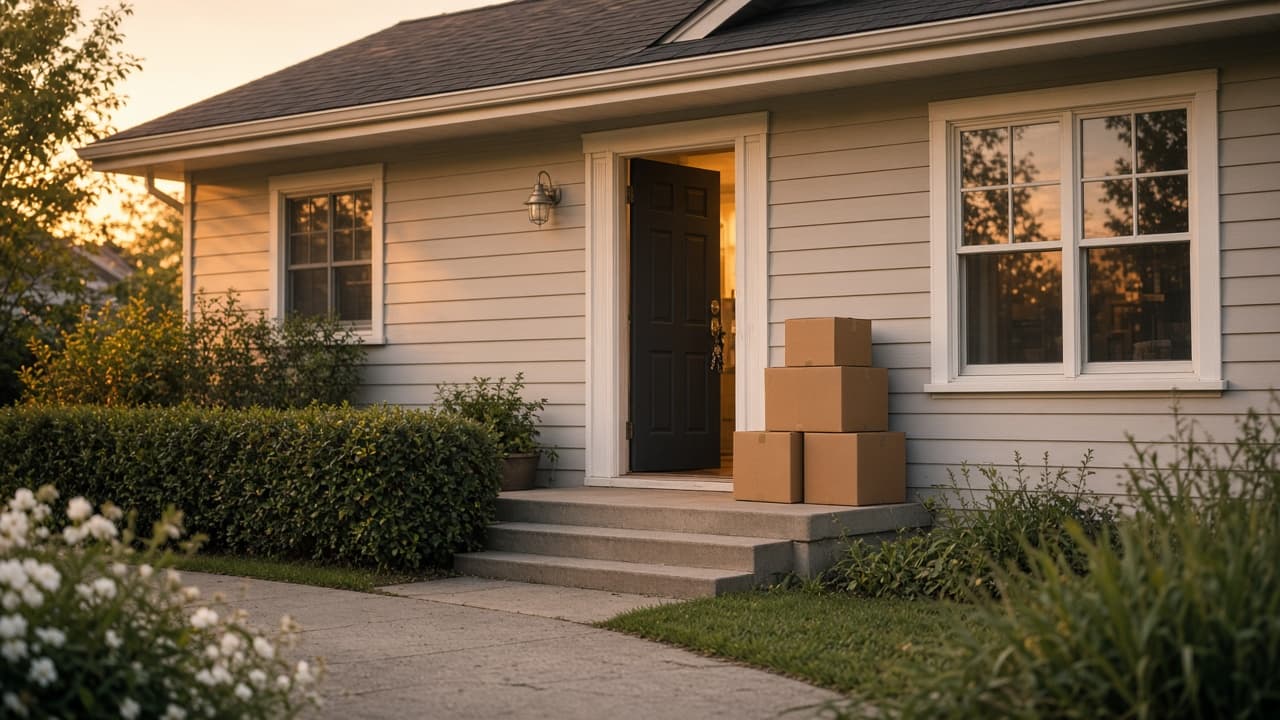
Moving dreams are about relocation, and relocation in sleep is rarely only geographic. You are packing a life, choosing what gets a box, standing in rooms that will belong to someone else, and testing [keys](/dreams/keys) to a place you have not yet smelt in the morning. Something is ending as a habitat. Whether the move felt like relief, exile, or bureaucracy tells you how the waking change actually sits, job, city, relationship, recovery, a self you are trying to put down.
Packing and the Ethics of Boxes
Cardboard, tape, the decision about the kitchen drawer that contains nine lives. Packing dreams are sorting dreams. You are saying yes and no to the past at speed.
People in actual moves get these because the brain is a logistics animal. People not in actual moves get them when a role is ending. The objects that will not fit are usually the tell: a childhood desk, a partner's chair, a uniform, a pile of bags that keep multiplying. You are trying to take a previous economy into a new one.
Sealing boxes you have not looked into is a specific anxiety: you will arrive and not know what you are. Leaving everything unboxed while the van waits is the opposite, you cannot bear to close a version of the rooms.
Leaving a Self Behind
You lock the door and realise a version of you is still in the hallway, or in a photograph left on a hook, or sitting on the steps. The move is an identity event.
This shows up at graduations that are not academic: sobriety, divorce, a diagnosis, becoming a parent, leaving a church, leaving a country. The house was a self. You cannot take all of it. Grief here is not confusion. It is accurate.
If you tried to go back in after the keys were handed over, you are not finished with that self, or that self is not finished with you. If you walked away lighter, something in you has already moved, even if the furniture has not.
The Empty Shell
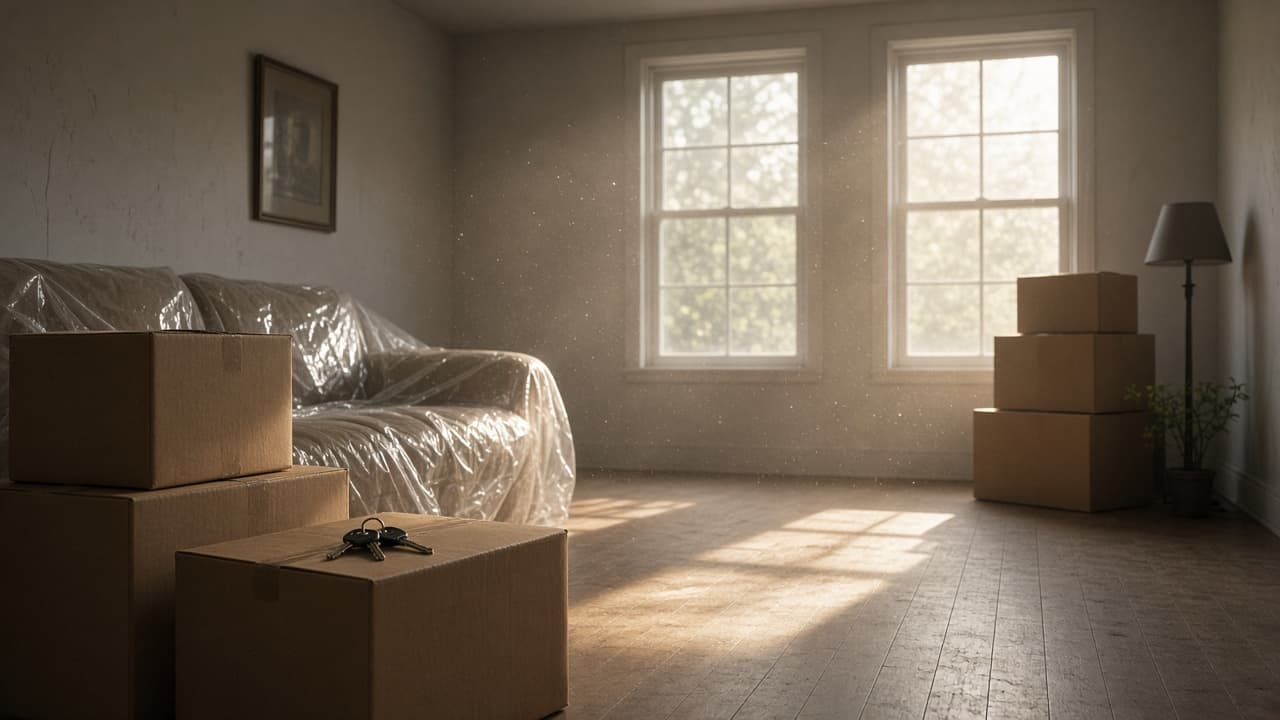
Everything is gone. Footsteps are loud. Sunlight hits marks on the walls where pictures were. Empty-house dreams are aftermath, even when they occur before the real leaving.
They can be peaceful, a clean ending, a job of work completed. They can be bleak: you did not know the life was this small once the stuff was out. They can be guilty, if the empty rooms still seem to expect you.
Stand in the feeling. An empty shell that feels like potential is a buying a house dream in reverse: space, not yet story. An empty shell that feels like a crime scene is often a relationship or a family home that was vacated without a proper death.
New Keys, Wrong Keys, Keys That Come Too Soon
A key on a piece of string, a fob, a code that only works sometimes. Access to the next place is the plot.
Keys that arrive before you have left the old house create a double life, you are already responsible for a future you cannot inhabit yet. Keys that will not turn in the new door mean the next identity has not recognised you. You have the paperwork of a move without the belonging.
Losing the old keys after you meant to keep a spare is a picture of burning a bridge you were not sure about. Finding a key in a pocket you did not know you had is the opposite: an option, a place, a self you had forgotten you could still enter.
Have a Moving dream of your own?
Write what you remember and get a clear reading.
The Van, the Helpers, and Who Carries What
Moves are social even when they feel private. Who showed up, who disappeared, who broke a chair, who labelled nothing: the cast is a map of your actual support.
Dreams where you move alone, at night, with too many stairs, tend to accompany transitions you have not admitted to the people who could help. Dreams where the wrong people are packing your underwear are about exposure during change, family in your boxes, an employer managing your leaving, an ex still handling your things.
If a helper kept putting their own objects into your crates, someone else's life is being smuggled into your relocation. That is worth a daylight conversation.
Arriving at a House That Is Not Ready
The new place is a building site, a hotel, someone else's furniture, a room that is the wrong size for the life you packed. Arrival without readiness is a very common moving dream and a very common waking experience.
You got the job before you knew how to do it. You moved cities on a start date. You are married and the home is still two people's storage units. The dream is not saying you made a mistake. It is saying inhabiting lags behind relocating.
Trying to cook a meal in an unbuilt kitchen is a particularly honest image. You want ordinary life and the habitat cannot produce it yet. Lower the standard of the first week. The dream will often quiet when the first real meal happens.
Going Back to the Old Address
The body walks there. The key still works, or does not. New people open the door. You are a ghost in a place that has moved on without waiting for your inner timetable.
This is unfinished leaving. It is also, sometimes, a check: did I abandon something that still needed me? A plant, a neighbour, a version of evenings. If the new occupants were kind, the old life can be visited without being reclaimed. If they were hostile, you may be trying to re-enter a system that has already recoded the locks.
Repeated returns, night after night, usually mean the identity move is being done only in furniture, not in mourning.
Psychological Meaning
G. William Domhoff's 2018 The Emergence of Dreaming (and the continuity hypothesis running through his career) is the right first tool. People who are actually moving dream about moving. People whose lives are relocating without a van, new role, new diagnosis, new country of the self, use the same script because houses are how we store who we are.
Ernest Hartmann argued in 1996 and after that dreams contextualize emotion by finding a picture that can hold it. Leaving a home is one of the few pictures large enough for the blend of hope, shame, logistics, and grief that real change produces. Boxes are decisions. Empty rooms are the volume of what was lived. Keys are belonging.
Jung's house-as-psyche image still earns its keep here, with a caveat: a moving dream is the house in transit. Floors you cannot find are functions you have not unpacked. An attic you left behind is memory you are not taking. Do not turn every box into an archetype. Do notice which floor you keep forgetting.
Read the dream as a report on relocation of self. What is in the boxes, who is carrying them, and whether the new door knows you are the one who should come in.
When You Are Always Moving and Never Arriving
Recurring moving dreams, especially those that never reach an inhabitable room, often mean the waking life has become a sequence of temporary habitats, hotels, contracts, almost-relationships, identities you can pack in a weekend. The dream is tired of being good at leaving.
One experiment: unpack one literal or metaphorical box all the way. Put books on a shelf. Tell one person you are staying. Cook in the unfinished kitchen. Recurrence loves an incomplete threshold; it has less to do when a threshold is crossed badly and honestly.
If the dreams are of being forced out, eviction, fire, a landlord with no face, you are in threat territory, not growth territory. Safety first, interpretation second. A move you did not choose is a loss, even when the next rooms are finer.