Quick Answer
Dreaming about buying a house is rarely about property. Buying is a commitment you cannot easily undo, and a house is where a life takes place, so the dream tends to arrive around choices that will define the next several years: moving in with someone, changing direction, starting a family, deciding where you belong. The stage of the purchase is the clearest guide. Viewings correspond to considering options. Signing corresponds to commitment. Discovering faults afterwards corresponds to doubt about a decision already made. And a house you cannot afford is usually the dream telling you what a commitment is actually going to cost.
Viewing a House You Cannot Afford
You walk through beautiful rooms with a growing awareness that the number does not work. Dreamers often report the estate agent being pleasant and the arithmetic being brutal.
These dreams accompany aspiration outrunning resources, and the resource is not always money. Time, energy, and emotional capacity all show up in this dream as price. People considering a demanding new role, a second child, or a relationship with someone whose life is much larger than theirs describe versions of it regularly.
Whether you tried to buy it anyway is the interesting detail. Dreamers who put in an offer they knew they could not cover tend to have a matching waking situation, a commitment being made on optimism rather than capacity.
Buying a House You Have Not Seen Inside
The dream skips the viewing. You have bought it, you are standing outside with the keys, and you have no idea what is behind the door.
This version tracks commitment made on incomplete information. It appears around fast decisions: a job accepted without meeting the team, a relationship escalating quickly, a move to a city you visited once. The dream is not necessarily a warning, dreamers often report excitement rather than dread, but it is an accurate description of having bought something sight unseen.
What you found when you went in matters more than the purchase. Empty rooms lean toward blank potential. A house already furnished with someone else's things usually means you have taken on a situation that came with history attached.
Signing the Papers
Some of these dreams narrow down to a single moment: a pen, a document, a desk, and the awareness that this is the point of no return.
Signing dreams cluster tightly around irreversibility rather than the thing being signed. They turn up before weddings, before resignations, before medical procedures, before agreeing to care for someone. The pen frequently misbehaves in the way dream objects do, running out, tearing the paper, producing a signature that does not look like yours, and that malfunction usually reflects a reservation that has not been voiced.
If someone was hurrying you, identify them. Pressure in a signing dream is rarely invented.
Finding Extra or Hidden Rooms
One of the most commonly reported pleasant surprises in all of dreaming: the house is bigger than it appeared. A door you had not noticed opens onto more space.
Extra rooms generally accompany discovering unexpected capacity. It comes after recovery from a long illness, after leaving a constricting relationship, after a change of career reveals abilities you had not used. Dreamers frequently describe the rooms as unfinished or dusty, which fits, the capacity is real but not yet in service.
Occasionally the extra rooms are unsettling: locked, occupied, or containing things you do not recognise. That variant belongs closer to the broader material on houses, where the building maps onto the self rather than onto a purchase.
Discovering the House Is Damaged
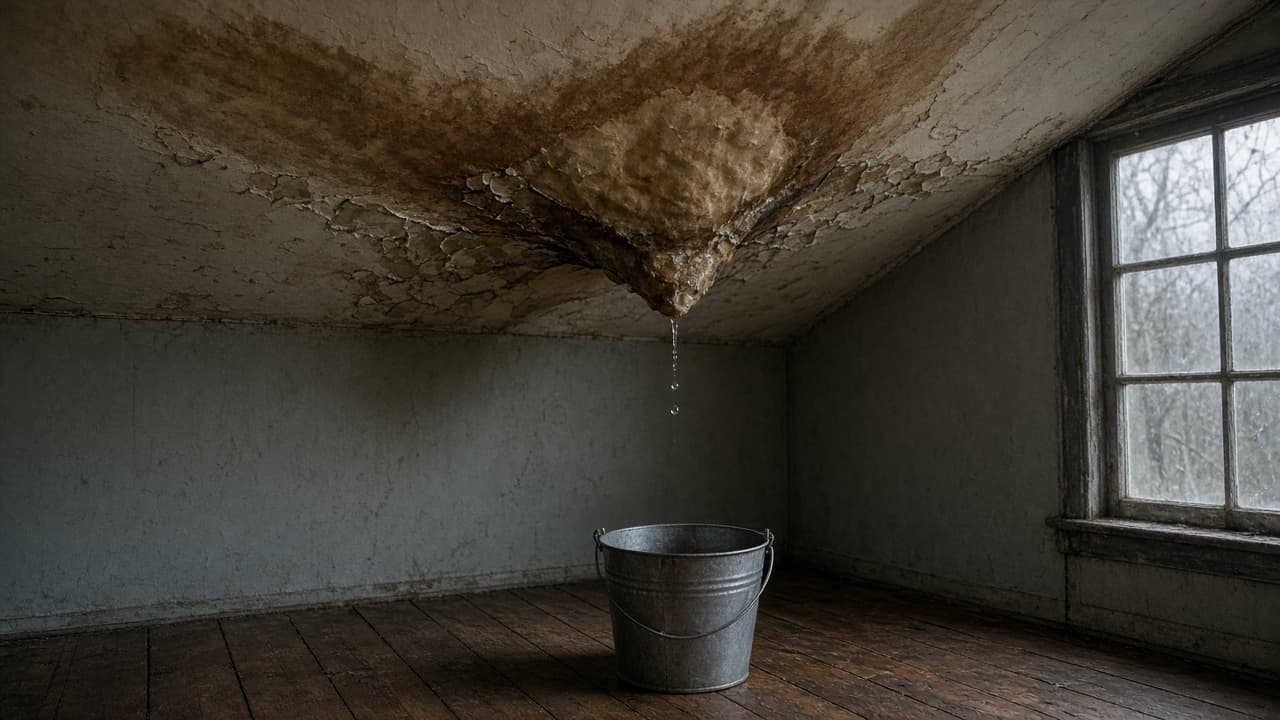
The keys are yours and then the survey arrives late, as dreams often arrange things: damp behind the wallpaper, cracks in a wall, a roof that has been letting water in for years.
This is a buyer's-remorse dream, and the specific fault is usually descriptive rather than decorative. A leaking roof points at inadequate protection, a commitment that leaves you exposed. Cracked foundations point at doubts about the basis of the decision itself. Rot and infestation more often accompany a suspicion that the problem was there before you and has been developing quietly.
Dreamers commonly report the sensation of having been told and not listened. That is worth taking seriously as a question rather than a verdict: was there something you were warned about.
Buying a House With Someone Else
When a partner, sibling or friend is in the transaction, the dream becomes a negotiation. Two people, one set of rooms, and usually a disagreement.
Notice what the argument was about. Dreams of this kind reproduce joint decisions remarkably faithfully: which room becomes what, whose furniture goes where, who is paying more. The dispute in the dream is often a compressed version of a real imbalance, money, effort, or whose life the shared arrangement will actually be organised around.
Dreams where the other person disappears mid-purchase, or where you cannot reach them for a decision, tend to accompany real uncertainty about whether they are as committed as you are.
Have a Buying A House dream of your own?
Write what you remember and get a clear reading.
Buying Your Childhood Home
Occasionally the house on offer is the one you grew up in, and the dream lets you buy it. Dreamers describe an intense, complicated feeling that mixes triumph with something heavier.
This is about returning rather than acquiring. It surfaces during attempts to reclaim security that once existed, or at moments where you are finally the adult with the resources, buying the thing that was your parents' to control. It also appears when a family home is genuinely being sold, or after a parent's death, which gives the dream a plain trigger.
The state of the house matters. Restored and warm tends to accompany healing; derelict tends to accompany the recognition that what you want back no longer exists in the form you remember.
The Sale Falling Through
Chains collapse, sellers withdraw, another buyer appears, or the paperwork evaporates. Dreamers wake with the specific deflation of something that had felt settled coming undone.
Loss-of-purchase dreams accompany fragile plans. They cluster around periods where a future has been imagined in detail but not secured: a job offer that has not been confirmed, a pregnancy in the early weeks, a move waiting on someone else's decision. The dream rehearses the collapse, which is unpleasant and probably useful.
Being Handed the Keys
Sometimes the whole dream is a moment of transfer. A hand, a set of keys, a door. Dreamers often report the weight of them.
Key-handover dreams tend to mark arrival, permission, or authority. They show up when something has been granted, a promotion, independence, custody, the end of a long process, and dreamers frequently describe the feeling as more solemn than joyful. If the keys did not work, or opened a different door, read that against the broader patterns on keys.
Psychological Meaning
Houses are among the most common settings in recorded dreams, which is one reason this dream feels so ordinary even when its subject is enormous. Calvin Hall and Robert Van de Castle's content-analysis norms, built from thousands of dream reports in the 1960s, found residential settings dominating the sample, familiar rooms are the everyday furniture of dreaming.
G. William Domhoff's continuity hypothesis accounts for the timing. Dream content largely follows waking preoccupation, so people going through mortgage applications, moves, and cohabitation decisions dream about them with unremarkable regularity. If you have literally been house-hunting, that is a sufficient explanation, and it does not stop the dream from also carrying feeling about the commitment.
The symbolic layer has a long history. Jung treated the house as an image of the psyche, with different floors and rooms corresponding to levels of awareness and to inherited material, a reading that fits the hidden-room versions of this dream unusually well. In the buying variant, the interesting addition is the transaction: not just what the self contains, but the price of taking possession of a particular life.
There is also a straightforward stress account. Property purchase is consistently ranked among the more stressful life events, involving large sums, long uncertainty, and dependence on other people's decisions. Michael Schredl's research on the relationship between waking stress and dream intensity would predict exactly what dreamers report, more vivid, more anxious dreams during the chain, and relief dreams afterwards.
Practically, the most useful question is not what the house means but what you would have to give up to keep it. That question tends to reveal the waking decision the dream is actually about.
Spiritual and Biblical Meaning
Building and buying houses carries genuine weight in scripture, mostly as an image of what a life is founded on.
The parable at the end of Matthew 7 contrasts a house built on rock with one built on sand, and the difference only becomes visible in a storm, which is close to what damaged-house dreams keep dramatising. Proverbs 24:3 frames a house as something built through wisdom and established through understanding, treating the structure as the product of character rather than money. Jeremiah 29:5 has exiles instructed to build houses and settle down in a place they had not chosen, which speaks directly to dreams of buying somewhere you are not sure about.
John 14:2, with its many rooms prepared, is the passage most often quoted to people grieving, and it sometimes surfaces in dreams of houses with more space than expected. Whether or not you read dreams devotionally, the consistent thread across these texts is worth noting: the tradition is far more interested in foundations than in acquisition.
When You Keep Dreaming of Buying
Repeated purchase dreams usually mean a commitment is still being weighed rather than that a decision is overdue.
If the dreams recur, track one thing: at what stage they keep stopping. Dreams that stall at viewings suggest you are still gathering information. Dreams that stall at signing suggest the reservation is about the commitment itself. Dreams that keep arriving after the purchase, with faults appearing, suggest the decision has been made and not yet accepted.
Where a real transaction is underway, expect the dreams to intensify and then fade; property stress is a well-known dream generator and it usually settles within weeks of completion. Where there is no real purchase in progress, treat the house as a question about the life rather than the building, what you are about to take on, what it will cost, and whether you have looked at all the rooms.