Quick Answer
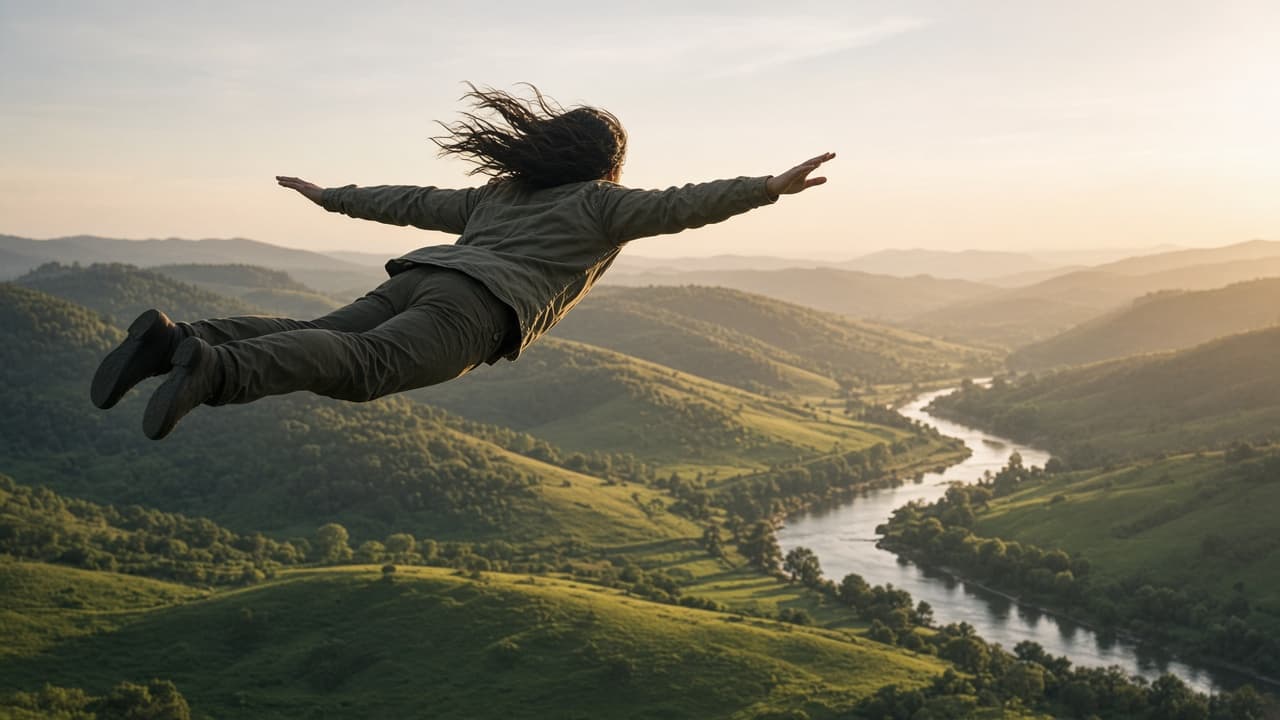
An eagle is a hunter that works from height. Dream eagles usually mark perspective, predation, and power that does not have to hurry, plus a thick layer of national, imperial, and religious costume that you should notice and then look through. How it flew, what it hunted, whether a wing worked, and whether you were the bird, the prey, or the person on the ground with a neck ache, decide the reading. [Flying](/dreams/flying) as a human is agency. An eagle is agency with a beak.
Soaring, a High View, Thermals
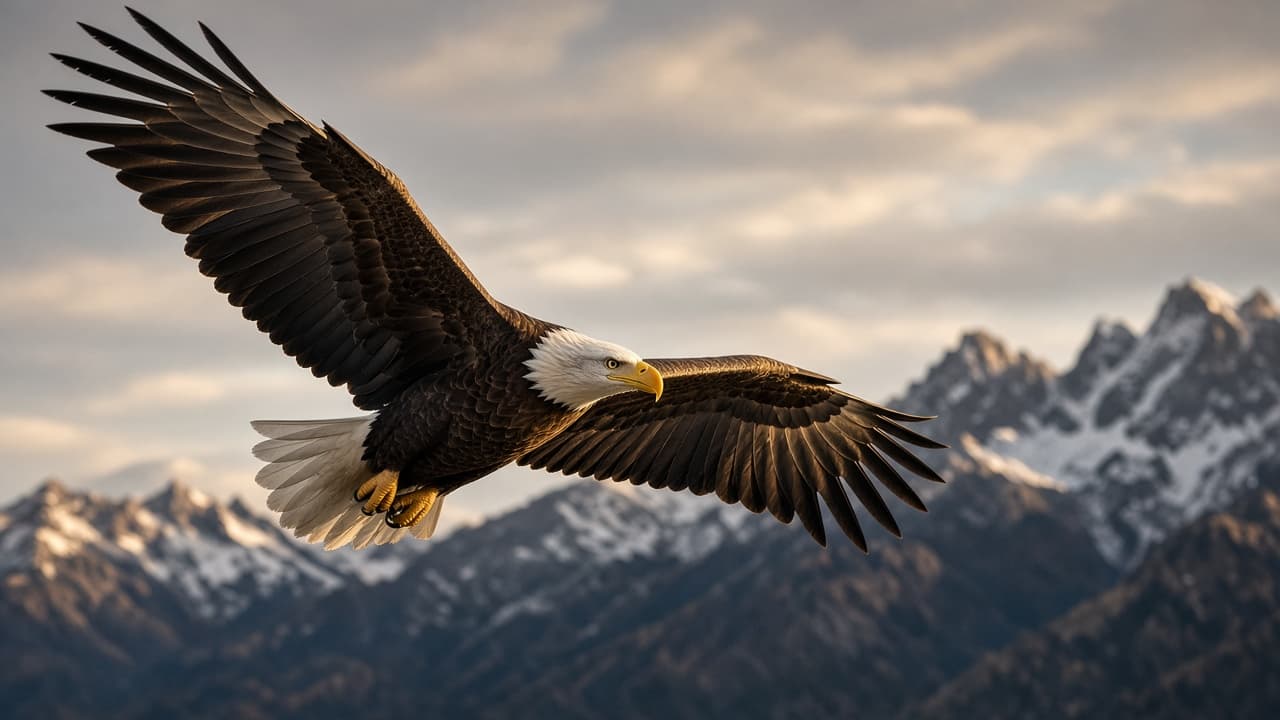
The bird is a speck, then a map. Landscape becomes information.
Soaring dreams are about perspective you currently have or want: a role that lets you see the pattern, a recovery of dignity, a mountain of work that finally has an overlook. People after promotions, after leaving a tangle, after getting sober enough to see a family system, report this one.
If the height was lonely, power without peers is the subject. If other birds were beneath you, the dream may be honestly hierarchical, or honestly arrogant. The feeling on waking is the tie-break.
Hunting From Above, a Stoop, Prey in Talons
The view becomes a strike. Speed, a scream, something small.
This is predation, and it is allowed to be yours. Closing a deal. Ending a situation. Sexual or intellectual capture. A lawyer, a surgeon, a journalist, a parent removing a threat from a child. The honesty test is whether you liked the talons.
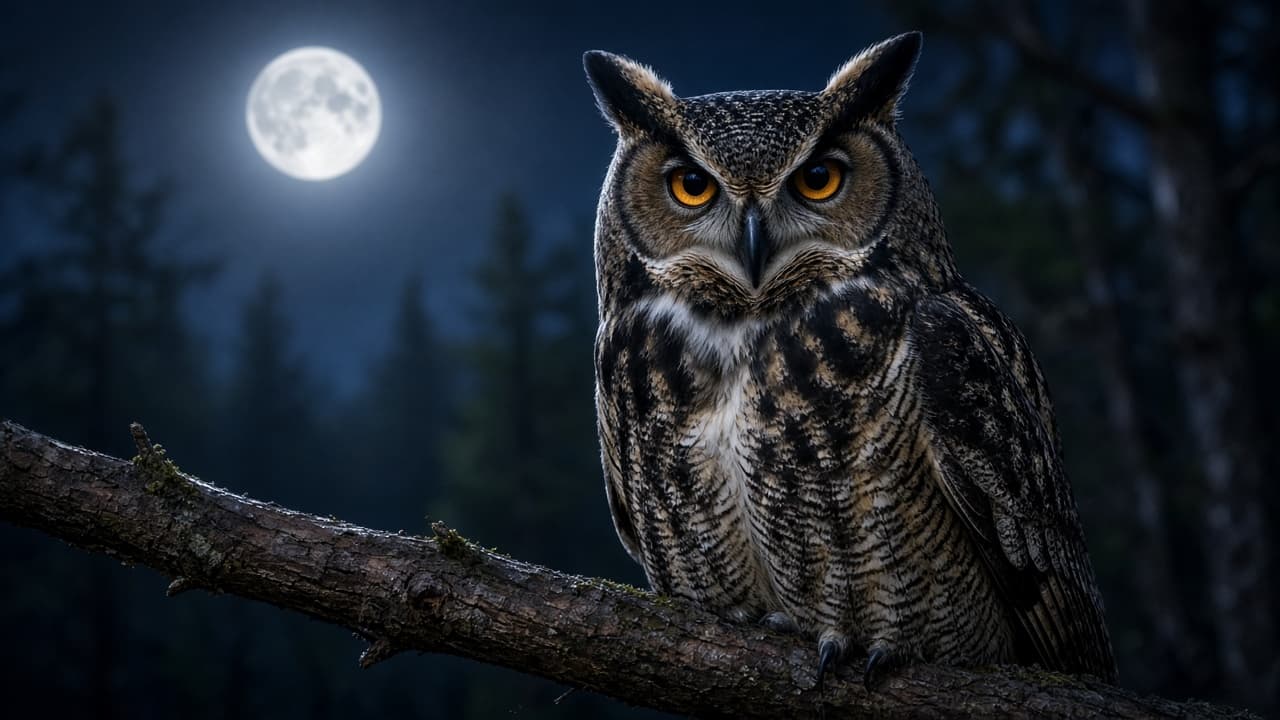
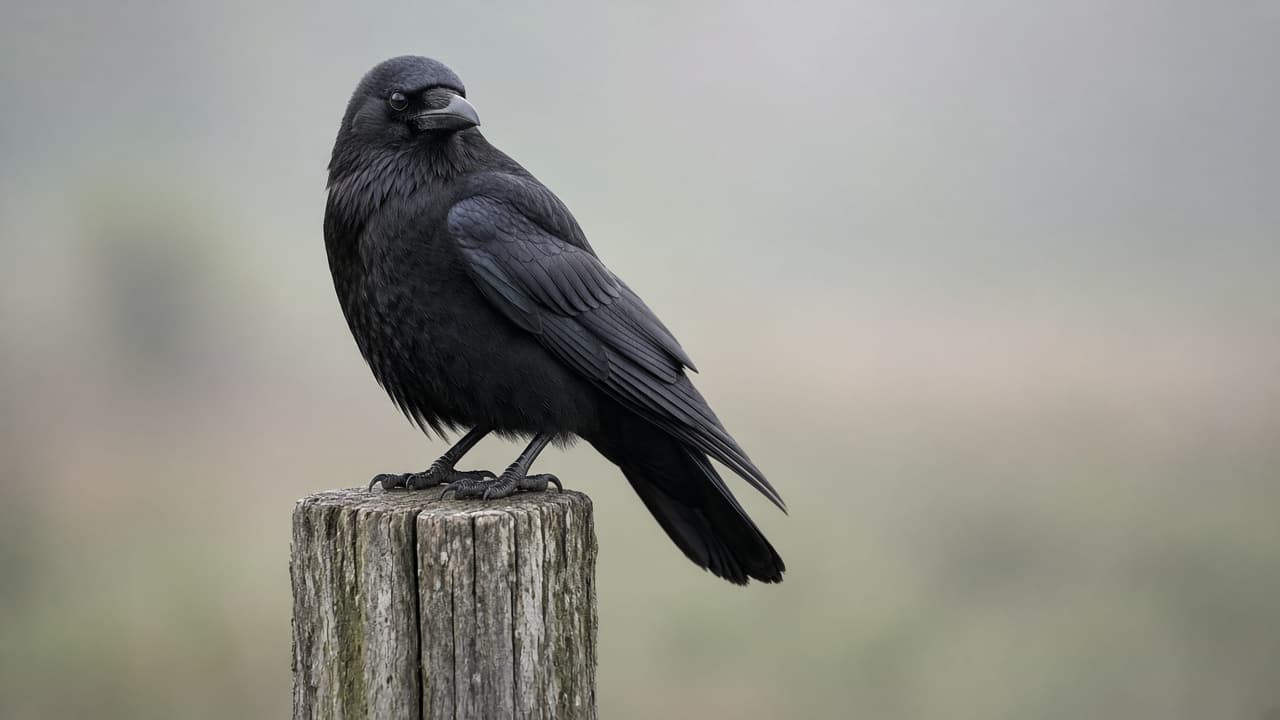
If you were the prey, a force above you has selected you, an audit, a state, a celebrity-attention, a family patriarch, a mood of judgement. Unlike a crow mob, this is usually one actor with altitude. Unlike an owl, it is not primarily about night knowing; it is about day power.
An Eagle on a Pole, a Roof, a Court of Arms
Stillness as display. The bird as sign rather than as hunter.
Perched eagles are emblems. Dreamers in the United States especially get bald eagles as news, patriotism, protest, or irony. The dream may be about the country, a courtroom, a company logo, a father who collected that imagery. It may also just be a large bird on a structure.
Whether it looked alive or like metal matters. A stuffed or carved eagle is a power that has become décor, still watching, no longer hunting. A live bird using a flagpole is the living force wearing the costume.
Injured Wing, grounded Eagle, Oil, a Trap
The high function fails. Hopping, a wing that will not set, a bird on a pavement.
This is one of the more useful eagle dreams because it resists the poster. A capacity you identified with altitude is compromised: health, visa, reputation, a moral injury, age, a scandal. Identification is frequent. You are the bird, and the pavement is humiliating.
Who helped, a stranger, a child, nobody, is the social world of the injury. Killing a wounded eagle can be mercy or the end of a persona. Taking it home is a caretaking plot that may be too much bird for a kitchen.
Have a Eagles dream of your own?
Write what you remember and get a clear reading.
An Eagle in the House or Too Close to Your Face
Wrong scale for the room. Beak, yellow eye, a living room that cannot contain a raptor.
Indoor eagles mark public power in private space: work identity at the dinner table, national politics in the marriage, a parent’s stature sitting on the sofa. It is magnificent and it breaks the furniture.
A face-level eagle is evaluation at a distance that does not allow you to be a landscape. You are being seen as prey or as rival, not as a person in a chair. Backing away is allowed.
Nest, Eaglets, Teaching to Fly
Height plus young. A scrape on a cliff, a platform, food torn up.
Nests are high caretaking. People raising children they want to be powerful (or free) dream this. So do founders, teachers, and anyone feeding a next generation of a craft. The cruelty of eagle parenting in nature (siblicide, harsh fledging) sometimes shows up; that is a picture of a developmental environment, not an instruction.
If you were the eaglet, the question is whose height you are being shoved toward, and whether your wings are actually ready. Pushing a young bird off a ledge is a dream about forced independence. It can be timely. It can be a repetition of a cold family.
Dead Eagle, Fallen, Shot
The emblem on the ground.
A dead eagle is a power that has ended, a regime, a career identity, a myth of exception, a parent. Grief and relief mix, especially if the bird had been hunting you. National dreamers sometimes get this during political loss or disillusion; it is continuity, not prophecy of a state’s fate.
Feathers as objects (a gift, a trophy, illegal possession) are leftover authority: you are carrying a piece of a height you do not currently occupy. Whether that is costume or relic depends on whether you still hunt.
Psychological Meaning
Jung’s eagle as spirit, sun-bird, and imperial height is the inherited European reading, and it is sitting in the room whether you invited it. Use it as culture, not as a stamp of chosenness. G. William Domhoff’s continuity hypothesis (2018) will usually beat it: people who hike, falcon, watch news, serve, or work in glass towers dream the raptors their lives already contain.
Freud (1900) is less specific here except as a reminder that large birds can carry parental and sexual force, being snatched, being lifted. If the dream was bodily, believe that.
Revonsuo’s 2000 threat-simulation theory covers being stooped on from above, a genuine raptor geometry. Hartmann (2011) would read soaring as a picture of "I can see the whole thing" and a grounded wing as "the high function is offline."
Deirdre Barrett’s problem-solving dreams sometimes give people the view they refused in the office: the pattern was visible from altitude, and the stoop was optional.
National symbolism deserves a special caution. Bald eagles in American dreams are often about America, or about the part of the self that uses that language. That can be serious. It is still not a patriotic fortune.
View Versus Wing
Separate the two gifts. Perspective is not the same as strike, and neither is the same as being able to take off tomorrow.
If the eagle returns, ask which job it had: map, hunt, emblem, parent, invalid. Then ask which job you had in relation to height this week. Coming down the mountain on purpose, repairing a wing, or refusing to decorate yourself with a bird you cannot currently fly, are all legitimate daylight moves. The night-time raptor tends to change posture when the altitude in the day does.