Quick Answer
A blue dream is often a colour-field: sky, sea, wall, or bruise with almost nothing standing in front of it. The hue is doing the work that a person or an object would do in a more crowded night. Cool distance, withheld speech, and a sadness that has no plot yet are the usual cluster. Read the temperature and the distance before you reach for a lucky-colour list. Ice-blue, bruise-blue, and swimming-pool blue are three different nights that happen to share a name.
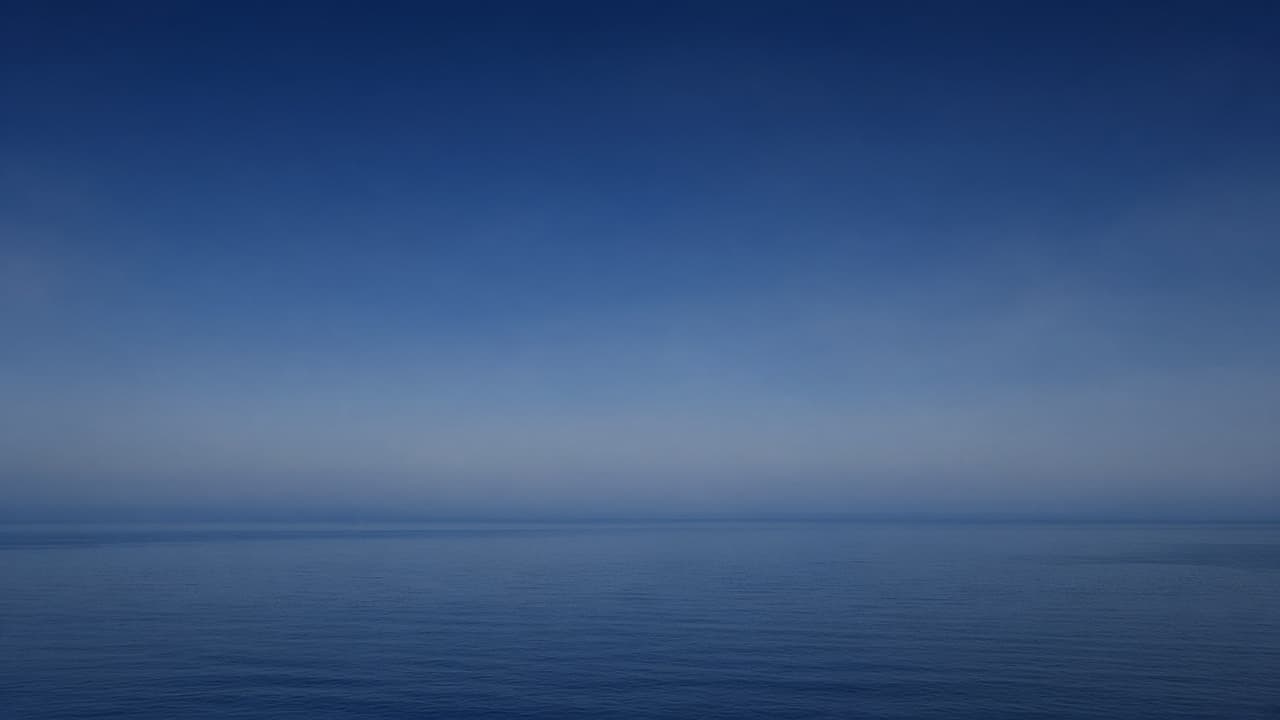
A Sky With Nothing In It
Empty sky that is only blue, no plane, no bird, no weather event. Dreamers often report looking up and finding the colour itself the event.
This scene tends to arrive when waking life has gone wide and under-specified, a gap between jobs, a move that has not landed, a relationship that is officially fine and privately uninhabited. Blue here is not peace. It is the absence of landmarks. Compare ocean dreams where the same emptiness is underfoot rather than overhead.
If the sky felt like a ceiling you could not get above, the dream is closer to stalled ascent than to serenity. If it felt like weather you could walk around in, you may already be living in the pause and simply noticing it.
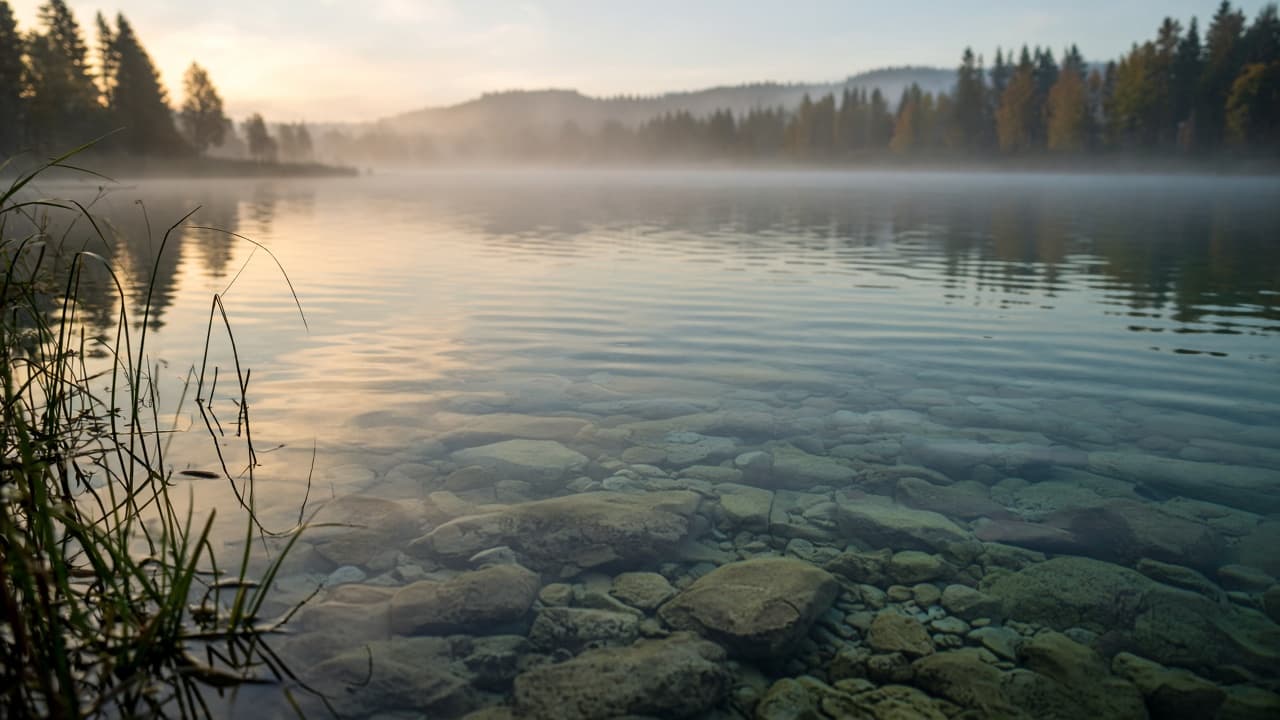
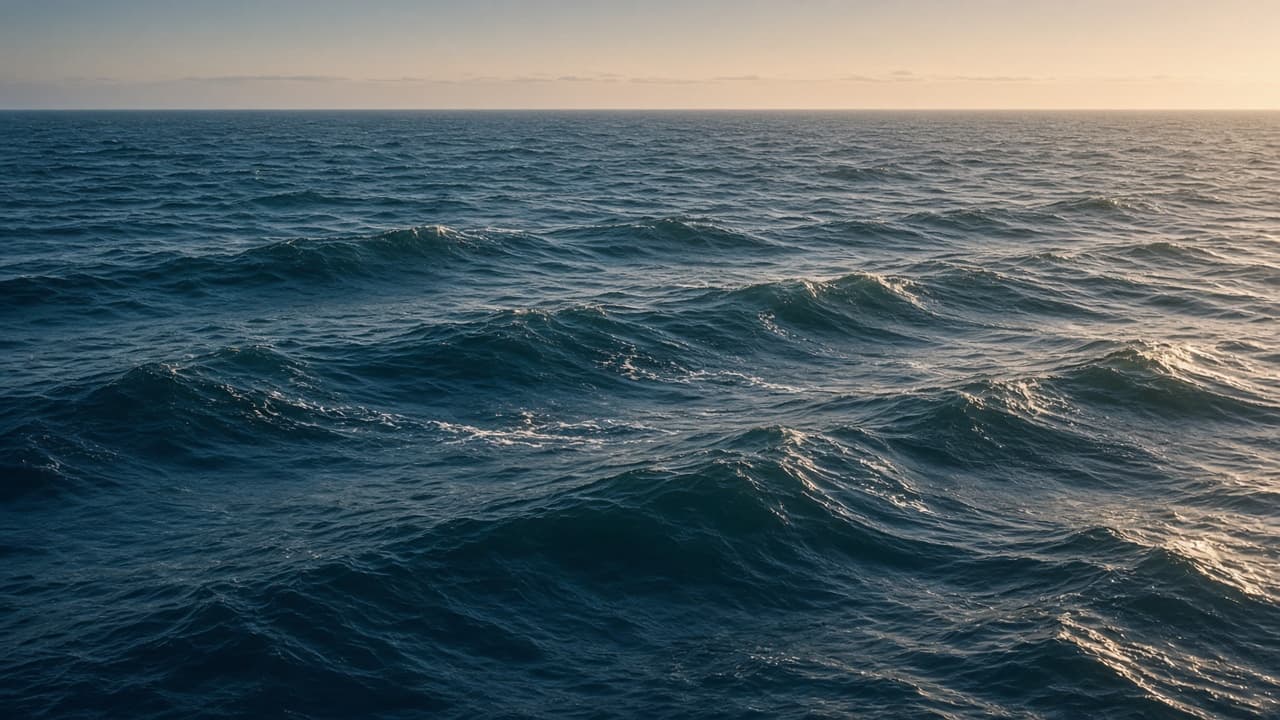
Blue Water With No Shore
Water that is blue rather than clear, dark, or dirty, and that refuses to become a beach. You are looking at it, standing in it, or floating without a horizon line that would let you leave.
Blue water is the emotional medium with the volume turned toward coolness. Heat would be fire or blood. Opacity would be silt. Blue keeps the feeling visible and still slightly out of reach, you can see that there is feeling, and you cannot quite get a grip on its temperature.
Whether you wanted to enter matters. Standing on a rim and looking is a different dream from already being in and unable to find the edge. The second is closer to drowning even when the water is beautiful.
A Bruise Coming Up Blue
Skin that is going blue-black, a shin, a cheek, a place you cannot remember hitting. The bruise is the colour-field made local and bodily.
These dreams often follow an impact that did not look like an impact at the time: a meeting that went quiet, a text that did not come, a family remark that landed after you left the room. Bruises develop on a delay. That delay is frequently the point.
If you were hiding the mark, the dream is about what you do not want witnessed. If you were showing it to someone who would not look, you already know who in waking life is refusing to see the contact.
A Room Washed Entirely in Blue
Walls, curtains, light, the interior has been dyed. Objects may still be there, but they have lost their own colours.
A blue room is mood as architecture. You are living inside a feeling rather than visiting it. Dreamers report this around depressions that have not been named as such, around grief that has become the furniture, and around cool competence that has replaced warmth in a household.
Notice whether you could leave. A blue room with a working door is a state you are occupying. A blue room with no exit is a state that is occupying you. Rain against the windows usually means the weather is still happening outside you; sealed blue with no weather is more internal.
Have a Color Blue dream of your own?
Write what you remember and get a clear reading.
Blue Clothes You Did Not Choose
You are wearing blue, or being dressed in it, and the garment is the whole plot. Uniforms, bridesmaid dresses, hospital gowns, a jumper that belonged to someone else.
Clothing-blue is identity on loan. Someone else's idea of who you should be is sitting on your skin. If the fabric felt like a costume, you are likely performing a role that keeps you slightly cold to yourself. If it felt like relief, the coolness may be a boundary you needed, a way of not being available for every demand.
Compare clothes dreams in general; the colour here is the extra data. Blue specifically tends toward professionalism, mourning, or "do not touch" rather than display.
Looking at Someone Who Has Gone Blue
A face, lips, or hands that have taken on the colour of poor circulation. This is the alarm version, and it is still not a medical prediction.
The dream is using a body-signal everyone recognises: this person is not getting what they need. It may be you. It may be a partner who has gone quiet. It may be a parent you have not called. The colour is a shorthand for "something vital is not circulating."
If you were trying to warm them, the waking analogue is usually care you already know you owe. If you walked past, the dream is recording a numbness of your own.
Blue Light With No Source
A glow, a screen, a neon, twilight that never becomes night. There is light, and it is blue, and you cannot find the lamp.
Sourceless blue light often maps onto attention that is on without a task, the phone, the insomnia hour, the conversation that continues after it has stopped being useful. It is stimulation without warmth. Dreamers who work screens late report this more than people who do not, which is continuity rather than mysticism.
If the light felt sacred or church-like, you may be reaching for meaning in a period that has gone technically bright and emotionally thin. If it felt clinical, the period is already being processed as examination rather than as life.
Psychological Meaning
Colour in dreams is easy to over-interpret because waking culture already sells palettes as personality tests. The more careful route is ecological. Stephen Palmer and Karen Schloss's 2010 work on colour preference, the ecological valence theory, argued that people like colours to the degree that they like the objects those colours are typically attached to. Blue wins many preference studies not because it is spiritually superior, but because it is the colour of clear days and clean water more often than of spoilage.
That finding is useful for dreamers. If your blue was sky-and-sea, the valence may be the open, slightly lonely good weather of a pause. If your blue was bruise, hospital, or lips, the attached objects are injury and under-supply, and the feeling will not match the "calm blue" poster.
Calvin Hall's mid-century dream reports already treated colour as secondary to action: what you did in the blue mattered more than the blue. Keep that order. The colour-field dream is what happens when action thins out and affect has to carry the night alone.
Practically: name the blue's temperature, name the distance, then ask what in your current life is wide, cool, and under-described. That is usually enough.
When Blue Dreams Keep the Room
Repeating blue nights often mark a mood that has become the climate. If the scenes stay empty, sky, sea, room, no people, the useful move is not a colour dictionary. It is asking whether waking life has too few objects in it: too few plans, too few conversations with heat, too few places you actually want to stand.
A bruise-blue series that will not fade is more specific. Something hit, and you have not yet let anyone see the mark. The dreams tend to quiet when the impact is named to a person who can look.