Quick Answer
A black shadow attacking you is a presence: a figure without a negotiable face, often with weight on the room or the chest. It sits next to sleep paralysis and next to ghost and demon stories, which is why people wake convinced something was there. The useful split is body-state versus plot. If you were in your real bedroom, unable to move, start with paralysis. If you were running through a story, start with threat that will not become a person.
This is educational, not a haunting certificate.
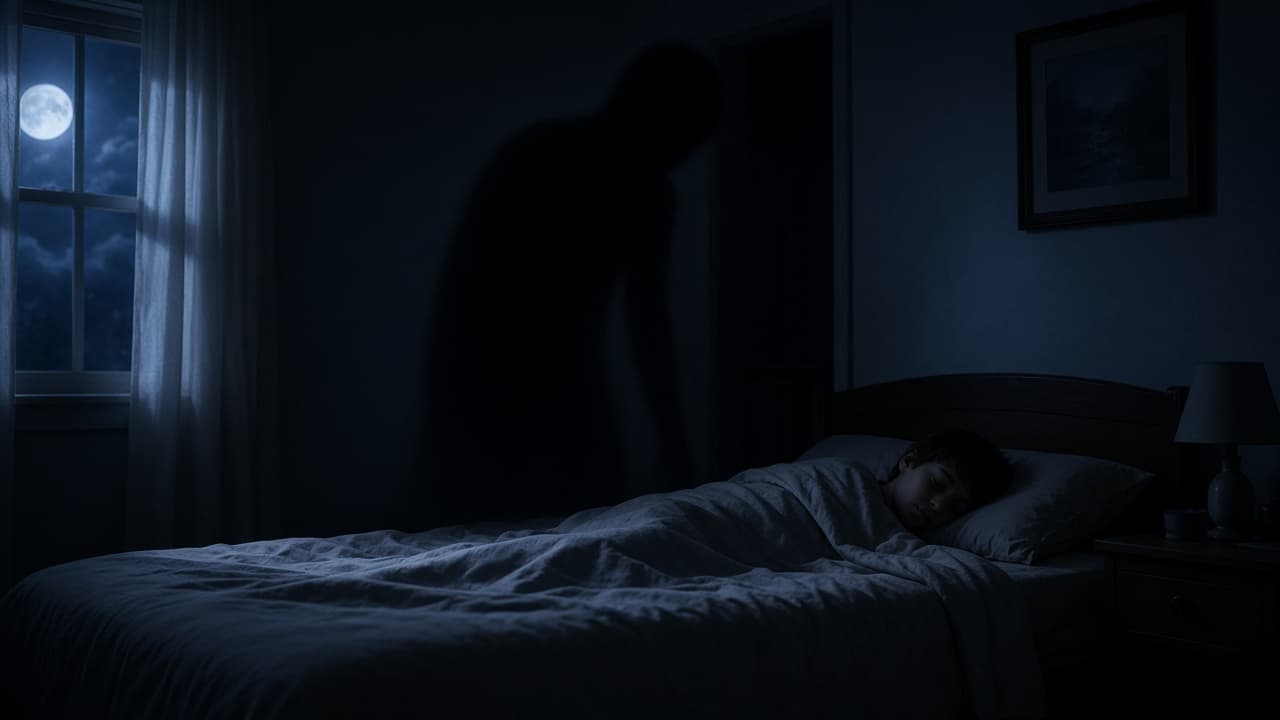
The Shadow Figure in the Room
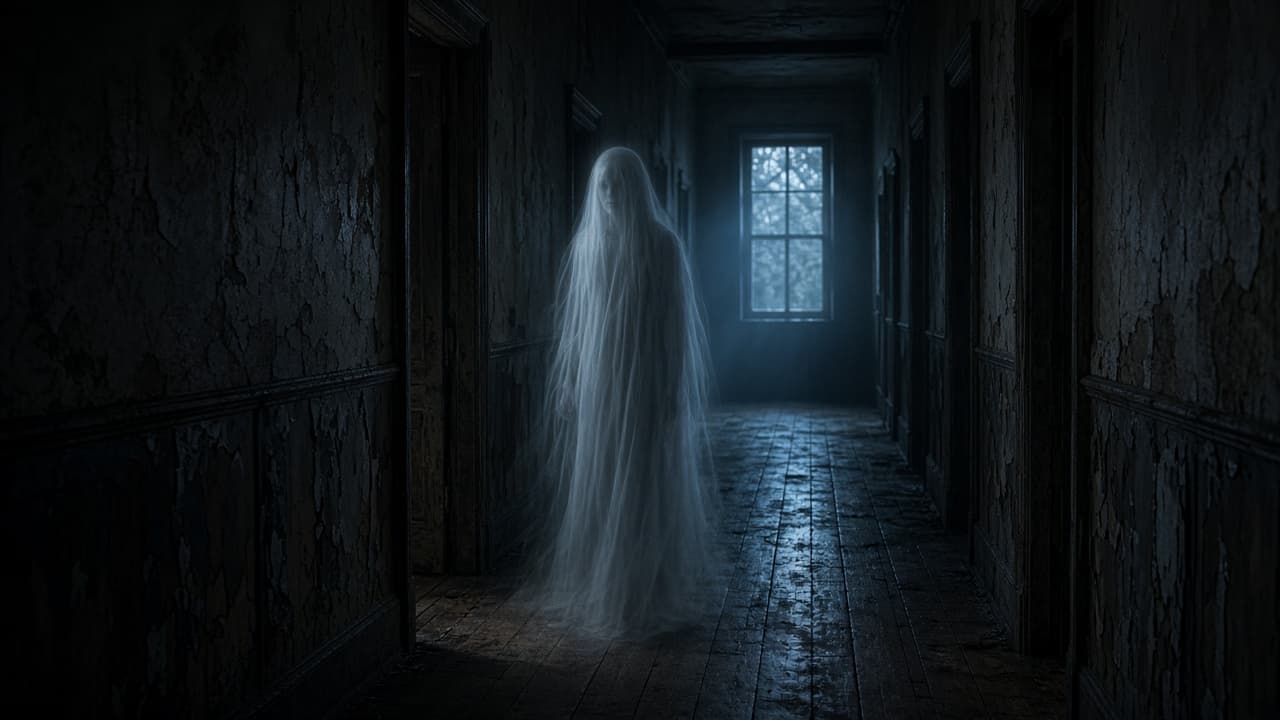
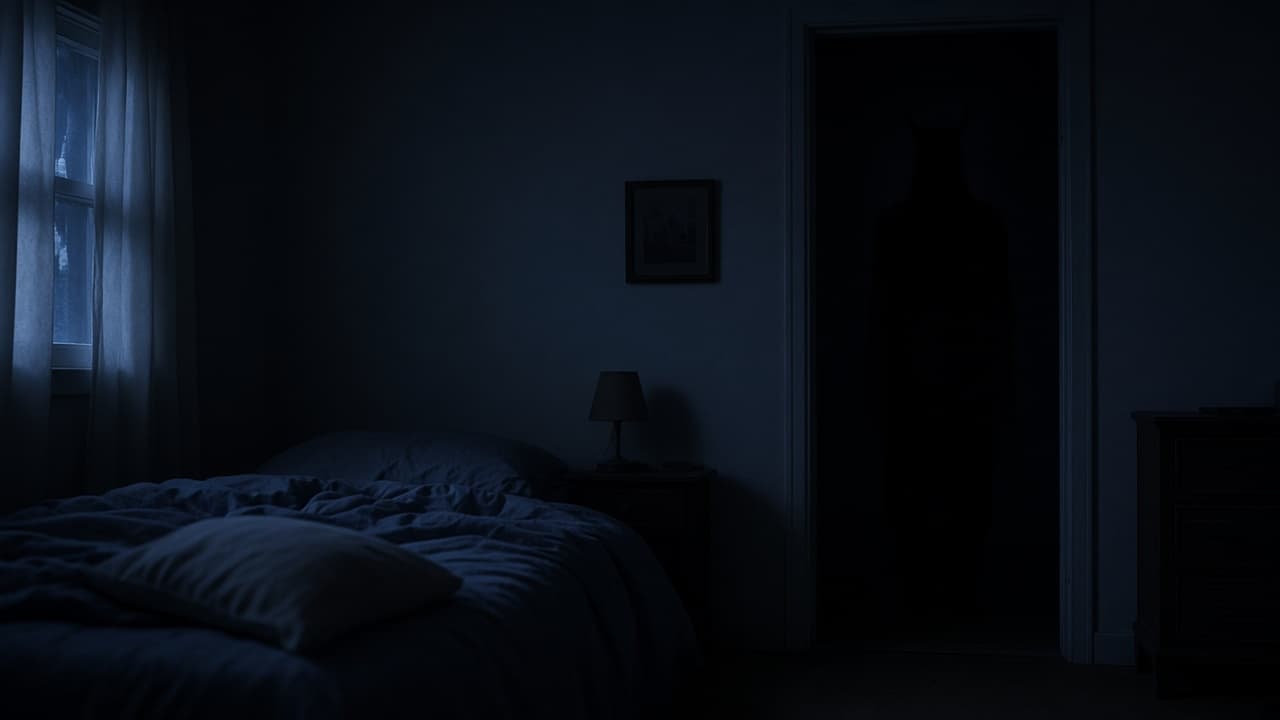
A human outline. No features, or features that will not stay. It stands in a corner, at the foot of the bed, in a doorway.
Sensed presence is the core. The dreaming and half-waking brain can generate "someone is here" with enormous conviction. A black mass is an efficient costume for that conviction because it refuses identification. You cannot talk it down. You cannot decide it is your partner.
If the figure stayed still, the dream is often about dread rather than chase. If it approached, the presence has become intent. Doorway positions are threshold images: something is trying to enter the place you sleep. Corner positions are surveillance. Foot-of-the-bed is the classic paralysis stage set.
Chest Pressure, No Breath, the Body Will Not Move
Weight on the ribs. A sit. Air that will not come. Limbs like stone.
This cluster is the sleep-paralysis adjacent scene, and it is worth treating as a body event first. REM atonia can leak into waking. The brain explains the immobility with a story of an attacker. Not being able to breathe in this context is often the same leak, not a separate omen.
If you have these episodes while "awake" in your bedroom, look up ordinary paralysis hygiene: sleep schedule, alcohol, back-sleeping, anxiety load. Symbolism can wait until the nights are less medical. If the same pressure happens inside a clearly invented landscape, then you can also read stuckness: a waking bind you cannot push off your chest.
The Shadow Chases or Grabs
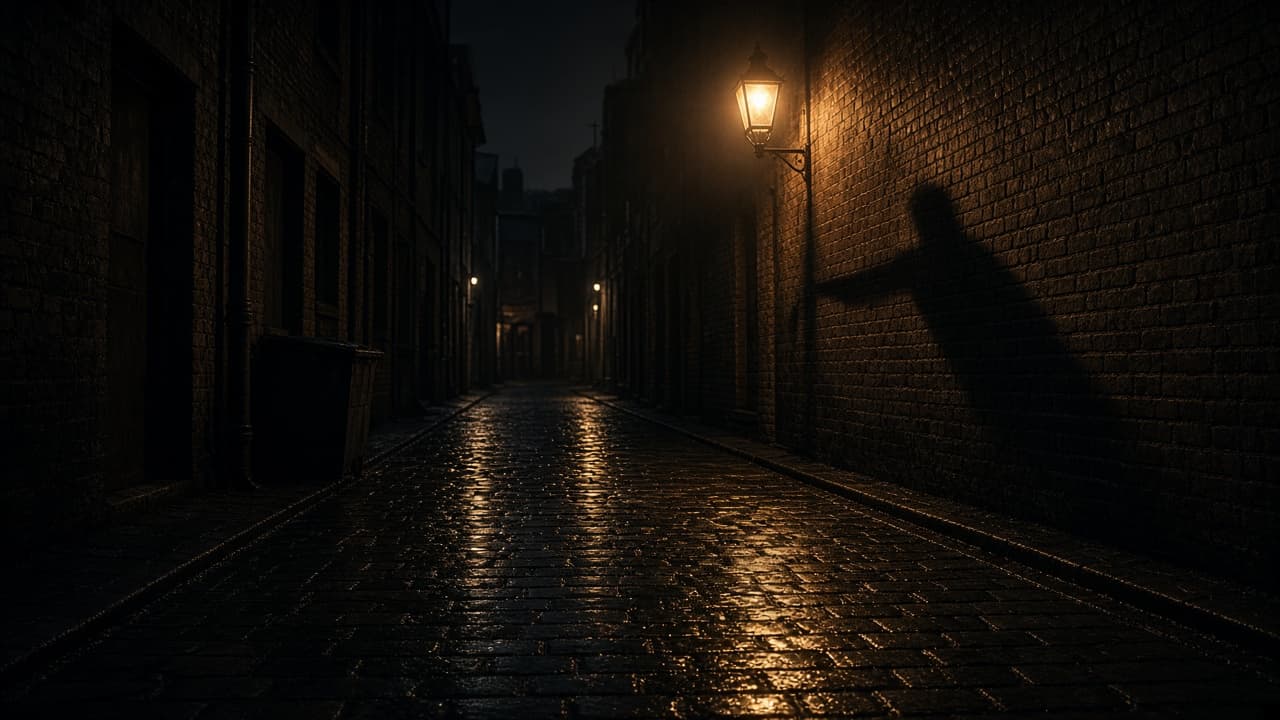
Motion turns presence into being attacked. Hands (or the idea of hands) on your clothes, your hair, your wrist.
A grabbing shadow is threat that still will not show a face. That often maps onto a stressor you have not allowed to become a person or a sentence, "the mood in the house," "the job," "the internet." Facelessness is the point. Compare with faceless girl, which is usually a person-shaped unknown. A black shadow is more elemental: absence with force.
If you ran, you still had locomotion, which argues against full paralysis. If you tried to run and the floor ate your feet, you are back in the body-state. Grabbing that felt sexual or intimate without a face is a different file: boundary and desire mixed with fear. Keep the reading non-graphic and specific to whether you felt chosen or random.
Multiple Shadows
More than one outline. A crowd of absences.
Number is overwhelm. No single opponent to name. Households with several cold conflicts, workplaces with a culture rather than a villain, and news climates that feel like weather produce groups of shadows. If they ignored you, you were witnessing a world of threat. If they closed in, you were the target of a system.
Invisible dreams are the inverse: you cannot be found. Multiple shadows are the world being too found, too many watching absences.
Have a Black Shadow Attacking Me dream of your own?
Write what you remember and get a clear reading.
The Shadow Has No Face and Still Feels Known
Recognition without features. "I knew who it was." A relative, an ex, a younger self.
Known-faceless is a psychological elegance. You are not ready to put a face on the thing, and you already know. Grief, anger, and shame all use this. If naming the person in the morning makes the dream feel smaller, that is a good sign you have the right file. If naming does nothing, the known-ness may be a quality (coldness, hunger, judgement) rather than a biography.
Do not force a name to make the night tidier. A quality is a legitimate reading.
Waking Into It, or It Following You Out
Hypnopompic leftovers: you switch on a light and the outline is still there for a second. Or you wake and the fear stays in the room.
These are among the most convincing experiences a brain can have, and they still sit inside known sleep biology. If this is happening often, treat it as a sleep issue with a frightening hallucination, not as evidence you need a stronger ritual. Rituals can soothe. They should not become a second job that proves the figure is real.
If the shadow only exists in a long dream narrative that ends when you wake cleanly, you have more room for ordinary dream interpretation: what in the day has no face and has weight.
You Attack the Shadow
Less common, and useful. You swing, you shout, you turn on every light.
Agency in a presence dream is a rehearsal of pushing back on the unnamable. Success (the mass thins) often arrives when a waking boundary has already started. Failure (your hands go through) is the frustration of fighting a mood, a system, or a body state with social tools. Light as a weapon is almost too on-the-nose: you want illumination, facts, a face.
If a religious frame is yours, you can keep it as meaning-making. Skip the idea that a failed shout means you are spiritually weak. Immobility is not a test you failed.
Psychological Meaning
J. Allan Cheyne's 2003 work on sleep paralysis and the structure of waking-nightmare hallucinations describes a reliable cluster: sensed presence, shadowy figures, pressure, fear, and the conviction of reality. The black-shadow attack sits in that cluster even when the sleeper later files it as "a dream." The visual system is filling in an agent because agents are what fear expects.
When the episode is a full REM narrative rather than a bedroom hallucination, Revonsuo-style threat simulation still applies, with the twist that the threat is undefined. Undefined threats are common in anxious seasons. They are not a diagnosis by themselves.
Culture then supplies demons, old hags, and ghosts. Those stories are old because the experience is old. Age is not the same as verification.
When the Shadow Returns at 3 a.m.
If the figure is a frequent visitor, fix sleep like a boring engineer: schedule, alcohol, position, stress load. If episodes include true paralysis, a clinician who knows the phenomenon can save you years of folklore.
If it is a story-dream that repeats, give the shadow a waking sentence ("the job," "the grief," "the house mood") and one action that faces a face. Presence hates being named into a person with a calendar. You do not have to believe it was a spirit to take the fear seriously. You do have to stop treating recurrence as proof it is winning.