Quick Answer
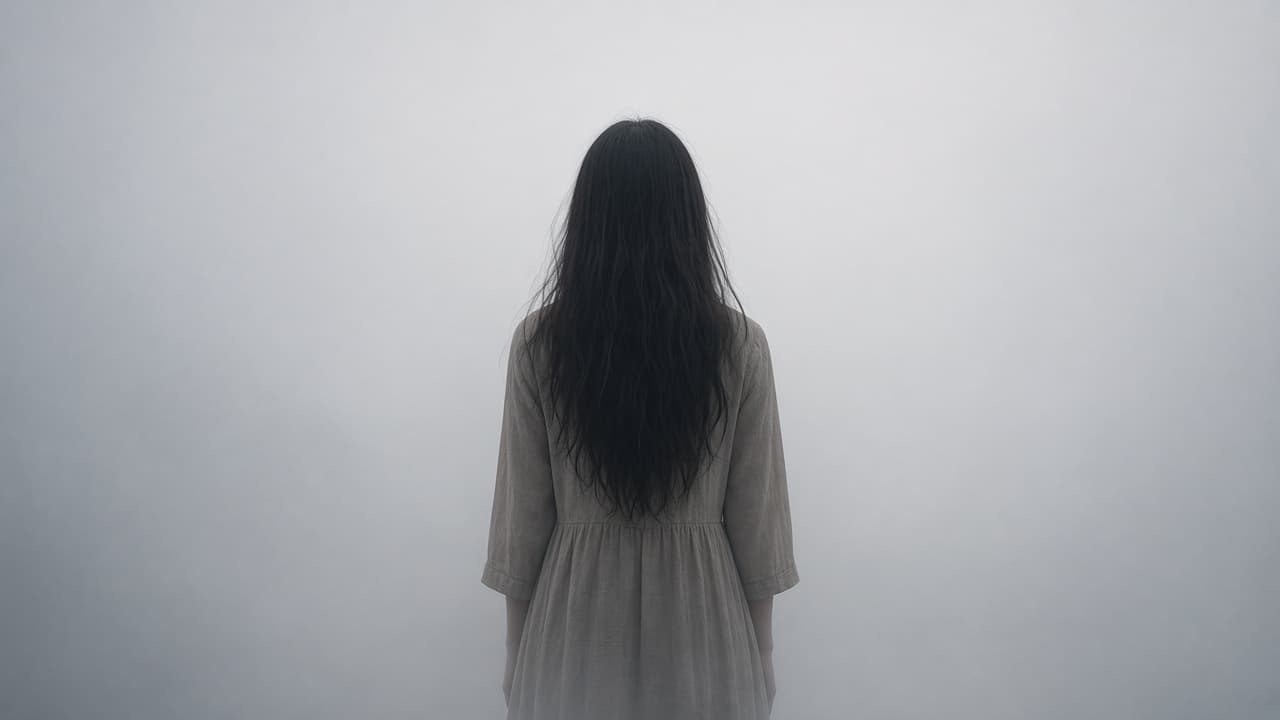
A faceless girl is a person-shaped unknown with a gender and often an age. The dream could give her features and did not. That withholding is the plot: identity not yet formed, identity hidden on purpose, a feminine figure you will not look at, or a self that cannot yet present a face. She is not automatically a spirit, a future child, or a dead girl. She is a [someone](/dreams/someone) whose face the night declined to finish.
Anonymity | a Role Without a Portrait
She is a daughter, a classmate, a waitress, a figure at the edge of a party, and when you look, there is hair, a dress, a gait, and no features, or features that will not stay. Anonymity is the social fact.
This version often accompanies situations where a feminine person is being treated as a type. It can be a critique of that treatment, including your own. It can be the experience of being the type: girl at the meeting, girl in the family, girl on the app. The missing face is what the role does not require.
If you kept trying to see her and could not, you may be trying to particularise someone (or a part of you) that a system is determined to keep generic. If you were relieved not to see, particularity may be what you are avoiding.
Identity Not Yet Formed
The figure is young, or blurring, or seems to be waiting to become someone. Unformed is different from hidden.
People in actual identity work, gender, sexuality, a career that has not chosen its clothes, leaving a religion, get this image because a face is a commitment. To have features is to be recognisable tomorrow. The dream postpones that.
If you were helping her choose a face, a hair colour, a name, you are in a midwifery role toward a self. If you were impatient with her blankness, you may be impatient with a beginning in your own life that will not present as finished.
A girl rather than a woman often means the psyche is using an earlier developmental room. Something in this story is not adult-sized yet. That can be tenderness. It can be a stuckness that needs more than a metaphor.
Identity Withheld on Purpose
She turns away. She wears a veil, hair, a mask, fog. You understand that the face exists and is being refused. This is concealment, not incompleteness.
It maps onto secrets, onto people who will not be known, onto parts of you that have learned that being seen as a girl or as a woman has a cost. Compare invisible dreams, where the whole body fails to register. Here the body registers. The identity does not.
Trying to force the face, grabbing, photographing, shining a light, is a power move, and the dream's emotion will tell you if it is rescue or assault. Some faces are withheld because the looking has not been safe.
She Is You
A mirror, a photograph, a voice you know is yours, and the face will not render. Self-facelessness is a presentation crisis.
It shows up around shame, around new visibility, around not knowing which version of a feminine self to take into a room. Video calls, dating, returning to a hometown, becoming a mother or refusing to: all can strip the default face off.
If other people in the dream still recognised you, the identity may be stable for them and lost to you, a disorienting split. If they also could not tell who you were, you are in a more complete anonymity, closer to a wish to start again than to a fear of being found out.
Have a Faceless Girl dream of your own?
Write what you remember and get a clear reading.
Desire, Care, or Threat Without Features
What she did is still a full dream even if the face is not. She ran. She sat on a bed. She was a crush with no portrait. She attacked. She asked for help.
A desired faceless girl is often desire that has not been allowed to attach to a real person, safer, crueler, or simply unfinished. A girl you must protect is often a vulnerable self or an actual caregiving load; do not collapse those without checking daylight. A threatening faceless girl can be a feeling you have gendered as feminine and then disowned: need, envy, a mother's power, your own.
Age matters ethically in the waking interpretation. If the figure was a child, keep the reading on vulnerability, memory, and parts of self. Do not sexualise a child figure to make a tidier symbol. If the dream itself was distressing in that way, that is material for a careful human conversation, not for a public FAQ.
In a Crowd of Faces, She Is the Blank
Everyone else is detailed. She is the exception. Contrast is the device.
This can mark the one relationship or self that has not been allowed specificity while the rest of the social world is over-drawn, a sister you still treat as a role, an ex who has become a type, a future you refuse to picture. It can also mark you: in a detailed crowd, you are the one who will not resolve.
Trying to introduce her, to say her name, to make the crowd look, is a wish that the unspecified become social. Failure is the cost of that wish this week.
Psychological Meaning
J. Allan Hobson and Robert McCarley's 1977 activation-synthesis paper is an unromantic and useful starting point. They argued that the sleeping brain generates characters and scenes from incomplete, poorly bound sensory and mnemonic fragments; the mind makes a story afterwards. Faces are computationally heavy. Dream characters often arrive as "girl," "teacher," "stranger" without a stable portrait. Facelessness can be a feature of how REM builds people, not a coded omen.
Ernest Hartmann's 1998 work on contextualizing still helps when the image has charge. A blank feminine face is a broad picture for identity-in-progress, for the unacknowledged, for a feeling that has gender in your private vocabulary and no biography yet. The dream is connecting a current emotion to a figure who can hold it without the complications of a known person.
Domhoff's continuity hypothesis asks the ordinary questions: have you been around a girl, a student, a sister, media with faceless figures, a mirror you did not like? If yes, start there. If the leftover is "I cannot see her" or "I cannot be seen as her," you have the waking theme.
Read the dream as a report on a feminine identity that is unfinished, hidden, or generic. Respect the blank. Filling it in too fast is how you get a story the night did not tell.
When She Keeps Arriving Without a Face
A repeating faceless girl usually means the identity question is still open. You can cooperate by giving some daylight specificity to whatever is vague, a feeling named in a sentence, a decision about how you will be seen, a real person treated as a person rather than a type.
If the figure is a child and the dream is a nightmare, check for real worry, real memory, and real overload before you build a myth. If the figure is you, one small act of presentation in the day (a photograph you consent to, a sentence in your own voice, a haircut you chose) is often more effective than decoding.
Do not treat a missing face as a missing soul or a prophecy about a daughter. Treat it as a picture of not-yet and not-shown. Those are human states. They change when something in waking life is allowed to come into focus, including the choice to remain unread for a while longer.