Quick Answer
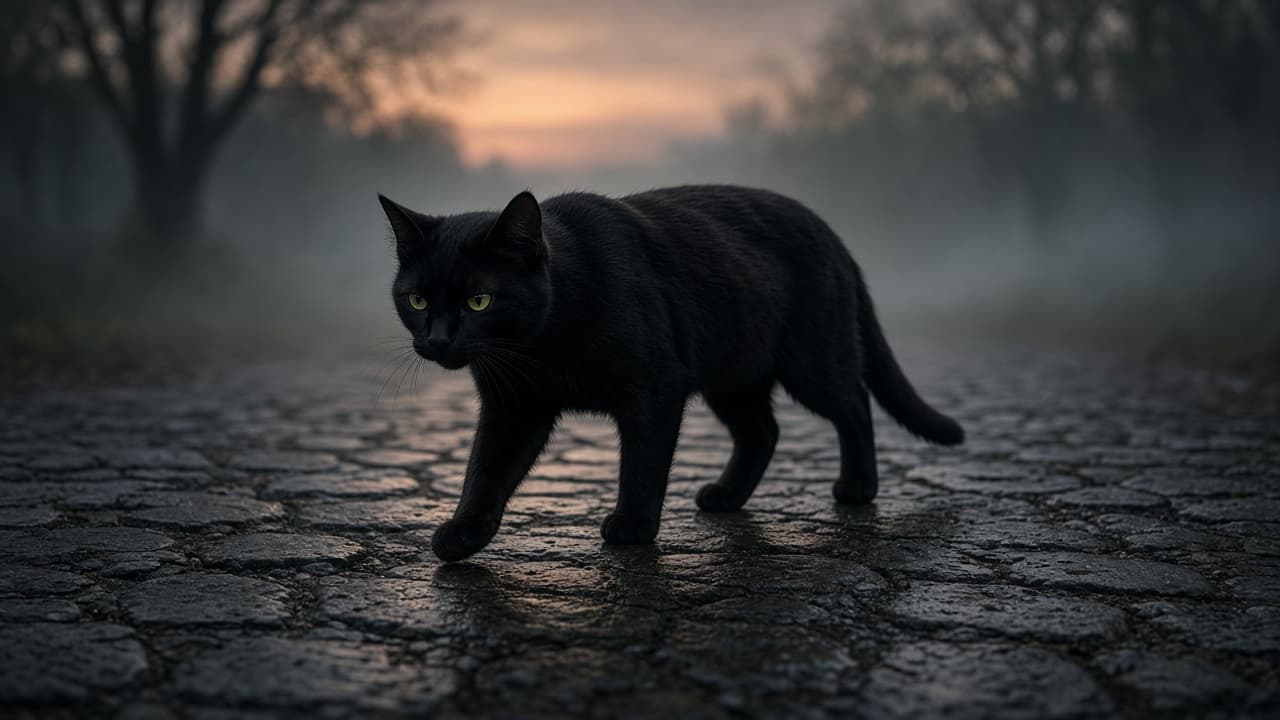
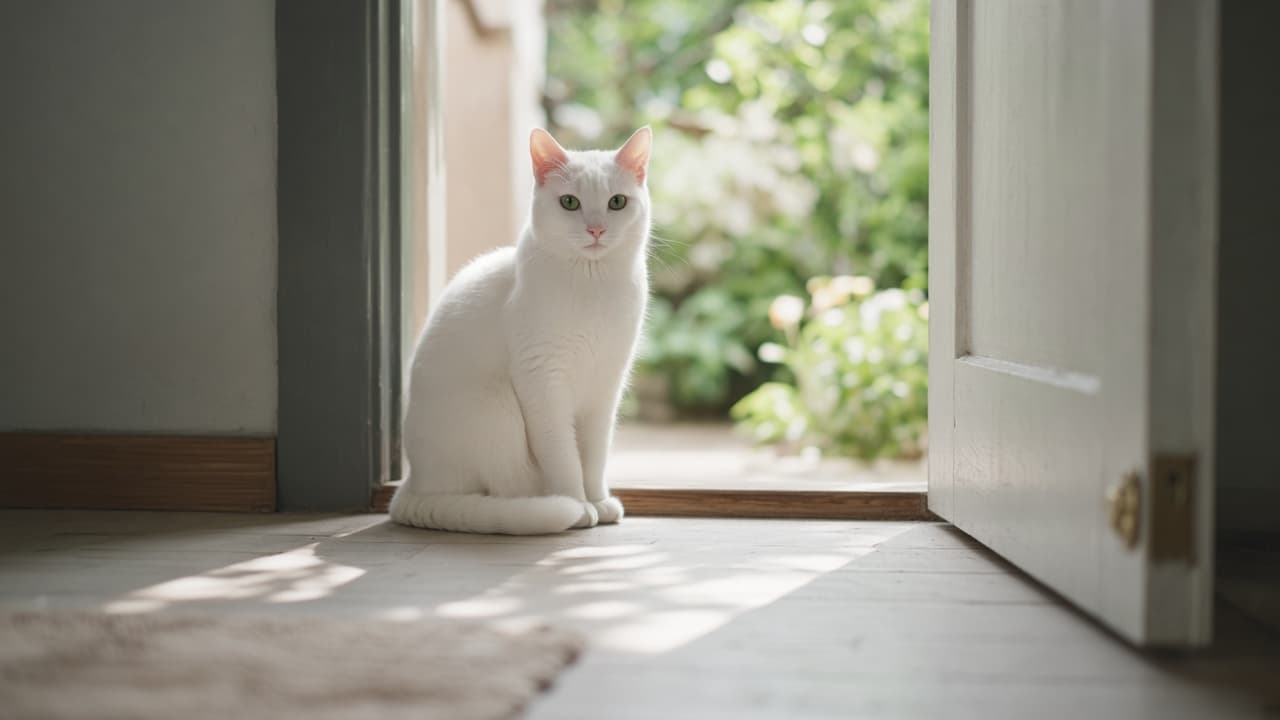
A white cat is still a [cat](/dreams/cats), independent, close-range, not on your payroll, wearing a coat that folklore has turned into a luck charm, a spirit, or a warning, depending on which grandmother you ask. That disagreement is already the correction. Do not invert a [black cat](/dreams/black-cat) page and call it a reading. Whiteness here is about visibility, gentleness-as-performance, and a presence that can vanish into light the way black vanishes into shadow. Then read the behaviour.
A White Cat That Looks Like a Charm
The animal is posed, almost decorative: on a windowsill, beside a cash register in the dream's shop, wearing the suggestion of a maneki-neko without being a figurine.
This is the luck-story walking in as a character. The dream knows you know the folklore. If you felt relieved, you are currently in a run of wanting a sign that things will be all right, money, fertility, a visa, a diagnosis. If you felt irritated, you may already be tired of treating animals and coincidences as oracles.
The useful move is to notice whether the cat then did something un-charm-like: scratched, left, ignored you. Luck mascots that refuse the job are more informative than luck mascots that sit still.
Your Own Cat, Only Whiter
A known animal has been bleached, or your actual white cat is somehow more white than physics allows, glowing, outlined, hard to look at directly.
Owners should start with continuity, as with any household animal. Patricia Garfield's case writing on animal dreams, and the broader continuity tradition after Calvin Hall, would ask first whether the cat was on the bed, ill, or in a small drama yesterday. Symbolism is what you reach for when that does not cover the charge.
Extra whiteness often means extra visibility. A private relationship, with the animal, or with whoever the animal stands in for, has been lit in a way you cannot dim. You wanted the comfort of the familiar creature. You got a spotlight.
A Stranger White Cat in the House
Unknown, indoors, on the bed or the kitchen counter, looking as if it has always had a key.
Indoor stranger-cats are guests in private space. White ones are guests you cannot pretend not to see. Unlike a dark animal on a high shelf, this one shows up in every room's available light. That maps onto a person or a trait that has arrived without camouflage: a new partner's habits, a child's need, a part of yourself that used to stay in the unlit rooms.
Whether you fed it, named it, or tried to put it out is the policy you are currently running. Desire is sometimes the guest. Sometimes it is grief that has started wearing a gentle face.
The Cat Vanishes When You Reach
You crouch, you call, you put out a hand, and the animal is gone, into a wall, into glare, into being a curtain.
White-on-white disappearance is a different trick from black-on-shadow. The thing you wanted was not hidden. It was over-exposed, and still not holdable. Dreamers report this around people who present as available and are not, around opportunities that look clean on paper, and around a self-image of "being the nice one" that will not survive being touched.
If you were sad, you wanted contact. If you were relieved, the unholdable thing may be a demand you did not want to have to meet.
Have a White Cat dream of your own?
Write what you remember and get a clear reading.
Attack From a Gentle-Looking Animal
A scratch, a bite, a leap from a white coat you had already classified as safe. The shock is the mismatch.
This is the correction to purity folklore. White is not tame. Cats do not sign contracts with your projections. In waking terms the dream often follows a boundary you missed because the person (or the institution) looked kind. Help that had claws. A family member whose softness is seasonal.
Blood on white fur is emphasis, not prophecy. Compare dogs for loyalty-breach; a cat scratch is usually about consent you assumed you had.
A White Kitten You Have to Keep Alive
Small, vocal, possibly hidden in a bag or a box. The plot is care, not luck.
Kittens in dreams are responsibilities that arrived looking like gifts. Milk, warmth, not being crushed, the tasks are humble and non-negotiable. Fertility anxiety can load this image, and so can any new fragile project: a business, a sobriety, a friendship with someone who needs more than you budgeted.
If someone was trying to give you the kitten and you did not want it, believe the refusal. If you hid it from a person who would have taken it away, you already know who in waking life does not support the fragile thing.
A White Cat as a Visitor From the Dead
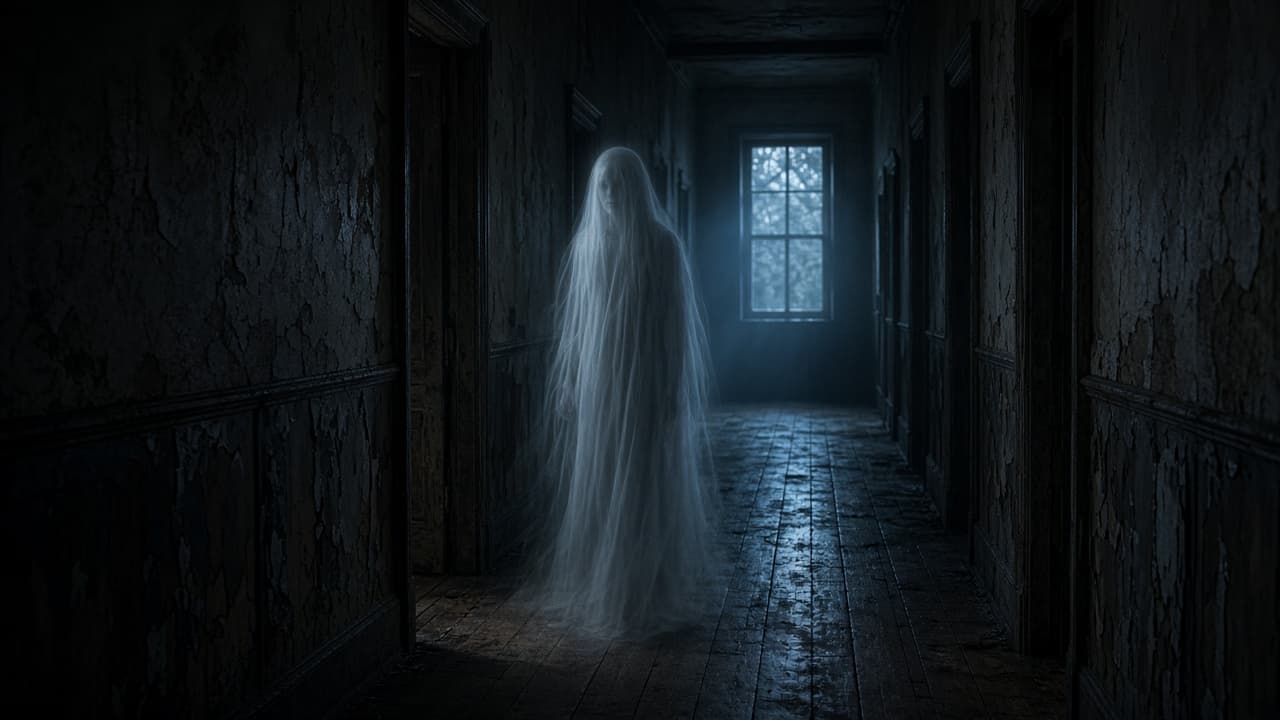
The animal behaves like a messenger: waits at a grave, sits on a photograph, walks through a wall like a ghost. You may hear yourself think it is a relative.
This is grief using an available animal. It is not evidence of an afterlife, and it is not a command. People who have lost a white cat, or who grew up with a grandmother's white-cat omen stories, will load this scene more readily. The feeling on waking, comfort, dread, unfinished conversation, is the usable data.
If the cat wanted you to follow, ask where in waking life you have been refusing a memory. If it only sat, the dream may be offering company rather than a task.
Psychological Meaning
Deirdre Barrett's 1992 review of the problem-solving function of dreams, and her later The Committee of Sleep (2001), is a better starting point here than a luck table. Barrett treats dream images as a working group that uses whatever props are lying around, including cultural props. A white cat is a prop that arrives pre-loaded with luck, spirits, and "good versus bad" arguments the dreamer has heard since childhood.
The committee then has to make the prop do something. That is why behaviour outranks coat. Hall and Van de Castle's animal-dream counts already showed that household animals appear in proportion to contact with them; colour folklore is extra paint. The white-cat night is therefore often a negotiation between a continuity animal and a cultural story about innocence, luck, or visiting spirits.
Separate those layers. If you live with a white cat, the parsimonious reading comes first. If you do not, ask what in your life currently looks gentle, visible, and not quite holdable. That question will get further than asking whether the universe sent a charm.
When the White Cat Keeps Sitting in the Door
A repeating white cat is either a repeating animal, or a repeating function, the charm you keep asking for, the guest you can see too clearly, the softness that scratched. Note which scene returns.
Luck-heavy versions often ease when you stop requiring signs. Care-heavy versions ease when the fragile thing in your life is given a realistic amount of attention, or a realistic no. Messenger versions ease when the unfinished conversation with the dead, or with the past, is allowed a waking hour that is not a dream.