Quick Answer
A [house](/dreams/houses) in a dream is the private self. Someone breaking in is the hinge: not yet the full occupation of the [home-invasion](/dreams/home-invasion) page, and not yet the loss-inventory of [being robbed](/dreams/being-robbed). It is the door, the [window](/dreams/windows), the second of give. You may be on the inside hiding, on the inside watching the handle, or outside seeing your own [door](/dreams/doors) fail. The act-in-progress is the point. Interpret the method of entry and your position relative to it.
The Door Gives | Shoulder, Tool, a Key That Should Not Work
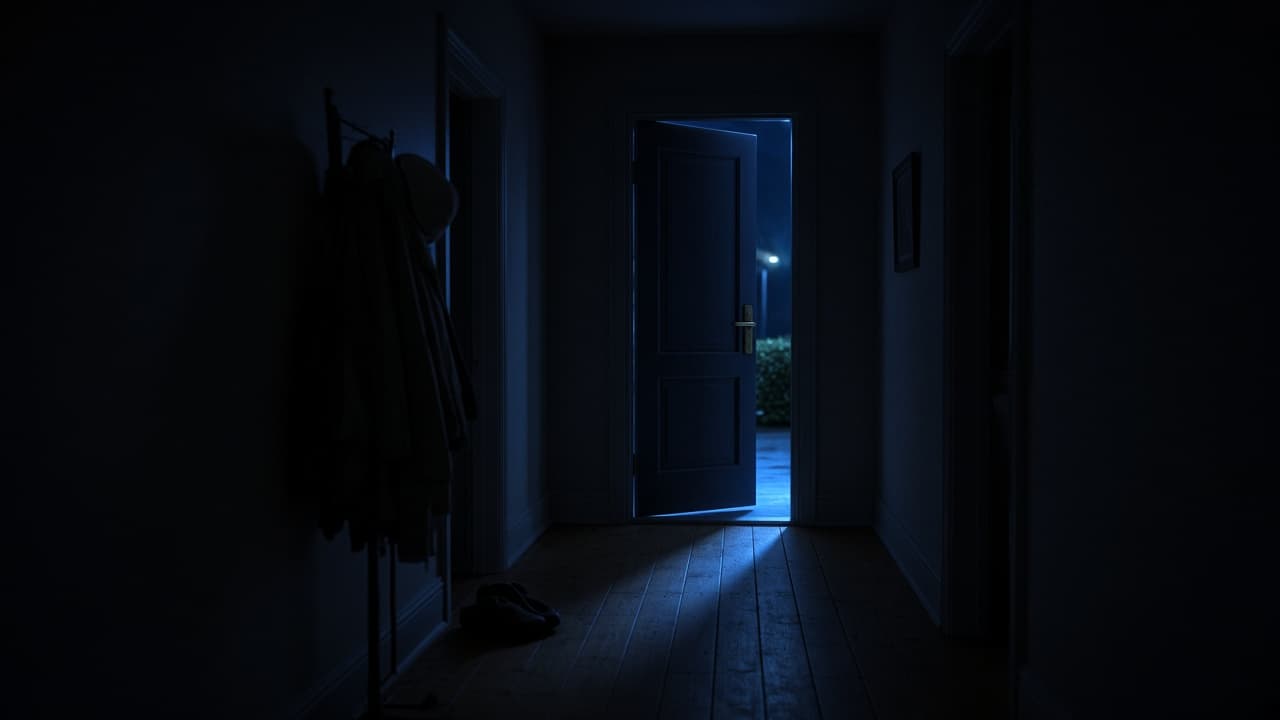
You see or hear the mechanism. Wood splits, a chain pops, a spare key you forgot exists.
Method is motive in picture form. Force is someone who does not care that it is closed. A key is entitlement, they have or claim access. A tool is premeditation. Dreamers remember the sound with particular clarity, because the sound is the boundary failing in real time.
If you were moving toward the door to hold it, you still believe in defence. If you were already backing away, you have decided the door will lose.
A Window, a Skylight, a Letterbox | Not the Front Door
Sideways entry. They will not use the social entrance.
Non-door entries are about rules being skipped. The front door is how guests come. A window is how you get in without being received. These dreams follow people who "just dropped by," who read a phone, who used a child's confidence, who entered a project through a side channel.
A letterbox or cat-flap version can look comic in the morning and still be right: something small was an opening. Small openings are how a lot of real boundary failures start.
You Are Hiding While It Happens
Wardrobe, bathtub, behind the sofa, a child's idea of invisibility. The break-in is audible. You are counting boards in the floor.
Hiding-during-entry is freeze plus hope. It is distinct from hiding while they search later (that is the occupation phase). Here you are trying not to be part of the moment of opening, as if the house could be entered without you being the person it happened to. Dreamers describe the decision not to call out, which maps onto not raising a waking alarm, not telling a friend, not reporting, not making it a scene.
If a child or a pet was with you in the hiding place, responsibility is fused with fear. If you were alone and glad of it, isolation is part of the strategy.
You Watch from Outside as Your Own House Is Forced
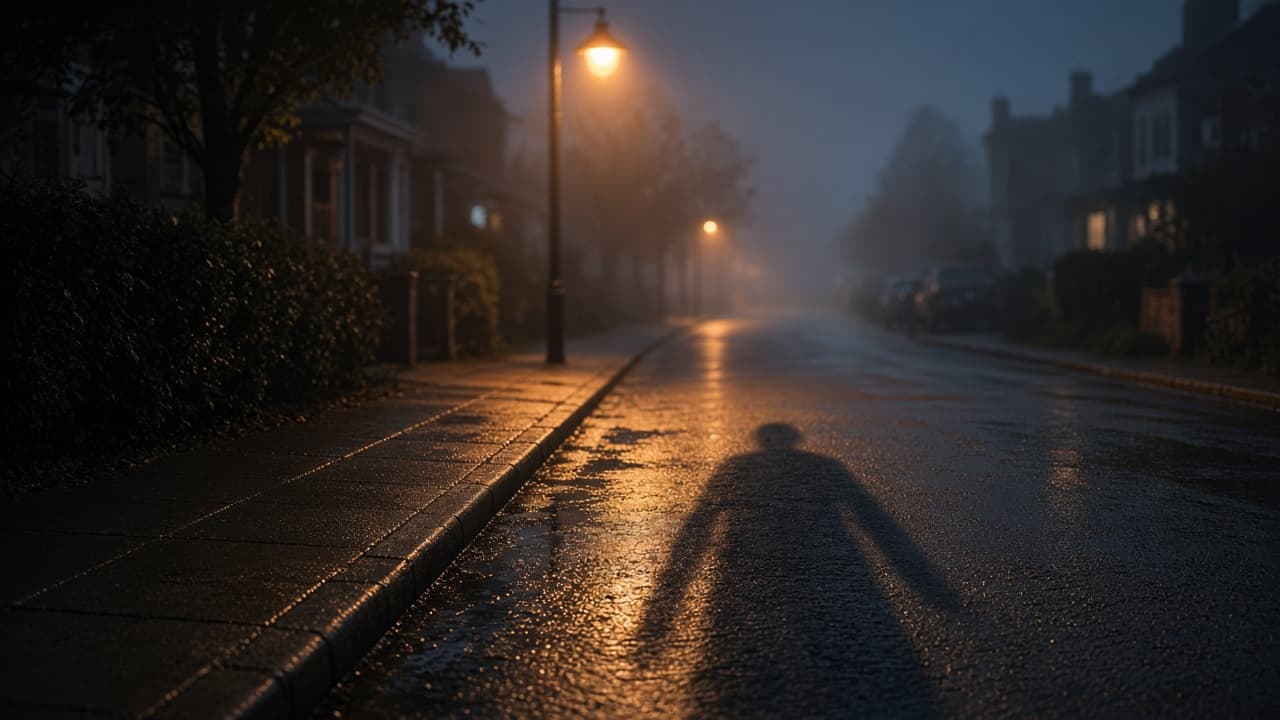
A street view. Lights on. You cannot get there in time, or you are choosing not to.
Outside-witness break-ins are dissociation and helplessness: it is your life and you are not in it for the critical second. They show up during hospitalisations, travel, legal processes, and any week when other people are handling your "house" (your papers, your reputation, your flat). Dreamers try to shout to neighbours. Neighbours in these dreams are the social world that may or may not help.
If you had the keys in your hand and they still got in, access is not the same as control.
Have a Someone Breaking Into Your House dream of your own?
Write what you remember and get a clear reading.
Slow Opening versus Smash
Tempo.
A smash is shock, news, a person exploding, a sudden leak of information. A slow opening (handle turning through ten long seconds) is watching an intrusion you have seen coming. People in being-stalked situations, and people waiting for a family member who does not knock, get the slow handle. The dream stretches the second because your days have been stretching it.
A door that opens by itself, with nobody clearly there, is closer to a felt presence than to a burglar. Sleep paralysis can supply that version. If you were awake-unable-to-move, read the body first.
You Interrupt Them in the Act
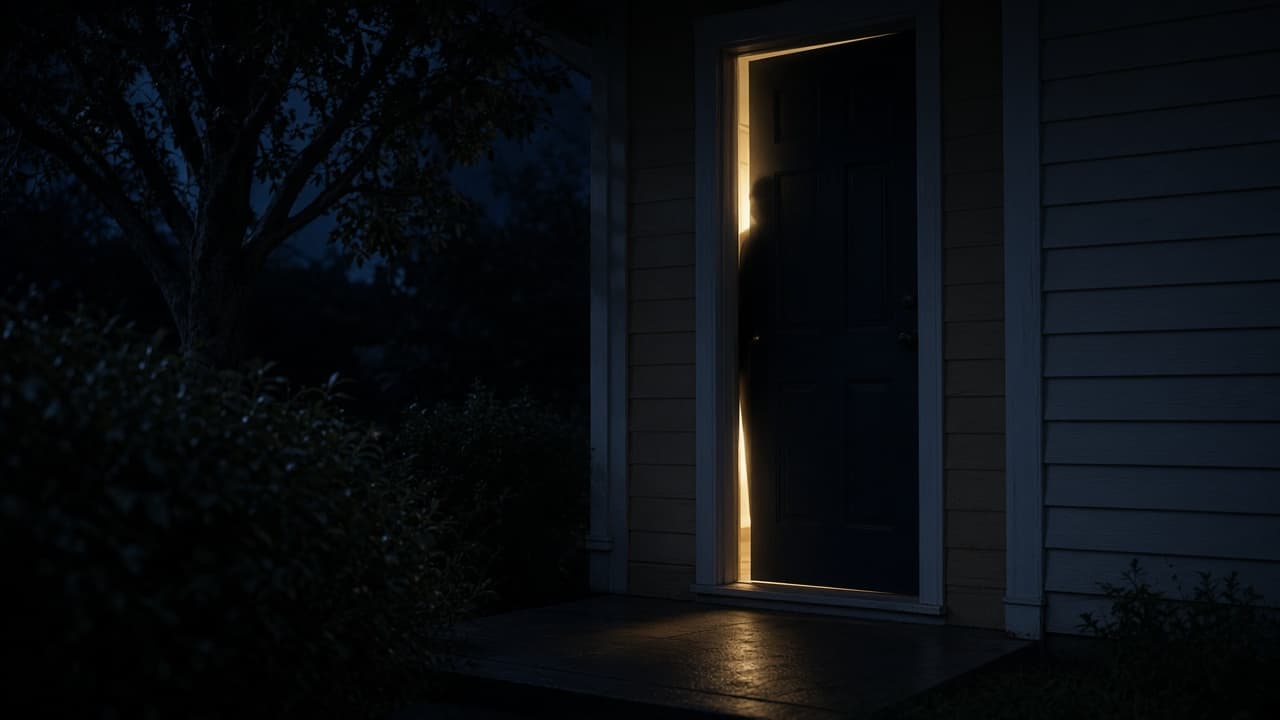
The hinge swings the other way: you arrive at the door while they are still in it.
Interruption dreams are about catching a boundary violation as it happens, walking in on a conversation, seeing a screen, arriving home early. They feel "lucky" and awful. What you did next (shout, photograph, freeze, invite them in in a confused polite way) is your actual repertoire.
If they smiled as if you were the rude one, entitlement is the subject. The smile is the gaslight.
After a Real Attempt, a Neighbourhood Scare, or a Drill
Literal residue. The dream uses your actual porch.
Then symbolism waits. Replay is how threat memory works. Improve the real door if the real door is the worry; reduce footage if the scare was a story; get trauma-shaped help if the replay is weeks long and the house does not feel like yours at night. The home-invasion page's aftercare section applies. This page only adds: the moment of entry is what the mind keeps restaging when the violation was specifically about being opened.
Psychological Meaning
Ross Levin and Tore Nielsen's 2007 neurocognitive model of nightmares (Psychological Bulletin) describes how fear-memory networks, once primed, generate unfolding threat simulations with a strong sense of now. A break-in-in-progress is almost a pure "now" dream: the threat is not complete, so the simulation stays in the act. That is why this page is not just a duplicate of occupation-inside-the-house.
Antti Revonsuo's threat-simulation theory still supplies the ancestral reason a sleeping-place entry is such a default plot. G. William Domhoff's continuity attaches the spare key, the window, the actual porch.
J. Allan Cheyne's sleep-paralysis intruder work remains relevant for the slow-handle, felt-presence versions that happen at the edge of waking. Knowing the mechanism reduces the need to treat the figure as a person in the world.
If the method (key, smash, window), your position (hiding, holding, watching from the street), and the tempo are clear, those three are the break-in. Put them in a personal reading in thirty seconds. Do not skip them in favour of a generic "boundaries" sentence. The hinge is the meaning, and the hinge is a second long.