Quick Answer
Dreaming you are being stalked usually means your privacy is the thing under pressure. A chase is about running. Stalking is about being known: routes learned, windows used, messages waiting. The scene decides the flavour, a stranger on the street, a face at the glass, a person you already know, a camera you cannot find. If you are actually being harassed in waking life, believe that first and get practical help. Symbolism is for the nights when the watching has no single human owner.
Followed on the Street or in a Crowd
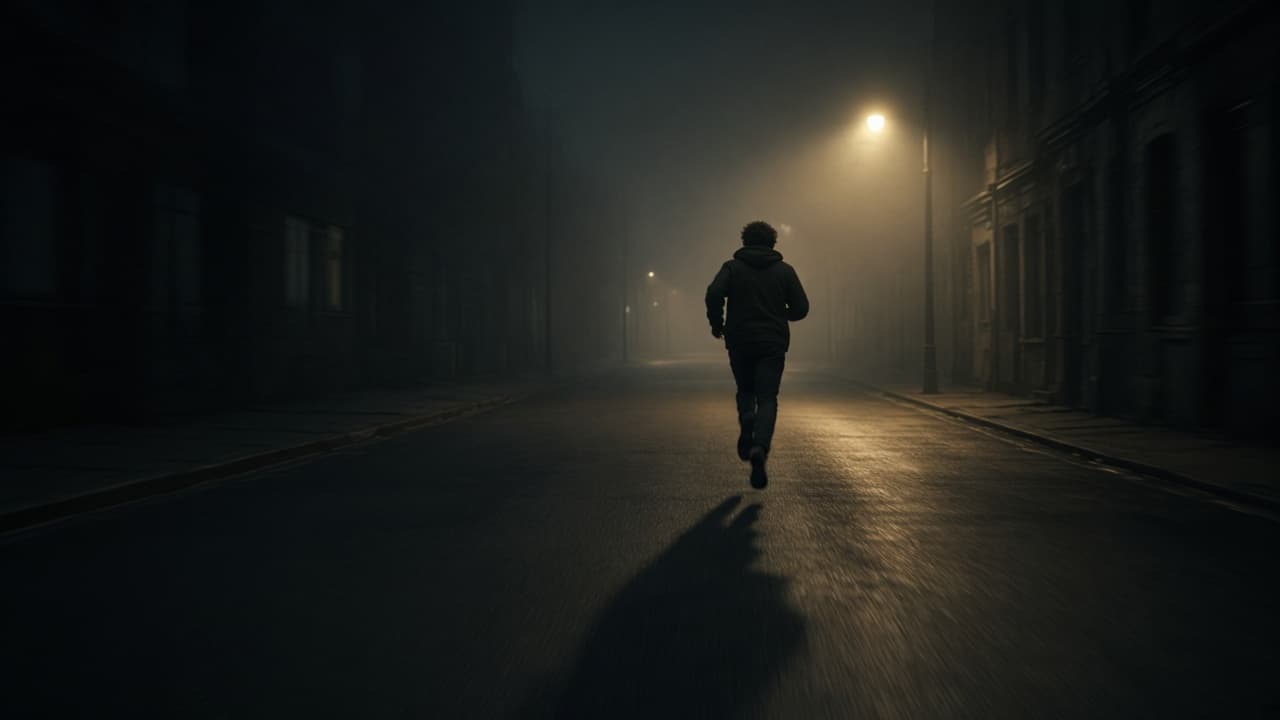
The classic version is footsteps that match yours. You change sides. They change sides. A crowd does not help because the attention is personal.
This is a dream about routes. Someone, or some pressure, has learned your habits. Waking matches include a colleague who always “happens” to need you, an ex who still knows the timetable, a parent who tracks the car, a platform that serves you ads for the thing you only thought. The street is public, which is why the fear has a particular flavour: you are allowed to be there and still not allowed to be unobserved.
Whether you confronted them or only sped up splits agency from endurance. Confrontation in the dream often arrives after a waking decision to name the dynamic. Endless matching of pace more often tracks a week of managing someone else’s attention without a scene.
Watched Through Windows
Glass is the whole symbol. You are inside, supposedly. The outside has a view.
Window dreams of this kind cluster around exposure of domestic life: arguments that carry, a house that is too visible, a family that comments on what it can see of you, a job that now knows your evenings because you work where you sleep. Dreamers describe closing blinds, turning off lamps, moving to an inner room, and still feeling outlined.
If the watcher was only a silhouette, the pressure is often institutional or diffuse, “they,” the street, the feed. If you recognised the face, the privacy leak has a name you already have.
Messages, Calls, or Being Found Everywhere
Some stalking dreams barely use a body. The phone lights. The same number. A letter under the door. You change address in the dream and the next scene is the new kitchen, same envelope.
This variant tracks inescapable contact. Group chats. Read receipts. A professional who emails at midnight. A family system that treats silence as an emergency. You can be a good person and still need an uncontacted hour; the dream is what happens when that hour has been abolished.
Changing phones, names, or cities in the dream and remaining findable is usually a report that the problem is not your coordinates. It is the claim.
The Stalker Is Someone You Know
A recognisable watcher collapses the “stranger danger” story and replaces it with something more awkward. Dreamers often wake ashamed of having cast a real person.
Read it as a map, not an indictment. People who already know your routes appear because they do: an ex, a manager, a sibling, a friend you have been avoiding. The dream is asking what unfinished claim is still walking behind you. It is not proof of their intent to harm.
The moment of recognition is useful. Knowing from the first step usually means you already know the waking analogue. A face resolving late, after you have been afraid of a monster, more often means you have been protecting yourself from identifying the ordinary source.
Hiding, Changing Routes, Disguising Yourself
Here you are the strategist. Back stairs. A different grocery shop. Hair cut in the dream. A coat that is not yours.
Concealment dreams accompany lives organised around not being found: job hunting your employer must not hear about, a relationship kept off the family map, recovery you are performing wellness over, a legal or financial situation you are routing around. The exhaustion in these dreams is specific, not sprinting, but editing yourself.
Whether the disguise worked is the split. Successful invisibility can mean the current strategy is holding, at a cost. Being recognised anyway usually means the strategy has expired.
Have a Being Stalked dream of your own?
Write what you remember and get a clear reading.
The Stalker Inside the House
Indoors ends the fantasy that public/private will save you. They are in the hallway. They know which floorboard. They are already sitting on the bed.
These scenes arrive when scrutiny has colonised rest. A partner who monitors. A parent who still has a key, literal or emotional. Work that lives in the bedroom via a laptop. An inner critic that uses the house as its office. Related dreams of being chased still leave open the possibility of distance. This one does not.
If you could not call for help, or the phone would not dial, recover that. Isolation of the witness is often the waking injury being pictured.
Reporting It and Not Being Believed
Police, friends, a parent, a receptionist, you tell the story and watch it fail to become real for them.
Disbelief is a second plot, and for many dreamers it is the worse one. It attaches to any waking situation in which your discomfort has been recoded as overreaction: a workplace that calls harassment a personality clash, a family that calls a boundary dramatic, a friend group that likes the person who is wearing you out.
If someone in the dream finally believed you, notice who. That figure is often the ally you already have and have not used, or the ally you wish existed.
Cameras, Mirrors, and Being Recorded
Sometimes there is no pursuer, only an apparatus. A lens in a corner. A phone face-down that is not face-down. Your own reflection showing someone behind you who is not there when you turn.
Apparatus dreams lean toward institutional and technological watching: performance metrics, social media, a household with no unfilmed moment, a mind that has internalised an audience. You may not be able to name a stalker because the stalker is a climate.
Smashing a camera in the dream is a wish for an off-stage. Leaving it running is a report that you have started producing yourself for the lens even when nobody asked.
Psychological Meaning
Stalking dreams belong with social-threat rehearsal rather than with simple predator chase. Michael Schredl’s research on nightmare frequency consistently finds that interpersonal stress, conflict, humiliation, feeling observed, raises disturbing dreams more reliably than abstract worry. Being followed by someone who already knows your timetable is a precise picture of that class of stress: not a tiger, a witness.
Antti Revonsuo’s threat-simulation theory still applies, with a modern cast. The ancestral drill is pursuit. The contemporary drill is reputation, access, and the impossibility of an untracked hour. A face at a window is a cheap, efficient image for “my inside is available to the outside.”
G. William Domhoff’s continuity hypothesis then names the watcher from your actual life. People who live in small towns, work in public-facing jobs, grew up with intrusive caregivers, or spend their evenings on platforms that never blink will dream surveillance with different props and the same plot. The action you took, hid, reported, confronted, performed, is usually closer to your real strategy than the story you tell about being “fine with people.”
Practically: ask who already knows your routes. Then ask whether the dream’s worst moment was the watching, or the moment nobody believed the watching was happening.
When the Watching Does Not Clock Off
Stalking dreams process privacy and claim. They are not a prophecy of assault, and they are not a reason to distrust every familiar face in daylight.
If the same silhouette waits at the same glass, move one piece of your map in waking life. Change a route that is actually optional. Take a channel off the night table. Tell the one person who already believes you. Recurrence here is often an unaltered timetable.
If you have a real stalker, do not interpret. Document, tighten safety, and use local support. If the dream is “only” psychological and still panics you out of sleep, a clinician who works with nightmares can shrink the night without requiring you to become a more interesting symbol.