Quick Answer
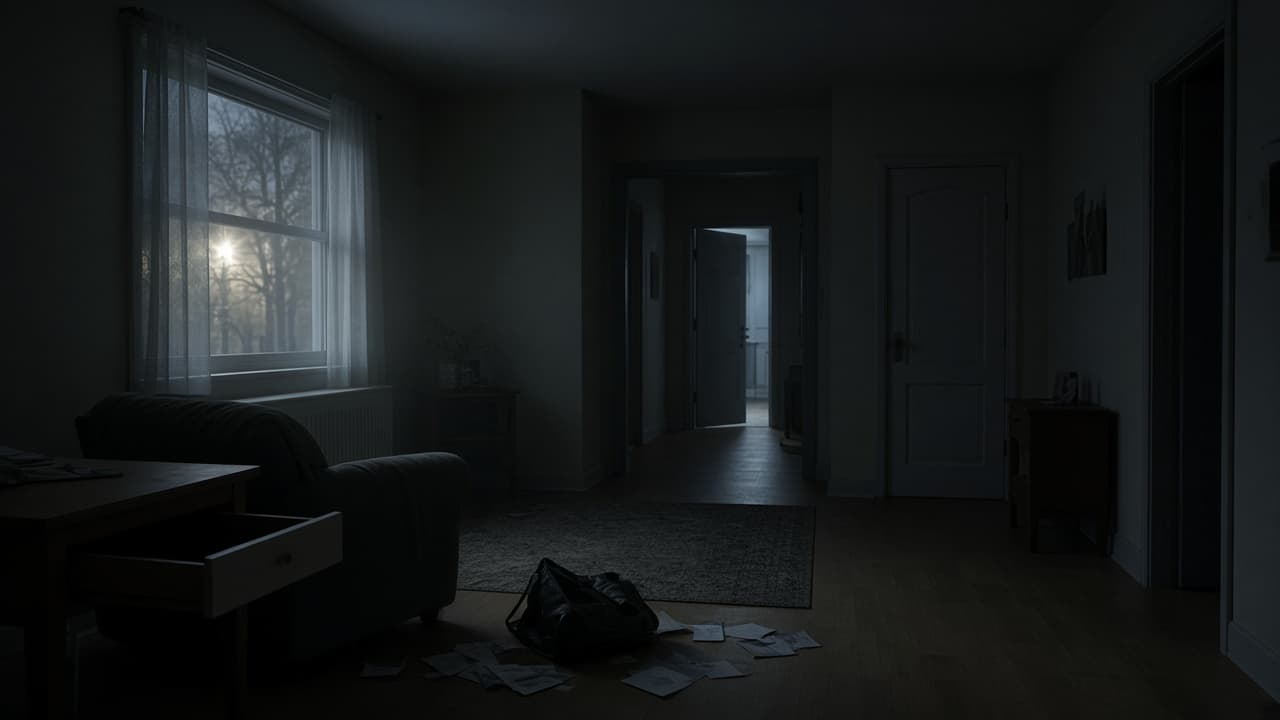
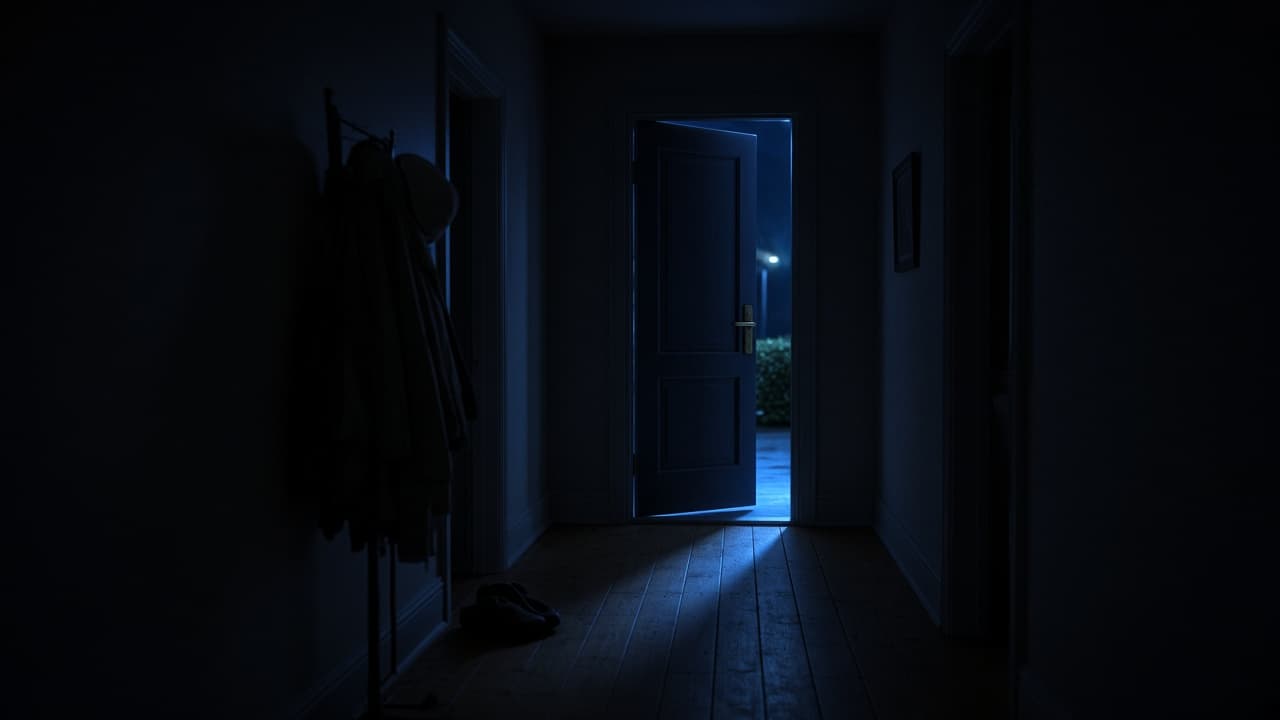
A home invasion dream is a boundary dream. Houses in dreams stand in for the self, the private, defended part you do not show everyone, so someone forcing their way inside usually marks a real intrusion you have not managed to stop: someone in your business, a demand with no off switch, a situation that has reached into space you consider yours. The detail that decides the reading is where the intruder got to. Someone rattling a door outside is a different dream from someone standing in your bedroom, and a stranger is a different dream from a face you recognise.
Someone Breaking In While You Are in Bed
The bedroom version is the worst one, because it removes the last room you have. Dreamers report waking with their heart pounding, then lying still to listen to their real house.
It clusters around stretches with no genuine privacy: living with people who do not knock, a job whose messages arrive at midnight, a caring role with no boundary between duty and rest. There is also a physiological overlap worth knowing about. During sleep paralysis, people frequently experience a vivid sensed presence in the room while unable to move, and the brain readily supplies an intruder to explain it. If your dream ended with you awake, aware, and pinned, that mechanism may be doing most of the work.
Hearing an Intruder You Never See
Sometimes nobody appears. There is a sound downstairs, a footstep on a stair that always creaks, a door handle turning, and the dream never delivers a person.
The absence is the reading. Unseen-intruder dreams tend to accompany threats you cannot identify precisely: a restructure at work with no announcement yet, tension at home that nobody names, a sense that something is wrong in a friendship. Dreamers usually describe straining to listen rather than running. That posture is often exactly how they are living.
A Stranger Already Inside, Moving Around Calmly
A particular horror belongs to this variant: no forced entry, no urgency. Someone is simply in your kitchen, opening cupboards, entirely at ease.
Composure in the intruder points at entitlement rather than violence. These scenes arrive when someone in your life behaves as though they have rights over your space, time or resources and does not think of it as taking, a family member who redecorates your life, a colleague who reassigns your work, a partner's relative who has moved in indefinitely. The calm is what makes it unanswerable.
Locks and Doors That Will Not Hold
The most frequently reported detail in the whole category. You push the bolt and it does not reach. The door has no lock at all. The glass is missing from a pane you thought was solid. You lock one door and discover three more standing open.
Malfunctioning defences map onto boundaries you have already tried to set. You said no and it was ignored; you asked for notice and did not get it; you blocked a number and they found another route. Recover how many times you re-checked the door in the dream, because that repetition often matches how many times you have restated the same limit in daylight. Doors covers thresholds in more detail.
Hiding While They Search the House
Here you are concealed, a wardrobe, a bathroom, behind a sofa, listening to someone move room to room getting closer.
These dreams tend to arrive during periods of concealment rather than physical fear. Something about your situation is hidden and searchable: a debt, an application, a relationship, a mistake at work nobody has traced to you yet. Dreamers often report trying not to breathe. That specific effort usually indicates the strain of maintaining a secret rather than a fear of being hurt.
Fighting Back or Confronting the Intruder
Confrontation dreams split sharply by outcome. Some dreamers surprise themselves by shouting, striking out, or physically forcing someone back through a door. Others swing and connect with nothing, or find their voice produces no sound.
Effective resistance often follows a real moment when you finally pushed back, and the dream is consolidating the fact that you can. Ineffective resistance, soundless shouting, blows that land like fog, usually accompanies situations where you have decided to stand your ground and have not yet had the chance, or where speaking up carries a cost you cannot afford.
Have a Home Invasion dream of your own?
Write what you remember and get a clear reading.
An Intruder Who Is Someone You Know
When the face is familiar, the dream stops being about crime. A parent, an ex, a manager, a friend who has become invasive.
Recognition narrows the meaning to one relationship, and dreamers usually know immediately which. Watch what they came for. Someone searching for something specific often tracks a person extracting information from you; someone simply present, uninvited, tends to track a person who ignores your limits without wanting anything in particular. If the intruder is an ex who will not leave the property in the dream, the reading is generally about ongoing contact rather than danger.
A Break-In at Your Childhood Home
Setting matters, and a childhood house changes the timeframe of the dream. The invaded space belongs to a version of you that no longer exists.
These versions often surface when something is reaching back into your history: a family conflict resurfacing, a parent's illness, contact from someone you knew then, or therapy that has opened up early material. The intruder is frequently vague in these dreams while the house is unusually detailed, which is a reasonable clue that the building, not the burglar, is the subject.
After a Real Break-In
If your home has actually been broken into, these dreams behave differently. They replay real detail: the actual window, the real mess, the exact sound. They are frequent at first and usually thin out over several weeks.
That pattern is a normal part of processing a genuine violation, not a sign of weakness or of a lasting problem. What helps is boring and practical: restoring the house's defences in reality, sleeping somewhere that feels safe for a while, and not treating every dream as a fresh event. If the dreams persist for months, arrive with hypervigilance, or make you dread going to bed, trauma-focused therapy is effective for exactly this presentation. Being robbed deals with theft dreams where the loss rather than the entry is the focus.
Psychological Meaning
Antti Revonsuo's threat-simulation theory fits this category more cleanly than almost any other. His argument is that dreaming evolved partly to rehearse threats in a safe environment, with a bias toward dangers that mattered most to survival. An intruder in the sleeping place is close to the archetypal ancestral threat, which is why the scenario recurs across cultures and eras and does not need a real burglary to generate it.
G. William Domhoff's continuity hypothesis supplies the trigger. Break-in dreams cluster around waking intrusions: surveillance at work, an unwelcome relative, litigation, medical procedures, a data breach, someone reading your messages. The mind reaches for the strongest available metaphor for being entered without consent, and the house is it.
Michael Schredl's research on nightmare frequency adds a useful correction to self-blame. Nightmare rates rise with stress and poor sleep quality generally, which means a run of intruder dreams often reflects how depleted you are rather than how threatened you actually are. Fatigue makes the alarm louder without making the danger real.
The sleep-paralysis link deserves its own note. J. Allan Cheyne's research in the early 2000s catalogued the intruder-type hallucinations that accompany paralysis at sleep onset or waking, a felt presence, sounds in the room, a sense of malevolent attention. These are misinterpretations of a normal transitional state, and knowing that tends to reduce their power considerably.
Practically: identify what has entered your life uninvited this month. Then ask what the dream had you doing about it, locking, hiding, listening, or fighting. Those four responses describe four quite different waking strategies, and one of them is probably yours.
Biblical and Cultural Readings
The break-in has an unusually specific scriptural presence. The thief who comes in the night appears in Matthew 24:43 and again in 1 Thessalonians 5:2, both times as an image of something arriving without warning rather than as a warning about crime. Proverbs treats the secure house as a picture of a well-ordered life, which is why an invaded house reads so easily as a life whose order has been breached.
Folk traditions across several cultures treat dreams of intruders as signs to attend to protection, of the household, of reputation, of a secret. Those customs are not predictions, but they do encode something sensible: the dream tends to arrive when something needs guarding.
Where a spiritual practice offers you a way to mark the boundary, a prayer over the house, a blessing, a ritual at the threshold, the effect is often genuinely calming, because it gives the anxiety somewhere to go. Just keep the practical layer practical. If the dreams are about a person who really is overstepping, the remedy is a conversation or a lock, not only a ritual.
When Break-In Dreams Keep Repeating
Recurring intruder dreams almost always point at an unresolved boundary rather than an unheeded warning. The most useful question is not who the figure was, but which door in your waking life is currently unlocked.
A few things reliably reduce the frequency. Fix the real boundary if there is one, the notification settings, the spare key, the relative's open invitation, the manager who messages at night. Sort your actual home security if uncertainty about it is feeding the dreams, because unresolved doubt about a real lock keeps the scenario supplied with material. And protect your sleep, since exhaustion amplifies the whole category.
If the dreams are frequent, violent, or leave you afraid of your own bedroom, a clinician can help directly. Imagery rehearsal therapy, rewriting the dream while awake and practising the new version, has good evidence for recurrent nightmares and works in a small number of sessions.