Quick Answer
Rats in dreams are about survival in the gaps. They live in walls, eat what was left unattended, and succeed by intelligence rather than size. Most rat dreams are not a verdict that someone will betray you, that is slang riding on top of a much older image of the clever pest. Start with the space: whose house, whose food, how many, whether you could see them or only hear them. Then decide whether the rat is a neglected problem, a competing survivor, your own scrappy adaptation, or, more rarely, a person you have already stopped trusting.
A Rat in the House
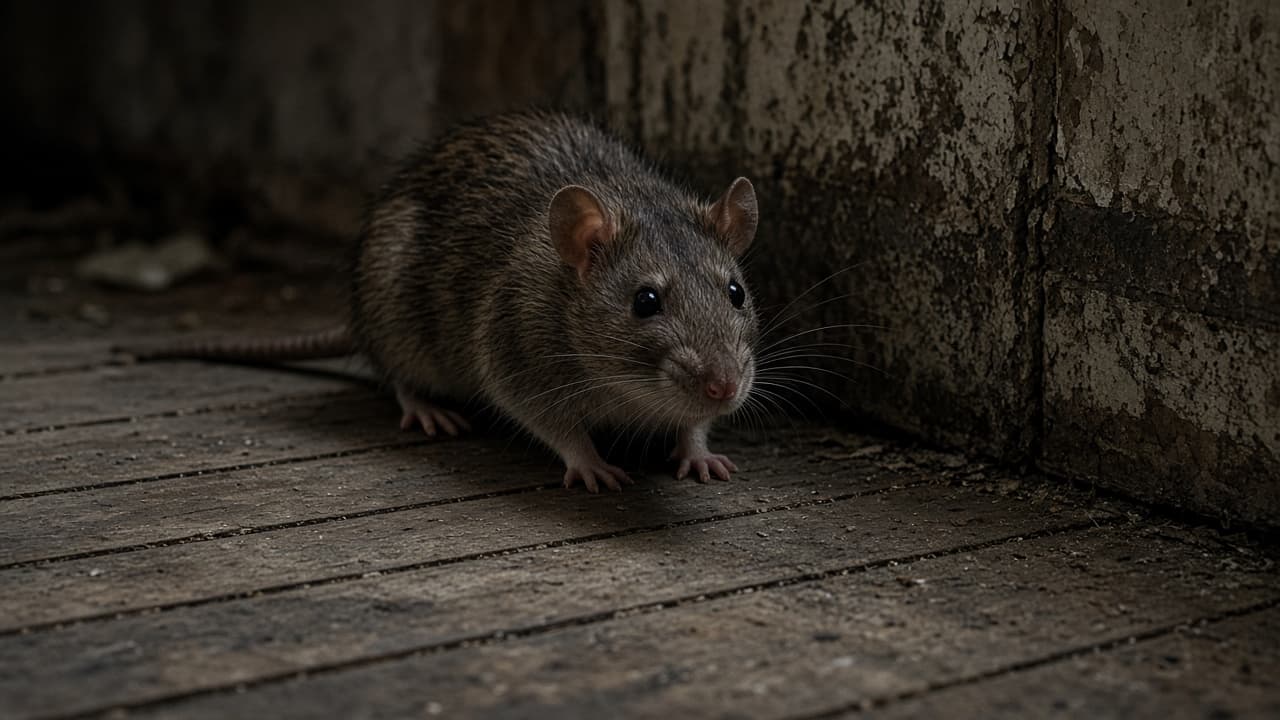
Indoors is the boundary. Rats belong to the in-between of buildings: cavities, pipes, the space behind the fridge.
A single rat in a house usually means the neglected thing has a location in private life. Money disappearing in small amounts. A habit using nights. A relative who helps themselves. A health issue you have been living beside. Dreamers often report trying to chase it without wanting to kill it, which is a fair description of ambivalent problems.
Room still matters. Kitchen is resources and care. Bedroom is rest and intimacy breached. Walls and ceilings, the sound of something in the structure, lean toward a problem in the life-arrangement itself, not in one object.
Infestation or Many Rats
Count replaces character. No individual rat is the villain; the pipes are.
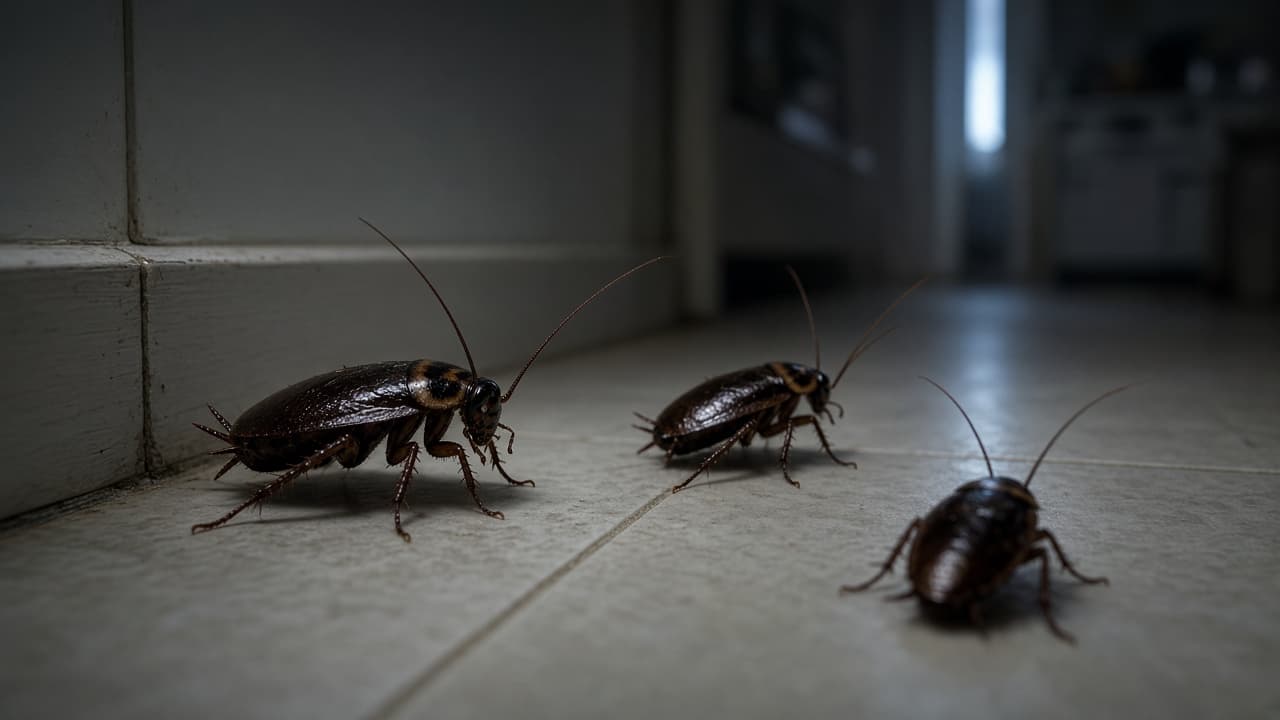
Infestation dreams show up during periods of accumulated small failures: admin, mould, unread messages, a team full of unofficial workarounds, a street or building that has actually gone downhill. They share DNA with cockroach and insect load-dreams, with a difference: rats feel smarter. The problem is not mindless. It is opportunistic.
Whether you called someone (an exterminator, a landlord, a parent) is diagnostic. Help-seeking in the dream often means you already know this is not a one-person job. Hiding the infestation from visitors maps onto shame about how far a standard has slipped.
A Clever Rat That Outsmarts You
The animal is ahead. Traps fail. It looks at you. It takes the bait and leaves.
These scenes track a problem, or a person, that rewards cunning over force. Bureaucracy with loopholes. A colleague who is always slightly better informed. Your own talent for getting by in a system you do not respect. The rat is not always the enemy. Sometimes it is the skill you are using and do not want to admire.
If you felt respect mixed with disgust, take that mixture seriously. It is often the most honest feeling in the week: you are dealing with something effective that violates a standard you still hold.
Being Bitten by a Rat
Small teeth, outsized aftermath. A nip on the hand, the ankle, the lip.
A bite is a precise injury from something you could have treated as background. It clusters around minor violations that keep working afterwards: a stolen idea, a sarcastic remark, a symptom you normalised. Compare mice, similar scale, usually less aggression. A rat bite has more intent in the folklore of the dream.
Rabies anxiety and disease panic are common on waking. Those are cultural overlays. Unless you have an actual exposure worry, read the bite as social or bodily information that got through a defence, not as a medical prophecy.
Have a Rats dream of your own?
Write what you remember and get a clear reading.
Rats Stealing Food or Nested in Walls
Theft and nesting are two plots that often travel together.
Stolen food is resource competition: someone or something is eating your stores, time, leftovers, budget, emotional labour. Nesting in walls is settlement. The problem is not visiting. It has had young. Dreamers report this during long-term arrangements they have stopped inspecting: a shared flat, a marriage’s unspoken economy, a job’s unpaid extras.
Finding a nest is different from seeing a runner. A nest means you have located the breeding site. That is often progress, even when the image is horrible. You cannot clear what you cannot find.
A Friendly, Pet, or Talking Rat
The disgust is missing, or it arrives late as surprise.
Friendly rats complicate the pest reading. They show up for people who keep rats, work with them, or have rewritten the animal as intelligent companion. They also show up when a scrappy, slightly shameful strategy of yours has become an ally, hustling, hiding, surviving a hostile environment without applause.
If the rat spoke, recover the sentence. Talking pests often deliver the line you will not say in a clean room: the truth about the crumbs, the landlord, the marriage, the way you actually get by.
Killing a Rat or Setting Traps
The kill is a policy decision.
Relief after killing usually means you ended a leak, a subscription of effort, a person using your stores, a habit. Guilt more often means you attacked a survival strategy (yours or someone else’s) that was ugly and also keeping someone alive. Method matters: poison is indirect; a trap is mechanical; a shoe is sudden.
Traps you set and then forgot are a dream about half-measures. You acknowledged the pest and did not stay in the story. Waking life often matches: an email drafted, a boundary announced, no follow-through.
Psychological Meaning
Rats carry some of the densest betrayal folklore of any dream animal, which is why people wake up scanning their friends. Correct that first. Slang ("rat," "ratted out") is a linguistic overlay. The older image is the commensal survivor: an animal that thrives on human waste and human walls.
Freud’s 1909 "Rat Man" case made rats famous in clinical lore as torture, money, and forbidden thought. That case is not a decoder ring for your kitchen. It does show how readily the animal attracts disgust, debt, and aggression, useful to know, dangerous to apply wholesale.
G. William Domhoff’s continuity hypothesis is the workhorse. People living with actual infestations, people in cramped housing, people ashamed of a mess, dream rats. So do people in competitive, scarce environments where cleverness around resources is the local intelligence. Michael Schredl’s findings on waking stress and negatively toned dreams explain why rats arrive in overloaded months.
Antti Revonsuo’s 2000 threat-simulation theory fits bites, swarms, and contamination fear. Disease vectors and food thieves are ancestral and modern threats. The dream rehearses detection and removal. It does not schedule a betrayal.
The Gap the Animal Was Using
Ask what space in your life currently has crumbs and no inspection. That is usually the rat’s address: a budget line, a shared kitchen, a friendship that only takes, a health habit, a workplace workaround.
If betrayal still feels like the right word after you have named the space, then name the person and the act, in daylight, with evidence, not because an animal appeared. Folklore is loud. Neglected infrastructure is commoner. The dream is often asking for a torch and a dustpan, not a courtroom.