Quick Answer
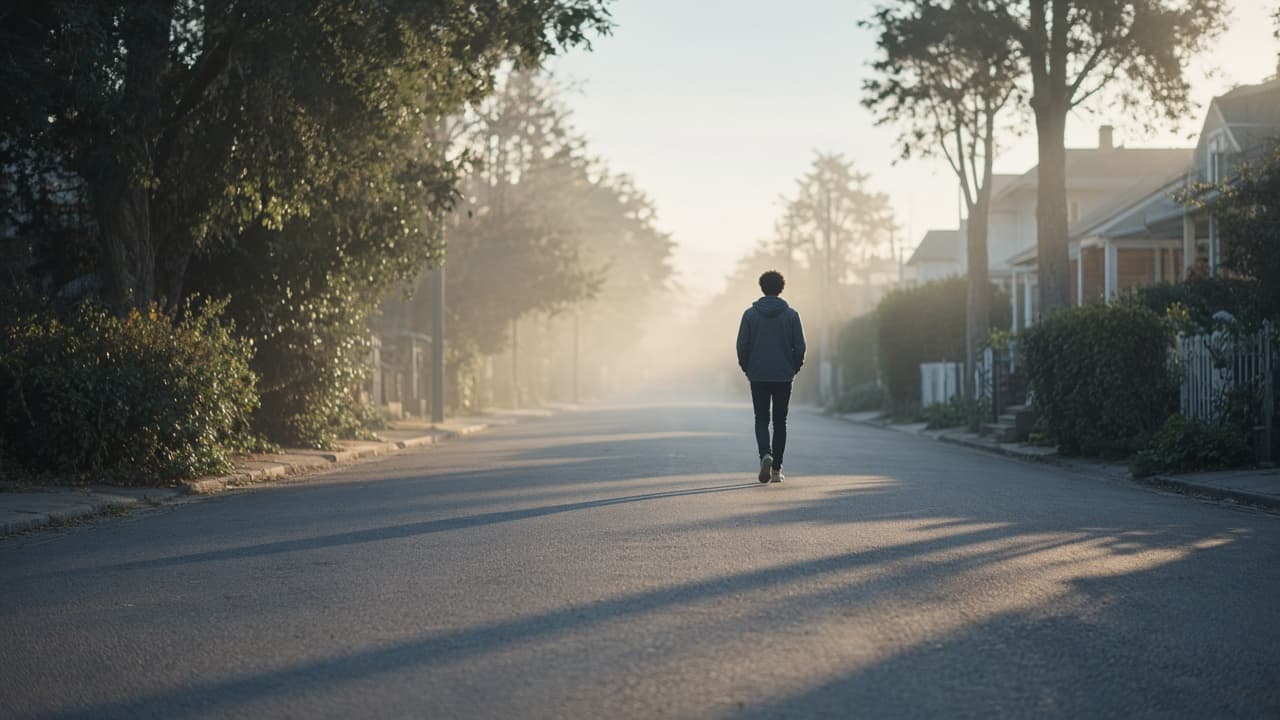
People from your past in a dream, classmates, colleagues, a neighbour from a house you left, are rarely a summons to reopen the relationship. They are a cast. The psyche is good at pulling actors who already know their lines: the one who judged you, the one who saw you before you had a professional self, the one you wronged. [Old friends](/dreams/old-friends) overlap; this page is wider. It includes the almost-strangers, the yearbook faces, the office from a job that still sits in your nervous system. The useful question is which social self walked back on stage.
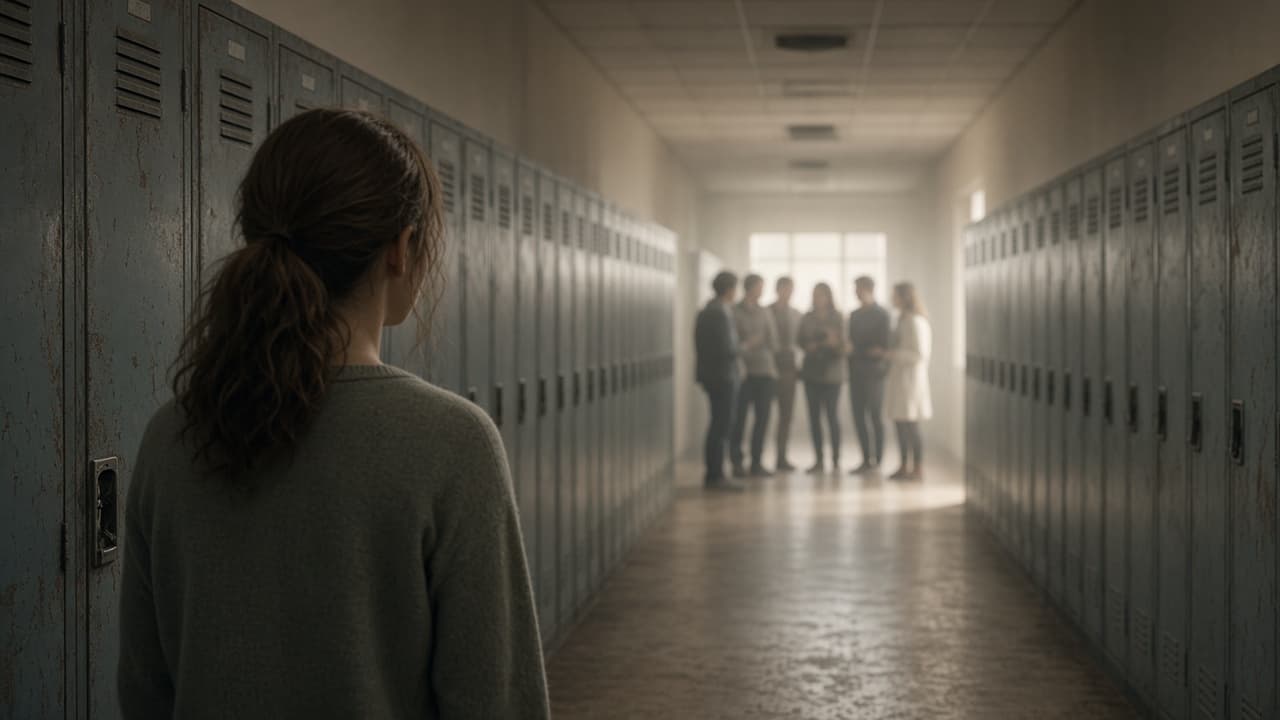
A School Corridor That Still Knows Your Name
Lockers, a timetable, a person you have not thought about in a decade standing as if no years happened. School is the set; the past people are the company.
These nights cluster around adult evaluation that has the same geometry as adolescence: a new hierarchy, an exam that is actually a job, a room where you do not yet know the rules. The classmate is often a function. Popularity, exclusion, a crush that was never spoken, a teacher-proxy. You do not need to message them. You need to notice which feeling walked through the door first, shame, belonging, unfinished competitiveness.
If you were the age you are now, trapped in the old building, the past is visiting the present. If you were sixteen again, the present is visiting the past. Those two directions are different diagnoses.
Former Colleagues, a Job You Left
An office you could still draw. A manager. The person who sat opposite you. A project that in waking life is finished and in the dream is somehow still due.
Work-past dreams are about roles that did not fully clock out. A competence you miss. A humiliation that still has a badge. A version of you that was "the reliable one" and is now unemployed, promoted, or parenting. The colleague may be a stand-in for a current coworker; the old office is simply the better-lit set.
If you were trying to leave and could not find the exit, the job is still occupying a room in you. If you were visiting as a guest, you may already have left in the ways that matter, and the dream is a tour.
A Party of People Who Should Not Be in One Room
A party that mixes decades: primary school, a first job, a sports team, a church, an ex. The social Venn diagram is impossible.
This is the unfinished social self as a guest list. You are being asked, in compressed form, who you are when all your audiences are present. People in identity transitions report these, a name change, a class move, coming out, going home for a funeral. The distress is rarely one person. It is the impossibility of a single performance.
Who you stood with is the vote. Who you hid from is the other vote. Strangers in the mix often mark the parts of the current life that do not yet have a history.
Someone You Wronged, or Who Wronged You
An apology that cannot be delivered. A confrontation that cannot end. A person whose face still carries a specific year.
Moral leftovers use past people because past people are finished enough to be symbols and unfinished enough to hurt. A cruelty you never accounted for. A rumour. A friendship you dropped without a sentence. The dream is not always asking you to find them. Sometimes it is asking you to stop running the scene as if they might still walk in.
If they forgave you in the dream and you could not accept it, the jury is internal. If they would not look at you, you already know the waking analogue: a repair that is not available.
Have a People From Your Past dream of your own?
Write what you remember and get a clear reading.
A Past Self Walking Beside Them
You are both ages at once, or you watch a younger you talk to them while current-you cannot intervene.
This is explicitly about the unfinished self rather than the unfinished other. The past people are scenery for a version of you that still wants something: to be chosen, to be clever, to be left alone, to have said no. Adult life can starve those wants without killing them. The dream restages the original hunger with the original witnesses.
Trying to protect the younger you is a caretaking instinct worth taking seriously. Trying to shut them up is information too.
They Have Not Aged and You Have
Their face is a photograph. Yours is not. The mismatch is the plot.
Time-uneven dreams often arrive around reunions, social media, and the first death in a cohort. You are being asked to feel the years as a fact. Envy, tenderness, horror at your own face in a bathroom, all of that is ordinary. If they looked disappointed in your ageing, the disappointed party is usually an internalised audience, not a psychic message from them.
If you had not aged either, the dream may be offering a holiday from time, which is rest, not regression.
You Search for One Person and Keep Finding Others
A specific name. You walk rooms. The wrong faces keep arriving. The one you want is always just left.
Search-dreams are about a particular function you cannot locate in present life: the person who got you, the person who made a group safe, the person who was the point. Past people appear as near-misses because the current world has not yet hired their replacement. That can be a friend, a mentor, a witness.
Waking with the name is allowed to become a message, a letter, a search. It is also allowed to become a clearer brief for who you need now, without requiring the original actor.
Psychological Meaning
Erin Wamsley and Robert Stickgold, in work across 2010–2011 on memory replay in dreams, showed that recent experiences are recombined rather than replayed as tape. Older memories enter as fragments that can carry an emotion more efficiently than a current acquaintance can. A classmate from 2004 is, in this account, a well-tagged file: "evaluation," "belonging," "I was small here."
That is why people from your past show up when the present has the same tag and worse scenery. Continuity still holds for the obvious cases, a reunion email, a photograph, a name in a dream journal the week before. The interesting cases are the ones with no daytime trigger. Those are usually the tag, not the person.
Do not treat the dream as evidence they are thinking of you. Reciprocal dreaming is a comfort story. Treat it as evidence that a social role in you is still staffed by a ghost cast, and ask whether the current life has given that role better work.
When the Old Cast Will Not Leave
Repeating past-people nights often mean a present evaluation is still running on old software: you are in a grown job with a school nervous system, or in a new city with a hometown audience in your head.
The series eases when the present gets a witness who is actually in the room, a friend who knows this year's version of you. It also eases when you give the old scene a waking sentence: I was cruel, I was unseen, I was good at that, I do not have to go back. If you want to contact someone, do it because you want to, not because a dream assigned you homework from 1998.