Quick Answer
A stranger is a person the plot needs and the biography has not supplied. That can be an unknown part of you, an unknown social field (a city, a company, a dating public), or a known person you are not ready to recognise. Do not rush to "the shadow." Sometimes a stranger is just a stranger: last week’s commute, a film, a face in a waiting room. The scenes that earn a reading are the ones with a claim, in your [house](/dreams/family), in a chase, in a kiss, in a crowd where you cannot place anyone, including yourself.
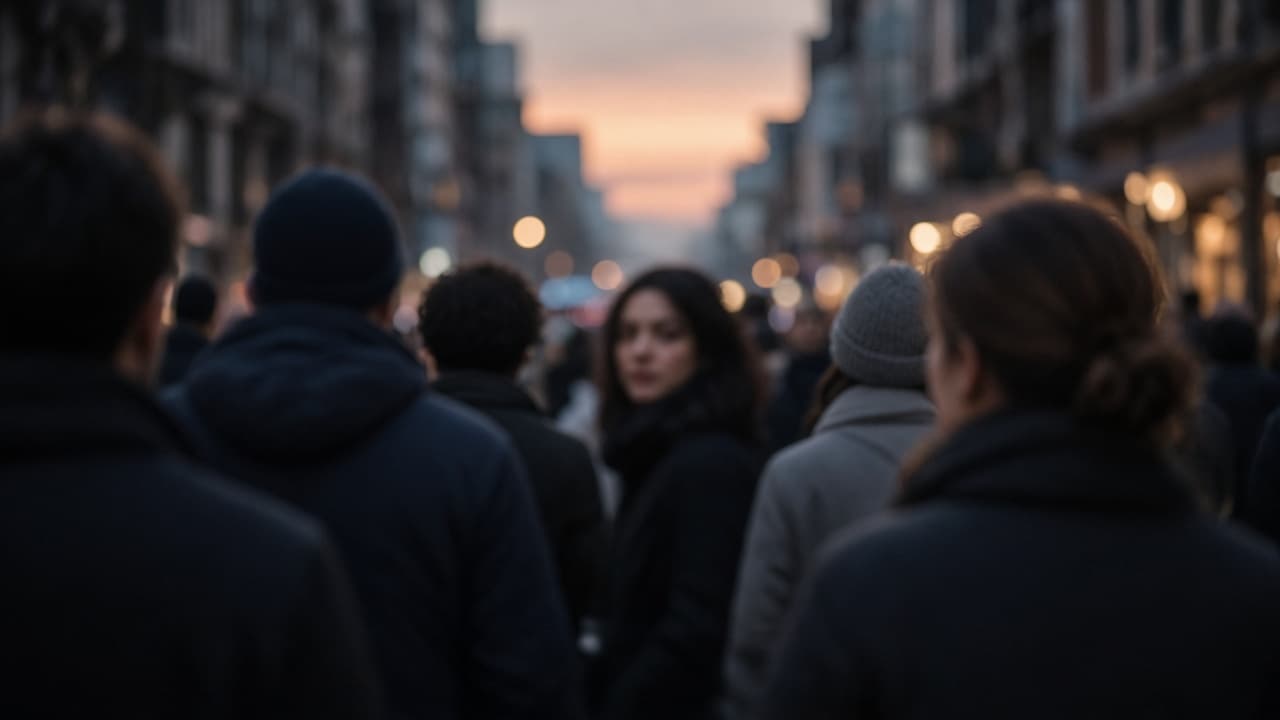
A Crowd of People You Cannot Place
A party, a station, a street. Many faces, no names, a hum.
Anonymous crowds mark a social field without a legend: a new job, a city, the internet, a hospital, a religious group you have joined, a family wedding on the other side. You are in among someone and you do not have the roster.
If you were trying to find one person in the crowd, the dream is a search plot wearing extras. If you were peaceful in the anonymity, you may be tired of being known. If you were invisible in it, recognition is the missing nutrient.
A Single Stranger Who Feels Important
One face, or almost a face. The rest of the dream arranges around them.
This is the classic "who was that" dream. Jungian habit calls it an unknown aspect of self, and that is sometimes exactly right: a competence, a cruelty, a sexuality, a vocation you have not introduced to the family. Continuity also allows an actual new person, a colleague you have not filed, a neighbour, a crush you are pretending is generic.
What they wanted is the claim. Help, sex, a message, your house, your name. A stranger who only watched is assessment. A stranger who already knew your story is a leak: something about you is travelling in a field you do not control.
Faceless Figures, Blurred Faces, People With No Features
The identity slot is empty on purpose.
Facelessness shows up in chase dreams, in bureaucracy, in medical settings, in sexual scenes where the point is not a particular other. It can be a failure of the dreaming brain to render, and it can be a precise report: this role in my life has no one in it, or I will not look.
Trying to force the face to resolve and failing is a dream about a recognition that is being resisted. If the face resolved at the last moment into a parent, a boss, an ex, you already have the casting. The stranger was a delay.
A Stranger in the House
The private zone has an unknown occupant. Kitchen, hallway, sitting on the bed as if invited.
Indoor strangers mark the unknown crossing the domestic boundary: a new partner the family has not met, a new impulse, a lodger, a fear, a part of you that does not live here yet. Compare old friends in the house (known past) with this (unknown present).
Whether they had a key is the consent question. A break-in is invasion. A stranger with a key is an arrangement you have already made and not fully admitted. Offering them tea is a different ethic from hiding in a cupboard. You are rehearsing a policy toward the new.
Have a Strangers dream of your own?
Write what you remember and get a clear reading.
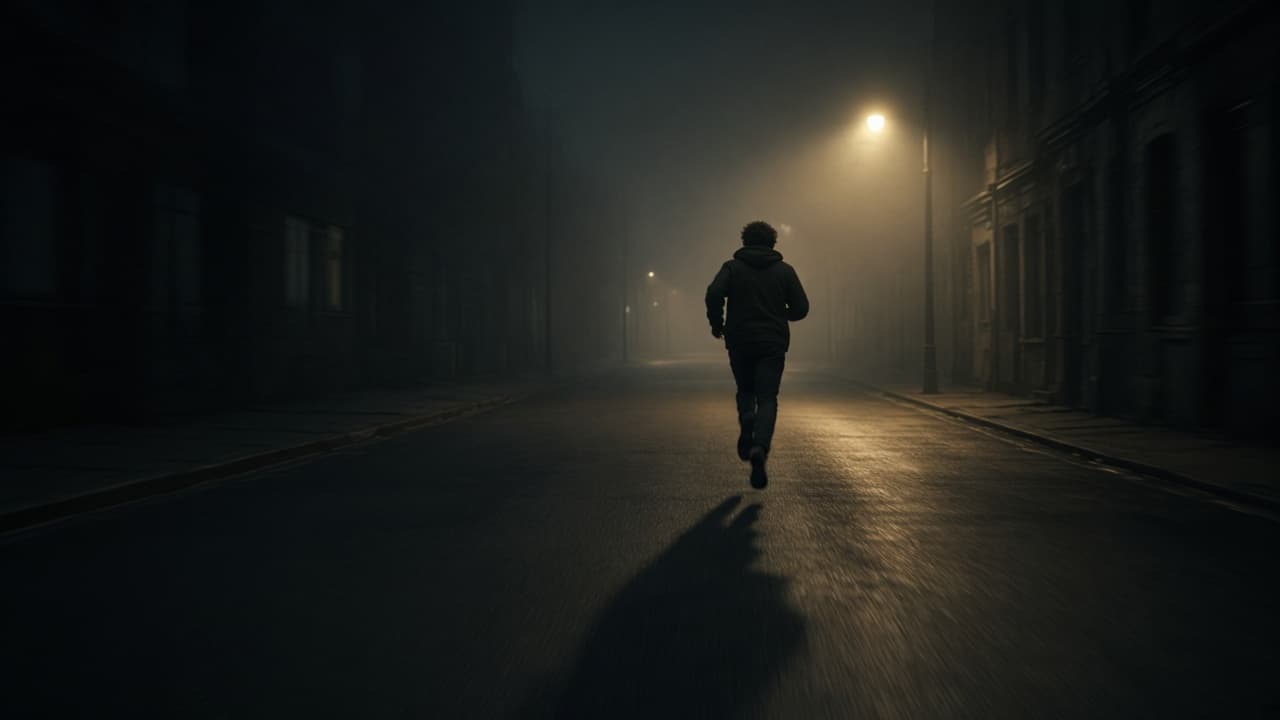
Being Chased or Threatened by a Stranger
Unknown harm, or harm you have not named.
A pursuing stranger is often a pressure without an owner: money, illness anxiety, a legal process, a social exposure. When the pursuer has no face, you may be keeping it generic because a specific name would require action. See the chase page for the body mechanics; here the point is the missing identity.
If the stranger became someone you know as they caught you, the delay ended. If they never did, the waking work is still naming. Attraction mixed with threat is its own field: an unknown desire that does not feel safe yet.
Talking With a Stranger, Getting Directions, a Kind Unknown
The social field works. A person you do not know is usable.
Helpful strangers are a dream about trust outside the clan, immigration, travel, recovery groups, a city that has started to have faces. They contrast with family dreams in which help is supposed to come from the roster and does not.
If you could not understand their language, you are in a field whose codes you have not learned (a job, a country, a generation). If they knew your name, the unknown already has information. That can be uncanny and still just be a small city.
You Are the Stranger, Unrecognised, Misnamed
They look at you as extra. Your family asks who you are. A lover uses the wrong name. A workplace badge is blank.
This identification is about failed recognition after a change: sobriety, a gender or style shift, a class move, a return from illness, a rebrand, simply growing up in a family that froze you at sixteen. The ache is specific.
Sometimes you prefer it. Anonymity as relief after being too known (a small town, a role, a scandal). If you tried to prove who you were and they would not have it, you are in a fight with a system’s memory, not with your own.
Psychological Meaning
Jung’s shadow and unknown-other is the inherited reading, and it is earned when the stranger clearly carries a quality you disown or want. It is not earned for every extra in a station scene. G. William Domhoff’s continuity hypothesis (2018) will take the new office, the dating app, the commute, and the film you watched without forcing a myth.
Freud (1900) treated some strangers as stand-ins, condensation of several people, or a forbidden one in costume. If the stranger later "was" your brother, that mechanism is on the table. Tore Nielsen’s typical-dream lists include being chased by strangers among the most common plots; the unknown pursuer is a default threat-cast (Revonsuo, 2000) when a specific animal or person has not been assigned.
Ernest Hartmann (2011) would call a faceless crowd a picture of "I am in a field of people I cannot particularise." Deirdre Barrett’s problem-solving dreams sometimes send a stranger with the missing quality (calm, ruthlessness, a language) as a rehearsal.
Hobson’s activation-synthesis view explains poorly rendered faces: REM is better at gist than at stable identity. When the dream insists on the failure to place a face, though, that insistence is the meaning.
The Face You Cannot Place
Ask whether the unknown was a field, a quality, a delayed recognition, or you. Those are four different jobs.
If the same stranger returns, they are probably still uncast in daylight, a conversation you have not had, a desire you have not named, a room in which you still have no people. Introduce one actual person to the plot (a colleague’s name, a feeling’s name, a hello in the building) and the night-time extras often thin, or one of them finally grows a face you already knew.