Quick Answer
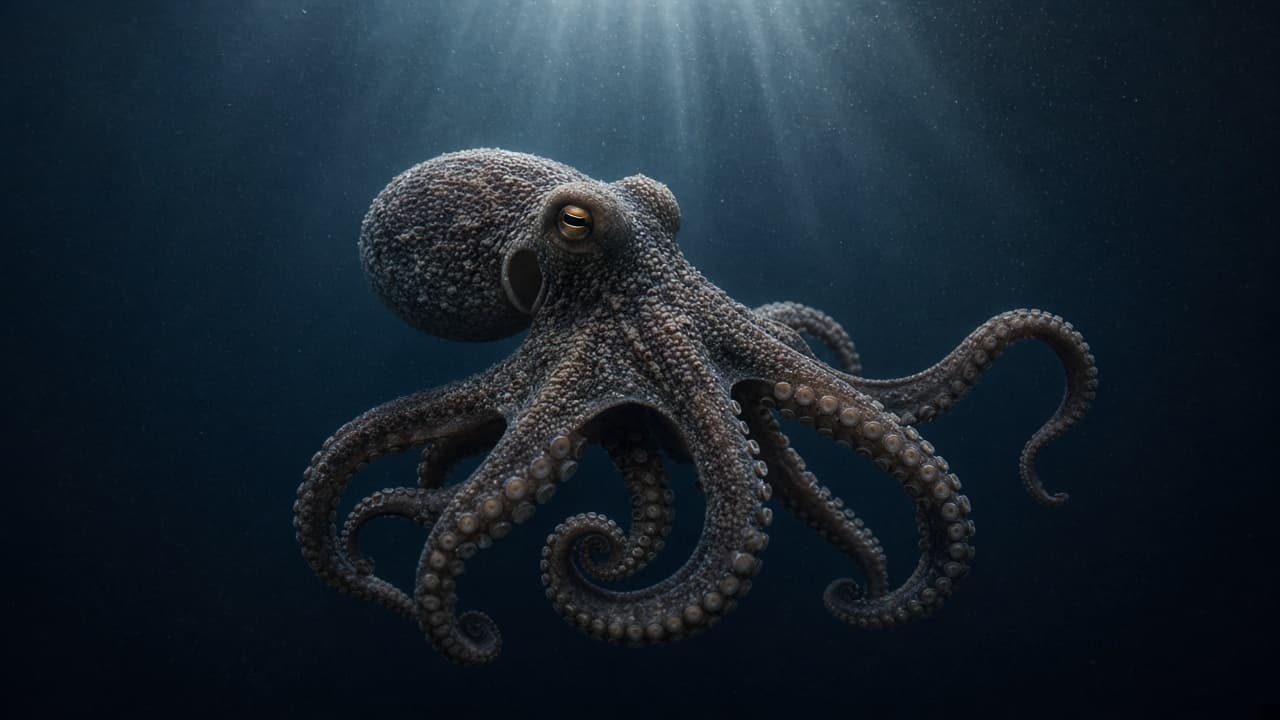
An octopus in a dream is almost never just "a sea creature". It is a body plan: a brain that thinks with its arms, a grip that can hold many things at once, intelligence that works in low light. The dream is usually about multi-tasking, entanglement, or a kind of smarts you do not get credit for because it does not look like a straight line. Watch what the arms were doing. Reaching, holding, releasing, camouflaging, and hunting are different jobs, and they map onto different waking weeks.
Watching an Octopus Move
The observational dream is often strangely calm. The animal pours itself through a gap, changes colour, or examines an object with a single arm while the rest of it waits.
These scenes accompany respect for a kind of intelligence you are using or witnessing, improvising at work, parenting with no script, navigating a family system where the official story and the actual power are not the same. Dreamers describe fascination more than fear, which is a clue that the octopus may be a picture of capability rather than of a monster.
If you were trying to follow it and kept losing the body in the rocks, the waking analogue is a person or problem that will not stay in one category.
Being Held by Tentacles
Contact versions are the ones people remember. Arms around wrists, ankles, waist; suckers against skin; the specific panic of a hold that has more points of contact than you have hands to peel off.
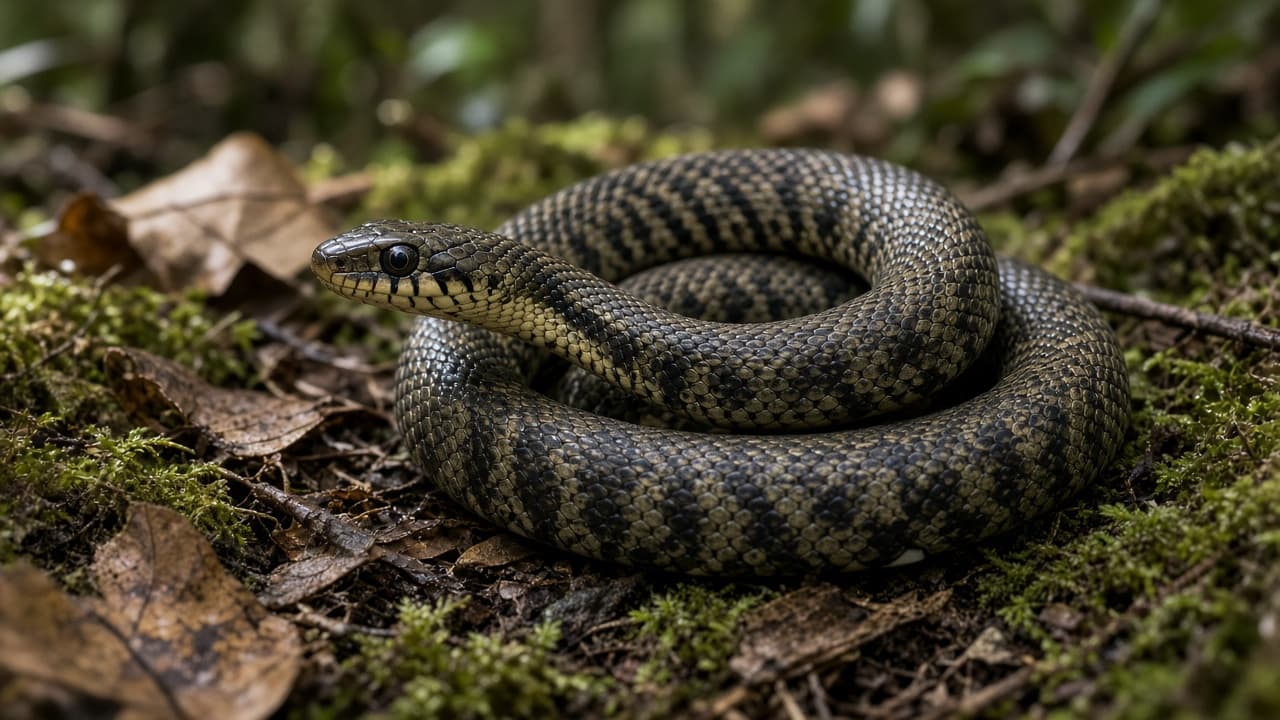
This is a dream about distributed grip. One relationship, one job, one family role that has a claim on Monday, Wednesday, the weekend, your phone, your sleep. It is closer to drowning in obligations than to a single attacker. Compare it with snake dreams: a snake is usually one line of threat. An octopus is a committee of holds.
Whether you could breathe matters. Restriction of the chest or throat often means the multi-tasking has reached the point where rest itself is captured. Restriction of the hands more often maps onto not being free to do your own work.
A Giant Octopus
Size in this family of dreams is about occupancy. A giant octopus in a harbour, wrapping a pier, filling a swimming pool, or occupying an entire house basement means one many-armed situation has become the environment.
These arrive around sprawling jobs, blended families, lawsuits with endless filings, or caretaking that has grown departments. The dream is not saying the thing is evil. It is saying you have stopped being able to see its edge.
If the giant animal was still, the load may be stable but huge. If it was actively pulling structures down, something in the system is now costing more than it holds.
An Octopus in the House or in a Bath
Fresh water where salt belongs, or salt water where a kitchen belongs: the category error is the message. The octopus has left its world and entered yours.
Indoor octopuses cluster when work methods follow you home, the clever, slightly ruthless competence you use in a difficult job now running in the relationship, or when a fluid problem (money, sex, grief, a flood of messages) has no remaining office hours. Bathrooms add the body: you cannot even wash without the hold.
A small octopus in a sink or jar is a different scene from a large one in a hallway. Containment suggests you still think you can keep the many-armed thing in a side project. Escape from the jar usually means that hope has already failed.
Have a Octopus dream of your own?
Write what you remember and get a clear reading.
A Friendly, Curious, or Helpful Octopus
Cooperation is striking because popular culture so often casts the animal as a villain. Here it hands you an object, walks with you, or simply sits in companionable intelligence.
These dreams often follow a reframe of your own indirectness. You have been solving things sideways, through people, through timing, through not saying the obvious sentence, and it has actually worked. Or you have met someone whose mind does not move in straight lines and you have stopped treating that as untrustworthy.
If the friendliness made you uneasy, you may not yet believe that grip can be care rather than capture. That unease is worth taking seriously in relationships where "help" comes with suckers.
Fighting or Escaping an Octopus
Struggle dreams are about peeling off holds. Dreamers report cutting arms (they grow back, which is its own metaphor), prising suckers, or swimming for a surface that keeps receding.
Growing-back arms are a precise image for problems that regenerate when you solve one branch, a family member who opens a new crisis, a job that replaces every finished task with two. Escaping upward toward air overlaps with drowning imagery and usually means you need an actual limit, not a better technique for handling more.
Winning by becoming still, rather than by fighting, shows up more often than people expect. It can map onto a waking insight that thrashing gives the situation more to hold.
Camouflage, Ink, or an Octopus You Cannot Quite See
Octopuses disappear. Dreams of searching a reef, a dark tank, or a room and only finding a texture that might be an animal are about intelligence that will not present a single face.
They cluster around people whose motives you cannot get into daylight, including yourself. Ink in the water, a sudden cloud, a loss of visibility, often marks a conversation or a workplace moment where someone (you, them) made the situation unreadable on purpose.
If you were the one camouflaging, ask what you are blending into and whether that skill has started to cost you a shape of your own.
Psychological Meaning
Deirdre Barrett's research on dreams as problem-solving, including her 1993 work on incubation and later writing in The Committee of Sleep (2001), helps here more than a predator checklist. Barrett treats dreaming as a mode of thought that can try out solutions the waking mind is too linear to attempt. An octopus is almost a mascot for that mode: distributed attention, testing with an arm, working in dim water.
If you are in a week that requires holding six threads, the dreaming brain may simply cast the correct body. The dream is not accusing you of being manipulative. It may be reporting that you are already the octopus, competent in the dark, slightly exhausted by having no spare limb.
Fear in the same image still counts. Grip without consent is a different emotional picture from curiosity. Rate the feeling on waking, then count the actual holds in your diary. The number is usually sitting there in calendar form.
When the Arms Keep Multiplying
If octopus dreams repeat, list the jobs each "arm" is doing by day, paid work, invisible work, emotional labour, a secret project, a person you manage. The dream often stops when one arm is allowed to let go, not when you become better at reaching.
A single night after a nature documentary or a seafood dinner can be just that. Recurrence across a month is almost always a map of a life with no off-duty limb.