Quick Answer
Jumping is a decision that uses the body. You leave a surface to cross a gap, to enter water, to get off a thing that is moving, to escape. That is different from [falling off a cliff](/dreams/falling-off-a-cliff), where the leaving is not yours, and different from [running](/dreams/running), which keeps contact with the ground. Hesitation at the edge, a clean landing, a miss, a sequel in which you fly, those are the usual plots. Recover the gap: what was on the far side, and what was in between.
Hesitation at the Edge
A roof, a platform, a mountain lip, a gap between buildings. Your toes. Time. Other people may have already gone.
Hesitation is the decision in its unconverted state. You can see the jump and you have not authorised the legs. These dreams cluster around resignations, proposals, moves, disclosures, medical procedures, any act that is quick in the doing and slow in the agreeing.
If someone was waiting on the far side, the relationship is the reason and the pressure. If someone was behind you saying jump, include whether they are pushing a real risk. Looking down is failure-mode research; looking across is destination research. People who count and cannot start are often using ritual to postpone motor commitment. That can be how you stay alive on actual cliffs. In a dream it is usually about a weekday cliff.
Frozen while being chased toward an edge is a worse variant: the jump is now the only exit and still will not happen.
Clearing the Gap
You leave. You land. The body knows it worked. Sometimes you surprise yourself.
A successful jump is a commitment that, in the dream's physics, paid out. It often arrives the week you actually do the thing, or the week your nervous system finally believes a thing already done. Dreamers underplay these because they are not nightmares. They are still reports: you can leave a surface and arrive.
If the landing was on a smaller, better place, a boat, a ledge, a new room, the far side is specific. If it was simply "across," the dream may not yet know the destination, only the necessity of leaving this side. A crowd cheering is social recognition you want for the risk. No witness is a private courage file.
Do not treat a successful jump as a command to take a reckless waking risk. Treat it as evidence that your model of the gap is currently jumpable.
Missing the Jump, Short, or Hitting the Wall
You leave and it is not enough. Hands scrape. You hang. You drop. The far side was real and you did not get there.
A miss is a commitment whose resources did not match the gap. Money, skill, time, a relationship's actual width. It is closer to a failed project than to a random fall, because you still chose to leave the first surface.
Hanging by the fingers is the near-miss: you almost have the new life and it is costing everything to hold. Dropping and surviving is a failed leap that did not end you. Dropping into the gap's contents, water, a street, fog, makes the in-between into a destination you did not want. If you jumped too early, timing is the lesson. If you jumped too late, the far side may have moved; opportunities do that.
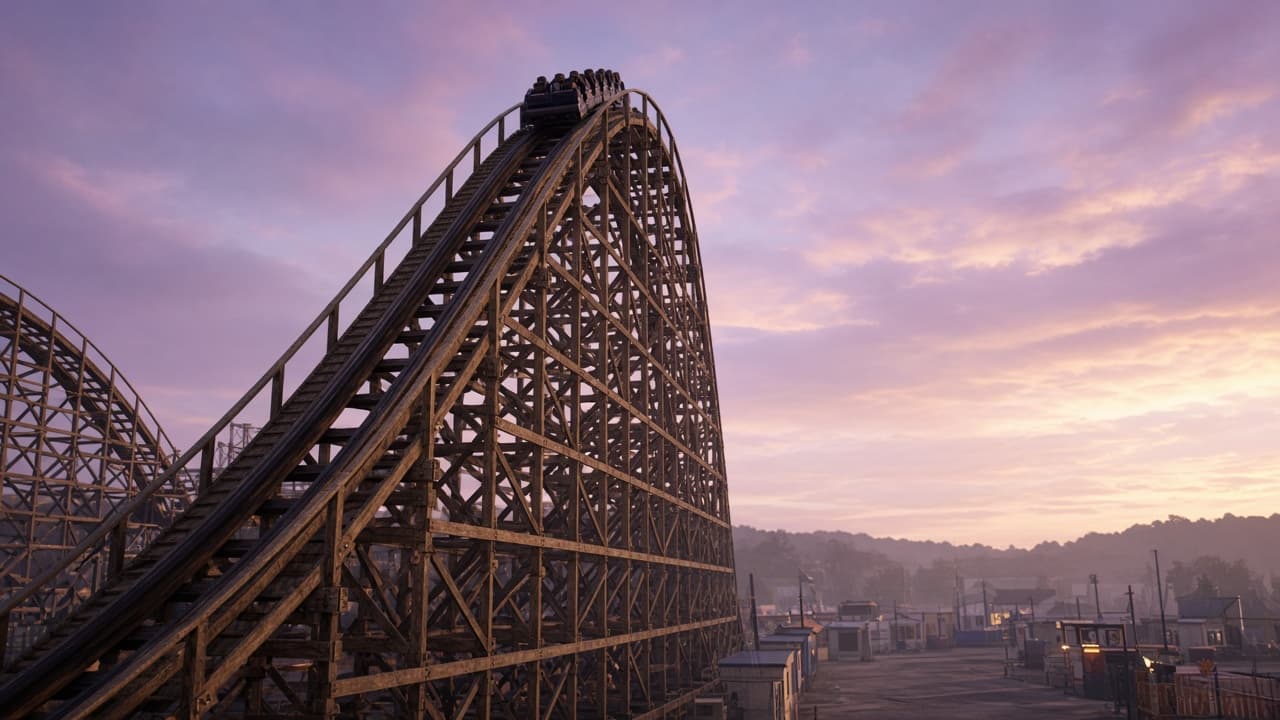
Unlike a roller-coaster, you are not strapped to a ride. The miss is yours, which is painful and also means the next attempt could be different.
Jumping into Water
A pool, a sea, a river from a rock. The commitment's landing is not solid.
Water jumps are entries into feeling, uncertainty, or a process you cannot stand on. Height plus water combines two fears and sometimes two pleasures. A clean dive you chose on a hot day can be play. A jump from too high into water you cannot see is a decision into opacity.
Whether you could swim on arrival splits the reading. Competence in the water means you have skills for the unstructured part after the decision. Sinking is a fear that the commitment has no aftercare. People already in the water calling you in are a social entry, a group, a family, a scene. An empty dark pool is a lonelier opacity.
Belly-flops are undignified landings: the decision happened and the form was bad. You still entered.
Have a Jumping dream of your own?
Write what you remember and get a clear reading.
Jumping to Escape
A window, a train, a fire, a person. The jump is not toward a destination so much as off a situation.
Escape jumps are about exits that cost a drop. You will take the gap because the surface you are on is worse. That maps onto leaving jobs, rooms, conversations, vehicles, relationships in which staying has become the larger danger.
If the landing was unknown, you currently prefer uncertainty to the known harm. If you knew the landing was bad and jumped anyway, the dream is reporting a trapped ranking of risks. Jumping from a moving vehicle adds timing: you cannot wait for a station. This is not a suggestion to leap from anything real. It is a map of how expensive staying feels.
A failed escape jump that returns you to the same room is a loop: the exit is not yet a real exit.
Flying After You Jump
The gap becomes irrelevant. Lift. You are not falling. You may laugh.
Flight as a sequel to jumping is extra agency after commitment. You left the edge and the world gave you more than a landing. People describe this around projects that opened unexpected rooms, around relief so physical it felt like air, around the discovery of a skill. It is also a known pleasure of the dreaming body: once gravity is refused, the simulation often keeps going.
If you could steer, the extra agency is usable. If you could only go up, the lift may be ungrounded, mania, idealisation, a high that has not chosen a far side. Coming down gently is integration. Waking at the peak is a mind that will not yet show you the landing.
This is still a jump dream, not a random flying dream, if the leaving of the edge was the first act. Keep that order. The commitment preceded the lift.
Jumping Again and Again, or Being Made to Jump
A sequence of gaps. A coach. A line of people. You are not done after one.
Repeated jumps are a life of successive commitments, interviews, dates, levels, a recovery with many edges. Exhaustion is often the point. A roller-coaster has a track; this does not. You have to authorise each time.
Being forced to jump is agency stolen at the moment of leaving the ground: a dare, a company, a family, a culture of "just do it." The body's protest is the meaning. Teaching someone else to jump is a different role, parent, manager, the one who has already crossed and now stands on the far side asking. If you would not take your own advice in the dream, listen to that.
Psychological Meaning
Jumping is a lucid-friendly action: it is intentional, bodily, and tests the physics of the dream. Stephen LaBerge, in Lucid Dreaming (1985), described how dreamers can notice the state and then experiment with action, including leaps that become flight, as a way of exploring the mind's simulation from inside. You do not have to be lucid for that research to help. It shows that jumping is one of the ways the sleeping brain lets a person test agency: leave a surface, see what the world does.
LaBerge's work also undercuts omen-reading. A jump that becomes flight is a known feature of a flexible dream-body, not a scheduled miracle. A hesitation at the edge is a known feature of a mind running a high-stakes choice. The useful question is what gap you are currently standing at in daylight, and whether the dream's physics (clear, miss, water, chase) matches your actual resources.
Jumping dreams do not instruct you to leap without looking. They report the state of a commitment: stuck, cleared, short, escaped, unexpectedly lifted.
When Jumping Dreams Keep Returning
Repeating edge-hesitation usually means the decision is still unsigned; write the smallest reversible step that is not the full jump. Repeating misses usually mean the gap estimate is off, skill, money, time. Repeating escape jumps usually mean the current surface is still rated worse than a drop.
If you have vertigo or a recent fall, include the body. If you are actually about to do something irreversible, the dream is a poor oracle and a decent dress rehearsal: walk the far side in daylight, including the ugly version. Then, if you still jump, you will have done the looking. The night was never meant to replace that.