Quick Answer
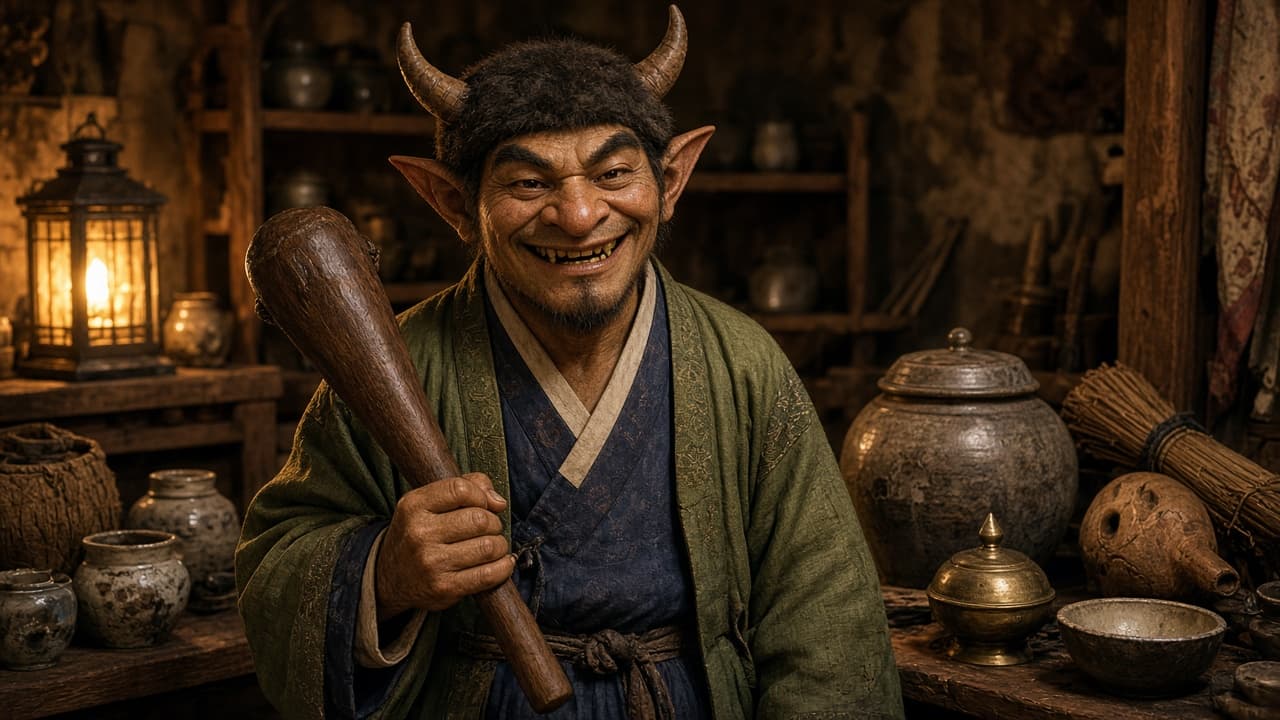
A dokkaebi in a dream is a trickster with a culture attached. Korean folklore gives this goblin a club, a love of wrestling and feasts, and the habit of turning ordinary objects into something else. The useful reading is rarely “evil spirit.” It is closer to a force that tests greed, hospitality, and whether the household’s things still obey the household. If the figure was generic horror, see [demons](/dreams/demons) or [monsters](/dreams/monsters). Stay here when the scene had mischief, a bangmangi, object-magic, or a specifically Korean name.
The Dokkaebi Appeared in the House
It is in the kitchen, the yard, the doorway, among shoes and brooms. Domestic space is the stage.
Household dokkaebi dreams are about the ordinary world becoming unreliable in a playful or punitive way. Something in the house is no longer only itself, a relationship rule, a family object, a piece of luck you treat as furniture. Tricksters belong in kitchens because kitchens are where appetite and hospitality are tested.
Whether you offered food or tried to expel it splits two waking strategies: bargain with the unruly thing, or purify it away. Neither is automatically wiser. Your actual household politics will tell you which you are already doing.
The Club, the Bangmangi, Things Appearing and Disappearing
A wooden club summons objects, money, a feast, a wall. Things arrive because a tool said so.
Instrumental magic is a picture of agency that feels slightly illegitimate, a workaround, a charm, a hustle, a family story about luck. You may be wishing for a tool that would make the material world obey. You may be afraid someone else has that tool.
If you held the club, the dream is asking what you would summon if you could, which is a values test. If only the dokkaebi held it, power is still elsewhere. Compare gifts that appear without labour: the emotional problem is similar, the folklore costume is different.
Wrestling, a Challenge, a Bargain
You fight it, drink with it, make a deal, lose a bet, win a hat. The encounter is social, even when it is physical.
Dokkaebi stories often hinge on contests and character. Greedy hosts fare badly. Clever or decent ones sometimes leave richer. In a dream, the contest is usually a waking one: a negotiation, a family demand, a workplace that feels like a folk tale about who deserves the pot.
Winning by trickery rather than force pairs with foxes as cousin tricksters. Losing because you were proud is a humility plot, not a cosmic punishment.
Transformation: Object, Animal, Person
A broom becomes a person. The dokkaebi becomes a man. You become something you did not choose.
Transformation is native to this figure. Category leak, object/person/spirit, maps onto lives where roles will not stay put: immigrant households negotiating two rule-sets, families where a parent is also a myth, jobs that demand you shapeshift. The dream is not telling you to believe in spirits. It is telling you that a category is under pressure.
If the transformation felt festive, play is still available. If it felt like a horror movie, the leak is unwelcome. Ghosts overlap when the figure also felt like the dead; dokkaebi are more often vividly alive.
Have a Dokkaebi dream of your own?
Write what you remember and get a clear reading.
Punishment, Reward, and Moral Tone
It leaves gold for the kind and filth for the greedy, or the dream simply lectures.
Moral dokkaebi plots are folklore doing what folklore does: teaching through a memorable body. Ask whether you have been in a story about deserving. Immigrants, eldest children, and people handling family money often have a dokkaebi-shaped auditor in the psyche even when they do not use the word.
Do not treat the lecture as an omen about upcoming luck. Treat it as a picture of the ethic currently running in the house.
You Did Not Know the Name Until Waking
The figure was a horned, club-carrying mischief until morning, when a drama, a game, or a relative’s story supplied “dokkaebi.”
That delay is fine. Culture tags the image after the fact. Read what happened in the scene first, house, club, bargain, transformation, and let the name be extra context, not a required exam. If you have no Korean background, you are still allowed to have dreamed a goblin with a stick. Tricksters are a wide human habit.
Psychological Meaning
Kelly Bulkeley’s 2008 Dreaming in the World’s Religions is the right kind of citation for a figure this culturally specific. Bulkeley treats religious and folk dream imagery as something people actually use, not as a universal cipher. A dokkaebi dream in a Korean or Korean-diaspora sleeper may be as ordinary as a saint dream in a Catholic one: the tradition supplies a face for a kind of power. In a sleeper who met the figure through media, the same face can still do psychological work as trickster, appetite, and object-magic.
Continuity remains first. Dramas, webtoons, games, a grandmother’s story, a festival, any of these can cast the night’s actor. The meaning is in the encounter: hospitality, greed, a tool that changes things, a house rule being tested.
Avoid two errors. One is flattening dokkaebi into Western Satan. The other is treating a single night as a folk-diagnosis of your luck. Educational reading stays with behaviour in the scene.
When the Goblin Keeps Coming Back
A repeating dokkaebi usually means a bargain or a household rule is still unstable. Name the contest in daylight, money, hospitality, a shapeshifting role, and decide whether you are wrestling, feasting, or closing the door.
If the figure only terrifies and never tricks, you may be looking at a monster dream in dokkaebi clothing. Use nightmare tools. Culture can wait until you have slept.
A dokkaebi dream is a trickster in a kitchen, not a verdict on your fate. Describe the club, the house, and whether you bargained if you want a reading that honours that folklore without turning it into an omen.