Quick Answer
Cannibalism dreams are about consuming a person as a way of talking about hunger that has broken a social rule. Incorporation, envy, merger, grief, and using someone as fuel are the usual waking neighbours. The image is educational and often sickening on purpose. It is not an omen, not a confession, and not a request for graphic detail. What was eaten, who offered it, and whether you refused are the forks that matter.
Ordinary food dreams stay food. This one put a person on the table.
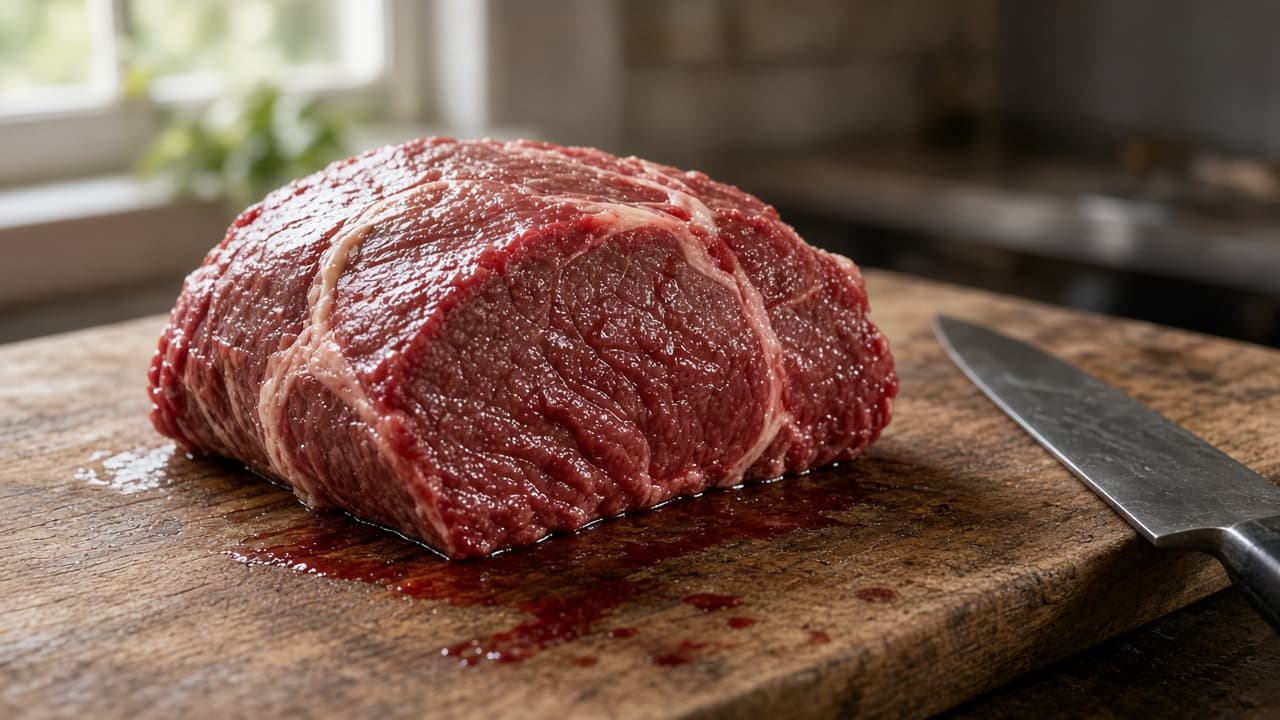
Being Offered a Person as Food
A plate, a covered dish, a sentence at a table. Someone else has decided this is dinner.
The offer is the ethics. A host who smiles is a culture, family, workplace, friend group, whose appetite you are being asked to join. A stranger offering is more like a test of your own hunger: would you, if nobody from your life were watching. Refusal is a boundary. Acceptance with nausea is a boundary you crossed and are still digesting. Acceptance with appetite is rarer in reports and usually maps onto a waking takeover you are already performing: a rival's job, a parent's role, an ex's friends.
Keep the sensory memory mild. What you need is the social fact: a person became food in a room with rules.
You Are Being Consumed
This is the depletion scene. Someone, or something wearing a mouth, is taking you in.
Jobs that eat evenings, children who need more than you have, a partner's crisis, a public that wants a version of you, all of these cast well. The "cannibal" may have a known face, or may be a crowd, which is how institutions feel. If you were calm, you may already think of yourself as supplies. If you were fighting, a limit is forming.
Being eaten and remaining conscious (a common dream trick) is about watching your own incorporation. You can still comment. That commentary is often the waking voice that says this cannot continue and then continues.
Taboo Hunger Without a Victim You Know
Hunger that has no name except that it is wrong. You want. You know you must not. The dream supplies the most forbidden meal so that the wanting has a shape.
This version sits near desire more than near death. Ambition, lust, curiosity, revenge, and the wish to be inside someone's life can all wear this costume. The taboo is the point: you have labelled a want as unsayable. Dreams are willing to be unsayable so you can see the want at all.
If you woke and immediately searched whether the dream "means you are evil," that search is part of the same taboo engine. Evil is not required. A want that broke your own rule is enough.
Discovering It Afterwards
The meal is over. You understand late. A bone that should not be there, a comment, an empty chair.
Late discovery is moral shock after participation. You already took part in a system, gossip, a pile-on, a family myth, a company practice, and the dream is showing the menu. Vomiting in this version is often an attempt to un-incorporate, to get the person out of you. It does not always work in the dream, which is honest: some takings cannot be fully reversed, only stopped going forward.
If others at the table already knew, you are the last to be told. That is a social reading, not a supernatural one.
Have a Cannibalism dream of your own?
Write what you remember and get a clear reading.
Ritual Versus Horror
Some dreams stage cannibalism as ceremony: quiet, formal, everyone knows the hymn. Others stage it as catastrophe.
Ritual versions often point at traditions of incorporation that a culture admits, inheritance, taking a name, "you are what your family is," communion imagery in people who grew up with it. The dream is asking whether you consent to being made of other people. Horror versions refuse the hymn. They show the same incorporation as a crime. People leaving a faith, a family business, or a political identity dream both, sometimes in one week.
Neither version predicts death. Both versions talk about what you are made of.
Feeding Someone Else
You are the cook or the server. That reverses the victim story and is harder to tell friends.
Feeding another person a person is about what you are putting into them: values, secrets, a role, a grudge. Parents dream this around influence. Managers dream it around culture. Partners dream it around "I need you to be like me." If the eater was willing, the dream may be about a merger you both want and fear. If they were not, you are looking at coercion you would rather call care.
This is still not a gore brief. Stay with who held the spoon.
Hunger That Will Not Fill
You eat and the need remains. The taboo meal does not work as nutrition.
Unfillable hunger after a person-as-food scene is a comment on strategy. Taking someone in, their time, their status, their body in the metaphorical sense of closeness, did not do what you hoped. The dream is willing to be blunt: this appetite is the wrong tool. It may need grief, or work, or ordinary eating and rest, rather than another person used as supplies.
If you searched for more, the night was still in acquisition mode. If you sat back from the table, a limit appeared.
Psychological Meaning
Mark Solms's 1997 The Neuropsychology of Dreams argued that dreaming depends on specific motivational systems in the brain, not only on REM fireworks. Appetite, attachment, and seeking are allowed to run in a simulated world where social rules can be broken safely. Cannibalism is an extreme breaking of the rule "people are not food," which makes it a loud way to talk about taking in.
Jungian language of incorporation (becoming what you wrestle with) is sometimes useful here, as long as it does not become a flattering myth. Envy and grief also belong. We take people in when they die, when we imitate them, when we cannot let them go.
Stay non-diagnostic. A single loud image is not a disorder and not a destiny.
If the Taboo Hunger Dream Returns
Repeating cannibalism usually means an incorporation question is still open: who is using whom as fuel, and whether you consent. Write a sentence that contains a real person or institution and the verb take in or use. If the sentence is unbearable, that is the work, not a need for a darker symbol.
If the dream is nightly and wrecking sleep, treat it as a nightmare loop. Imagery rehearsal can change the menu without pretending the hunger was never there. You do not have to decorate it, and you do not have to fear it as a future.