Quick Answer
Raw meat is food that has not yet been made social. Cooking is culture, patience, and the agreement that this flesh is now a meal. In a dream, uncooked meat usually marks something vital that is not ready to be consumed, an appetite, a project, a feeling, a truth still close to the body it came from. [Blood](/dreams/blood), smell, and whether you were preparing it or confronting it as a problem decide the reading. This is not an omen about illness or a curse on your kitchen.
On a Counter, Waiting to Be Cooked
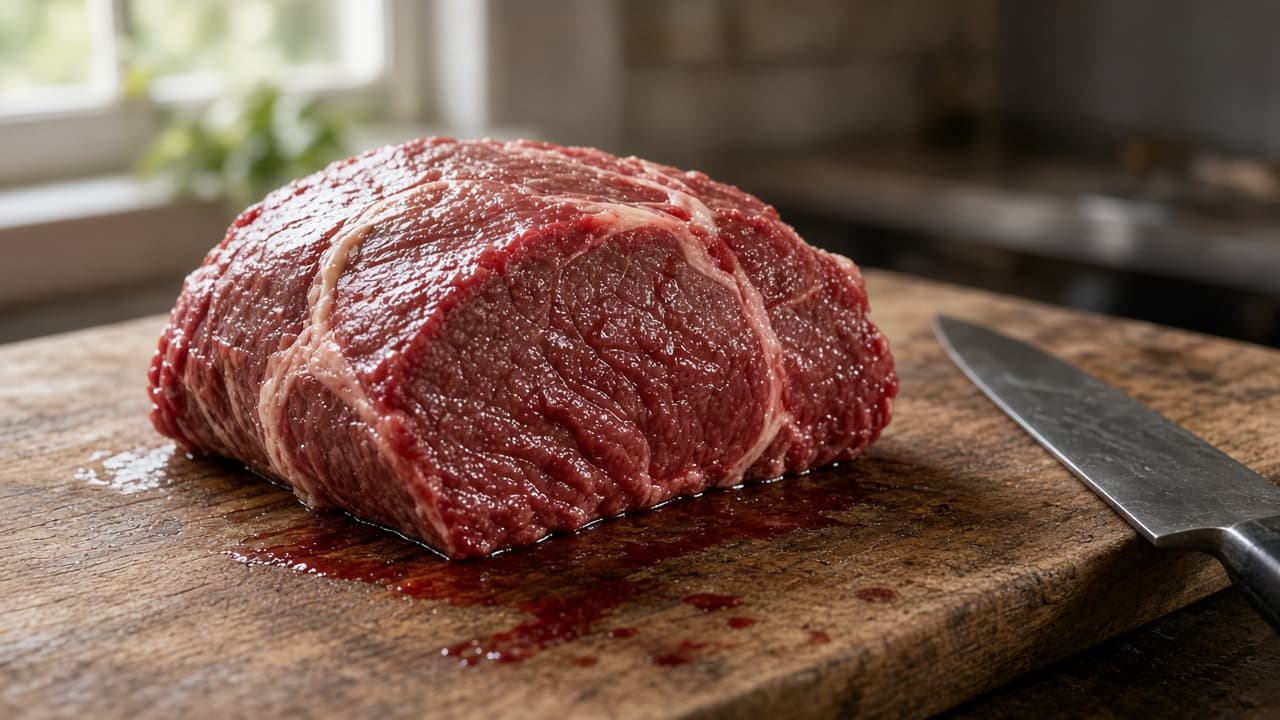
A butcher's paper, a fridge, a chopping board, knives nearby. The meat is a task. Someone is supposed to transform it.
This version clusters around work and care that still need fire, a draft, a conversation, a piece of anger, a sexual or creative hunger that you can name and have not yet made into a form you can serve to anyone, including yourself. The dream is not rushing you. It is showing you the ingredient.
If you felt competent, you probably have a method. If you felt disgust and obligation, you may be the household's designated handler of the bloody jobs, emotional, practical, or both.
Appetite That Will Not Wait
You eat it as it is. Hands, teeth, no plate. Hunger has skipped the civilising step.
This can be a picture of need so urgent that etiquette looks like a lie, grief, lust, ambition, a child-self who was made to wait too long. It can also be a fear of your own appetite, staged as feral so that you will not have to want the cooked, shareable version.
Shame afterwards is a rule speaking. Absence of shame can be integration or it can be a warning that you are done pretending your hunger is polite. Let the rest of your week vote on which.
Something Not Ready to Be Consumed
You are about to cook, serve, or buy, and a part of you knows it is too soon: too red, too much, still an animal. Readiness is the theme.
Projects launched before they have a skin. Relationships made sexual or public before they can bear it. Family stories told at a table that cannot digest them. The meat is the content. The undercooking is the timing.
Putting it back in the fridge is a respectable dream ending. Forcing it onto plates is a different ethic. If guests were waiting, you may be under pressure to produce a meal from something that is still a body.
Blood, Smell, and the Line Between Meal and Corpse
The sensory load is the point. Iron smell, a pool on the board, flies, a recognition that this was recently alive. Raw meat sits next to dead bodies in the file, which is why some dreamers panic.
If the scene stayed in a kitchen, stay in appetite and preparation. If it slid into a crime, a hunt, a battlefield, you are in a different dream, harm, guilt, a death you have not finished looking at. Do not collapse those into one symbol.
People who work with bodies, meat, medicine, or trauma get this imagery through continuity. Start there. The psyche is not always being clever.
Have a Raw Meat dream of your own?
Write what you remember and get a clear reading.
Serving It to Others, or Being Served
A plate of the unfinished thing, offered as hospitality. Who cooked, who insisted, who refused.
Serving raw meat to guests can be a picture of feeding people your unprocessed material and calling it a meal, oversharing, dumping, asking others to metabolise what you will not. Being served it can mean someone else is doing that to you: a family that plates up raw history, a workplace that calls cruelty "transparency."
Refusal is agency. Forcing yourself to swallow is a familiar social skill and the dream may be tired of it. See also cake that is wrong inside: celebration with a spoiled substance. Here the substance never pretended to be icing.
Spoiled, Forgotten, Left Too Long
The unfinished thing has acquired time. Green, sour, a package at the back of the fridge you keep meaning to deal with.
Anger not cooked becomes something else. So does a project. So does a body of grief you stored "until later." The dream is often disgusted because disgust is the emotion that says: this cannot be food now. You need a different ritual than dinner, burial, bin, compost, a conversation that is not a meal.
If you tried to save it anyway, you may be loyal past the point of nourishment. That loyalty has a smell.
Shopping for It, Stealing It, Not Being Able to Afford It
The meat is in the economy: a counter, a price, a theft, an empty tray. Vitality as resource.
Hunger for the raw stuff of life, energy, sex, protein, time, a body that works, can appear as a market problem. You can see what would feed you. Access is the plot. Theft dreams here are often about taking vitality you do not believe you are allowed to buy. Empty trays are scarcity, personal or cultural.
A luxurious amount you cannot carry home is the opposite: too much vitality, no way to get it into your actual kitchen.
Psychological Meaning
Freud's 1913 Totem and Taboo is the heavy, optional citation: raw flesh, the kill, the meal, and the taboo on what a group will admit it wants. You do not need the whole anthropology. You need the observation that uncooked meat is appetite before the group's rules have finished with it.
Ernest Hartmann's 1998 Dreams and Nightmares argued that high-emotion dreams use broad, powerful images to contextualize. Blood and flesh are broad. If the waking feeling is grief, lust, disgust, or a mix, raw meat is an efficient picture. The dream is not a menu. It is a temperature.
Hall and Van de Castle would code food, aggression, and misfortune separately. A kitchen scene with no attack is not a violence dream. Keep the categories clean; search engines do not.
Revonsuo would note that dead animals and blood are threat-relevant. If the dream is a hunt or a wound, threat rehearsal may be the engine and the "unfinished meal" reading is secondary.
Read the dream as a report on something vital that has not been processed. Is it waiting for fire, being eaten too soon, being served to people who did not order it, or spoiling in storage?
When the Fridge Will Not Clear
Recurring raw-meat dreams usually mean the unfinished thing is still in the house. Name it in a sentence that is allowed to be ugly. Then choose a verb: cook (give it form), freeze (a deliberate pause, not a forgetting), serve (share it with someone who consented), or throw away (end the pretence that it will become dinner).
If the imagery is traumatic, real violence, real bodies, stop using a food metaphor. That is memory and it deserves clinical care. If you have actual dietary or body distress, do not let a dream become another rule. Eat in the way that keeps you alive, and let the night's butcher shop be a picture, not a commandment.