Quick Answer
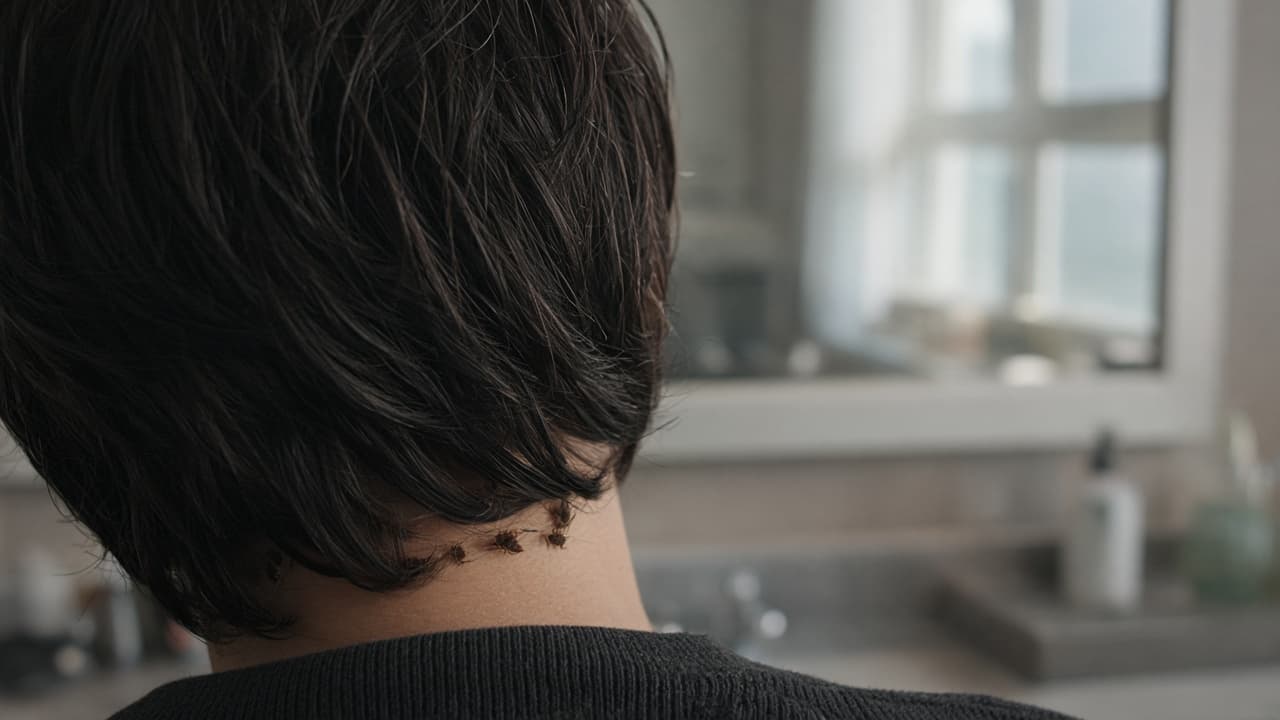
[Hair](/dreams/hair) in dreams is appearance, vitality and the line between private body and public presentation. Putting [insects](/dreams/insects) in it locates the problem at that line: something low-status and multiplying has reached the part of you that faces the room. Picking, washing, and being discovered are three different jobs the dream can assign. Your waking feelings about bugs are data. If you already hate crawlies, expect the volume to run high relative to the situation underneath.
Finding Them While Combing or in a Mirror
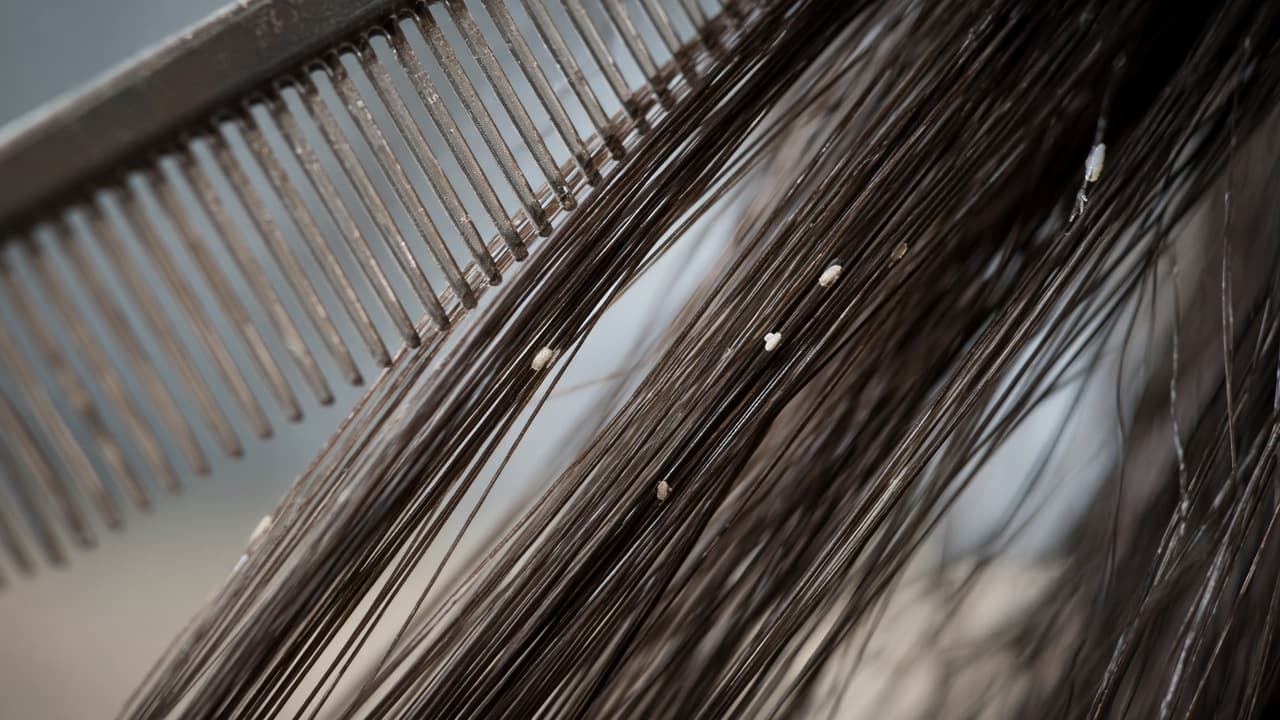
A routine grooming moment that goes wrong. The comb brings them out, or the mirror shows movement you cannot feel.
Discovery-in-grooming dreams track problems found while maintaining the self, a look in the glass that is supposed to be cosmetic and becomes diagnostic. Dreamers describe a delay between seeing and feeling, which maps onto realising a situation has been on you for a while. The scalp is a blind spot; you need a tool or a reflection to know.
If the bugs were only in the mirror and not in your hands, the infestation may be about how you imagine you appear rather than about a sensation you trust.
Picking Them Out, and More Arriving
The labour version. Fingers, a sink full, a count that will not finish.
Picking is rumination made manual. It clusters around checking habits: messages, symptoms, a partner's social media, a mistake you keep replaying. Each bug is a discrete worry; the horror is the supply. Dreamers often know, inside the dream, that they will not finish, and they keep going anyway. That is the waking pattern too.
Whether you crushed them or tried to save them splits the ethics of the anxiety. Crushing is suppression. Saving (putting them in a jar, refusing to kill) sometimes belongs to people who feel responsible for a mess they also want gone.
Public Discovery | School, Work, a Hairdresser
Someone else sees. A hairdresser stops. A classmate points. You are under a dryer, or in a meeting, and a bug drops.
Audience is social death in a small key, not a cancer sentence, a hygiene sentence, which for many people is worse in the moment. These scenes borrow from lice-in-classroom memory even when the dreamer is forty. They arrive when a private problem is close to becoming known: debt, a relapse, a family infestation of conflict, a professional error.
If you covered your head rather than looking, the dream is about concealment strategy, not about entomology.
Bugs You Could Feel but Not See
Crawling, itching, the certainty of movement, and nothing in the comb.
Unseen infestation is suspicion. It maps onto gaslighting-adjacent situations (something is wrong, nobody will confirm it) and onto health anxiety about the scalp, the skin, parasites you have read about. Formication, the real sensation of crawling without insects, can be wrapped in a dream at night; if the sensation continues in daylight, that is a body symptom to mention to a clinician, not a symbol to decode first.
The dream's job in the purely psychological case is to give the itch a picture. The picture will always be too much.
Have a Bugs In Hair dream of your own?
Write what you remember and get a clear reading.
A Particular Insect: Ants, Beetles, Spiders, Unnamed
Species is not a taxonomy test, but it is a tone test.
Ants suggest number, work, something organised against you or recruiting your head as territory. Beetles feel heavier, more like a single problem with armour. Spiders in the hair combine this page with web-and-trap meanings. Unnamed specks, "bugs" that will not resolve into a creature, are unstructured anxiety, and they are the most common report.
If they were flying insects rather than crawling ones, the infestation is less about being colonised and more about being bothered, a swarm you keep batting from your face.
Washing, Cutting, or Shaving Them Out
A remedy inside the dream. Scalding water, scissors, a razor, a chemical.
Remedies tell you what kind of solution your mind currently believes in. Washing is purification and repetition (you will wash again). Cutting hair is a larger sacrifice of identity to be rid of the problem, a look, a role, a femininity or masculinity you were wearing. Shaving is the nuclear option, and it often follows weeks of picking dreams that did not work.
If the bugs survived the wash, the dream is reporting that surface solutions are not matching the source. That can still be psychological. It can also be a nudge to look at a real infestation at home (bed bugs, actual lice) if one exists, because continuity includes the literal.
They Were in Someone Else's Hair, and You Had to Deal with It
A child's head, a partner's, a stranger on public transport. You are the one looking.
Care-infestation dreams belong to people who handle other people's problems at the root, parents, teachers, the family member who "deals with it." The disgust is mixed with duty. Dreamers describe not wanting to touch and touching anyway.
If you caught them from the other person, contamination is the subject: a closeness that transferred something you did not agree to carry.
Psychological Meaning
G. William Domhoff's 2003 The Scientific Study of Dreams restates a finding that is easy to forget when the image is this itchy: dream content continues waking concerns, including small, socially charged ones. An infestation at the hairline is an efficient picture of a concern that is both intimate and potentially visible. You do not need a Jungian swarm. You need the current worry that multiplies when handled at the surface.
Arne Öhman's work on rapid detection of animals is a supporting actor. Bugs commandeer attention cheaply; putting them where you cannot see them without a mirror maximises the unease. The vividness is partly design.
Freud's displacement from genital vermin fears is historical and optional; most searchers are not having that dream. Skip it unless the association is already yours. Keep the practical questions: were you picking, hiding, washing, or being shown? Those four actions are four waking strategies, and the dream is usually honest about which one you are using.
If the species, the audience, or the remedy was oddly precise, drop the scene into a 30-second personal reading rather than stopping at "bugs mean anxiety." Anxiety is the category. The scalp is the location, and location is the meaning.