Quick Answer
A black bear in a dream is rarely a monster. It is mass, something powerful, slow to provoke, and disastrous to handle wrongly. Dreamers usually describe wanting to avoid rather than defeat it, which is the whole reading in miniature. Three details do most of the work: distance, direction, and whether the bear had noticed you. A bear across a clearing that has not looked up is about power you are aware of and not engaging. A bear on its way toward you is about power that has already involved you.
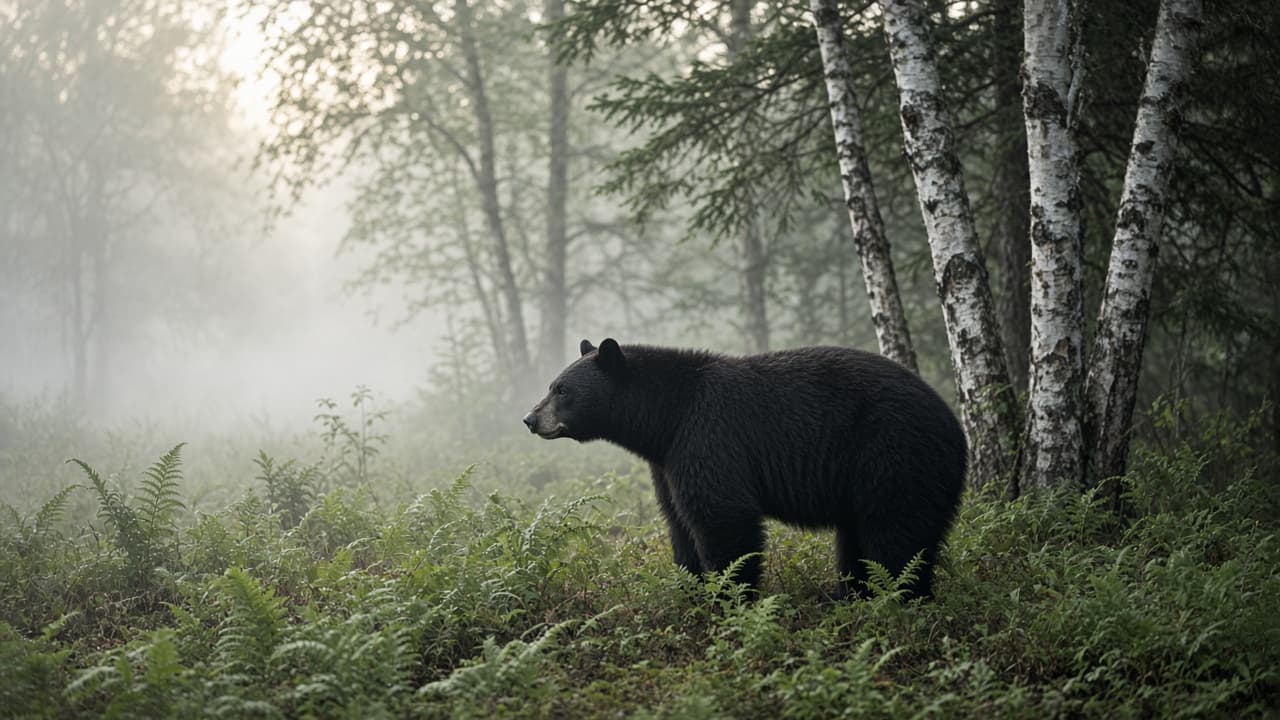
A Bear Watching From the Treeline
The most common opening scene. You are on a path, at a campsite, or in a garden, and a bear stands at the edge of the trees, still, entirely aware of you.
These dreams gather around situations where an obvious force in your life is behaving well and could stop. A manager with a temper who has been reasonable lately. A relative whose moods run the family. A financial pressure that has not yet caused damage. Nothing is wrong in the scene, and everything depends on the bear.
Note whether you kept eye contact or looked away. Dreamers who describe backing off slowly and calmly are frequently doing exactly that in waking life, sometimes without having noticed how much energy it takes.
Being Chased by a Black Bear
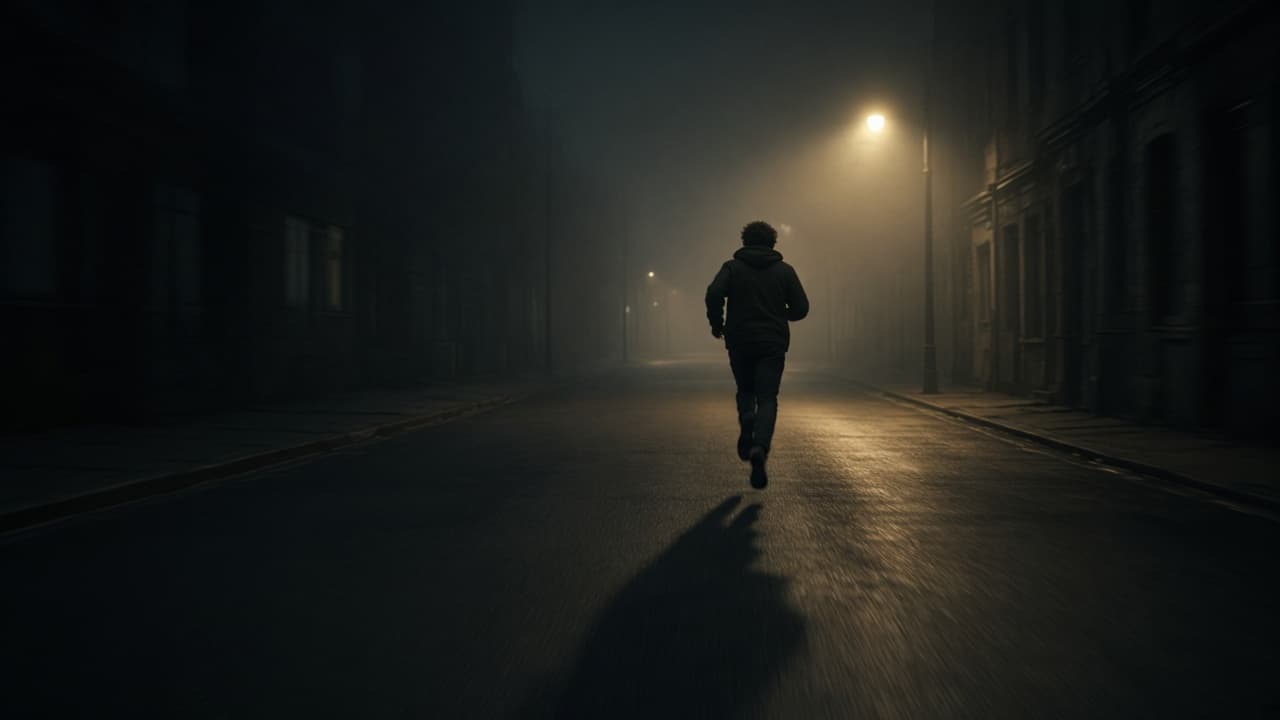
Bear chases are distinct from being pursued by wolves or dogs. There is no pack, no cleverness, no barking, just something much bigger than you closing distance.
The waking match is usually a confrontation you have postponed with someone who has real weight: an authority figure, a creditor, a person whose anger you have been managing for years. What makes it a bear rather than one of the wolves is that there is no pack to outmanoeuvre and no reasoning to be done, and if the pursuit itself is the part that repeats, being chased covers that pattern more broadly.
Where you ended up matters. Reaching a car, a cabin or a closed door tends to accompany situations that are contained but not resolved. Being caught in the open usually reflects a real absence of protection, no contract, no ally, no plan.
A Bear at the Door or Inside the House
Bears at windows, on porches, pulling at doors, or already in the kitchen appear often enough to be their own scenario, and they frighten people more than open-country dreams.
The house is your private life, so the reading is about crossing over. Work conflict that now shapes evenings. A family member's drinking that dictates how a household organises itself. A legal or money problem that has begun arriving in the post at home.
Which room it entered adds precision. Living rooms and kitchens lean toward shared family life. A bear in a bedroom is closer to intimacy or sleep being invaded by something you cannot lock out, and if the sense of a heavy presence near the bed while you could not move is what stands out, that experience overlaps with sleep paralysis rather than symbolism.
A Bear With Cubs
Bring cubs into the scene and the meaning changes decisively. The bear is no longer ambient power; it is protection under threat, and it will not negotiate.
These dreams turn up in parents, older siblings, teachers, nurses, and people managing teams. Sometimes you are the intruder who blundered too close, which often maps onto a situation where you criticised or approached something someone else was guarding, and got a response out of proportion to your intent.
Sometimes you are the mother bear, and dreamers usually recognise that instantly. Those dreams tend to arrive when someone you look after is being treated badly and you have been keeping your reaction civil.
A Bear That Simply Ignores You
Not every bear dream is threatening. A significant number involve a bear feeding on berries, wading in a river, digging at a log, entirely uninterested in you.
Dreamers frequently report peace or privilege in these scenes. They tend to arrive after something formerly frightening has become survivable: a diagnosis now managed, a difficult colleague who left, an anger of your own that has finally settled somewhere. The power did not vanish. It just stopped being aimed at you.
Have a Black Bear dream of your own?
Write what you remember and get a clear reading.
Being Attacked or Mauled
The worst version is mercifully less common than the chase. When it happens, dreamers usually describe being overwhelmed by weight rather than by teeth, and often report a strange lack of pain.
Attack dreams tend to follow real events where you were on the losing end of something much larger, a disciplinary process, an eviction, a family blow-up in which you were outnumbered. The mass in the dream corresponds to the imbalance in the situation, not to physical injury.
If you played dead, froze, or curled up, be gentle with that memory. Freezing is an involuntary response, not a choice, and voluntary movement is suppressed during REM sleep in any case. Being unable to fight in a dream tells you nothing about your courage.
A Caged, Injured, or Tame Bear
A bear in a cage, in a zoo, chained, or visibly hurt produces sadness rather than fear in most reports, and often guilt.
These scenes usually involve power that has been contained at a cost. Sometimes it is someone else's: a parent whose ambition was shut down, a friend whose spirit has flattened. Frequently it is the dreamer's own anger, kept behind bars for so long that it has become pitiful rather than dangerous.
If you were the one keeping it caged, ask what would happen if it were let out under controlled conditions. That question tends to be more productive than the dream is comfortable.
A Bear That Speaks or Guides You
A minority of bear dreams are unmistakably numinous: the bear speaks, leads you somewhere, or stands still in a way that feels like an encounter rather than an event. People often remember these for years.
Psychologically, these tend to arrive at genuine thresholds, recovery, bereavement, a decision to change direction. The bear is a good vehicle for the idea of strength that does not need to prove itself. Recover the words if any were spoken; talking animals in dreams typically say the thing you already know.
Psychological Meaning
Large predators are staple dream content, and threat research explains why.
Antti Revonsuo's threat-simulation theory, published in Behavioral and Brain Sciences in 2000, argues that dreaming rehearses responses to threats, weighted toward dangers that shaped human survival. Big mammals feature heavily, even for dreamers who have never seen one outside a screen. So a bear dream does not need a real bear, or a real emergency, to make sense.
Content analysis fills in the pattern. In the coding system Calvin Hall and Robert Van de Castle established in 1966, animal characters are a recurring category and appear far more often in children's dreams than adults', which is one reason bear dreams often carry a childhood note, a toy, a story, a school trip, something that used to be comforting and is now enormous.
As for why a bear turns up in one particular week, G. William Domhoff's continuity hypothesis points at whatever is dominating waking attention. These dreams gather when something large and unpredictable is genuinely present: a restructure, a legal process, a relative's illness, someone's temper.
It is worth adding a plain fact that defuses a lot of unnecessary dread. Black bears are shy animals, generally more interested in food than in people, and attacks are rare. The dream uses their size, not their behaviour. If you woke braced for danger, the more accurate translation is usually "there is something big here I have decided not to poke."
Spiritual, Cultural and Biblical Readings
Bears carry deep significance in many traditions, and it is worth being specific rather than blending them together.
Across a wide range of Indigenous North American nations, bears hold important roles as clan animals, kin figures, and beings associated with healing, strength and knowledge of plants. These are distinct traditions with distinct teachings, not a single interchangeable "bear medicine," and the respectful version of this reading is to note the significance rather than to borrow a specific meaning.
Because bears hibernate, European and North American folk symbolism also connects them to withdrawal, dormancy and return. Dreams of a bear emerging from a den often accompany the end of a fallow period, after illness, grief, or a long spell of doing very little.
Scripture treats bears as raw force. David cites killing a bear and a lion as proof of God-given strength before facing Goliath in 1 Samuel 17. Proverbs 17:12 rates meeting a bereaved bear as safer than meeting a fool in his folly. Daniel 7:5 places a bear-like beast among the great empires. In every case the animal stands for overwhelming power rather than evil, which lines up neatly with what dreamers actually describe.
If the Bear Keeps Coming Back to the Same Door
Recurring bear dreams are usually about an unresolved power imbalance rather than about the animal.
The most useful question is not "what does the bear mean?" but "what am I currently tiptoeing around?" Naming it, the person, the debt, the temper, the institution, often takes the charge out of the imagery, especially if you can identify one small piece of the situation you are able to influence.
Where the dreams are violent, frequent, and leaving you exhausted, treat the sleep problem as its own issue. Recurring nightmares respond well to imagery rehearsal therapy, which a clinician can teach in a few sessions, and there is no need to have solved the waking conflict first. If the bear in your dreams is your own anger, and that anger is beginning to show up in ways that worry you when you are awake, that is a good thing to talk through with someone rather than to interpret alone.