Quick Answer
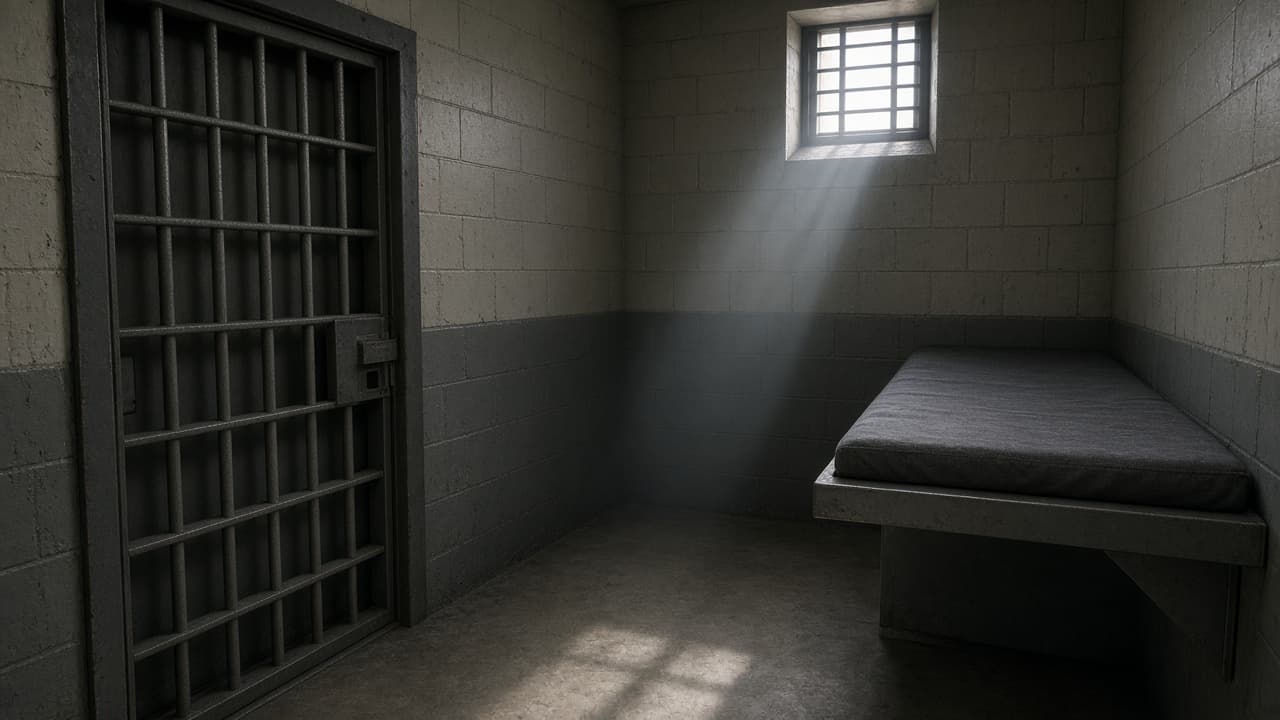
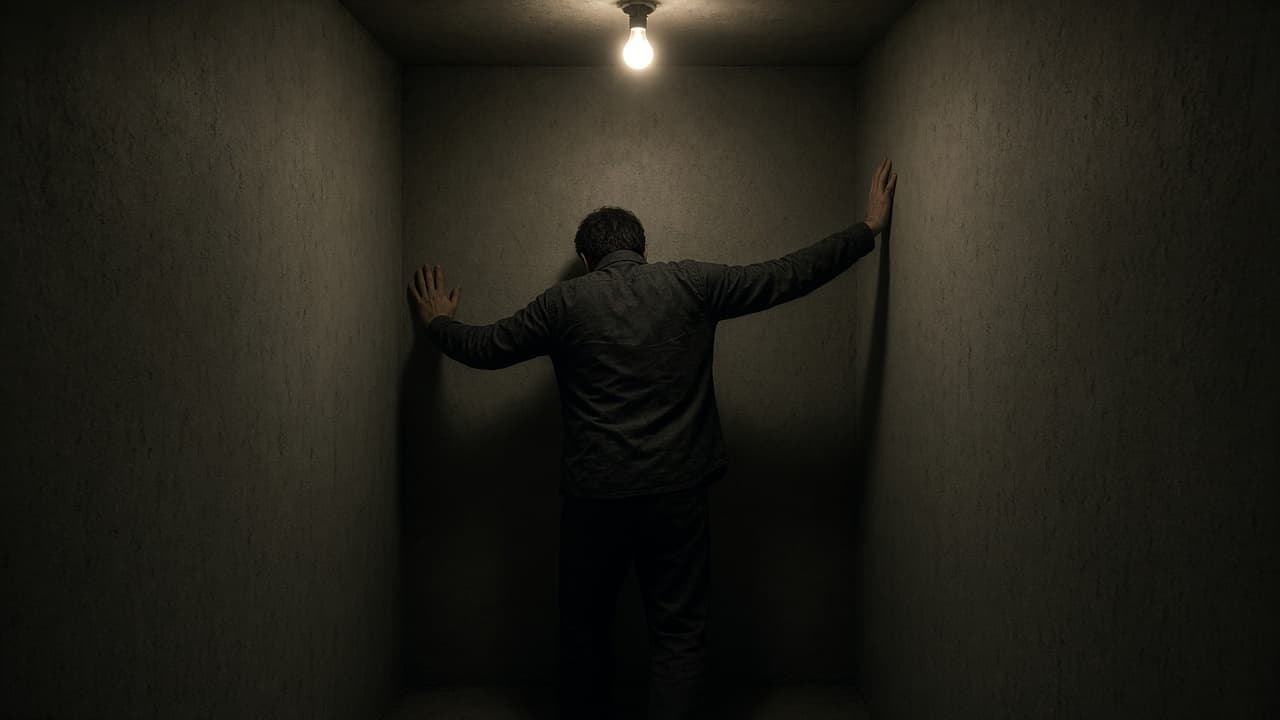
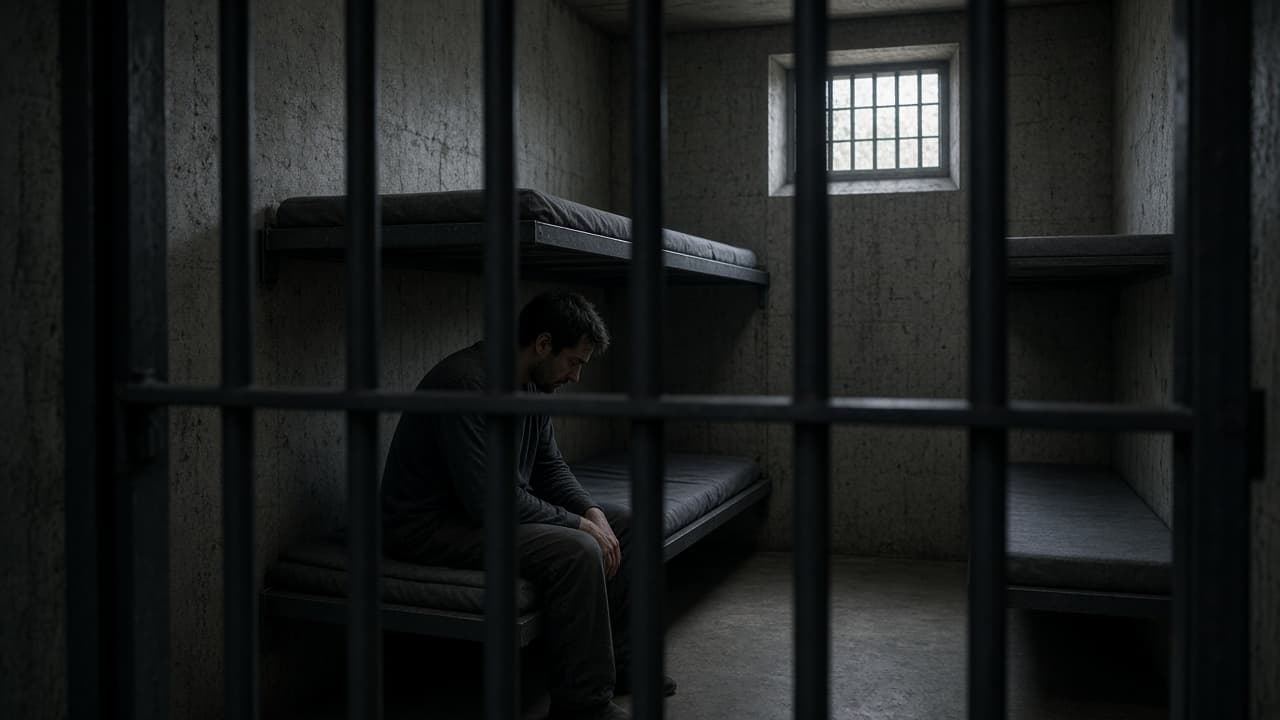
Being in jail is a habitation dream. You are not on the way there; you are there. The cell, the bunk, the [door](/dreams/doors) that opens only from outside, the people you sleep beside, and the length of the sentence are the furniture of a life that has already been narrowed. Compare [going to jail](/dreams/going-to-jail), which is about arrest and entry. Compare [prisons](/dreams/prisons) as institutions. Stay here when the striking fact was already being inside. This is not a prediction of a conviction. It is a picture of serving time in a structure, [work](/dreams/work), [family](/dreams/family), a secret, a mood.
The Cell as a Room You Know How to Live In
You know where the toilet is. You have a routine. The shock is gone. This is your address.
Familiar cells are the most honest version. The confinement has been going on long enough to become a habitat. Jobs with no exit, marriages that are technically a home, caregiving years, undocumented waiting, depression that has a daily shape, all produce a bunk you have learned.
If the familiarity felt like relief, part of you prefers a known cage to an unknown freedom. That is allowed to be true and still worth questioning in daylight.
Cellmates
Someone in the other bunk. A crowd. A friend. An enemy. You.
Chosen-unchosen company is the social version of a cell. You cannot pick who shares the restriction. Workplaces, wards, families in small houses, group houses in a crisis, the dream puts bodies in a volume that is too small for courtesy.
Kind cellmates can mean you have made a life inside the limit, complete with solidarity. Dangerous cellmates mean the confinement includes threat, not only boredom. A cellmate who is clearly you is an internal split: one part serving time, one part visiting.
The Sentence: Known, Unknown, Life, Almost Over
A number on a wall. A calendar. A guard who will not say. Release tomorrow. Release never.
Time is the second wall. A known long sentence is grim and graspable. An unknown one is a special torture: you cannot even pace your hope. “Almost over” dreams often arrive near the end of a contract, a treatment, a visa process, a school. “Life” sentences often arrive when you cannot imagine a self after this role.
If you were counting days wrongly, the dream is already saying your waking clock is off, you think you are near the end and you are not, or the reverse.
Innocent, Guilty, or the Crime Would Not Stay Still
You know you did it. You know you did not. The charge keeps changing. Nobody will read you the paper.
Guilt that matches a waking remorse is worth taking seriously as conscience, not as a legal forecast. Innocence in a cell is a picture of being punished by a story you do not authorise, reputation, a family myth, a bureaucratic category. A shifting charge is a confinement whose justification will not sit still, which is how gaslighting and some workplaces feel.
Do not confess to a partner or an employer on the basis of a night crime. Do inventory your actual ethics if the dream named something specific you have been dodging.
Have a Being In Jail dream of your own?
Write what you remember and get a clear reading.
Visiting Hours, a Window, a Door You Cannot Open
Contact with the outside is rationed. A small window. Voices in a corridor. A door with no handle on your side.
These details map onto restricted access to a fuller life, phones at work, a family you only see on a schedule, a body that will not take you into the world. Trapped dreams without jail still share the handleless door. Jail adds the official story: this restriction is a sentence, not an accident.
If a visitor could not recognise you, the confinement has changed your face. If you refused a visit, you may be protecting the outside from what you have become, or punishing them.
Release, Escape, or Choosing to Stay
A gate. A mistake in the paperwork. A tunnel. You walk to the door and turn around.
Endings of jail dreams are decisions about the waking structure. Escape is unofficial freedom, a way out that is not allowed, a fantasy of leaving without the conversation. Official release is a fantasy of being permitted. Turning back is the hardest and sometimes the truest: the cell has become identity, or the outside looks more dangerous than the bunk.
You can want both in one night. That is not confusion. That is a real bind.
Psychological Meaning
David Foulkes’s 1985 Dreaming: A Cognitive-Psychological Analysis treated dreams as organised thought continuing under different constraints, a useful frame for jail as a cognitive picture of constrained life. You do not need the dream to be a message from a warden. You need it to be an accurate diagram of reduced options, other people’s schedules, and a self that is still thinking inside the reduction.
Continuity will name the institution: a job, a marriage, a ward, a visa, a grief. Threat-simulation will explain the panic versions. Neither requires a future arrest.
If you are actually facing charges, this page is not legal advice. Handle the real process in daylight. For everyone else, the bars are usually metaphor, and the useful question is what sentence you are already serving and whether any part of it is renegotiable.
Stay educational. Being in jail in a dream is not a character judgement and not a fortune. It is a room.
When You Wake Up Still in the Bunk
Recurring already-in-jail dreams mean the waking structure is still closed. One daylight move is to name the sentence in ordinary language, the contract, the role, the secret, and one action that is actually available: a conversation, a search, a boundary, a clinical appointment. Sleep often changes when the door gets even a small handle.
If the dreams follow real incarceration, they can be memory. Treat them with the seriousness of trauma and re-entry, not as a symbol hunt.
Being in jail is confinement as a life you are already living. It is not an arrest notice. Describe the cellmates, the sentence, and whether you tried the door if you want a reading that stays inside that room.