Quick Answer
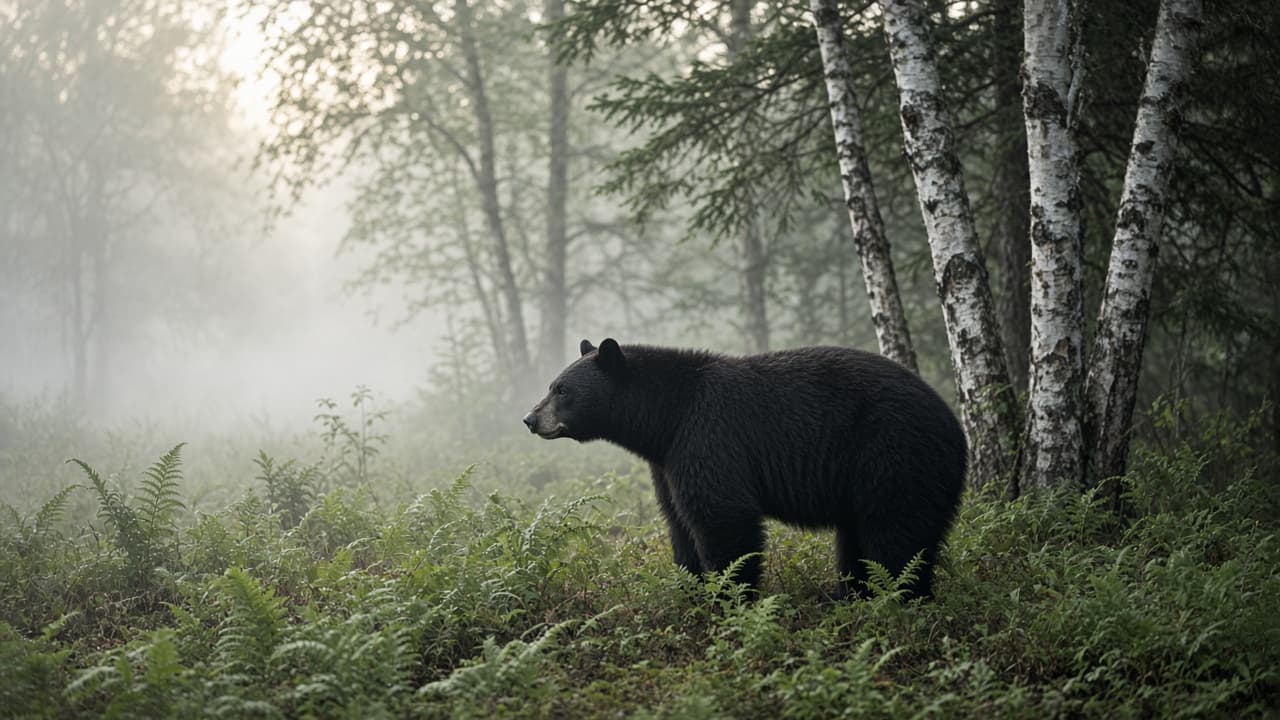
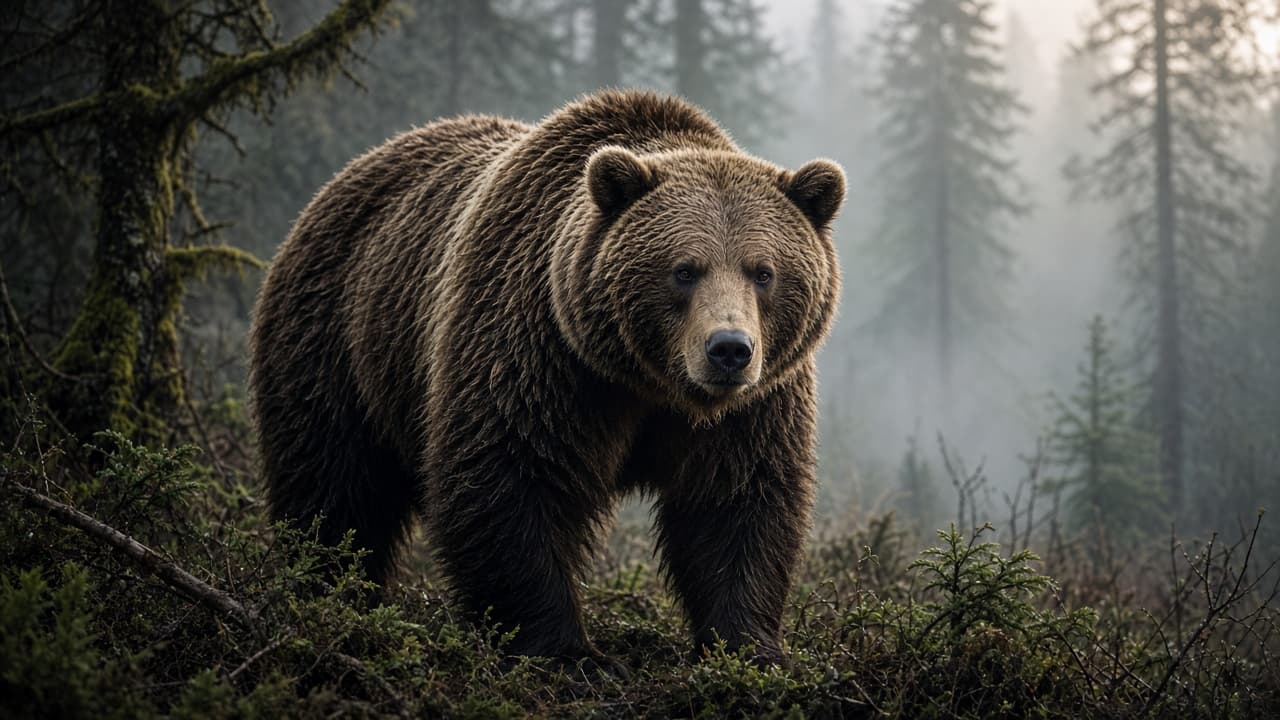
A bear is more force than you want to wrestle. Dream bears usually mark something large, anger, authority, appetite, a protective function, a depression that has taken to a den, that you handle by distance, food offerings, closed doors, or not making sudden moves. Setting decides the rest. Forest and mountain are the animal in its own territory. A bear in the [house](/dreams/houses) is wilderness inside the private world. Hibernation is force offline. A mother with cubs is protection that will not stay civil. If the animal was specifically a [black bear](/dreams/black-bear), that entry is the closer read for North American backyard fear; this page is the wider family.
A Bear in the Wilderness
The animal is where it belongs. You are the visitor. Distance and season do most of the work.
A bear feeding, ignoring you, occupying a river or a slope, often tracks a large force that is not currently about you, a boss’s mood that is not personal, a parent’s illness, a market, a climate of anger in a country. Respectful distance is a skill. Dreamers who keep walking anyway are often people who cannot afford the scenic route in waking life.
If the bear stood up, the proportion changed: you have been seen. Standing is display, not yet a charge. It maps onto moments when a large person or a large feeling notices you and you have to decide whether to freeze, back up, or talk.
Being Chased by a Bear
Bears are fast enough to make the chase unfair. That unfairness is the point.
Chase plus mass usually means a confrontation you have been postponing with something that will not be outrun, a temper (theirs or yours), a legal process, a debt, a body of work. Unlike a wolf pack, this is typically one force. Unlike a lion, it often feels less royal and more inevitable.
Trees you climbed, cabins you reached, water you crossed, those are the waking buffers. If none of them worked, the dream is reporting that the current buffers are theatrical. Getting into a car and still being followed is a modern version of the same news.
A Bear in the House
The wilderness did not stay outside. Kitchen, hallway, sitting on the sofa as if it paid rent.
Indoor bears mark a large thing that has colonised private life. Work rage at the dinner table. A relative’s presence that rearranges every room. Your own appetite or depression using the household as a den. Dreamers frequently try to usher it out without making it angry, which is an exact description of several family systems.
Doors and caves in the same night are worth connecting: a bear that came from a basement or a crawl space is often a force that was stored, not newly created. A bear at the threshold, not yet in, is a warning you still have a door to use.
Mother Bear and Cubs
The adult is not the subject. The young are. Everything else in the dream is judged as threat-to-cubs.
This is one of the clearest caretaking images in the animal set. Parents dream it. So do people protecting a project, a sibling, a patient, a team. The aggression, if it comes, is in defence of something small that cannot defend itself. Waking guilt about being "too much" often misses this: the dream may be reporting a correct ferocity.
If you were the cub, the reading flips to needing cover, whose protection you are under, and whether that cover is safety or captivity. If you threatened the cubs without meaning to, recover who in waking life has read you as a predator around their vulnerable thing.
Have a Bears dream of your own?
Write what you remember and get a clear reading.
Hibernating or Sleeping Bears
Mass, breath, a den, the decision not to poke.
Hibernation is overwhelming force in the off-season. A talent you have parked. A marriage on ice. A grief that is metabolising slowly. A conflict everyone has agreed not to start before spring. The dream’s tension is usually about whether you will wake it.
If you were the sleeper, the den may be yours: withdrawal as strategy, depression as climate, a needed rest you are ashamed of. Jungian language of the bear as instinctual self is optional; the practical question is whether this sleep is restoration or a freeze that has outlasted the winter.
Feeding a Bear or Being Friendly With One
Food as diplomacy. Sitting near a large animal that could end you and currently is not.
These dreams track negotiated peace with a large force, a difficult relative you have learned to cook for, a boss you manage with offerings, your own anger that is currently fed and quiet. It can be wise. It can be a protection racket.
Whether the bear was satisfied is the test. A bear that kept taking is an unbounded demand. A bear that ate and wandered off is a manageable cost. People who keep wild animals as if they were dogs in dreams are often underestimating a waking power difference they already know about.
An Injured, Dead, or Caged Bear
The large force is compromised.
Injury can be your power laid up, illness, humiliation, a rage that spent itself. A dead bear is an aftermath: a tyrant gone, a drive ended, a protective function that will not return. Relief and grief often arrive together, which is accurate.
Cages and zoos are containment. Someone has put the overwhelming thing behind bars, medication, a legal order, a family myth, your own white-knuckle control. If you felt sad for the caged bear, you may be looking at a vitality you locked up in order to be civil. If you felt safe for the first time, the cage may be the point of the whole dream.
Psychological Meaning
Antti Revonsuo’s threat-simulation theory (2000) is at home with bears. Large predators are high-cost ancestral threats; the dreaming brain has every reason to rehearse not provoking them, getting up a tree, getting cubs out of the way. A house-bear is the same rehearsal with domestic scenery.
G. William Domhoff’s continuity hypothesis then personalises the predator. People with violent relatives, people in authority conflicts, people who hike in bear country, people who are themselves the large angry one, dream different bears. The black bear page covers the shy, backyard North American version; grizzly and brown images often carry more charge.
Jung placed the bear near the theriomorphic, instinctual layer, a self that is not polite. That helps when the bear is clearly you: appetite, grief, mother-rage, the wish to sleep for three months. Freud (1900) is less specifically useful here except as a reminder that large animals often carry parental force.
Michael Schredl’s nightmare-frequency research explains clustering: bear nightmares rise with waking stress. They are not a calendar of attacks.
The Force You Were Managing
Name the large thing before you decorate it with spirit-animal language. Whose anger. Whose protection. Whose winter. Whose wilderness in the kitchen.
If the bear returns, the force is still large and still incompletely housed. The useful daylight move is rarely "become the bear" as a slogan. It is deciding whether this force needs a den, a door, a feeding schedule, or a conversation that does not pretend it is a dog.