Quick Answer
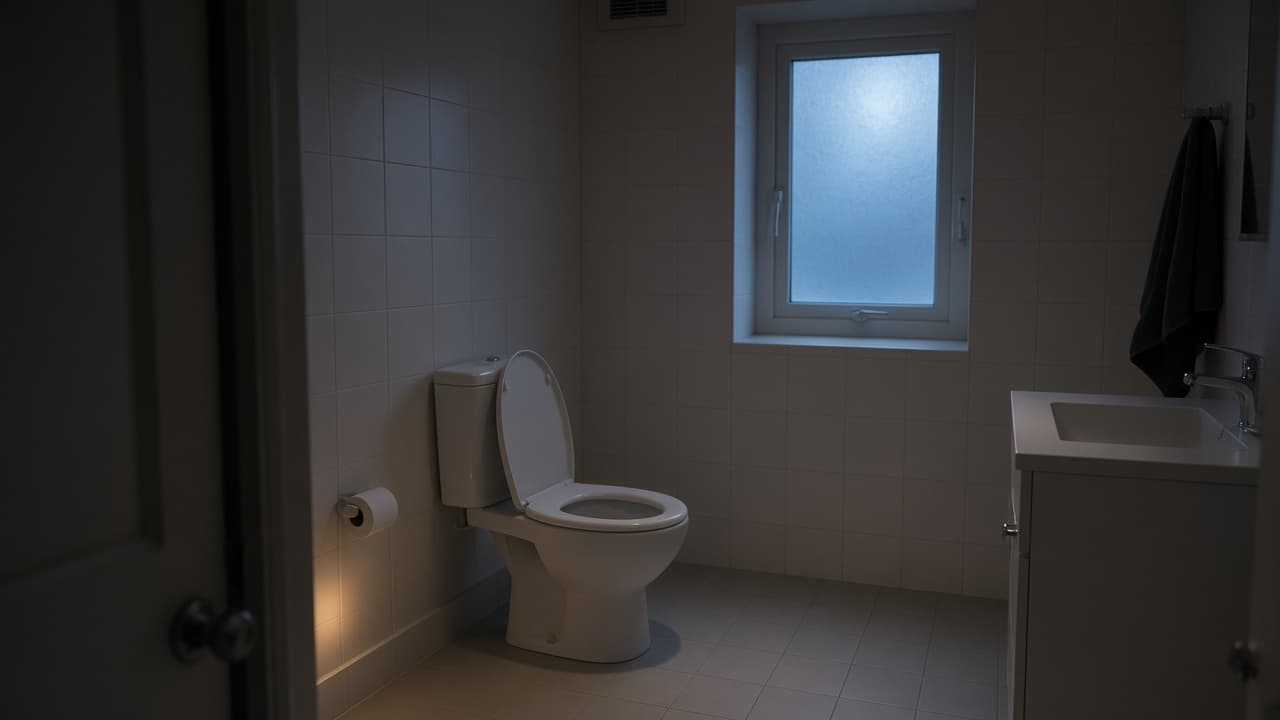
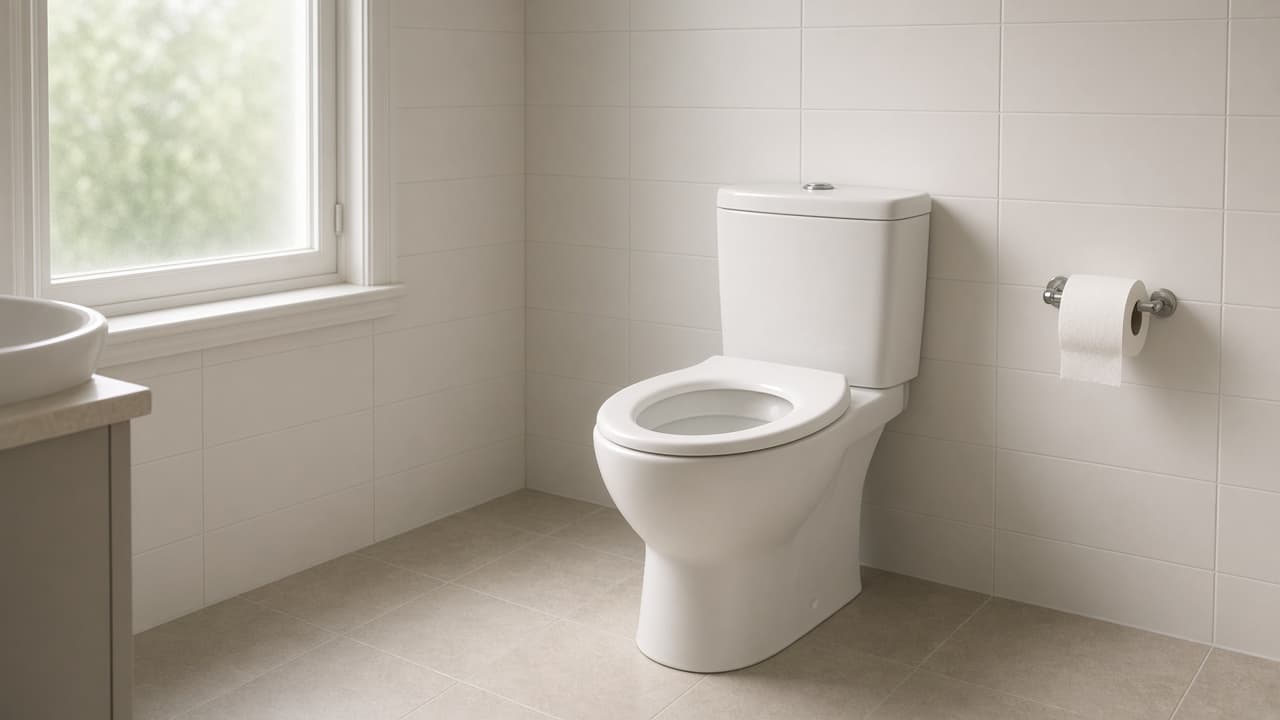
Bathroom dreams put a private function in a public-adjacent room. You need to pee, wash, or hide, and the architecture will not cooperate: stalls with no doors, a queue, a mirror full of strangers. The scene decides whether this is exposure, relief, disgust, or a simple bodily alarm. Check whether you woke needing the toilet before you interpret your character.
Houses have many rooms. This one is the room that admits the body.
Public Bathroom, Stalls, a Queue
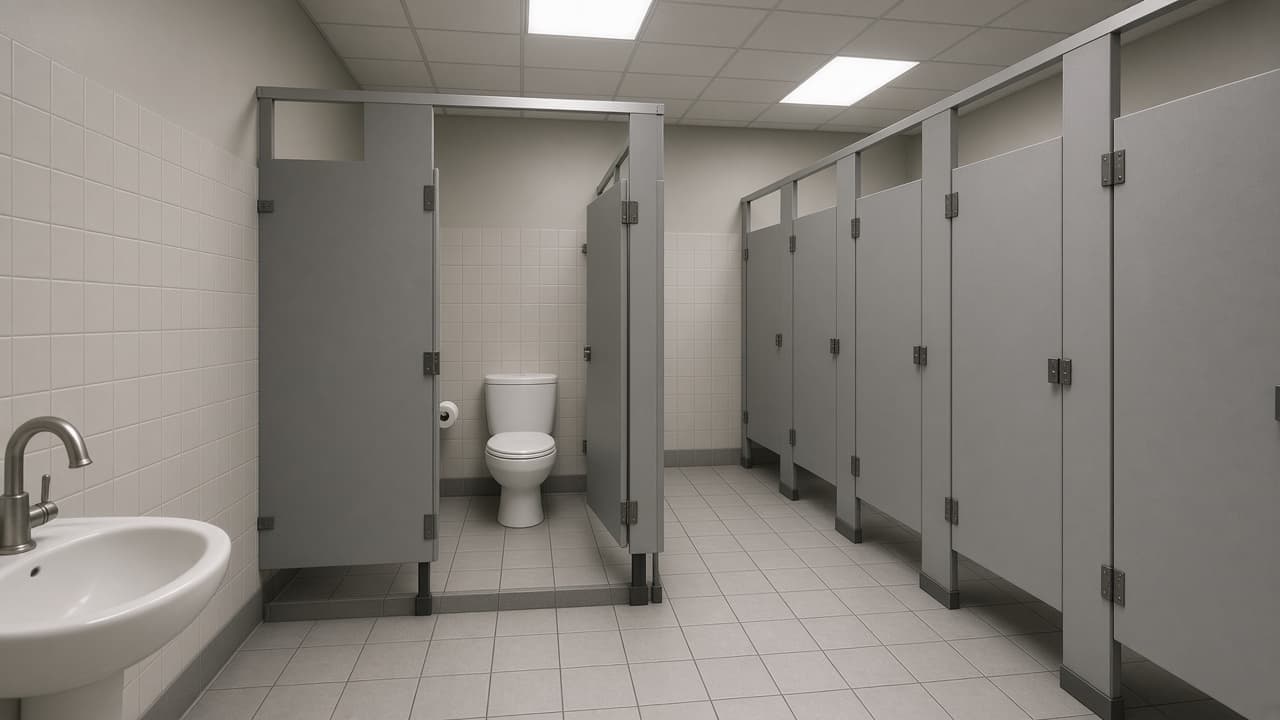
A row of stalls is privacy that is standardised. Everyone gets the same thin walls. The dream is already social even when you are alone in a cubicle.
Queues add time and comparison. Other people need what you need, and you are waiting your turn to be a body. These scenes cluster around workplaces, schools, hospitals, and any institution where your needs are processed in batches. If the queue never moved, the waking analogue is often a system that acknowledges the need and does not meet it.
Who was in the queue matters. Colleagues are evaluation. Family is old rules about what may be mentioned. Strangers are a more general exposure: you are a body among bodies, which can be relieving or humiliating depending on how the dream felt.
No Door, or a Door That Will Not Close
The missing door is the signature of this symbol. The room still says "bathroom." The hardware says "performance."
You are expected to do something private while remaining available to interruption. Meetings where you cannot mentally leave, open-plan life, parenting with no lock, illness that has turned your body into a shared project, these supply the architecture. A door that closes and then swings open is slightly different: you thought you had privacy and the building disagreed.
If people walked past and did not look, the dream may be about your own hyper-visibility rather than actual audience. If they watched, the audience is the point. Related exposure without plumbing lives on naked.
Cannot Find a Bathroom
Endless corridors, restaurants that have no toilets, a house whose bathroom has moved. Searching is urgency plus nowhere allowed.
Two clocks run at once. One is bodily: many of these dreams end in a real trip to the toilet. The other is social: you cannot find a place where your need is legitimate. People who "hold it" all day, teachers, nurses, drivers, guests in someone else's home, dream this more, which is continuity, not mysticism.
If you found a bathroom and it was in a shop window or on a stage, the search resolved into exposure. If you found one and it was luxurious and empty, the dream may be about finally having conditions, time, a lock, a room of your own.
Dirty, Broken, or Flooded
Filth is disgust at the function. You still have to use the room. The room is not fit.
Avoidance is the usual waking partner: a conversation, a medical issue, a domestic chore, a feeling you have been stepping around. Flooded bathrooms mix this with water overwhelm, emotion that the "processing room" cannot drain. Broken fixtures (no paper, no water, a blocked pan) are resource dreams: the support that should make the private thing manageable is missing.
If you were the one who made the mess, agency has entered. Guilt here is often about having needs at all, which is a harsher reading than "you did something wrong."
Have a Bathroom dream of your own?
Write what you remember and get a clear reading.
Someone Walks In
Interruption is a plot with a person attached. Who opened the door is the whole interpretation.
A partner or parent walking in can be old household rules: bodies were not private in that house. A boss walking in is evaluation in the wrong room. A stranger is more purely architectural, the public/private boundary failed, and it did not even fail for someone who knows you.
Whether you could speak ("get out") matters. A voice that worked is a boundary you can still use. Silence is the bathroom version of the chase-dream locked throat: the need is happening and the protest will not.
Locked In
The opposite of no door is a door that will not open. You have privacy and you cannot rejoin the building.
These dreams show up after conflict, during illness, and in any week when "taking a minute" became a trap. The bathroom was supposed to be a pause. It became a cell. If people were knocking, the social world wants you back before you are finished. If nobody knew you were in there, the isolation is yours: you stepped out of the play and the play continued.
Compare with taking a shower, which is more about washing a self than about waste and relief. A locked shower is still identity. A locked toilet is more often need.
The Bathroom Keeps Changing
Stalls multiply, the mirror shows another room, you walk through a door into a second bathroom, then a third. Architecture as maze.
Changing bathrooms often accompany identity relocation, a move, a new job, a body that has changed, where you have not yet learned the new building's rules for being a body. Hotels, hospitals, and in-laws' houses in waking life produce this even without a "deep" meaning. If the rooms got cleaner as you went, you may be moving toward conditions you can use. If they got more public, the dream is escalating exposure, not offering a tour.
Poop dreams that happen in this maze are still about letting go; the maze adds "I cannot find a legitimate place to let go."
Psychological Meaning
David Foulkes's 1985 cognitive account of dreaming treats dream settings as assembled from memory for a kind of thinking that is not under daytime editorial control. Bathrooms are heavily learned spaces: we know what they are for, who may enter, what would be a disaster. That makes them efficient stages for permission and shame without requiring a Freudian essay every time.
There is also a blunt physiological channel. Bladder signals incorporate into dreams. A "searching for a toilet" plot is sometimes just that signal wearing a story. Rate the body on waking. Then rate the architecture: door, audience, dirt, queue.
Continuity remains. People in shared housing, people with GI or urinary symptoms, and people in high-surveillance jobs dream bathrooms more. The symbol is ordinary. The failed door is what makes it memorable.
When You Keep Waking Up Looking for a Door
If the same stall returns, ask what in waking life is private-but-scheduled: a need you are allowed to have only in a designated box, or a box that has lost its door. Fixing a real lock, taking a real break, or saying a real "give me a minute" is less glamorous than symbolism and more likely to end the rerun.
If the dream is mostly urgency and you always wake needing the toilet, believe the body first. Imagery rehearsal is for the nights when the architecture, not the bladder, is what will not let you sleep.