Quick Answer
Dreaming of an alligator usually means a powerful threat is using stillness as cover. The animal belongs to water that looks quiet. You belong to the bank, the boat, or the house you thought was dry. The reading turns on whether the alligator stayed put, crossed onto land, or was already waiting indoors. Your own geography matters. If you grew up with real gators in canals and ponds, expect more literal residue. If your only alligators arrived via film, expect the dream to borrow that film’s patience and suddenness.
An Alligator in Still Water
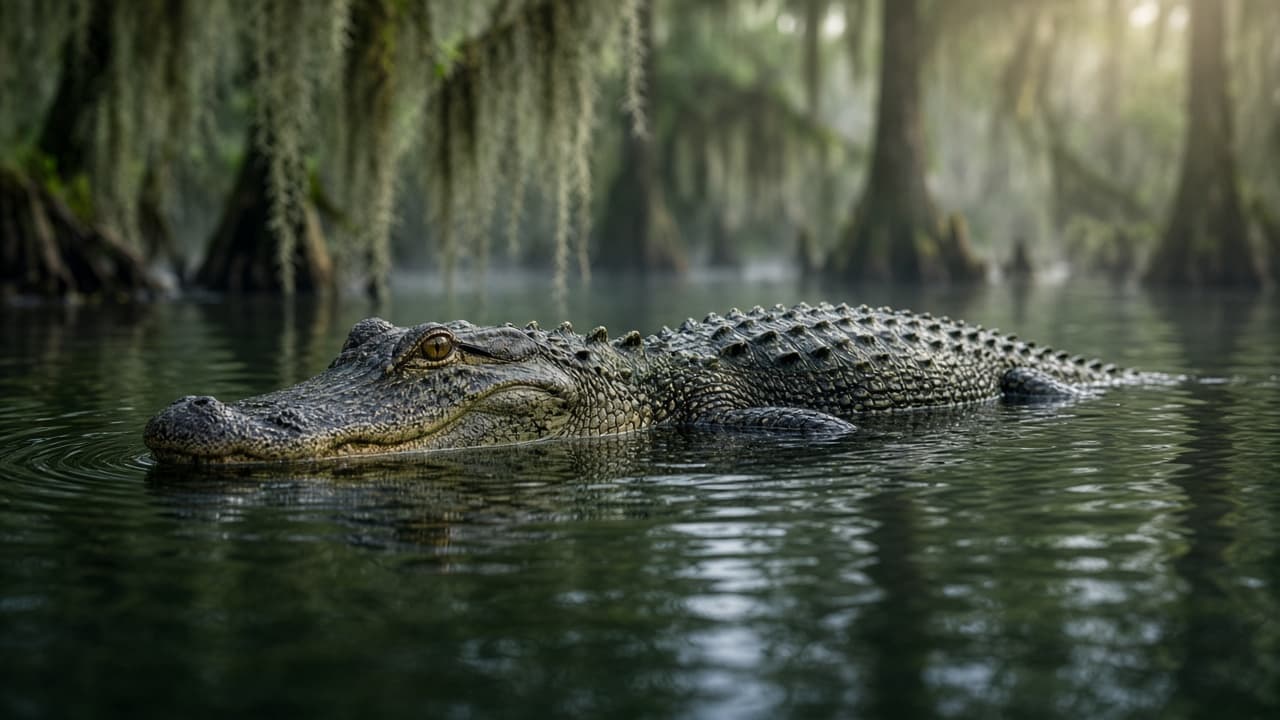
Most of these dreams begin with a surface. A pond, a canal, a lake, a flooded ditch. Something is wrong with the quiet. Then a ridge of back, or two eyes, or a shape you hoped was a log.
Stillness is the thesis. The situation you are walking beside has not exploded; it has been holding. Dreamers report workplaces that are “fine,” marriages that are “fine,” family visits that stay polite, while a topic with teeth waits under the small talk. The alligator is that held energy, territorial, old, not interested in your schedule.
Whether you were in a boat, on a bank, or already wading decides how close the waking analogue is. Wading usually means you have already entered the arrangement and are only now admitting what shares it with you.
An Alligator in a Pool, Bath, or House
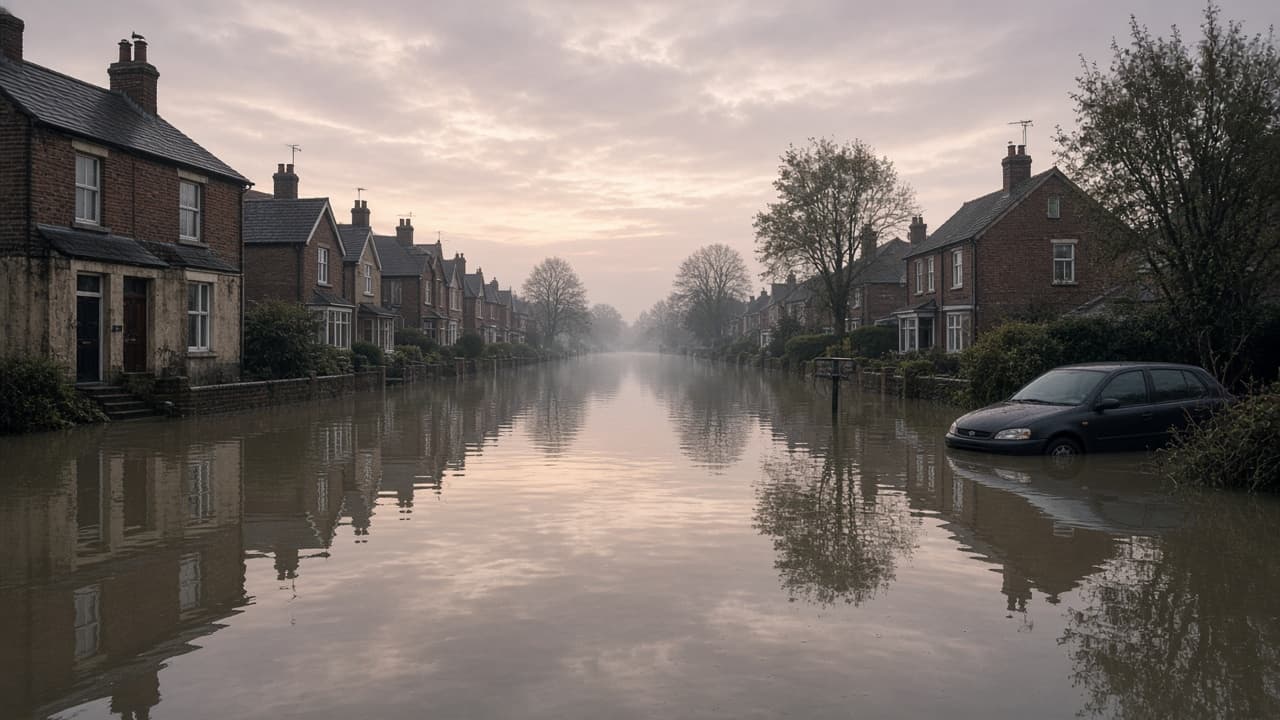
Domestic water is a boundary violation with a specific insult: the dangerous animal is using the place designed for rest and play. A backyard pool, a bathtub, a flooded living room, a hallway with wet tiles.
These scenes arrive when a primal conflict has moved into private infrastructure. Anger that used to stay at the office. A legal or financial predator that now calls the home number. A family temper that used to belong to childhood and has been installed in adult rooms.
Dreamers often describe trying to keep children, pets, or guests from noticing. That instinct is data. The waking situation is frequently one you are managing so that other people can continue to treat the house as safe.
Being Chased by an Alligator
On land, an alligator is out of its best element and still fast enough. Dreamers remember the low run, the unexpected speed, and the knowledge that climbing or a closed door is the only theory they have.
A chase means the waiting is over. The still-water phase has ended; the thing is now allocating energy to you. Common waking matches include a complaint that became a case, a rumour that became a meeting, a health symptom that became a referral, a relative who stopped hinting and started arriving.
Where you ran matters. Toward a car or a building usually means you still believe in institutions or tools. Toward water, back into the swamp, more often tracks a habit of returning to the old arrangement because it is familiar, even though the familiar is where the animal lives.
The Jaws, the Bite, or Being Held
Contact dreams are about grip, not spectacle. Alligators hold. The bite in the dream is often less about pain than about not being able to leave.
These scenes cluster around commitments you cannot currently exit: a contract, a caregiving role, a debt, a reputation bind, a relationship with a freeze-and-hold pattern. The jaw is the mechanism that closes and waits. Dreamers sometimes report the animal not chewing, just keeping them, which is frequently an accurate metaphor for a stalemate.
If you were held and still able to think, recover what you thought. Alligator-hold dreams often contain a surprisingly practical inner sentence: whose help you wanted, which limb you would sacrifice, whether anyone on the bank was going to move.
A Baby Alligator or an Egg
Smallness invites a mistake, and the dream usually lets you make it. You pick it up. You underestimate it. You think it is a curiosity.
A juvenile alligator marks a threat you are treating as early-stage and therefore optional. New credit. A cutting joke that is becoming a style. A secret that is still deniable. The adult is implied in the anatomy; the dream is asking whether you intend to raise this.
Eggs and nests add territory and futurity. Guarding them, stumbling on them, or destroying them are different bets on whether a latent conflict should be allowed to hatch. If you were the one protecting the nest, ask what in waking life you are incubating that other people would call dangerous.
Have a Alligators dream of your own?
Write what you remember and get a clear reading.
Killing, Trapping, or Escaping an Alligator
Agency returns in these versions, and the emotion afterwards is the reading.
Relief after a kill or a successful trap usually means you closed a long-open threat, ended the arrangement, documented the behaviour, left the water. Guilt more often means you used force on a conflict that still felt like family, or you shut down a powerful part of yourself (anger, appetite, ambition) because it looked too reptile for the rooms you want to live in.
Escape without killing is a different ending. Making it to a car, a roof, or a locked bathroom tends to accompany a strategy of distance rather than victory. That can be wise. It can also be a holding pattern if the alligator still has the run of the yard.
An Alligator Crossing a Road or Path
Here the animal is briefly ordinary. It is going somewhere. You are in a car or on a pavement and have to stop.
Crossing dreams are about a threat that is not hunting you and is still able to halt your day. A process moving through the organisation. A mood moving through a household. A legal timeline that does not care about your errands. You are not the prey in this variant; you are traffic.
Whether you waited, honked, or tried to go around is worth recovering. Impatience in the dream often matches a waking wish that the ancient thing would hurry up and not be your problem.
A Dead Alligator
A corpse changes the job of the dream from threat to aftermath.
Finding a dead alligator, on a bank, in a road, in a drained pool, tends to arrive after a conflict has already ended: a tyrant left, a case closed, a temper burned itself out. Dreamers sometimes feel unexpectedly sad, which is useful. Even oppressive structures organise a life; their absence is disorienting as well as relieving.
If you killed it in a previous night’s dream and now only find the body, the series is reporting completion. If the dead animal still seemed about to move, completion may be what you want rather than what you have.
Psychological Meaning
Alligators are purpose-built for Antti Revonsuo’s threat-simulation theory, laid out in his 2000 paper in Behavioral and Brain Sciences. Dreaming, on that account, evolved as a rehearsal system biased toward ancestral dangers: predators, ambush, water that is not empty. An armoured animal waiting under a still surface is almost a textbook drill. The dream is not telling you an alligator is coming. It is running the feeling of unnoticed lethality so that waking attention might, next time, treat stillness as information.
That rehearsal uses the props your life currently supplies. G. William Domhoff’s continuity work predicts that people in chronically tense but polite environments, families that do not shout, jobs that punish directness, will dream the threat as something that cannot be reasoned with and will not announce itself. The alligator is a poor conversationalist. That is the point.
Ernest Hartmann’s idea of the contextualising image is a useful third lens when the water itself feels like mood. A flat pond with a hidden body can be the dream’s way of picturing affect that looks regulated and is not safe to assume is regulated. Size and proximity then track intensity, not zoology.
Practically: locate the still water in your week. Then ask whether you are on the bank, in the boat, or already hip-deep.
After the Water Goes Quiet Again
Alligator dreams process patience and bite. They do not forecast a specific betrayal, a medical sentence, or a violent event.
If the same pond keeps producing the same ridge of back, the waking analogue is probably still undiscussed. Name the topic you have been walking around. One concrete sentence, said to one real person, often does more than a month of symbol journals.
If the dream is mostly jaws and freeze, and it wrecks sleep, treat it as a nightmare pattern rather than a puzzle. Reduce late conflict (arguments, true-crime, doomscrolling) in the last hour of the day, and consider a clinician if you are waking in panic more nights than not. The animal can wait until you are rested enough to decide whether you are dealing with a log or a living thing.