Quick Answer
A zombie apocalypse in a dream is a mass-threat story about people who have lost the part that can meet you. The crowd is the danger. Numbness is the infection. Survival is the job of remaining particular, a name, a plan, a [family](/dreams/family) member still behind the eyes, while the already-gone keep coming. It is not a prophecy of [dying](/dreams/dying) or of the end of the world. Films supply the costume. Waking life supplies the feeling of a street that used to be a street.
Running From the Horde
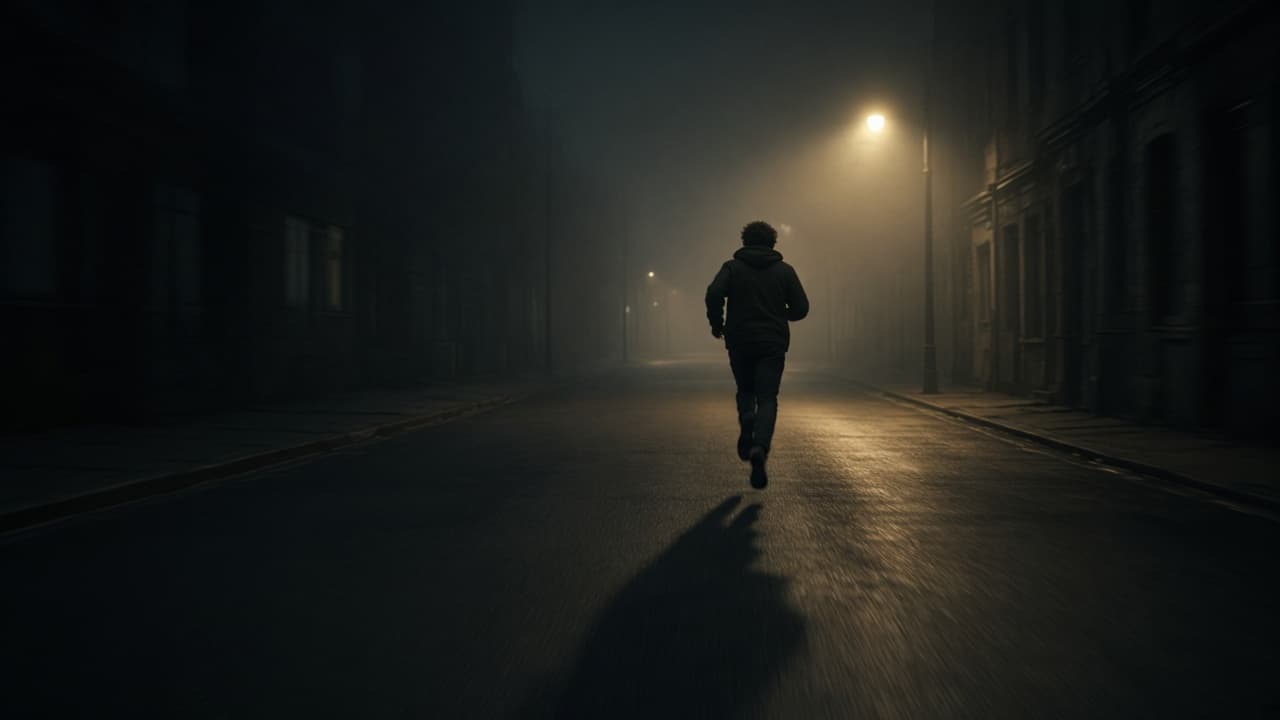
The classic: running, a street, a car park, a noise of many bodies, the knowledge that stopping is how you join them. This is a chase with a crowd instead of a single pursuer.
Horde-running maps onto social overwhelm that has no negotiator, a job of endless tickets, a city, a family gathering, a news cycle, a school gate, a platform. You cannot talk the pressure down. You can only keep moving or find a door.
If the zombies were slow and the terror was still total, number is the point, not speed. If they were fast, the dream is borrowing cinema and the waking analogue may be a week that simply will not let you rest between contacts.
Someone You Love Has Turned
A partner, a parent, a child, a friend: the face is right and the meeting is gone. Dreamers often wake with a grief that feels unfair, because the person is alive in the day.
This is one of the more precise images in the family. It tracks presence without encounter, addiction, a phone that ate a face, dementia, a political or religious conversion that ended conversation, depression, a workplace person who used to be a friend and is now a function. You are still responsible. You cannot get them back by explaining.
Whether you could still see a flicker (a pause, a tear, a moment of the old voice) matters. A flicker means you have not given up on the person. No flicker means you may be grieving a relationship that has already, in the way that counts, ended.
You Are Becoming One
A bite, a fever, a look in a mirror, a hunger that is not yours, forgetting a name. Identification with the numbness.
Turning dreams appear when you fear catching a deadness you can already smell: a job that makes everyone speak in slogans, a family shutdown, scrolling until 2 a.m., a cruelty that is becoming easy. The infection is social. You get it from contact.
If you hid the bite from your group, shame and the wish to remain "the well one" are active. If you felt relief at not having to try anymore, exhaustion has started to look like an invitation. That relief is information. It is not a moral failure to notice it.
Barricading a House, a Shop, a School
Boards, furniture, a supermarket, a childhood kitchen. The plot is architecture versus mass.
Barricade dreams are about the last particular space. Who you let in is a map of trust. Who you kept out, especially if they were still themselves, is a map of fear that contact equals infection, sometimes wise (a draining group), sometimes a picture of isolation that has gone too far.
If the barricade failed because of a small gap (a pet flap, a window you forgot), the waking analogue is often a tiny remaining channel: a group chat, a relative's key, a habit you called harmless.
Have a Zombie Apocalypse dream of your own?
Write what you remember and get a clear reading.
An Empty City, Quiet Aisles, the Day After
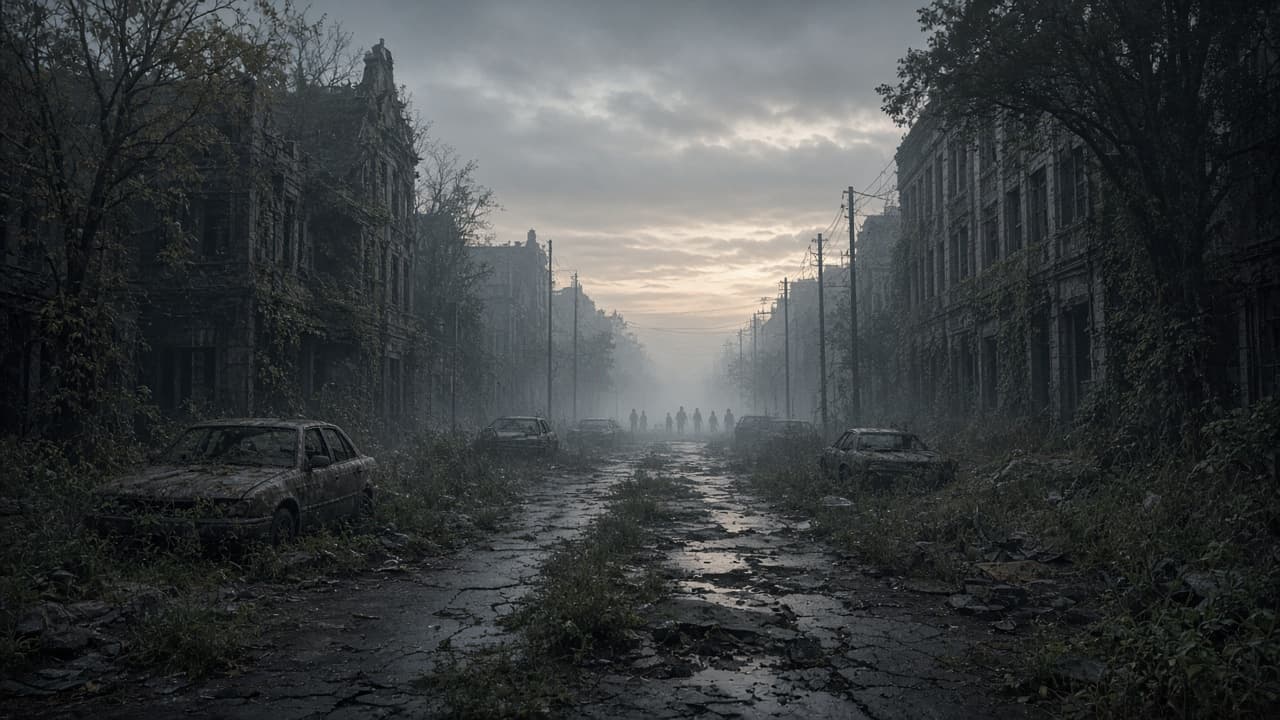
Some dreams skip the chase. Dust, abandoned cars of a sort, a sky that is too big, the job of finding batteries. The apocalypse has already happened and you are in the inventory.
Aftermath-only versions often mean the mass event in waking life has already had its week, a redundancy round, a community that dissolved, a pandemic memory, a friendship group that ghosted, and you are practising being a person in the leftover streets. Loneliness here is not subtle. Competence (finding food, making a list) is the psyche trying to remain practical.
If the emptiness felt peaceful, you may be hungry for a world with fewer demands, and the zombie story is an extreme way of getting other people off the stage. That hunger can be honoured with an ordinary quiet day. It does not require an end of the world.
Finding Other Survivors
A radio, a camp, a stranger who still has eyes. Relief, then politics. Who is in charge, who is sick, who is lying.
Survivor-group dreams are about whether particular people can still be found. They cluster when you have been scanning a numb environment for anyone still awake, a colleague, a sibling, a friend from before. Conflict in the camp (sharing, leadership, a suspected bite) maps onto the ordinary difficulty of trust once you have decided most of the crowd is gone.
If you were the leader, you may be tired of being the one who still cares. If you were refused entry, you fear you have already turned in someone else's eyes.
Fighting, Mercy, and the Problem of Faces
You have to stop a body that used to be a person. Keep this non-graphic. The moral noise is the meaning.
Dreamers wake shaken by violence they would not choose. The dream is using a survival plot to ask what you do with relationships, jobs, or habits that still have a human outline and no remaining encounter. Mercy (cannot do it, tries to save them) and ruthlessness (does it and hates the necessity) are both rehearsals of a waking decision: stay, leave, stop explaining.
Monsters in other dreams are often singular. Zombies are the monster as crowd and as former neighbour. That is why the grief attaches.
Psychological Meaning
Revonsuo's threat-simulation theory (2000) expected dreams to run pursuit and hostile agents. A zombie horde is a modern load-out of that system: many bodies, contagion, no negotiation, a city as habitat. Nielsen's typical-dream research did not have "zombie apocalypse" as a nineteenth-century item, but mass-threat and being chased sit at the top of the lists; cinema gave the undead a convenient uniform.
The psychological theme that survives the costume is depersonalisation spreading. Ernest Hartmann would call the horde a contextualising image for a feeling: I am among people and not meeting anyone. Domhoff's continuity then names the waking source, burnout cultures, feeds, family shutdown, a city, a year that flattened faces.
If you have recently watched a zombie series, subtract some wardrobe. If the dream keeps returning without new films, look at where you are surviving among the already-gone: a team, a commute, a group chat, a house where someone is still technically home.
If the Crowd Keeps Coming
When numbness is the waking problem, the dream often eases after one deliberately particular hour, a conversation that is only with one person, a task that cannot be done as a crowd, a walk without a feed. The horde is allergic to the specific.
A one-off after a film is costume storage. Recurrence across weeks is almost always a map of a social environment that has stopped returning your face, and of your effort to remain someone who can still be met.