Quick Answer
Wind is what moves the world without standing in it. You see [trees](/dreams/trees) bend, [clouds](/dreams/clouds) race, dust lift; you do not see the mover. Dreaming of wind usually tracks influence of that kind: a mood in a house, a market, a rumour, a grief, a political climate, attraction, pressure at [work](/dreams/work) that has no one owner. A breeze, a gale, a wind that knocks you over, a wind you try to walk into, those are doses and relationships, not omens of weather. If you live in a windy place, subtract some literal replay. If you do not, take the invisibility more seriously.
A Gale That Moves Everything
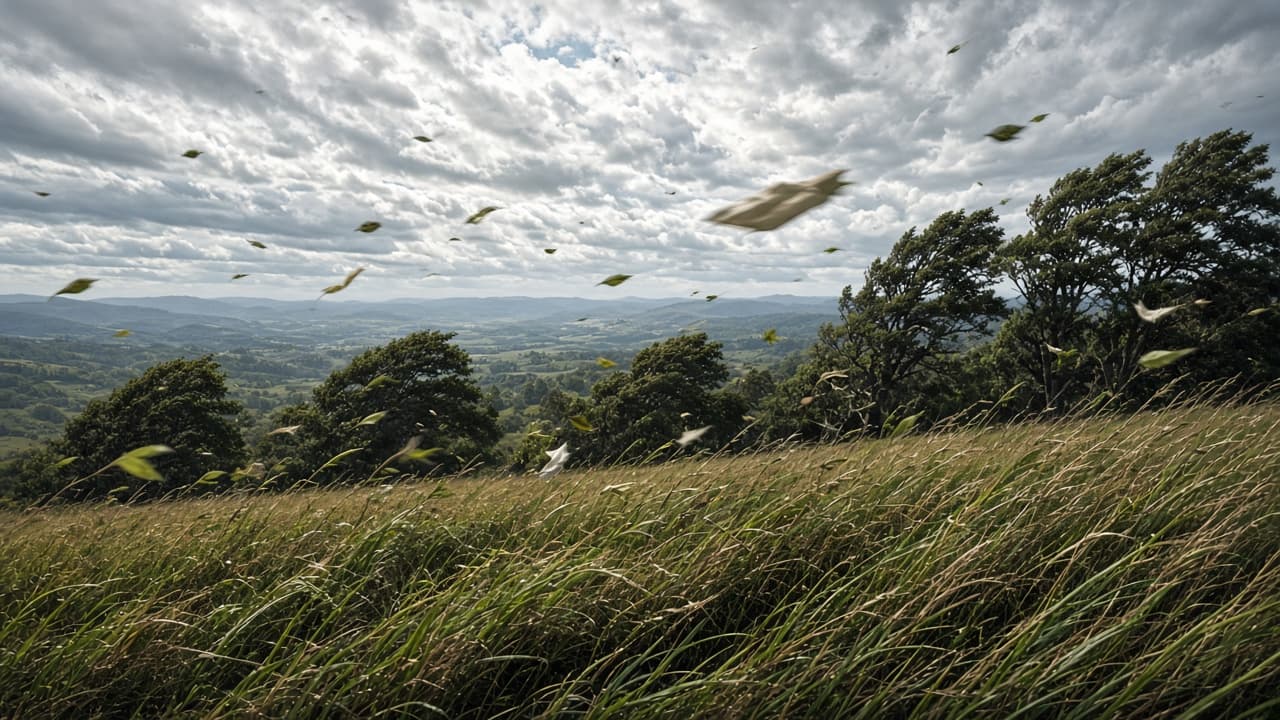
Doors slam. Chairs scrape. Hair, papers, a whole street leaning. You have to decide whether to go out.
A gale is high-dose invisible force. The environment is already responding; your body is next. These dreams cluster around weeks when everyone is affected by the same unseeable thing, a restructure, a family mood, a news cycle, a seasonal depression that has weather.
If you stayed inside, you are managing exposure. If you went out and leaned into it, you are trying to have a relationship with the force rather than only sheltering. Objects flying past are particular contents the wind has picked up: messages, jobs, people. A gale that was exciting rather than frightening often maps onto a hunger for motion after a still period.
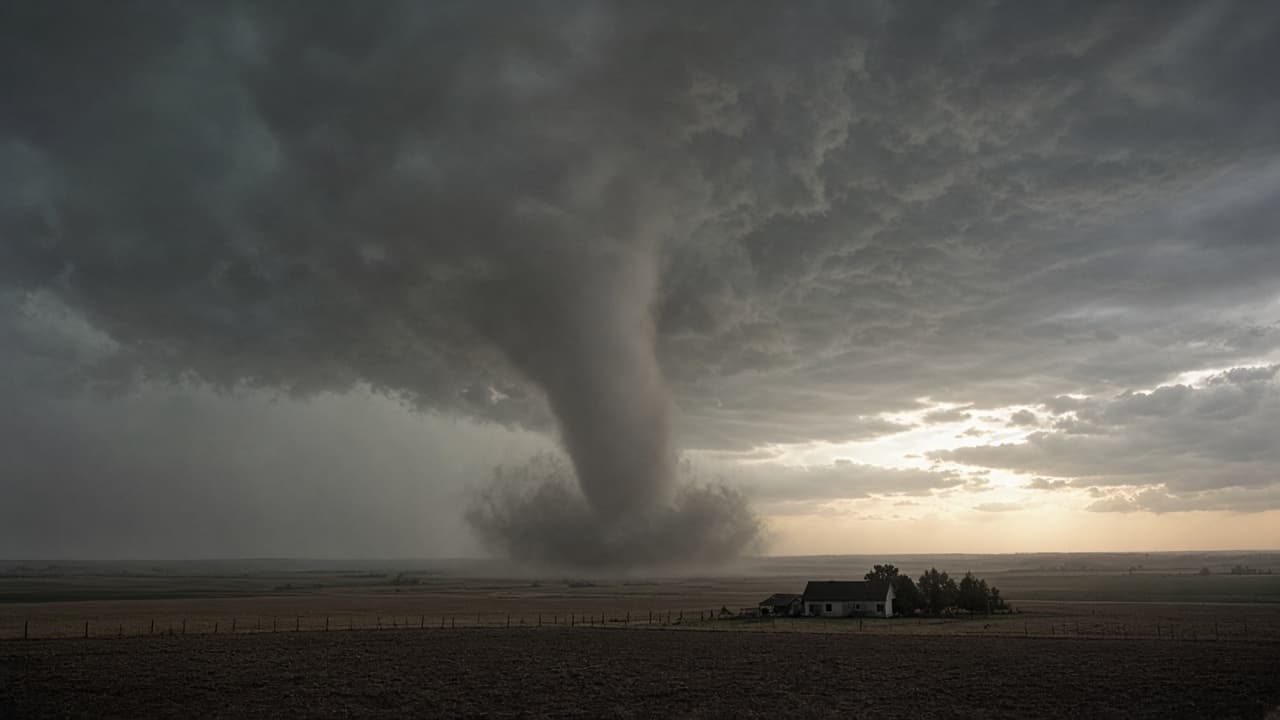
This is still not a tornado. There is no funnel to point at. That absence is the meaning: you cannot locate a centre.
Being Blown, Lifted, or Knocked Down
Feet leave the ground, or almost. You stagger. Sometimes you fly a few metres without having jumped.
Loss of stance is the plot. Influence has exceeded your weight. People describe this around charismatic others, around panic, around markets, around being the smallest person in a family weather system. Unlike flying dreams that start with a jump, this flight is not chosen. You are weather's object.
If you enjoyed the lift, the loss of control currently has a pleasure in it, a holiday from agency that you may or may not be able to afford. If you fought for the ground, you still want traction. Landing in a new place is a relocation-by-force dream: you did not walk there. Grabbing a post, a person, a tree, is a search for an ally with mass.
Walking Into the Wind
Progress is expensive. Your face hurts. You keep going because the destination is upwind.
A headwind is opposition that has no villain. You are trying to move against a prevailing mood, a market, a family's unspoken rule. Effort is real; so is the lack of a person to confront.
If you made the corner or the hill, the opposition is costly and doable. If you had to turn and go with it, you have accepted the prevailing direction for now. People passing you the other way, coats easy, are the ones the climate was built for. A tailwind after a long headwind is a change of political weather, and dreamers often weep with the relief of it.
A Breeze, a Shift, a Wind That Merely Touches
Curtains. A smell. Leaves turning their pale sides. Nothing falls over.
Small wind is influence at a human dose. Attraction. A new idea. A season. A person entering a room and changing the air. These dreams are easy to dismiss because they are not dramatic. They are often the most accurate.
If the breeze brought a smell you knew, follow the smell into memory; the force has a history. If it cooled you, you may need less intensity, not more. If it made you restless, a small change is already acting and you have not named it. Desert breezes and sea breezes carry their landscapes: a desert wind can be a dry, scouring honesty; a wet wind is closer to rain coming.
Have a Wind dream of your own?
Write what you remember and get a clear reading.
Wind That Speaks, Warns, or Feels Like a Presence
Intent in the air. A voice without a throat. You know it is "about" you.
Personified wind is influence that wants to be a someone. Grief that feels like a visitor. A religious or animist register. A parent who still moves the house though they are not in it. Recover any words. If there were none, stay with the intent: kind, hunting, hurrying you, holding you back.
You do not have to decide whether this is "spiritual" before you use it. A presence in the wind is a picture of agency without a body. That can be sacred. It can also be how the mind represents a system, capital, the internet, a hospital, that acts and cannot be sat down with. Test both. If a face almost formed in the clouds, the dream was trying to give the force a social shape.
Wind Inside a House, or No Wind Where There Should Be
Papers in a closed room. A corridor that behaves like a ridge. Or flags hanging dead on a day that should move.
Indoor wind is private life colonised by a force that belongs outside, work climate at the dinner table, public panic in a bedroom, a family unspoken that blows through closed doors. You cannot shut the windows enough.
A still day when you needed wind is the opposite: a sailboat, a feeling, a project that requires atmosphere, and the air has died. Depression, a stalled market, a room that will not change. People who live by weather in waking life (sailing, farming) should allow a layer of practical replay. For everyone else, still air is often a mood report.
Trying to make wind, fanning, opening everything, is a bid for motion. It sometimes works in dreams as magic and still points at a waking wish to restart a climate.
Damage: Fallen Trees, Torn Roofs, Dust
Aftermath. You walk a street the air has already used. Trees down. A roof peeled.
Wind damage is what invisible force costs after it has passed. You may not have been there for the gale; you are there for the inventory. These dreams follow actual storms and they follow metaphorical ones: a week later, the relationship, the team, the town looks different.
Clearing debris is recovery work. Leaving it is overwhelm or a decision that this is not your street. If you knew a tree would fall and did not move, you are in a dream about ignored forecasts, including your own. Dust and sand in the teeth is a desert version: the force is dry, scouring, hard to wash out. That texture often maps onto shame or rumour, which also get into the mouth.
Psychological Meaning
Wind is a problem for a visual dreaming system: the thing itself cannot be pictured, only its effects. J. Allan Hobson and Robert McCarley's activation-synthesis hypothesis (1977) proposed that the sleeping brain makes stories out of internally generated signals. A sudden vestibular lurch, a real draught from a window, a memory of a gale, a feeling of being moved by forces, any of these can be synthesised as wind. You do not have to take their whole model as final to use the modest claim: the dream is a narrative solution to a sensation of being moved without a visible mover.
That is also the waking condition wind dreams love. Moods, markets, rumours, climates of fear or desire. Activation-synthesis does not empty those of meaning; it explains why air is such a ready plot. The story the dream built, gale, breeze, knock-down, headwind, is still your story about influence.
Wind is not a message from the sky about next week's weather, and it is not a spirit by default. It is how the night pictures force without a face. Name the force if you can. If you cannot, the invisibility is the finding.
When Wind Dreams Keep Returning
Repeating knock-downs usually mean stance is still the problem; ask what would give you more mass, sleep, allies, money, a decision. Repeating headwinds usually mean you are still walking a direction the climate hates; that can be honourable, and it has a fatigue bill. Repeating indoor wind usually means a boundary is still open.
If a real storm is in the forecast, some of this is mundane. If the air in your house is actually stale or draughty, fix the room. Then, if the dream remains, it is about the other climate, the one that bends people rather than trees.