Quick Answer
A tarantula dream is a [spider](/dreams/spiders) dream with the volume knob broken. The animal is large, hairy, and hard to file under “tiny pest.” That mismatch, enormous presence, often modest real-world harm, is frequently the meaning. You are looking at a fear or a problem whose appearance is doing more work than its bite. Handling, stillness, and pursuit decide the rest. This is not an omen ranking of spider species.
A Tarantula Sitting Still and Filling the Space
It occupies a wall, a pillow, a doorway. It does not rush you. Size is the aggression.
Still, oversized tarantulas usually mark a problem that has grown until it is the room. A deadline, a person, a diagnosis, a reputation. Everything else in the dream stays ordinary, which is how you know the proportion is the point.
If you could have walked around it and did not, you may be granting the fear more floor area than it has earned. If walking around was impossible, the waking analogue is probably actually large. Be honest about which.
Hair, Texture, and Disgust
The dream is tactile. Hair on the body, hair on your skin after it walked, the wrong softness.
Disgust is a different emotion from fear, and tarantulas recruit both. Something in waking life may be “too much information”, a conversation that got bodily, a mess you can feel, an intimacy you did not agree to. The hair is excess sensory data.
People with trypophobia-adjacent reactions or a general invertebrate disgust should start there. The dream may be running a sensory drill, not an essay about your boss.
Handling It on Purpose
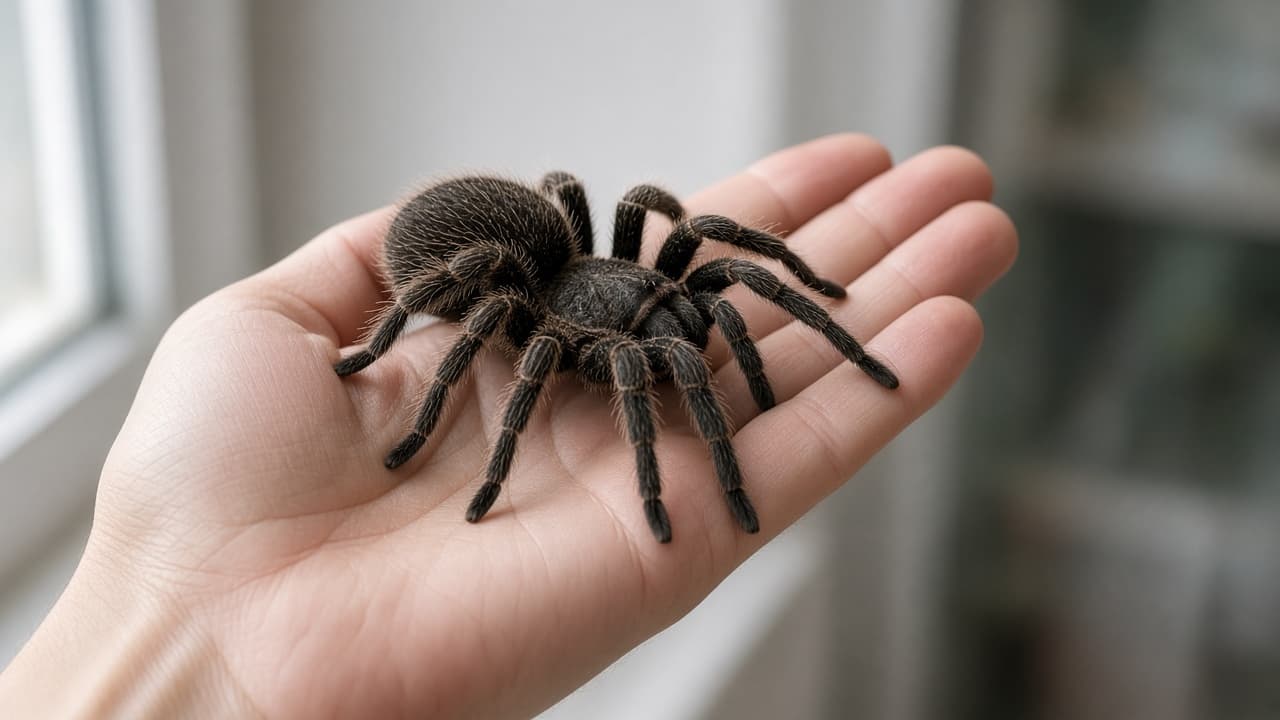
On a palm, on a wrist, transferred into a tank. You are the keeper.
Handling dreams split cleanly. Calm contact often means you have taken a job as the person who can tolerate what others will not, family mediator, the colleague who deals with the difficult client, the friend who can hear the ugly detail. Panicked handling means you have that job and hate it, or you are performing nerve.
If an audience watched, add status. You are being seen as brave or reckless. Ask which you would rather be, and whether the tarantula is a problem you actually consented to hold.
Hobbyists and pet owners: continuity first. You dream the animal you already respect or already dread feeding.
It Ran at You
A tarantula that sprints is using a behaviour many species can do and that human brains find unfair. Large plus fast is a predator script.
Pursuit overlaps being attacked. Because the animal still looks like a spider, dreamers often feel foolish afterwards, “it was only a spider”, which is a waking habit of minimising a fear that did not feel small at 3 a.m. Do not take the hangover shame too seriously. Size in the dream was the honest report of how the threat felt.
Whether you could kill it or only flee matters. Failed swats at a huge spider are dreams about tools that are the wrong scale.
Have a Tarantula dream of your own?
Write what you remember and get a clear reading.
Shed Skin or a Tarantula That Looked Dead
A husk, a curled body, a tank with a still animal you are not sure about.
Moulting and death-feigning are real tarantula facts that leak into dreams for people who know them, and they work as metaphors for everyone else. A shed skin is a problem that has already changed shape; you may be fighting last season’s version. A maybe-dead tarantula is uncertainty about whether a threat has ended. Poke it in the dream and you are in an information-seeking plot. Leave it and you are choosing not to know yet.
Many Tarantulas, or One in a Place It Should Not Be
A cluster is about proliferation of the oversized thing, several large problems, not a swarm of small ones like insects. One tarantula in a fridge, a shoe, a child’s bed is about category violation: the big hairy problem in a zone you had filed as safe.
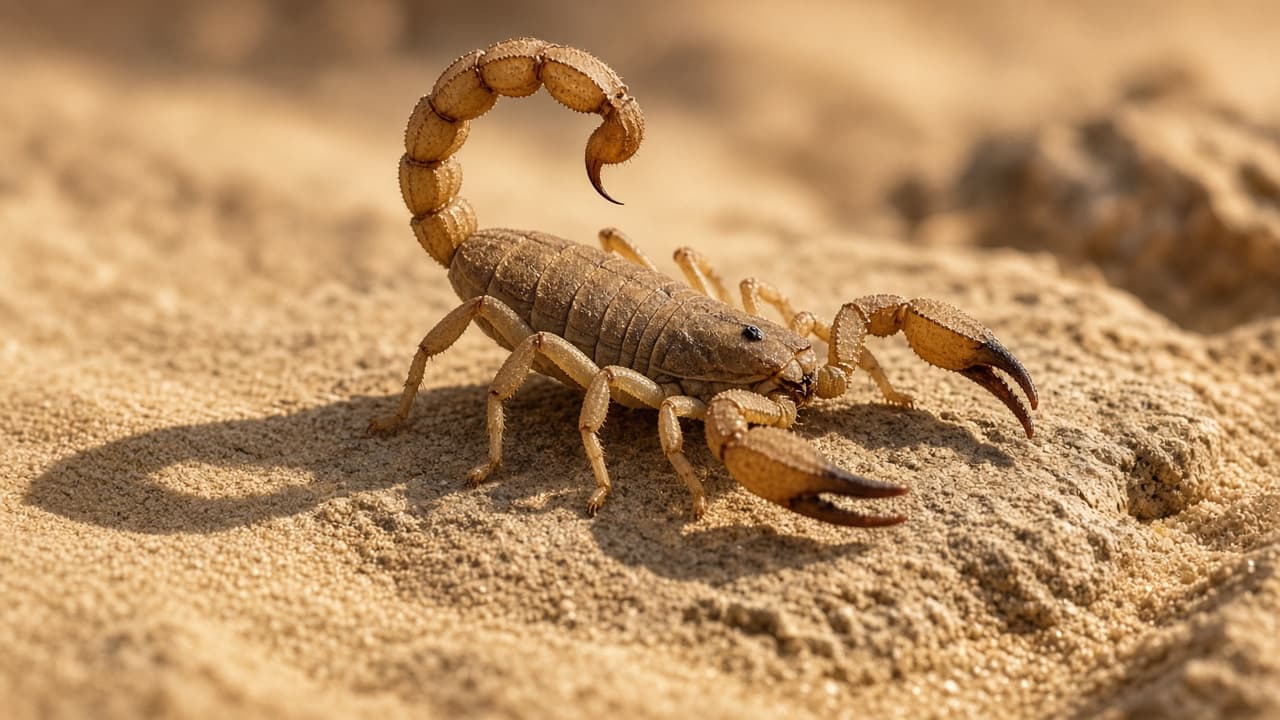
Compare scorpions in shoes. The tarantula version is usually more visible and less “hidden sting,” more “how did this much animal get in here.” Visibility plus trespass.
Psychological Meaning
Martin E. P. Seligman’s 1971 preparedness theory argued that humans learn some fears, snakes, spiders, heights, far more easily than others, as if evolution had primed the association. Tarantulas are almost a parody of that priming: they look like the spider category at a scale the body reads as mammal-wrong. The dream does not need a unique spiritual meaning to be loud. It needs a shape the fear system already knows how to inflate.
That inflation is useful data. Ask what in your week looks bigger than its actual capacity to harm you. Social humiliation, medical waiting, and certain relatives are good candidates. Also ask the opposite: what have you been calling “just a spider” that is, in proportion, a tarantula.
Handling sits with self-efficacy. Bandura would be at home here even though the citation of the page is Seligman: contact with the feared object, in fantasy, is a kind of exposure. If you handled it well, your sleeping mind may be practising mastery. If you handled it badly, it may be practising the fear of being the designated adult.
Stay educational. No species ranking predicts your future. A tarantula is a picture of oversized tactile threat and the question of whether you will pick it up.
When the Hairy Thing Returns
Recurring tarantulas usually mean a proportion problem is unsolved. You are still treating something as huge, or still pretending it is small. Measure it in daylight: what can it actually do, what do you actually have to hold, who else can hold it.
If the dreams are simple phobia overtime, exposure-based work with a clinician beats a thicker symbol key.
A tarantula dream is size, hair, and handling. It is not a curse in eight legs. Describe whether it sat, ran, or sat on your hand if you want a reading that respects that difference.