Quick Answer
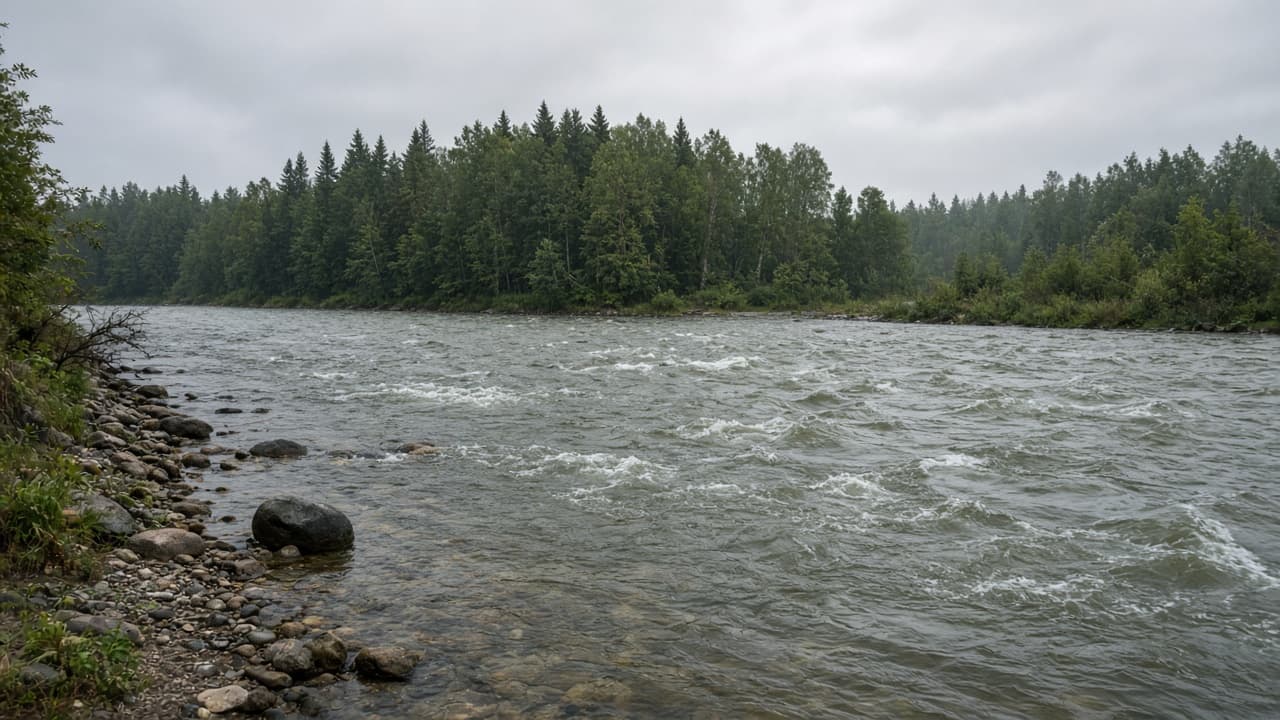
A river is water that refuses to be a pond. It has a source, a mouth, a current you can enter, fight, or use as a border. Dreaming of rivers usually tracks processes that already have a direction: a career, a relationship, a legal case, a grief, a country you might cross. That is different from a [lake](/dreams/lakes) (contained), from [rain](/dreams/rain) (weather), and from open-sea [drowning](/dreams/drowning) (no banks). The question is almost always: what is the water doing, and what are you doing relative to it?
Crossing a River
A ford, stepping stones, a swim, a ferry that may not exist. Two banks. Moving water in between.
Crossing is a side-change with a process in the way. You cannot pause the river while you think. These dreams cluster around decisions that have to be timed: leaving while a job is still moving, speaking while a family story is still flowing, emigrating while money is still in motion.
Depth and speed are the engineering. Shallow and slow is a crossing you can probably do with care. Fast and brown is a crossing that will take you whether you are ready or not. Stepping stones that wobble are supports that almost work. A missing stone is a gap in the plan. If someone on the far bank called, name them; they are often the reason to cross. If you turned back mid-stream, you currently believe return is safer than arrival, which may be true this week.
Going with the Current
You are in. The river decides the pace. Landscape slides past. You may be swimming lazily or being carried.
Downstream is cooperation with a process that already exists. It can be wisdom: stop fighting a season. It can be abdication: you have given the current your diary. The feeling splits them. Relief and scenery usually mean the process is one you trust. Helpless speed, debris, a mouth you can already hear, usually mean you have boarded something larger than your stroke.
If you could get to a bank and chose not to, you are remaining in the process on purpose. If you could not reach either bank, the current is currently stronger than your exits. Fellow floaters make it social: a cohort, a generation, a news cycle.
Fighting Upstream
Effort, little progress, water in the face. You have a reason to go the wrong way relative to the river.
Upstream is opposition to a prevailing process. Whistleblowing, returning to a hometown everyone leaves, staying in a field that is dying, trying to reverse a family pattern. Honour and exhaustion live here together.
If you made headway, the opposition is costly and possible. If you were walked backward despite swimming, the process will not yield to effort this week; another strategy is required, a different river, a boat, a road. Fish going with you or against you are small allies or the native population of the current. A weir or waterfall ahead means the upstream project has a structural drop you have not budgeted for.
A River in Flood, Banks Breaking
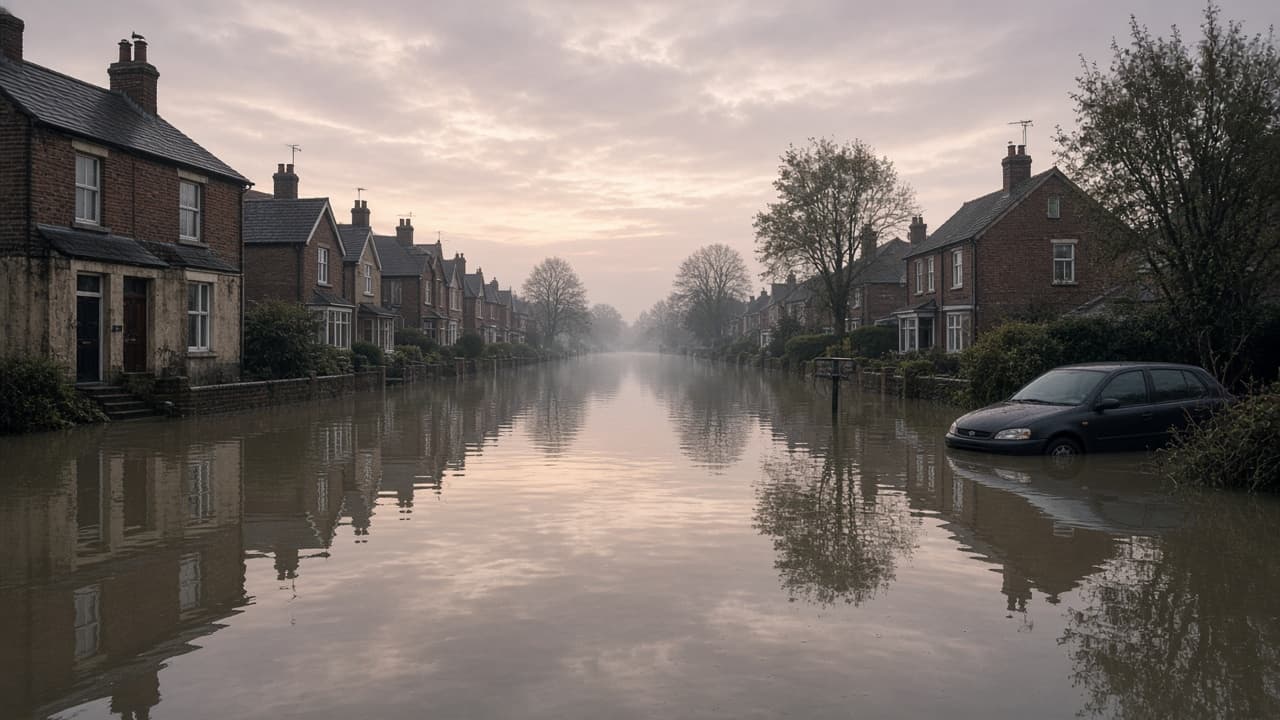
Water over the fields, a town, a house. The channel is not enough. This is a flood with a spine: it still has a direction.
Flooding banks are a process that has exceeded its container. Emotion, work, a scandal, rain on already saturated ground. Unlike a still flood in a basement, a river flood arrives and continues. You may be able to predict the next field it will take.
Standing on a high bank watching is different from being in the water. Witnessing a process overwhelm a landscape is often about other people's lives, a parent's decline, a company's collapse, as well as about your own. Sandbags are waking coping: partial, practical, not a full stop. If the flood was seasonal and you knew it, you may be in a cycle you actually understand and still cannot like.
Have a Rivers dream of your own?
Write what you remember and get a clear reading.
The Source, the Mouth, or a River You Follow
A spring in moss. A delta. Walking along a bank for miles to see where it goes, or where it starts.
Source dreams are origin questions. Where did this feeling, this family pattern, this talent, this conflict begin? The water is small and the implication is large. Mouth and delta dreams are about dispersal: a process spreading into many channels, a life opening into too many endings, a career that fans out. Following a river is letting a process be your road, a year organised around a project, a relationship, a recovery.
If the source was polluted, the origin story is contaminated; later water will carry that. If the mouth was the sea, the personal process is about to hit something much larger. Getting lost in a delta is the opposite of a single current: too many endings.
A Frozen, Dry, or Underground River
Ice you can walk on. A bed of stones. Water you can hear under rock.
A frozen river is a process paused in a form you can stand on, sometimes safely, sometimes with a cracking sound. Winter in a conflict, a shutdown, a feeling that used to move and now bears weight. Walking on ice is using the pause; falling through is the pause failing.
A dry riverbed is a channel without a process. You can travel the route of an old feeling. Nostalgia, a dead industry, a friendship whose water left. Underground rivers are processes you cannot see and can sometimes hear, family money, aquifer grief, a political current under a calm street. Finding a spring in dry country is a start you did not expect.
Someone in the River, or a Body in the Water
A swimmer, a child, a stranger, something that was a person. You on the bank or in with them.
Other people in the current make the process relational. Rescue dreams are about duty toward someone caught in a flow you may or may not share. Refusing to go in is a boundary, sometimes a necessary one. A body in the river is an image of something already carried away, a phase, a hope, occasionally a real death the mind is placing in water because water is how some cultures move the dead. Do not take it as a forecast. If it is tied to a recent loss, it is processing.
If you were the one being pulled and someone on the bank would not help, name the watcher. If you both floated, you are in the same process, which can be intimacy or mutual helplessness.
Psychological Meaning
Gaston Bachelard, in Water and Dreams (1942), wrote about water as an element of the material imagination: different waters (clear, violent, stagnant, running) invite different inner postures. A river, in that vocabulary, is running water with banks, a directed intimacy, not the ocean's totality and not the swamp's stuckness. You do not have to accept Bachelard's poetics as science to notice that dreamers already speak this way. "I was going with it." "I couldn't get across." "It came over the banks."
The scenes above are physics before they are symbols. Current, crossing, flood, ice. Those are also how people describe careers, marriages, and moods. The dream is often only making the metaphor walkable. Where Bachelard helps is in slowing down: stay with the quality of this water, this week, rather than stamping "journey" on every river and leaving.
Rivers do not predict drownings. They report how you are living with a process that already has a direction.
When River Dreams Keep Returning
A repeating crossing usually means the decision is still mid-stream. A repeating upstream swim usually means the opposition is still the plot of your weeks. A repeating flood usually means a channel is still too small for what is coming through; widen the channel in daylight (help, time, a conversation) or admit the field will get wet.
If you grew up on a real river, include it. If you cannot swim in waking life, include that in any in-water scene before you reach for myth. And if the dream is only banks and a pretty current, it may be offering motion as a gift. Not every river is a test.