Quick Answer
Dreaming of kittens usually means something small and not yet independent has your attention, a beginning that needs feeding, a vulnerability that invites caretaking, or play that still has claws. Adult [cats](/dreams/cats) can walk away. Kittens cannot, which is why the dream often leaves you holding more than you planned. Scene details decide the tone: abandoned, overcrowded, injured, or simply tumbling in a patch of sun.
Finding Abandoned Kittens
A box, a ditch, a stairwell, a room in your house you do not use. No mother. Eyes open or not.
Abandonment plots are unchosen care. They show up when a need appears without a budget: extra work, a neighbour's children, a creative idea that will die if you do not pick it up, a younger self you left in an old apartment of the mind. The ethical pressure in the dream is the point.
If you walked past, do not moralise too fast. Walking past can be a picture of a boundary you are practising. If you scooped them up with no plan, you may be describing a waking pattern of rescue that outruns your resources.
Play That Scratches
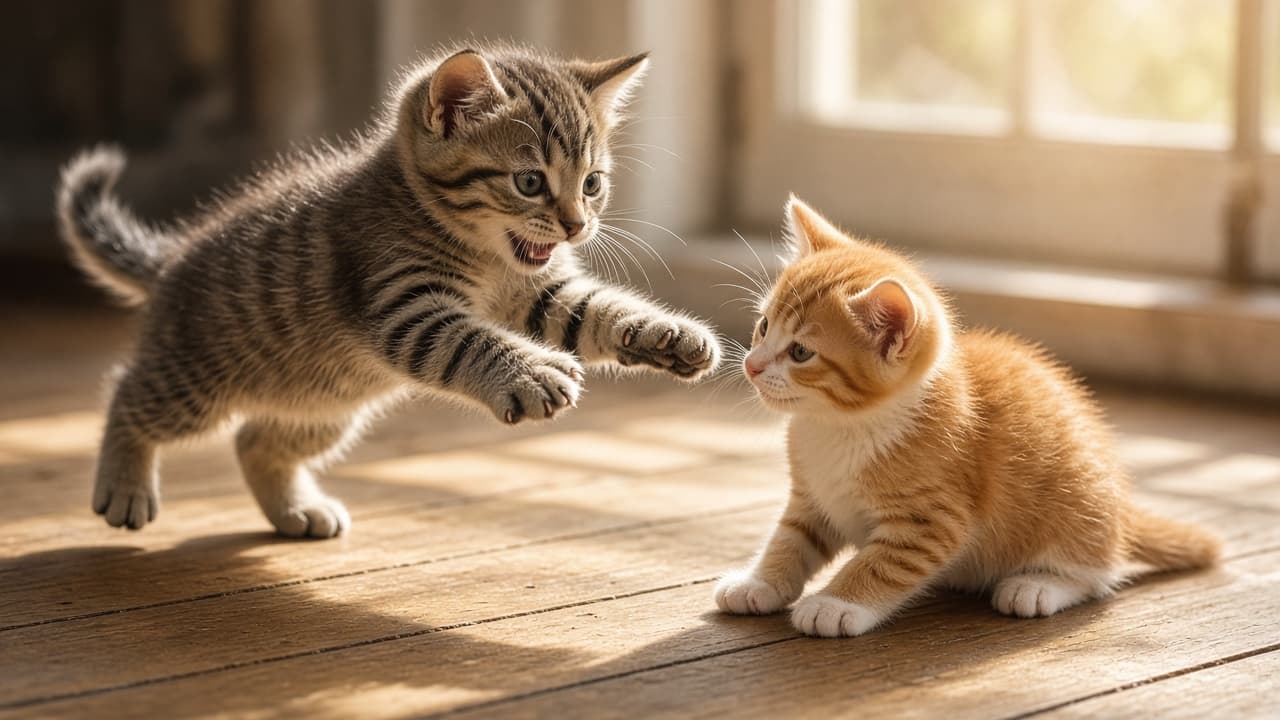
Pouncing, batting, a sudden needle of claw. You laugh and then hiss.
This is the signature kitten paradox: charm plus harm in a package too small to take fully seriously, until the scratch is real. It maps onto new relationships, new teams, and new habits that are "just playful" and already drawing blood. It also maps onto children in the house, whose play is not metaphorical.
Who got scratched matters. If it was your face, the play is getting into how you are seen. If it was your hands, it is getting into what you make.
Too Many Kittens
They keep appearing. The litter will not stay a countable number.
Overwhelm by cuteness is still overwhelm. These dreams gather during seasons of multiplying small obligations, messages, errands, petsitting, side projects, each one defensible, together impossible. They are cousins to infestation dreams, with a warmer costume.
Trying to name them all is a useful variant: you are attempting to individuate a mass of needs. Failing to count is the honest census.
A Kitten in Danger
Road, water, a closing door, a larger animal. You are too slow or just in time.
Rescue pressure is high. The kitten is a vulnerable project or person. The larger animal may be an adult system, a company, a family mood, a dogs energy of loyalty that is too big for the small thing.
If you saved it, you are practising competence you may actually have. If you failed, the dream is often grief or guilt about a small thing you could not protect, not a prophecy that you will fail again. Stay with what the small thing was in waking life.
Have a Kittens dream of your own?
Write what you remember and get a clear reading.
Feeding, Nursing, or Cleaning Kittens
Bottles, dishes, litter, endless small labour.
Maintenance dreams strip the romance. Caretaking is logistics. They arrive for new parents, new managers, new artists, and anyone whose days have become a cycle of tiny necessary acts. Having-a-baby energy can wear kittens when the mind wants a less human, less taboo picture of dependency.
If the kittens would not eat, the "project" is not taking what you offer. If they ate and immediately needed more, the need is structurally endless, which is information about the role, not a demand that you become endless.
A Kitten That Follows You Everywhere
It chooses you. It will not stay where you put it. It appears at work, on a train, in a locked room.
Chosen-by-the-vulnerable is a bond dream. Something has imprinted. That can be lovely and it can be a trap. Ask whether you wanted the following. Unwanted following is a picture of a responsibility that has attached without a contract.
Talking kittens, or kittens with oddly adult eyes, usually mean the small thing has a voice, an idea, a memory, a part of you that is young but articulate. Listen to the sentence if there was one.
Kittens and Mice in the Same Dream
Predatory play starts early. A kitten with a mice situation is about instinct arriving before ethics.
You may be watching a new part of yourself learn how to hunt, ambition, flirtation, competition, before it has manners. Your job in the dream (stopping it, cheering, freezing) is often your waking stance toward that instinct.
Psychological Meaning
Michael Schredl's research on dream content and waking emotion (including work around 2010 on how daily concerns and animal imagery show up in dreams) supports a straightforward frame: people dream about animals they live with, long for, or have strong feelings about, and the feelings in the dream track current concerns. Kittens are high-nurturance, high-cuteness, moderate-threat objects. They are perfect for "I am responsible for something fragile" and for "this is sweet and it can still hurt."
You do not need a mystic kitten omen. If you have cats, expect more cat-family dreams; that is continuity. If you do not, the image is still available from culture as a shorthand for the young of a self-contained species, independence coming, but not yet.
Jungian language would call some kittens a young anima or a young instinct. Fine as poetry. Test it against the litter size and whether you could put the kitten down.
When Kitten Dreams Repeat
Repeating abandoned-kitten scenes often mean the unchosen responsibility is still on the floor. Repeating play-scratches often mean you have not decided whether the new thing is safe to keep handling without gloves.
Give the kitten a waking noun: the project, the person, the habit, the child-self. Then ask the only logistical question that matters, do you have food, time, and a door you can close. The dream will usually quiet when the noun has a plan, even a small one.