Quick Answer
A dream about having a baby is usually about something new that has already started and cannot be handed back. New jobs, new relationships, moves, businesses, caring responsibilities and creative projects all generate these dreams, because they share the baby's defining features: total dependency, no pause button, and a permanent change to who you are. Whether you felt capable, overwhelmed, or strangely unbothered in the dream is what decides the reading. These dreams are not pregnancy tests. Plenty of people who cannot conceive, do not want children, or are decades past childbearing dream about having a baby regularly.
Giving Birth and Only Then Realising It
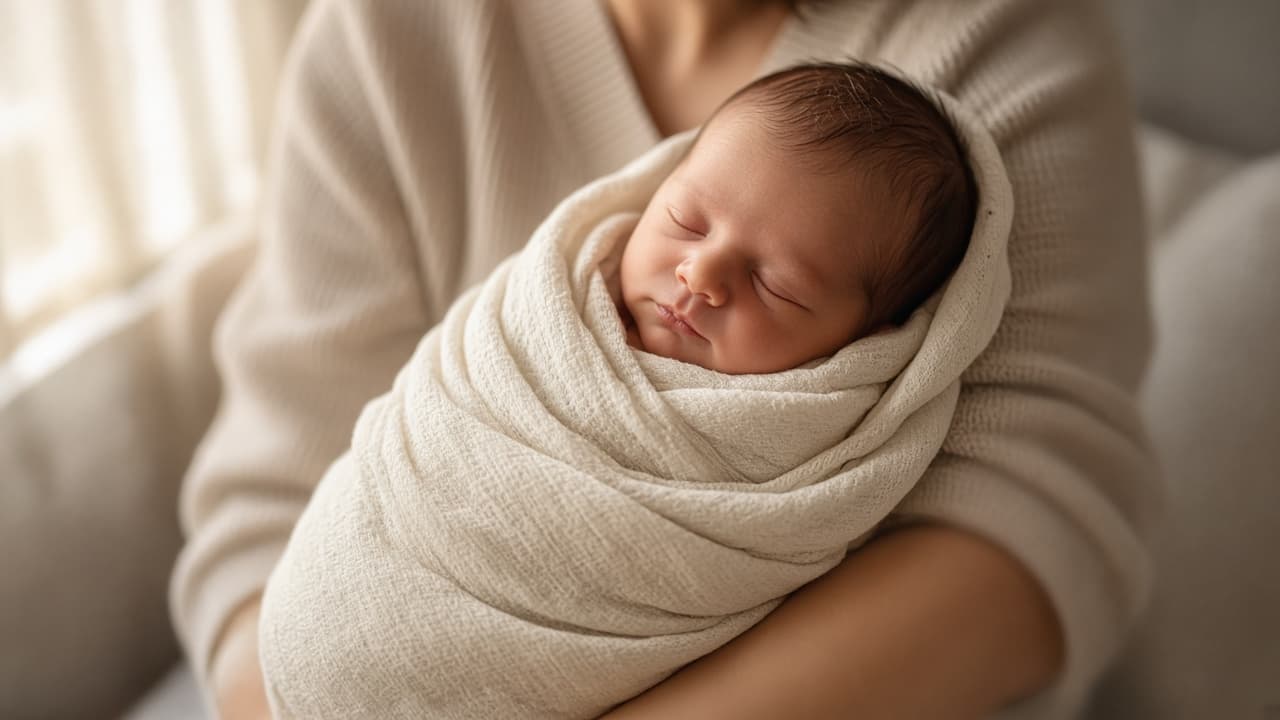
A very common structure: the birth has happened and you are holding a newborn with no memory of pregnancy, labour, or preparation. There was no nine months. The baby is simply here.
That missing lead-up is the whole point. This scene shows up when a change arrived faster than your sense of readiness, a promotion that came early, a relationship that turned serious in weeks, a relative who suddenly needs daily care. The dream reproduces the specific vertigo of being responsible for something you have not had time to plan for. If you want the fuller version of the labour scenes themselves, giving birth covers those separately.
Dreamers often report scanning the room for a midwife, a partner, anyone official. Looking for that person usually maps onto a real search for guidance you have not found yet.
Holding a Newborn You Know Is Yours
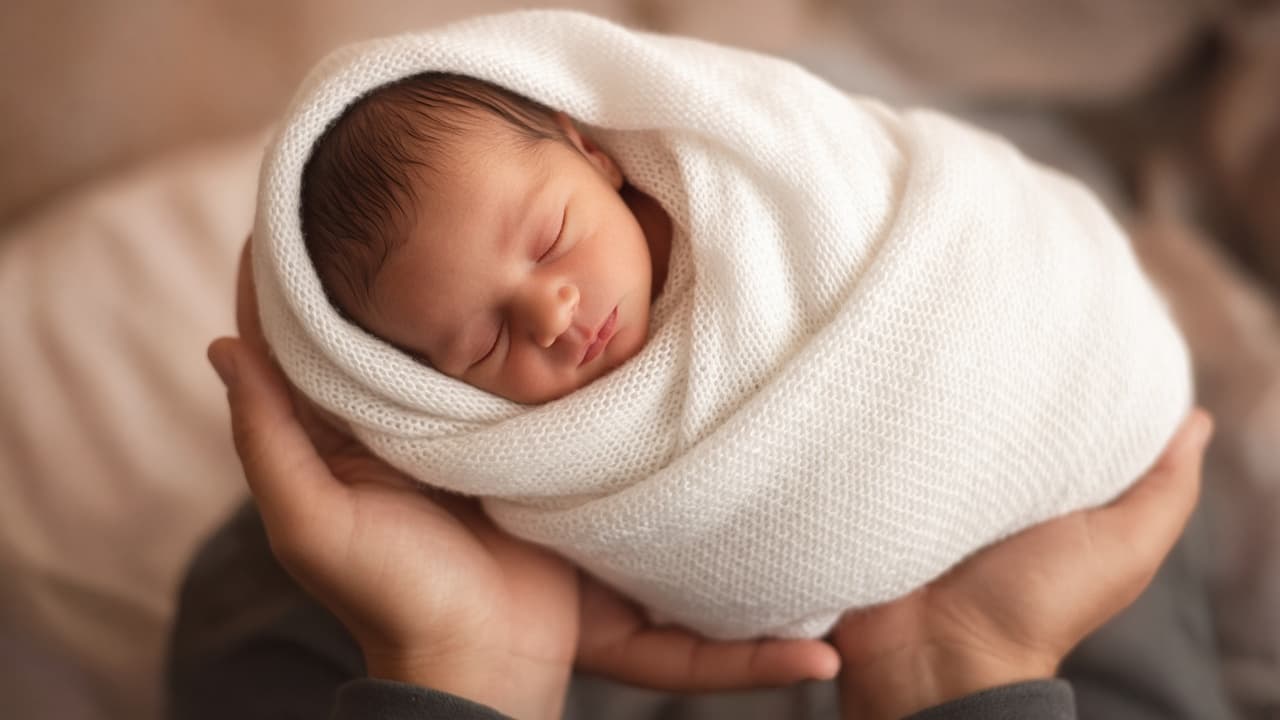
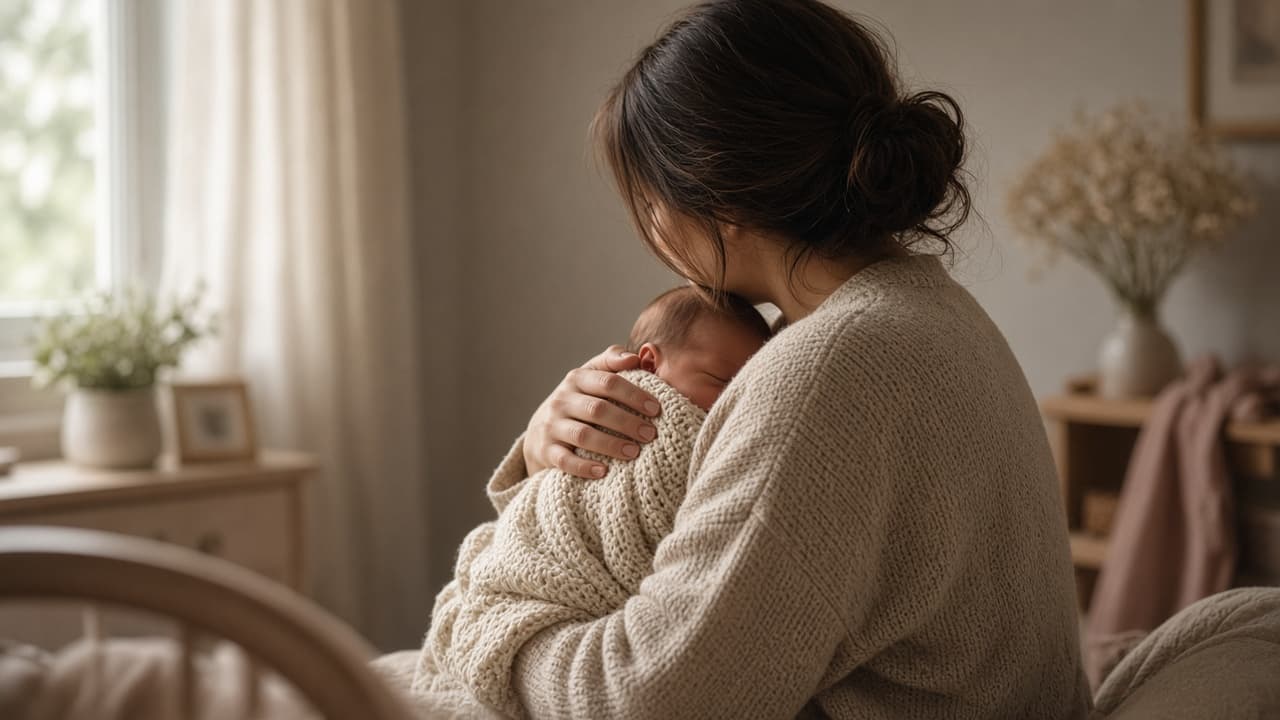
Here the emotion is quiet rather than dramatic. You are sitting somewhere ordinary holding an infant, and the striking part of the dream is the certainty: you know without being told that this child is yours.
These dreams tend to accompany a genuine attachment forming. People report them after committing to something, signing a lease, agreeing to a co-founder, deciding to stay in a difficult relationship and work on it. The tenderness is real, and it is generally reporting the state of an existing bond rather than requesting a new one.
Weight and warmth are worth remembering. Dreamers who describe the baby as heavier than expected are often carrying more than they have admitted. Those who describe the baby as impossibly light sometimes turn out to be holding something that has not become real yet.
Finding Out You Are Having a Baby
Some of these dreams never reach a baby at all. The scene is the announcement: a test, a scan, a doctor, a family member telling you.
Announcement dreams are about the moment a change becomes public and irreversible, and they often carry the specific dread of other people's reactions. Who you told in the dream, and how they took it, is usually more informative than the pregnancy itself. Telling a parent points at approval you are still measuring yourself against. Telling nobody points at something you are managing alone.
If the news arrived as pure alarm, check whether a waking commitment has recently crossed a line where backing out is no longer clean.
Losing the Baby in a Crowd or Forgetting It
One of the most distressing versions, and one of the most misread. You remember mid-dream that there is a baby you have not fed, or you set it down somewhere and cannot find it, or you left it in a car, a shop, another room.
This is a capacity dream, not a moral one. It arrives during periods of genuine overload, when you are tracking more obligations than working memory comfortably holds, and it is especially common in new parents, carers and people running several projects at once. The horror in the dream is proportional to how seriously you take your responsibilities, which is the opposite of what dreamers usually conclude about themselves at 4am.
Whether you found the baby matters. Recovering it and finding it fine tends to accompany a near-miss you already caught. Still searching when you wake usually means something real is currently unresolved and you know it.
A Baby That Talks, Walks, or Grows Too Fast
An infant that speaks in full sentences, walks across the room, or ages years in a scene is unsettling in a way that has nothing to do with children.
These dreams often accompany a project or relationship that has developed far quicker than you can adjust to, a small idea that became a company, a hobby that became an income, a child who is suddenly independent. Parents of teenagers report this shape frequently. So do founders.
If the baby said something specific, keep the sentence. Dream speech from an unlikely source is often a thought you have been avoiding stating in your own voice.
Have a Having A Baby dream of your own?
Write what you remember and get a clear reading.
Having a Baby With an Unexpected Person
The other parent is a colleague, a friend, an ex, or someone you have never met. Waking up embarrassed is a normal response and usually unnecessary.
Co-parenting in a dream typically stands for joint responsibility rather than desire. You and this person are bound to something that needs both of you and cannot be dropped. Work partnerships, shared caring for a parent, and jointly held debts all produce it. If the person was an ex, the dream may be sorting through what the two of you actually built rather than reviving the relationship, a theme covered under ex-partners.
The atmosphere is the tell. Practical and cooperative points at real collaboration. Awkward and secretive more often tracks an alliance you would rather other people did not scrutinise.
A Baby That Is Fragile, Ill, or Very Small
A newborn who seems too weak, too small, or in need of help you cannot give makes for a frightening dream, and it is worth handling gently.
In people who are not pregnant, this scene most often accompanies a vulnerable new thing: a business in its first months, a recovery, a relationship rebuilding after a bad period. The fragility is a fair description of the stakes, not a warning about a real child.
In pregnancy and early parenthood, dreams about a baby's wellbeing are extremely common and are not a signal about the baby's health. They generally reflect the ordinary vigilance that comes with caring for someone who cannot protect themselves. If they are frequent and distressing, mention them at an antenatal or postnatal appointment, clinicians hear about them often and take them seriously without alarm.
Psychological Meaning
The evidence here is unusually good, because pregnancy and new parenthood are life events researchers can study prospectively.
Deirdre Barrett's 1988 work on pregnancy dreams found consistent themes across trimesters, babies, water, and the body, and, importantly, that anxious dream content about the baby was common and did not track anything wrong. Tore Nielsen and Tyna Paquette's 2007 research on pregnant and postpartum women documented how frequently new mothers dream about their infant being in danger or misplaced in the bed, sometimes vividly enough to act on it while half-awake. Knowing that this is a documented, ordinary pattern removes a great deal of unnecessary guilt.
For everyone else, Domhoff's continuity hypothesis explains why the image travels so far beyond literal parenthood. Dreams reuse whatever emotional structures fit current concerns, and a baby is the most compact available image for dependency, irreversibility and unpracticed competence. If your week is dominated by something you cannot put down, the dream has an obvious cast member.
Barrett has also written on dreams and creative work, and the overlap is instructive: people describe projects in parental language constantly, "my baby", nurturing an idea, letting it go. The dream is not being metaphorical for effect; it is using the vocabulary your waking mind already reaches for.
Cultural and Spiritual Readings
Baby dreams attract prediction more than almost any other symbol, and it is worth separating the traditions from the claims.
Across many cultures, dreaming of a newborn is read as a beginning: a new phase, a new venture, renewed favour. That reading is broadly consistent with what the dreams seem to be doing psychologically, which is probably why it has survived. In parts of West African, South Asian and Eastern European folk tradition, a relative's baby dream is treated as an announcement of a coming pregnancy in the family, sometimes with a specific sex assigned to the child. There is no evidence for any of it, and it can be genuinely painful for people struggling to conceive. If a well-meaning relative has told you your dream means a baby is coming, you are allowed to set that down.
Christian readings tend to place new life alongside promise and stewardship rather than prediction, the responsibility to tend what has been entrusted to you. Where that framing helps, the question it raises is practical: what has been placed in your care this year, and are you feeding it?
If Baby Dreams Keep Waking You
Frequent baby dreams usually mean your life is full, not that your body or future is signalling something. They cluster in the busiest, most committed periods people have.
Try naming the actual dependent thing before you interpret further, the project, the person, the obligation, and check whether the dream's emotion matches how you feel about it in daylight. A mismatch is the interesting part.
If you are pregnant or newly postpartum and vivid dreams or half-waking searching for the baby are disrupting your sleep, tell your midwife, health visitor or GP. Broken sleep amplifies all of this, and there is straightforward support available for both the sleep and the worry underneath it.