Quick Answer
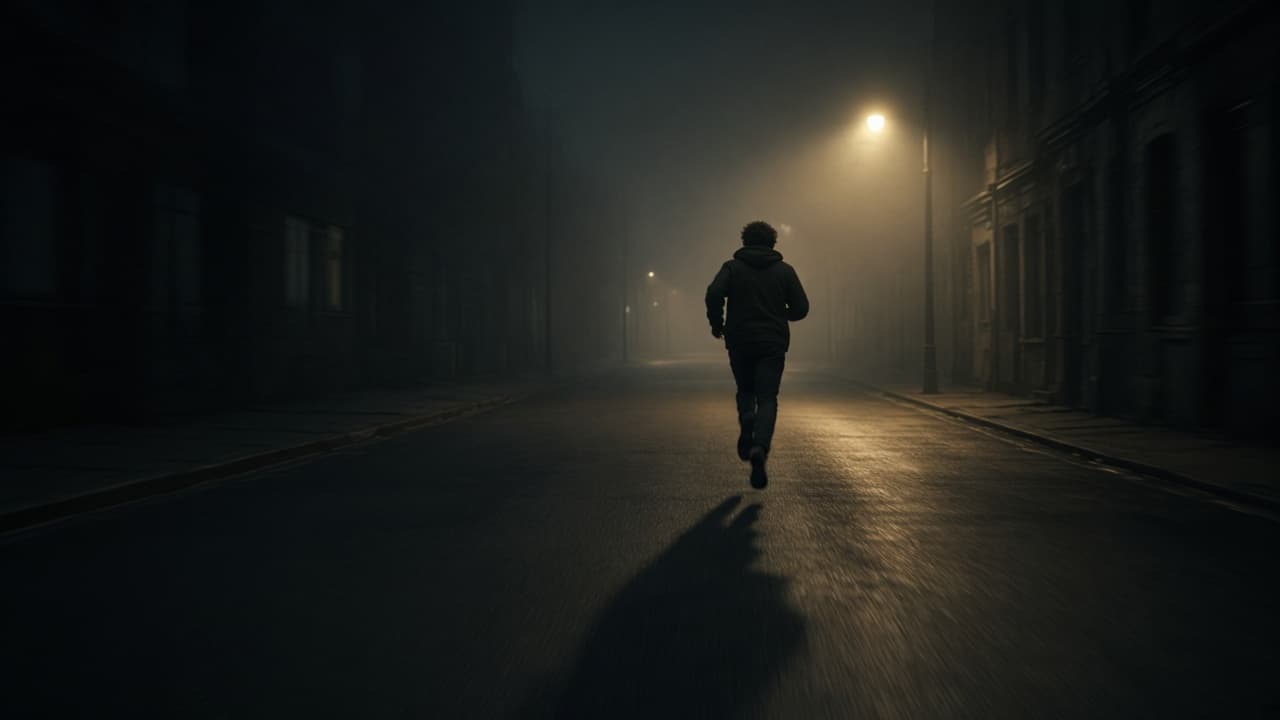
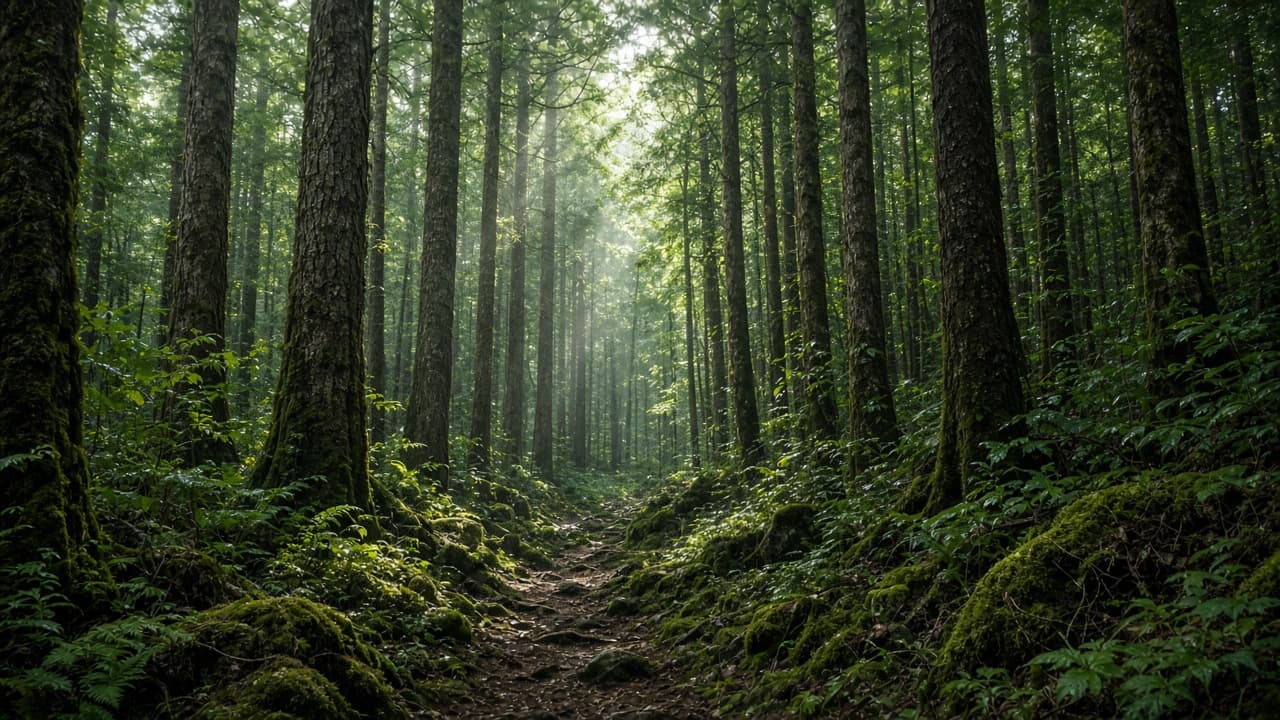
A forest is not one [tree](/dreams/trees). It is too much life to hold in a glance, paths that fork, undergrowth, things that may be watching, a roof of leaves that takes the sky away. Dreaming of forests usually tracks density: a situation with more living parts than you can survey, a psyche with more growth than a street grid, a problem that will not become a [desert](/dreams/deserts) (too little) or a single mountain (one climb). You enter. Overview is expensive. Mood decides a lot. Some forests are cathedral. Some are hunt.
Getting Lost Among the Trees
You walk, and the walking does not produce a clearing. Landmarks repeat. Moss on the wrong side. Panic or a strange calm.
Lost-in-forest is the classic density dream. Options look alike. Jobs, dates, tasks, family members' needs, each tree is a living thing and together they erase direction. Unlike being lost in a city, there are no signs. Unlike a desert, there is too much rather than too little.
If you kept walking, you still believe motion will help. If you sat down, you may need a different strategy than effort: wait for light, make a mark, admit you need a person with a map. Hearing water and not finding it is a particularly cruel variant, a need you can sense and not reach. Night falling while you are still lost adds time pressure to density.
This is not a moral failing. Forests hide their own edges. That is what they do.
A Path Through the Woods
A track, a desire line, blazes on bark. You can still not see far, but the ground has been decided by someone.
Paths are inherited or chosen routes through density. A career path, a tradition, a therapist's method, a well-walked grief. You are not pioneering, which can be a relief in a forest.
If the path was clear and you left it, you are experimenting with unmarked growth, creative, or reckless, depending on whether you could find the path again. If the path forked, the dream is a decision among routes that all stay inside the same ecosystem; neither fork is the city. A path that ended in a wall of trees is a method that does not go as far as you were told.
Footprints on the path raise the question of who went ahead. Animal tracks mix the social with the instinctive.
Something Watching from the Trees
A feeling. A snapped twig. Eyes you cannot confirm. The forest is not empty and will not introduce itself.
Watchers are attention without a face. Gossip. A boss. Your own hypervigilance. A childhood sense of being observed that never found a person. In threat-heavy dreams this leans toward predator: wolves, a hunter, the start of being chased. In quieter dreams it can be the forest's own aliveness, which some people experience as sacred and others as unbearable.
Staring back is a different dream from hiding. Staring back is a bid to make the attention mutual and therefore social. Hiding agrees that you are prey or a secret. Calling out "who's there" is a wish to convert the uncanny into a conversation. If a face finally appeared, name it; the dream has done you a favour. If nothing appeared and the feeling stayed, you may be living with ambient scrutiny that has no one owner.
A Dark Forest Versus a Sunlit One
Gloom, closed canopy, mushrooms, the colour drained. Or shafts of light, birds, a place you would picnic.
Light is the emotional climate of the density. Dark forests collect fear, secrecy, and the parts of a life that do not get sun, family systems, addictions, a workplace with no windows. Sunlit forests collect growth that is still complex but not hostile: a creative thicket, a community, a problem that is alive rather than dead.
Moving from dark to light inside one dream is a weather change you should take seriously: something in the situation became more breathable. The reverse is a closing canopy. A forest that was beautiful and became dark as you stayed often maps onto a situation that reveals its politics after you have entered.
Do not assume dark means evil. Some necessary work happens in low light. Assume dark means you could not survey.
Have a Forests dream of your own?
Write what you remember and get a clear reading.
A Clearing, Cabin, or Edge of the Woods
Open ground, a hut, a road suddenly, the tree line like a wall behind you.
Clearings are relief from density, a thought that simplified, a room of one's own, a diagnosis that organised the symptoms. Cabins are a way of living in the forest without being lost in it: a practice, a relationship, a job that sits inside complexity with four walls. The edge is the most interesting: you can see both systems.
If you were trying to get out and could not find the edge, the density currently has no exit in your model. If you stood at the edge afraid to go back in, you have left a complex system and are not sure you can re-enter, a family, a field, a city of friends. A cabin with a light on is help inside the thicket. An empty cabin can be shelter or a story about help that used to be there.
Caves in a forest add a further interior: not just among trees, but under.
Being Chased Through the Forest
Running, branches in the face, no straight line. The density is now an obstacle course.
A forest chase combines being chased with the many. You cannot sprint as on a road. Cover helps and hinders. This is pursuit inside a complex system: office politics with too many people, a family argument in a house of relatives, a rumour you cannot outrun because every tree is a listener.
If you used the trees to hide, concealment is still available. If the trees themselves seemed to grab, the environment is allied with the pursuer, a culture that will not let you leave. Coming to a mountain or a cliff at the forest's end is a change of metaphor: complexity gives way to a single drop or climb.
A Forest Fire, Logging, or the Woods Dying
Flame through the understory, stumps, ash, trees falling. The many is being reduced.
Destruction of a forest is destruction of a living system, not of one plant. Burnout that takes a whole ecology, a friend group, an industry, a habitat of hobbies. Logging can be necessary work or extraction, depending on whether you were grieving or working. A dying forest without an obvious cause often tracks a slow loss of aliveness: depression, a company culture, a landscape you actually know.
If you set the fire, you may want to simplify by burning complexity, which solves density and creates a different problem. If you were trying to save one tree, you have picked a particular life inside a collapsing system. New growth after fire is a real ecological fact the dream sometimes uses honestly: some systems restart that way, and the cost is still real.
Psychological Meaning
Forests are a favourite image for the unmapped interior because they are literally hard to see through. James Hillman, in The Dream and the Underworld (1979), argued for taking dream images as places the soul goes, rather than as signs to be translated into daytime advice. A forest, on that view, is not "confusion" as a crossword answer. It is an underworld terrain with its own laws: density, paths, watchers, no panorama.
You do not have to become a Hillmanian to use the caution. Translating every forest into "you feel lost at work" can be true and still too thin. Stay with the image long enough to notice whether the woods were hunting you or holding you. Then, if you want a weekday noun, pick one: a family, a market, a mind with too many tabs. Hillman's protest is against skipping the woods.
Forests are not omens of getting lost in life as fate. They are pictures of being among too much life to survey. Sometimes the work is a path. Sometimes it is a clearing. Sometimes it is learning to be watched without turning into prey.
When Forest Dreams Keep Returning
A repeating lost-in-woods dream usually means overview is still missing; draw an actual map of the waking thicket, people, tasks, forks, on paper. Repeating watchers usually mean scrutiny has not been located; name one possible source even if you are wrong. Repeating sunlit forests may be the mind offering a habitat you do not have in the city of your days; consider whether you need more unmanaged life, not less.
If the forest is a place you know in waking life, include memory. If it is generic fairy-tale woods, include the stories you were told about being alone among trees. Either way, getting lost at night in a dream is a poor reason to fear trees. It is a decent reason to ask what has grown too dense to see through.