Quick Answer
Fighting someone is a narrower dream than [fighting](/dreams/fighting) as a blur. There is an opponent with a face, a body, a chance that you could pick them out of a lineup. The conflict has already chosen its people. Meaning lives in identity, in who threw the first blow, and in whether the fight felt fair, shameful, or like a relief. This is not a forecast of a street fight and not a confession of secret violence. It is a staging of a waking opposition that has become personal.
You Knew Them
A partner, a sibling, a boss, a friend, a child grown large. The someone has a name.
Named fights are relationship documents. Sleep is running a version of a conflict you are partly having in polite form. The dream drops the politeness. That can be clarifying and also unfair: dream-them may be harsher than day-them.
Ask what you were fighting about in the dream’s own logic, a room, a child, a lie, a plate. Objects in fight dreams are often the real topic wearing a prop.
If you woke still angry at that person, do not dump the dream on them as evidence. Dump the waking issue, if you dump anything.
A Stranger With a Specific Face
Not a blur. A particular nose, a jacket, a laugh. You would know them again. You have never met them.
Specific strangers often carry a quality: a type from work, an ex’s stand-in, a parent’s generation, a version of you. The mind did not bother to use the real person, which can be mercy or cowardice. You get to fight the quality without ruining breakfast with the actual human.
If the stranger felt like a celebrity or a figure from the news, continuity with media is likely. Then ask why that figure got to be your opponent this week.
Who Threw the First Blow
This is the question the dream is begging you to recover.
If they started it, you may be living a story of being pushed until something breaks, being attacked with extra agency because you fought back. If you started it, you may be done containing. Initiation can be healthy anger arriving late, or a fear that you are the destructive one. The feeling after the first contact tells you which: righteousness, horror, or both.
A fight that was already underway when you arrived is a conflict with history. You joined a war. See also war if the scale went beyond two bodies.
Weapons Versus Hands
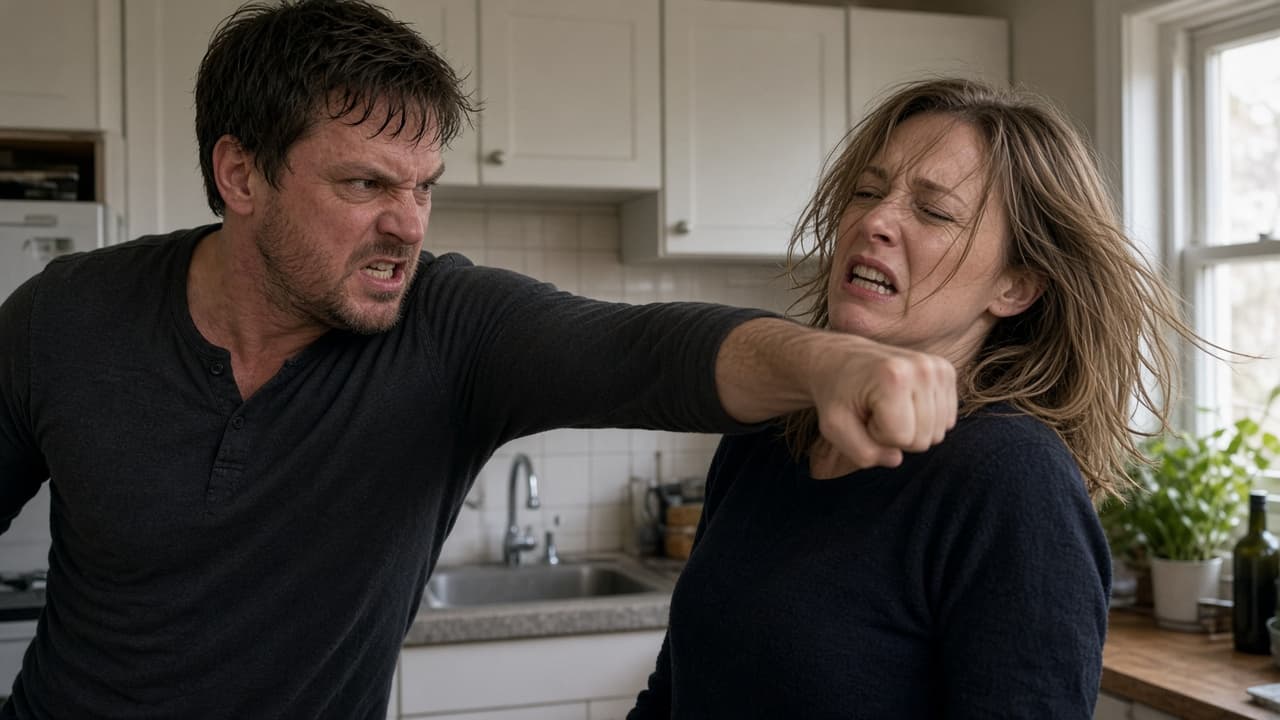
Fists, grappling, a kitchen, a knife, a bottle, a gun on a table you did not pick up.
Hands keep the fight in the realm of relationship and impulse. Weapons raise lethality and often map onto words or decisions that cannot be taken back. Reaching for a weapon you then refused is a dream about a line you still have. Using it is a dream about a line you crossed in fantasy, which is still information, not a crime.
If the opponent was unarmed and you were not, power is the subject. If it was the reverse, humiliation and unfairness are the subject.
Have a Fighting Someone dream of your own?
Write what you remember and get a clear reading.
People Watching, Referees, Nobody Helping
A kitchen full of family who eat while you fight. A street. A colleague who films.
Audience turns the fight into a reputation event. You are not only opposing someone. You are being seen opposing them. Families that triangulate, workplaces with a crowd, and online life produce this staging.
If someone tried to stop you and you would not stop, the dream is about a runaway need to finish. If you wanted a referee and did not get one, you may be lacking a fair third in waking life, a mediator, a policy, a friend who will not take a side because they will not come into the room.
Winning, Losing, or Waking at the Moment of Contact
The outcome is a mood, not a trophy.
Winning with grief means you did not want the relationship that winning costs. Winning with glee means a pent-up opposition got a stage; ask whether daylight needs a smaller, legal version of that glee. Losing can be relief (you did not have to be the one who destroys) or a rehearsal of a defeat you expect.
Waking at first contact is common. The mind may be unwilling to finish the scene. You can finish it awake, on purpose, in a chair, as a way of finding out what you think happens next. That is not magic. It is continuing a thought.
Psychological Meaning
Calvin Hall and Robert Van de Castle’s 1966 content-analysis system documented how frequently aggressive interactions appear in ordinary dreams, including fights with people the dreamer knows. Aggression in sleep is statistically normal. It tracks waking conflict, status, and frustration more than it tracks a secret wish to harm.
That empirical habit is the right first move. Who was the someone. Who struck. What the room was. Those are continuity items. Threat-simulation then explains the intensity: the brain rehearses costly social conflict because social conflict is costly. You are not a monster for having a body that knows how to punch in a story.
If the dream repeats a real assault, stop decoding and use trauma care. Symbolism is for metaphorical nights.
Stay non-moralising about who started it. Dreams are allowed to let you be the aggressor so you can see an anger you have been performing as patience.
When You Keep Fighting the Same Someone
A repeating opponent is an unfinished dyad. Write the waking conflict in one sentence that could be said without fists. If you cannot, the dream may be using violence because language has failed. That is a cue to get a third party in daylight, not a cue to escalate.
If the someone is you with another face, the fight may be internal. Still useful. Still not an omen.
Fighting someone is a conflict with a name and a first blow. It is not a character reference. Describe who they were, who started it, and who watched if you want a reading that stays in that kitchen.